Here we are, autumn of the year, gathering the harvest of what we have sown, both bitter and sweet. Hail to the West, place of the setting sun, of evening, of fullness and reflection and maturity.
ECG ritual banner of the West. Design by Dana Driscoll.
West, traditional place of feeling and intuition, and in this cycle, the moon waxing toward fullness, too. I know: in the associations of many tables of correspondence, West is the waning moon. Why not attune to what will light the sky this evening, rather than a pattern that obviously doesn’t fit the moment? Tonight I’ll sit at my fire-circle for an evening contemplation, open as I can to what comes.
With the full moon can come illumination of what was previously hidden. We move in cycles, nourishing some causes and energies in the unconscious, till they move into awareness and we can assess whether they work to our advantage.
Larger cycles concern nations and planetary systems, whole species and immense and intricate patterns, while smaller ones shape our communities and individuals. Disasters and tragedies will keep coming, whether through deeply-rooted patterns in human psyches, or in natural cycles of change, disruption and rebalancing.
After a hurricane, rather than recriminations, it’s most useful to serve obvious need. Likewise after a human tragedy like a shooting. Let my sympathies rouse me to understand causes better, work for change, or open my compassion in concrete forms of aid. Otherwise, am I doing anything more than muddying the astral waters?
Emotional reaction has its place — we feel what we feel — but it can most lovingly be grounded in prayer, ritual and contemplation, and action, for my own good as well as for the good of others. Look to your own self first. the beginning point of all thought and action, counsel my inner guards and guides.
Here’s a first draft of a ritual meditation I’m still working on:
Earth in my hands, my gaze to the horizon,
I cast fear away, hate away, anger away.
clearing the bodies for health.
Water in my hands, my gaze to the wells of spirit
I wash in love, I bathe in compassion, I cleanse with caring,
clearing the springs of the heart.
Fire in my hands, my gaze to the flame of purification
I burn away limitation, I incinerate obstacles, I ignite useful anger,
clearing the will for further growth.
Air in my hands, my gaze to the way of wisdom
I conceive a change, I know a change, I understand a change,
clearing the mind for action.
I don’t say these things because they’re easy, but because they’ve proven themselves to me to be among the best responses over time, and the best ways to take a pro-active stance as well. They’re a practice, something I find worth doing in itself like any practice worth the name, and for healing needed so plainly and deeply.
Site statistics for the last post drew readers from surprisingly varied lands: Vietnam, South Africa, Argentina, Ukraine and Latvia among them. I highlight these simply because their national languages aren’t English (with the exception of S. Africa). Not only are readers there interested in Druidry, but they’re seeking out English-language media that talk about it.
“Show us applied Druidry and we’ll pay attention”, you’re saying.
Here’s a follow-up, an excerpt from my “post-mortem” journal entry after the ritual. Because “feels” don’t really tell the whole story, as you’ll see. How I think a ritual progressed, and the whole picture with every factor included, can be two different things.
First off is the ritual set. You know: state of mind, weather, time of day, preparation. Alert. Noticing many animal presences, especially ants, flies, aphids, grasshoppers. Slightly edgy, the way I often feel when stuff’s going on I know I don’t otherwise notice. (Material for later meditation there.) Weather sunny and clear, 73 F (23 C). Approximately 2:00 pm. Preparation minimalist, with a few objects I was led to choose in meditation earlier that day. (Barely visible, behind and below the cup to the left/north sits a black Cherokee owl cup, containing objects from my first OBOD initiation, along with a symbol of the wild boar, one of my animal guides. (Yes, in one sense this wasn’t “minimalist” at all; I’d pulled out all the stops for this rite.)
Below is an image with the fire lit, a little more than halfway through the rite. I began with a standard OBOD ritual opening: “By the power of star and stone, by the power of the land within and without …”
In the picture I’m facing East. Directly in front of me is the blue bowl of water for West. To the right, South, the dragon candle-holder, with a green candle.
“Green for South?” I hear the purists gasp. Yup. Why? As one of my friends might say (and spell) it, that’s the color of “the green fyre” of nature. I’d been nudged to use green at our Midsummer ritual. More than the sun, how the Land flourishes under the sun at the solstice says “summer” to me. Your climate and tools differ? Excellent! We’re both learning to listen to what’s in our faces and under our feet and in our hearts.
On the far side of the circle in the East is a deer-bone whistle from Serpent Mound. Its high pitch matched the cry of birds overhead, the wind in the trees. Finally, to the left and North is my Ovate anchor stone and one of several offerings, a cup of milk and a slice of bread (already offered by the time of this picture), white for the northern snow, for Lugh Lord of Light, and for Thecu Stormbringer*, for fertility and harvest both, how we are all nourished from the time we are born, “the fat of the land”. What is it that fire burns, after all?
Dry wood lay ready, kindling and newspaper, too. I’d just said these words “I ask your aid in consecrating this fire circle and the greater circle, that has its center here, its circumference everywhere.”
Out with the book of matches. One after another. Nothing. The fire wouldn’t light.
So back into the house for wooden matches. “Disaster! Bad omens abound! No fire means no passion, no energy for your work. AND you broke your ritual circle!”
Well, no. Remember the part above about the “greater circle”? I was still in it. I pondered the nudge to include this line as I wrote it earlier in the day. And if such “ritual breakage” distresses you in your own rites, you know what to do: cut yourself a ritual doorway, The circle won’t blow away during the few minutes you’re gone.
Sometimes a break in the ritual points to a specific focus for the ritualist to attend to. I took the need to get better matches as a ritual message: when I tend any fire — energy — passion — heat — will — decision — I need to pay particular attention to beginnings, to my tools, to an extra step that might be necessary to assist with manifestation. Fire spoke: any ritual worth its salt links self-as-home together with the ritual action. Fire comes from within as much as from without. Much more useful and to the point than irrational fear of bad ritual mojo.
“I kindle this fire in honor of all the elements, earth and form and north the altar, air and breath and east the means, water and cauldron and west the capacity.”
At length, after a meditation I’m still reflecting on, the closing, again adapted from OBOD ritual: “As the outer fire dies down, may it remain a pure flame within. This circle is closed in the apparent world. May its inspiration continue within us all, a gift”.
/|\ /|\ /|\
*In the next post, an update on my work with Thecu of the Nine Paths of Storm.
One of the groups I gather with to observe at least some of the “Great Eight” festivals has been searching for a meeting place for our upcoming Lunasa/Lughnasadh celebration.
So, I ask myself, what does my teacher of Daily Druidry have on hand to show me this time?
Turns out, a lot. One member of our group whom I’ll call V has generously hosted our past three festivals in her spacious back yard. From the Spring Equinox to Midsummer, she provided cooking space as well as an altar. And plates, cups, and tableware.
And, on more than one occasion, burgers and sausage to contribute to our potluck meals, and a bottle of wine, too. So it’s well past time for a change of host and venue, if only not to impose any more on V’s hospitality. Even though she was willing to offer her home yet again, this time for Lunasa. Until her life rearranged and changes blew through it — good ones! — and now she can’t host us after all (or attend).
So I pour a double libation to Mundana and Mundanus, twin deities of this world where we launch so many spiritual vessels, never noticing how our “ordinary” realities matter at least as much as any other.
As a for-instance: the day of ritual dawns on all-day rain, and we scramble to move indoors, or reschedule.
Or the quiet fellow who agreed at the last gathering to take on writing the ritual script for this one falls sick the day before, with just a skeleton outline he was waiting to complete with the adrenalin/awen inspiration of last-minute-ness, and so we scurry to come up with an alternative ritual, offer up energies to aid him in dealing with his physical reality, and ponder again the key role of those twin gods of the mundane.
Need a hull or anchor, a current or shore to set out from, wind in your sails, fire in your belly, water in your canteens or buoying you up, tide and moon and sun? Hail, gods of the Mundane! We honor and salute you, without whom this world cannot shape the Spiral, playing its part in manifesting anything at all in the world of form. Right and Left Hands of Spirit, we offer these gifts and salutations.
It’s fitting that Lugh whose festival is upon us bears the epithet Samildanach: “equally skilled in many arts”. The god stands out not for any particular excellence but for all of them.
And that includes — fully, rightfully, honorably, deservedly — the forms that Spirit takes in its guise as the “mundane”: the gifts of welcome, an open hearth, food and laughter and good company.
“mundane” altar: stone (N), feather (E), candle (S), shell
/|\ /|\ /|\
Images: ancient three-headed image of Lugh found in Paris in 1800s.
When I wrote earlier this year in May, reviewing the first Mid-Atlantic MAGUS Beltane Gathering, I noted briefly how “the initial inward glimpse of the Gathering came to one of the organizers almost a decade ago. There’s yet another indication, if I need the reminder, of the possible time-gap between first seed and outward manifestation.”
For this post, let’s substitute “frequent” for “possible”. Life on earth often means adapting to that pace — that’s a large part of “growing up”, working patiently with the gaps between seed and manifestation. Life in the “fast lane” is precisely that — unearthed, out of harmony with the planet, with embodied existence in general. The old tradition of letting the land lie fallow, to restore its fertility as well as to rest, testifies to this ancient understanding. Even as we try to increase the pace of change here for our own benefit, the land, like humans, need breaks from busy-ness. Land unbusied by humans is “wild” going about its own concerns that do not need humans. So much that we find restorative in wilderness stems from its rootedness in its own rhythms, in a pace it sustains through countless ages. Attuning to that pace, as so many traditional cultures show us, is health-giving. Yet all wild landscapes change, too.
photo courtesy Wendy Rose Scheers
Earth following its own nature brings things forth “in season”. There’s a time for everything, and everything in its time — and we say the same thing, even more, about place. Even at death, that instant of change, we work with liturgies which (re)assign places: we hear “earth to earth, ashes to ashes, dust to dust”. Pagans regularly “ground and center”. Humans attempt to earth changes, to ground or integrate or heal them with the sovereign power of physical stability and constancy. Terra firma. The fixed and reliable earth. Back on solid ground.
Many qualities of earth match the same ones we cherish in other people. “You can always count on her”; “He’s solid — you know where you are with him”; “I feel safe and protected around him”; “She’s a total earth-mother”; “She’s a really well-grounded person”; “He’s the salt of the earth”. Earth-home. This old “bone-house”, bānhūs, as the Anglo-Saxons called it, the skeleton of the physical body that mirrors earthiness, that holds the flesh up. Backbone, spine — good things. Courage of earth. Resilience.
If an inner threat encroaches on me, if I need respite and retreat, I open my practical tool-kit and deploy a triple protection exercise. As I turn from what troubles me, I ask for the protection of earth. In vision I approach a golden mountain. Set in the rock are enormous, heavy double doors. I walk through and they close protectively behind me. I proceed, coming to a second set of doors, even larger and more massive than the first, which also thud shut after I pass. I feel the echo in my bones. On through the final set of doors, greatest of the three, which close with a resounding boom. Safe behind these triple doors, I regroup. Here I can regain balance and poise, seek insight and perspective. I will emerge only when I’m damn good and ready.
And we make games of change because in contrast to earth’s stability, change still does happen. We notice it most clearly against the “background” of the land, of the concrete, the manifest, the dense material world. And so we flirt with change and chance, we attempt to build, or flee from, a “house of cards”, we enshrine reminders to ourselves in proverbs like the “straw that broke the camel’s back”, we see (or miss) the approach of a “tipping point”, we witness the point itself in volcanoes, earthquakes, those sudden and massive shifts in previously reliable earth, we lament it in accidents, injuries, illnesses. We gamble, take risks, bet on our intuitions of what will last and what will lurch and abruptly buckle. We “time the market”, watch for that “point of no return”, and so on and on.
In a word or two, then, much of the time we get it. We’re good at earth.
But earth’s just one of the elements. Also breathed on by air, washed by water, flamed with fire, we manifest spirit — we’re that quintessence, those five points of essence, of existence. “Every man and woman”, says Aleister Crowley, “is a star”.
When our “lives rearrange in the winds of change”, as one song goes, when we set sail on the ancient sea within us, when that slow-burning fire flares up and heats everything, when spirit nudges us through all these forms, then change happens. A key: the elements working in concert usher in smoother change than the kinds that shatter the worlds of form. But as a transformer of spirit myself, I may choose to ignore the ebb and flow of energies. When I cast the elements aside, ignore spirit, turn my face from all things around me speaking what I need to know, then I invite more violent change. Nothing, nothing, nothing — WHAM!
But there, in the broken soil of change, a seed germinates, splits open, sends forth its first pale tendrils, and begins again the long game of living. How will it, how will I, manifest this time?
/|\ /|\ /|\
From an earlier post — “Creating a Goddess Book“: “The physical world, so important for manifestation, by its nature tends to lag behind the swiftness with which vision can appear. But that lag is precisely part of this world’s immense value: its inertia and density allow for greater permanency and resistance to change, so that we can experience the results of vision over time — and fine-tune it if we choose. Unlike in dream, where the subtle stuff of vision or imagination can wisp away so quickly, physical manifestation tries to linger.”
So here’s the task I set myself in the previous post:
… I’ll take up ritual and its close alliance with emotion. Through rite and ritual, powered by where emotion can guide me, I can begin to (1) find out what I need to know (Air), (2) clear the way for the will to act (Fire), (3) empower my imagination (Water), and (4) help myself heal (Earth).
This morning, after fasting from coffee for three days, my wife and I dove back into our joint addiction. That meant, in addition to washing the carafe, cleaning the coffee mill of the remains of a brand that we found irritated our stomachs and left us with weird dreams. In spite of an organic label and a source we trusted, that particular brand goes on our NO list.
Yes, I’ll readily admit it: we’re coffee snobs. I say, if you have a habit, addict responsibly. Why pay a barista to do what we can do at home much more cheaply and satisfyingly.
Thus armed with our indulgence and our insufferably caffeinated arrogance, we perform the daily ritual. First, the banishing, or cleaning. Then the invoking, or grinding and brewing. Finally, the savoring, black or with milk or half-and-half. Or sometimes, if a new brand turns out especially bitter, a spoonful of maple syrup. This is also known as the sense of ritual well-performed. In other words, as with most cooking — and magic — season to taste. There are recipes to learn, and then there are local variations and individual adjustments. Both prove needful.
Coffee invites assessment and comparison. (My mistyped original read “incites”, which is also true.) So should ritual. We brew coffee almost daily, because we like it enough to find it worth the effort. Anticipation heightens the preparation, the performance. Not all batches are the same, and I can always fine-tune what I do. Feeling can guide me well, but not exclusively.
If it’s to have any benefit, ritual (or magic) needs similar practice, and the doing of it IS the ritual, IS the practice of magic. I should enjoy the experience enough that it’s worth the effort, the outlay of time, material, and energy.
Otherwise, why do it? Can I answer that question sensibly? (A lack of common sense has oft defeated many an evil overlord.) A more modest Druid like me has much to learn from the great and (ig)noble. Success, for evil or good, depends on feet planted on the good earth, first of magics. (After all, Yesod, “Foundation”, is a low, easily-reachable branch on the Tree of Life. It’s “a vehicle allowing movement from one thing or condition to another …” says Wikipedia. Or as Basics in Kabbalah puts it, “The foundation (yesod) of a building is its ‘grounding’, its union with the earth (malchut).” A measure and sounding of our time: you can find such formerly hidden knowledge simply by following an internet link. Do we dismiss such magical familiars because they have made our lives too easy?)
What will I write onto and into my skin? What will I invite deeper?
So back to the four elements, to the task enumerated at the start of this post. I learn (Air) which coffee to buy — and whether today is even a coffee day — apply the heat (Fire) to water (Water!) and ground the rite (coffee, Earth, pun included) at its conclusion — a pour of hot black nectar into our two waiting mugs. Any excess of thinking or willing gets balanced by this cauldron of feeling, of desire and pleasure and outcome. Hold the mugs in our hands, warmth and aroma as much a part of it all as taste on the tongue. Incidental effects, like the temporary sharpening of attention, the rise of blood pressure (I’m chronically low), the motivational effects to a sluggish intestinal tract, are all side benefits not to be disdained.
OK — I’ve taken the analogy further than it can bear, or perhaps not far enough. We tend to think of ritual and magic in abstract terms, when in fact they’re a series of concrete choices and actions and manifestations. Humans are magical transformers, with time and space our field of play. Whatever we manifest has its causes: as with the universe outside our skin, so with the universe inside. This isn’t just metaphysics but actual physics. If the definition of insanity is to expect different results from doing the same thing, then sanity can begin simply by trying something new.
And “old-new” might be a very good alternative name for our uni-verse, our “one-turning” which offers ritual as one of its keys and clues.
And what of healing? I wrote in March of this year, in the post “Healing From the Past“:
I add to my practice a henge-meditation. We needn’t bother ourselves to make any such claim as “Druids built Stonehenge” in order to make use of the spiritual dynamic it offers as a source of healing. Merlin sets the precedent: Stonehenge-as-symbol, in Geoffrey’s telling is older than its present home in southern England anyway. Not its origin but its power is what we need. Magic thrives when our intent makes the occasion a necessity: our focus is single and sharp not from force of will but from desire, emotion, need, want, hope, imagination, planning and preparation, ritual foundation, and love.
A final note: to make ritual “economical” in terms of any wear and tear on the practitioner, which means us, (1) start small, (2) keep records, (3) experiment to find what works and what doesn’t. As with coffee, check in frequently: how does it feel? Does the brew need tweaking? Make this aspect part of the process — though not its sole determinant. Ritual and magic, done skilfully, are among the most scientific as well as loving things we do.
Who knows when odd reading can lead to insight — and material for a blogpost?
Take, for instance, this delicious (to me, anyway) fragment:
“Emotions alert us to specific issues, and they do so without any subterfuge. If we are aware enough … our emotions will be able to contribute the energy we need to move into and out of any situation imaginable, because they contribute the specific energy and information we need to heal ourselves” (Karla McLaren. Emotional Genius: Discovering he Deepest Language of Soul. Laughing Tree Press, 2001).
This kind of statement makes me sit up and pay attention. Partly because any large claim switches on my crap detector, but also because I immediately want to try it out. You know, set up an experiment to test the claim.
In this case, like most of us, I’ve got a running start on just such a test. We can all name stories, movies, songs that grab us and move us. Even — if they reach deep enough, if we’re open and vulnerable to their magic — on the fifth, tenth or thirtieth read, viewing, hearing. Among your top contenders you may count a childhood favorite. The quality of these repeated experiences, at least for me, leaves no doubt: gods are alive, magic is afoot. Magic is alive, gods are afoot. (Leonard Cohen nails it again.)
In fact, so completely may the magic live for you that you guard it zealously and jealously. You watch who you choose to tell about it, because you’ve learned the hard way how another’s misunderstanding or mockery can sting, and even, if it’s carefully targeted, ruin a beloved experience for you.
The number and quality of claims McLaren makes are quite remarkable. Here they are again in list form. Emotions:
— alert us to specific issues.
— don’t lie or mislead — they offer no subterfuge.
— contribute the energy we need to move into and out of any situation imaginable.
— contribute the specific energy and information we need to heal ourselves.
Or, to put it elementally and alchemically, emotions identify what we need to know (Air), clear the way for the will to act (Fire), empower the imagination (Water), and help us heal (Earth).
McLaren also wisely includes a kicker, escape clause, out, safety switch: If we are aware enough … Of course. Isn’t that always the issue at the heart of things?
Stay with me here. (As the Rocky Horror narrator exclaims, “It’s just a jump to the left!”) Working with adolescents in a boarding school for sixteen years let me reflect on my own emotional growth or lack of it, even as I served as an adviser to hundred of students over the years. Because I advised freshman and senior girls, I frequently saw emotion more openly expressed than I might have with boys. How often I’d witness some variation of “I’m so upset/amazed/impressed/in love! Oh my god, I can’t believe X. I was A and now I’m B. I’m so upset/amazed/impressed/in love!”
The lesson here is emotion can be so strong that at first we have no distance from it, no perspective or comparison. We recycle it, loop with it, rehearse it. “All or nothing” is the adolescent’s stereotypical default setting, partly because so many experiences arefirsts and really don’t offer any basis for comparison: first love, first significant failure, first challenging success, first death of a close friend or family member, first major social embarrassment, first large moral choice, and so on. Emotions don’t lie, but when the tide sweeps in and then out again, how do you make your way through the wreckage to picking yourself up and drying out and moving forward?
With some progress towards maturity comes that invaluable ability to detach, step back, gain perspective on one’s own situation and experience. (We might say that IS maturity.) Only then can emotion alert us to specific issues. (If you look at the media and the world right now, we see repeated spikes of emotion with far too little detachment, reflection, proportion, perspective. Keep a person, a community or a nation in the first stage of emotion and they’ll never reach the second stage, let alone any of others. That way mature judgment dies.)
While cooler heads may lament the manipulation of whole groups by the technique of constantly lighting new fires, all while stoking the flames of old ones, there’s a useful lesson in the power of emotion. To lift a line from “Storybook Love”, the theme song to The Princess Bride, “it’s as real as the feelings I feel”.*
And it is. Emotion is real. The gifts of emotion, however, come in what we find after strong feeling. Feel the feeling, yes, I’ve learned. (Can’t do much if I’m repressing it. Genii still in a bottle, that trick.) Then work with it — from outside. Return whenever I need to fine-tune my understanding by checking in with the authenticity of the feeling. Just don’t invite it to take up residence and watch as it tracks in dirt and hangs its laundry over my windows.
Anger. Fear. Lust. Self-pity. Doubt. Feel any of these lately? These are among my top five most potent negative emotions. They’re also five of my teachers. I’ve learned more from anger and fear than I could tell you in any reasonable-sized book.
Awe. Curiosity. Amazement. Gratitude. Love. Another five, among the most potent positive emotions. Also fabulous teachers. Alchemized versions of the preceding negatives, shaped by the spiritual work we’re each called to do in our lives.
Emotion, our elemental Guide of the West, serves us best when we respect its proper domain. Its role is not to usurp our sovereignty by taking the throne.
In the next post I’ll take up ritual and its close alliance with emotion. Through rite and ritual, powered by where emotion can guide me, I can begin to (1) find out what I need to know (Air), (2) clear the way for the will to act (Fire), (3) empower my imagination (Water), and (4) help myself heal (Earth).
That is, I can begin to take McLaren at her word, and try out the claims she makes.
Yesterday our local group celebrated an early Solstice. The forecast rain held off — Blessing of the Sun! — and at the very end of the rite as we uncast the circle, a couple of birds landed in the branches of the tree above the altar, just a few feet overhead. As many of you have also witnessed, the natural world acknowledges the energies of ritual respectfully performed.
Several members of our group are Wiccans — note the brooms to sweep away negative energy as needed. They’re not only working tools but useful working symbols as well. By that I mean a symbol to carry into meditation and deploy in visualization, as well as a physical object. Catch myself in less-than-desirable states of consciousness? Out comes the “inner broom”. My particularly stubborn inner trash gets swept into heaps, dumped in a bucket and cast into an inner river which dissolves it and washes it away, reintegrating it into the cosmos. (Repeat as needed.)
So often we look half-aware for something to replace negativity, and lacking a viable replacement we can get sucked back into it, because its tug draws the emotions. Symbols stand ready to our need, charged with their own emotional electricity. When I find it may not be enough merely to purify, whether with prayer, salt, incense, ritual or some combo of them, a symbol can help rally inner resources. Some unwanted stuff has a way of creeping back in, and the situation may call for an ongoing cleanse. Broom, en garde!
If it makes you feel better, because you “grasp” or “understand” such things, to call them “psychological”, by all means do so. What matters more to me, though, at least in the moment, is whether they work. One member couldn’t join us yesterday who played a specific role in the rite-as-written, so after a quick exchange of PMs with the ritual writer, I stepped in, among other things to cast the circle. This gave me a splendid excuse to de-rust a sword for the purpose and, not-so-incidentally, help me confront why I love and seek out ritual, but shy from consecrating objects I already possess as ritual aids. I’ve touched on this in previous posts [among others, here].
Fire comes to our ritual and bodily need (why separate them, after all?), its heat, light and hue all central to the season and a ritual working: nearby fire-pit shedding warmth on our skin, or candles flickering on the altar. But the sword is a fine tool of power, a weapon, a strong and ancient symbol, forged in flame and often enough incorporating a cross where hilt meets blade. So it gathers up a whole complex of symbolic vectors of energy.
The replica sword I cleaned up yesterday morning before the ritual is an older design than the more familiar Medieval ones with the exaggerated hilt. Its edges are very dull — no risk to anyone of injury — so it’s also ideal to transport. If by chance the police should stop me for any reason, it’s much easier to explain a stage sword than one like my other sword, much rustier, but with a wicked edge still. Seeing how well the white vinegar cleaned off the rust from the smaller sword, though, I’ll be tackling that more extensive cleaning job tomorrow.
I mention all this at some length because the curious resistance I felt at bringing a ritual tool along to the ritual told me something curious is afoot. Two swords (a promising name for a novel, or magical order!) put me in mind of the two ancient Indo-European words for elemental fire, *ogni the active, and *pur the static. Is there something at play in my conception of ritual, or my ritual purposes, that I’m missing or blocking? The smaller, less impressive (and very dull-edged) blade has the fancy scabbard. The other, larger and deadly weapon has a simple leather sheath, all practicality, but no tooled design. Surface and deeper meaning, keenness and showiness, purpose and pretension? I’m still listening.
After uncasting the circle yesterday, I drove the point of the blade into the soft earth by the altar, saying, “The circle open, but unbroken”, or some variation on those words.
And the ritual circle in my mind, open and unbroken, interrogates me still. If I gain any insight, I’ll pick this up again in a subsequent post.
/|\ /|\ /|\
“Where can I celebrate the Solstice?” You can find some version of this question online. Best, I’d answer, is your own celebration. Yes, there are plenty of group events around the world, but the shortest night of the year offers you your pick of how to observe the festival. An all-night party (a lively Scandinavian tradition) or a vigil (some Druid traditions) are two popular options. Or some unique combination of the two.
I plan to stay up Tuesday evening for a “second Solstice” and greet the Sun Wednesday morning, June 21st, on what will be the longest day in the eastern U.S. Where I live, daylight on the 21st is 15 hours and 21 minutes long, making the night just a little over 8 and a half hours.
The “third Solstice” is Friday 23 June, whether I attend a group celebration just outside of Boston (a drive of 3 hours in Friday evening traffic) or do a ritual solo at home.
The first of what richly promises to be an annual event, the Mid-Atlantic Gathering U.S. (MAGUS) took place over this last weekend, Thursday to Sunday, at Four Quarters Sanctuary in Artemas, Pennsylvania.
photo courtesy Wanda Flaherty
The initial inward glimpse of the Gathering came to one of the organizers almost a decade ago. There’s yet another indication, if I need the reminder, of the possible time-gap between first seed and outward manifestation.
And our hosting venue, Four Quarters, an interfaith sanctuary launched in 1994, was the perfect place to hold a Beltane Gathering. As the Four Quarters home page observes, it’s
a membership-driven non-profit, a vibrant community of real people living real lives. And Four Quarters actually owns the Land, buildings and equipment that make our work possible, forever set aside from the vagaries of private ownership.
The lovely and wild 150 acres of the sanctuary lie in the Allegheny foothills in southern PA, just miles from the Maryland border. Home to a stone circle, labyrinth, retreat center with bunkhouse and dining pavilion, a brewery, a drum and dance circle, sweat lodge, a handful of permanent residents, and the clean-flowing Siding Creek defining part of its periphery, Four Quarters strives to
honor the many world traditions that reflect an Earth Based Spirituality, and we work to support those traditions and welcome their people. We do not teach “One Way” of belief. We do not have “The Answer”. We do have good questions.
Here’s the Stone Circle seen from the north, a work in progress (with annual megalithic-style stone raisings open to anyone willing to join the rope-pulling and log-rolling stone lifting team). Note the nearly three-foot-long camp bell suspended from the tripod in the foreground — a deep voice audible throughout the property.
photo courtesy Wanda Flaherty
A wide-angle shot can’t capture the majesty of the stones or the power of the circle. Here’s a closer view of some of the lovely rough surfaces, mottled with rust in places, asking for touch and communion.
photo courtesy Wanda Flaherty
The first time I walked the circle Thursday evening, I sensed a quiet hum of presence. The next time I came more at ease, eager to touch and listen to the land and the inner voices. By the time I reached the eighth stone, sudden tears filled my eyes. The circle holds indisputable power.
Here’s one of the altars near the center of the stone circle. The ancestors speak strongly here, if I give even half an ear.
photo courtesy Wanda Flaherty
How to convey the blend of the speaking land, the personal and the tribal at such Gatherings?! You come as someone new to Paganism, or to OBOD more specifically. Or you come knowing you’ll reunite with your people once more, across the miles. If we saw each other every day, we might begin to forget the human and spiritual wealth that surrounds us. In ritual, in conversations in the dining pavilion (below) or over coffee during breaks, we’re reminded that we’re never alone, no matter how solitary we may live the rest of the year. Inner connection exists over any distance.
dining pavilion — photo courtesy Wandy Flaherty
Typically when I reflect on a Gathering a few days after, one or two things stand out sharply. But when I started naming them over breakfast this morning, I ended with a list of a score of items — nearly the entire weekend as I experienced it, a blend not to be parcelled out in soundbites or highlights.
From the place, with its cool air crackling with oxygen from the vigorous trees, to the faces and energy of the Tribe and its rituals, formal and informal, to the songs of spiritual presence that all places offer, everything stands out in memory. Impossible to narrow down. This post is a small attempt to hint at that Everything — to urge you, if you want a taste of a particular kind of marvelous, to attend a Gathering if you can.
The way of the Solitary can indeed be a blessed one, but the Tribe also offers a great deal to reinvigorate even the most hermetic of Solitaries. A Gathering can paradoxically reaffirm the Solitary, because you meet other Solitaries. You witness the integrity of the individual path, as well as the gift of the Tribal way. Gatherings have changed me into an avid Tribe-seeker, at least a few times each year, so that when I retreat to my own smaller circle, the closing words of OBOD ritual echo true: “May our memories hold what the eye and ear have gained.”
/|\ /|\ /|\
“Kindling the Flame” was our Gathering theme. We apparently also needed the blessing of Water, in the form of steady rain from late Thursday afternoon through the night, and intermittently all Friday, to help remind us that all the elements gather, whenever any one of them is invoked. “Thus is balance preserved”.
Thursday included an opening orientation by our special guest OBOD Druid Renu Aldritch, a workshop I delivered on “Kindling Our Sacred Fires”, the opening ritual, and preparation for Bardic initiations the next morning.
After breakfast Friday, we initiated 12 Bards. Like many others, I’ve come to see how priceless it is to support initiations and attend whenever I can, regardless of whether I have an assigned “role”. The rite washes over us all, renews the experience each of us had during our own initiation, helps us rededicate, and allows us to greet the newly initiated within ritual space.
Always there are small hiccups and endearing glitches during a ritual. I think without them we’d have to make sure we added them. And we come to expect them: they humanize a dramatic moment, when someone with a major or minor role misplaces a prop or drops a ritual spoken line, topples the incense or bowl of water, mispronounces a magical name, and so on. We laugh, disarmed, and then the next part of the ritual can reach deeper, because we’ve opened up that much more. Each initiation is unique: tears, laughter, the presence of Spirit, the call of bird or beast to punctuate a word or silence.
Friday gave us Renu’s workshop, “Kindling the Spiritual Warrior”, a theme that bears ongoing attention. Dana’s workshop “Land Healing on the Inner and Outer Planes”, her ritual later that afternoon, “Ogam Tree Galdr in the Northern Tradition”, her generous personal readings using her own tree divination system, and her conversation fired many with renewed love and commitment to this path. That evening also brought initiation to three Ovates under moonlight and the background throb of drums from a drum workshop. We couldn’t have asked for a better ritual setting.
Downhill from the Labyrinth, prepping for the evening Ovate initiation in the open air: Renu, Dave, Ahote, me and Cat. (We opted later for a covered stage, in case the rain continued.)
photo courtesy Gail Nyoka
Saturday gave us Wanda’s workshop, “Awakening Your Beltane Sensuality” with its creative chance to heighten one sense by muting the others. Now that the rain had ceased, we could hold our main Beltane rite in the stone circle.
Here’s an evocative pic from Saturday night, the Fire Circle alight, a few dancers visible, along with Brom, our Fire Master, tending the flames.
photo courtesy Wendy Rose Scheers
By Saturday night I’d mostly finished my other ritual responsibilities, including providing a glitch for the main Beltane ritual where I had a speaking part — I dropped a line. “When that ritual pause goes on a little too long and you look around, you’re probably what’s missing”, as someone quipped over the weekend.
I was looking forward to enjoying the Fire Circle without performing for the eisteddfod, the Bardic arts portion of most OBOD festivals that welcomes the evening fires and the awen-inspiration of a Gathering and offers it back again in song and poetry and story.
But as Bards know from experience, the awen sometimes has other ideas. Fire gave me an opening line a few hours earlier during dinner. And it kept gathering more lines to it, right up to the evening Fire Circle. Verses kept changing and I didn’t have pen and paper handy, so I kept playing with lines and rhymes and their order. “Fire says improvise” came the first line. I’d invoked fire, after all, during my workshop, in several different ways. What did I expect?! Here’s the poem:
Fire says improvise —
no surprise,
when such orange wonder
seeks out skin and eyes.
Fire can burn all to black
but before,
that hot roar lifts me
to soar beyond
anything I thought to think I lack.
Most times I’m no fool —
how does this jewel
get to be so hot and cool?
Old rule, it says.
Burn madly, gladly,
or — if you must — sadly:
one way only among those other two.
For I will heat you from your crown
to your open-toed shoe.
The fire, friend,
the fire is in you.
Just get up and say it, came the nudge. Doesn’t have to be polished. I delivered the lines, gazing at the flames the whole time, then stumbled back fire-blind to my seat on one of the Fire Circle benches. The version here is close to what I remember saying, probably edited a little. Fire didn’t want an editor. Just flame, large or small. The other Bards obliged, and this eisteddfod was among the most varied and interesting I’ve known.
One of the oldest pieces of spiritual counsel in the Indo-European tradition is this: “Pray with a good fire”.
/|\ /|\ /|\
Below is an informal altar by Siding Creek, which curls around Four Quarters, another voice audible through much of the Sanctuary as a background whisper.
photo courtesy Renu Aldritch
Four Quarters brews its own mead, a taste of the Land to take inside the body. Warmed by place, fire and fellowship, we return to our lives richer by each person who attended. Long live MAGUS!
photo courtesy Wanda Flaherty
A final view of the Circle through the eye of the Mother Stone:
Spirit animates all things, earth and water, air and fire. To live is to experience, in Christian terms, a continuous sacrament. The sacraments of Druidry are the elements. Spirit makes life sacred, and we know this to the degree we recognize and participate and commit to living fully and wholly.
The energies of the elements feature widely in both Druidry and Christianity. John baptizes Jesus in the Jordan River, and water energies characterize the Bardic grade in many Druid traditions — inspiration and intuition, dream and emotion and astral awareness. The place of the Bard is the west, long associated with elemental water. Standing in the west, the bard also faces east — sunrise, beginnings, elemental air, perception and knowledge.
We’re always crossing and re-crossing elemental lines and boundaries. Neither earthy gnome nor watery undine, airy sylph nor fiery salamander, we’re all of these, linked to each.
We might see and call each person’s life a spiral of elemental baptisms. So we ritualize it as a sacrament and reminder. Each of us cradled in our mothers’ wombs, our earth bodies forming, the amniotic waters bathing us as we take on physical shape and substance. No breathing except what our mothers do for us. Then birth, and that first cry, a gasp of air in new lungs, the loss of that other body and its warmth, our first journeying into a world that offers us choices and ventures among all four elements.
What more earthy place to be born for a child of god — all of us children of the divine — than a stable? How fitting that in the traditional story, animals surround the holy newborn, with their hay and straw, along with the reek of dung and the puffs of animal breath. The Golden Tarot features the holy magician surrounded by beasts, implements and symbols of the elemental altar at his feet.
Yet even at birth, at such a private affair, surely a matter of just father, mother and child only, a star shines distantly to herald each birth. We saw his star in the east, say the Magi, the Mages, the Magicians, and we have come to honor him.
Follow your own star, counsel the wise ones of many traditions. You are my guiding star, say our love stories and tragedies. A star shines on the hour of our meeting, say Tolkien’s Elves. Nothing is random.
And disaster? That’s a dis-aster, an ill star that may shine and color our lives. But other stars also — always — are shining. We are never just one thing only. And the Ovate is the grade of the north, the mysteries of life and death, healing and divination, time and fate and return. We are earth at birth, but all of the elements in turn and together, too. Stand in the north, the place of earth, of incarnation and death, and take stock. Learn the herbs that heal and harm, chant the words and sing the charm.
The call of rivers and oceans, streams and pools and wells. Water baptisms, summer swimming holes, the daredevil dive from a height into water that some of us risk. Do we long to “make a big splash” as we enter our adolescence? Surely a time of water and emotion, of dream and imagination, as the world unfolds itself into our first inklings of adulthood, as hormones surge and wash through us, working their watery changes. And those stories of the Biblical flood, of Atlantis drowned, of Mu and Lemuria. We live our lives on a planet dominated by water, we carry in our veins a blood that mirrors the primeval ocean in its salts and minerals, our bodies made of water and earth, subject to the tug of a tidal moon.
Air that fills our lungs, that in-spires us, that makes up one of the rhythms of our whole lives, until we ex-pire, that last breath going out, just as with our first cry we took it in. Air that caresses sweetly or gusts violently, every element meeting us in all its guises, fierce and gentle. Jesus on the mountain, transfigured. Jesus in the wilderness, tempted by power, by simply existing, alive, a blend like each of us of the elements and spirit.
And there in his sight the diabolic or oppositional aspects of incarnate life pull at him. Cast yourself down, the voice taunts him: you won’t really die. Who among us hasn’t stood on a high place and imagines jumping, imagined not plummeting to death, but somehow floating, flying, a power beyond what human life gives? What will we do with this enormous power each of us has to heal or hurt, make or mar the people and places we live? Renounce it, ignore it, forsake it, abuse it, explore it, fulfill it?
Conception and taking on form, an earth baptism of the North.
Birth and first breath, an air baptism of the East.
Adolescence and its hormonal tides, a water baptism of the West.
Adult passion and dedication to a worthy cause, a fire baptism of the South.
Trace the traditional order and position of each element in that sequence — North to East to West to South — and you describe a zigzag, a Harry Potter lightning flash.
And to push further at the symbolism, to go all nerdy and allegorical for a moment, because we can, we’re all marked by a vol de mort, the will of death, a will shaping the particulars of this life that ends at death, whatever may or may not follow.
But until then!!
Other baptisms, of suffering and love, growth and pain and knowledge, each time the elements forming and reforming in our experience. Bones breaking, healing. Bodies ill and recovering, hearts broken and full to bursting, minds challenged and sharpened by training and testing, blunted on battlefields and in factories, regenerated in gardens and gatherings, shaped in schools and lives.
In each life humans spiral through these baptisms, each renewing the experience and memory of the previous one, but also extending it, transforming it. Never twice the same, and yet familiar, too.
Jesus changing water to wine, a water-fire baptism of surprise at a wedding, a symbol of wholeness along the spiral, elements blending and merging. Jesus transfigured, on the airy mountain. Jesus crucified, the pain of incarnation and death, all the elements again, body and blood, breath and fire of pain, of ending. It’s finished, he says. in one gospel. I’ve done what I came to do.
Don’t each of us? To live at all, whether short or long, is to experience the whole gamut, every baptism multiple times. Death, yes. The tomb where they lay Jesus, and roll the stone door shut. Elemental baptism of earth again. Spiral, spiral.
For that’s not all. Because resurrection. Spring. Rebirth. In the northern hemisphere, look out your window. No need to believe any of these things. Walk out the door and experience them for yourself. Make a ritual out of it. Figure out after what it “means” to you. Live it.
To go pop-culture on you: I’ll be back, says the Terminator, mirror of the Creator. The great Ender, who promises a death before life even gets fairly launched. Prevent the future. But No fate — he doesn’t “win.” Instead, life changes him — our perception changes him. He becomes, death becomes, potentially at least, an ally, if a difficult one.
Death is the mother of beauty, says crazy old bard Wallace Stevens. (All bards, to make a verse or song or story, must be a little crazy from time to time. It’s good for them, good for us.) What?! I shout, outraged. Death is the mother of beauty, he repeats, quietly. Only the perishable can be beautiful, which is why we are unmoved by artificial flowers.
The gift of incarnation is to draw out from each element the fullness of what it offers. A ritual of elemental baptisms can help us recognize the opportunity of each as it spirals by, and ride the energies of the elements. Give me a rich, full life. I long to drink it all, the bitter, yes, inevitable. But also the sweet, the fair, the lovely, the shining, the joy.
The 7th OBODEast Coast Gathering (ECG) took place this last weekend with over 100 Druids, friends and family gathering at Camp Netimus in NE Pennsylvania. [Go here for accounts of previous Gatherings.]
Netimus, a girls’ summer camp, has welcomed us each autumn for Alban Elfed, the Autumn Equinox. The non-human staff of coyotes, hawks, dragonflies, chipmunks and owls lets us know they know we’re present, too, adding their own wild signatures to the rituals, the evening fire circles and the day and night-time hours.
Hex in his drumming workshop
This year we celebrated the turning of the year among ourselves, without the headline special guests that can make registration for the Gathering a matter of internet frenzy and growing wait-lists.
We initiated ten new Bards, two Ovates and two Druids into the Order, as well as holding workshops on fairies, crystal jewelry, drumming, moon wisdom and beekeeping, and gathering in the camp dining hall for meals our devoted kitchen crew volunteers prepare with love, laughter and long hours of hard work.
Each evening brings the fire circle, always a draw. And this year we organized a more competitive eisteddfod, showcasing our singers, storytellers, musicians, dancers, fire-spinners and mead-makers, culminating in a final round on Saturday.
photo courtesy Gabby Roberts
The Ovates gathered mugwort Saturday morning as we prepared our gift to the Tribe during the main Alban Elfed ritual Saturday afternoon. An invasive that can take over, mugwort nevertheless has healing properties, healthful in teas and soothing as a smoked herb, too (when it smells remarkably like pot!).
photo courtesy Krista Carter
Preparing for Ritual
photo courtesy Nadia Chauvet
A nearly full moon rose overhead each night, bathing the Gathering in light, and making the Camp paths and steps a little easier to navigate if, like me, you forgot all three nights to fetch your flashlight from your cabin before dark — needing a light to find your light!
photo courtesy Alec Mayer
The rain — thank you, Spirits of Place! — held off till shortly after the closing ritual Sunday morning.
/|\ /|\ /|\
The reason Camps like this happen at all is that enough people are willing to give of themselves. Rather than complain about what doesn’t happen to their own narrow liking, enough people contribute to what does.
And among the thanks, reminiscences and anecdotes that always leave us both smiling and teary during the final ritual, several comments stood out, like Frank’s. He thanked us for the opportunity to serve. Those people in our lives that we come to value the most are those who give without drama or ego display.
Our closing ritual talked of all four elements, including the humility of water, that takes whatever shape we ask. Alban Elfed, Light on the Water, is a festival of the West, of Water, of balance and change, the dynamic that Druids revere, and strive to navigate with all the grace and wisdom we can muster.
photo courtesy Alec Mayer
Thank you, everyone, two and four-footed, winged, scaled, legless, and unbodied, who made this ECG another splendid opportunity for the Tribe to gather and celebrate and grow.
Beltane’s nearly upon us, and Alison Lilly’s most recent blogpost “Holy Adoration: Fire as Prayer” catches the energy behind this fire festival. For it is after all the day of the Fires of the Celtic solar god Bel, as even a traditional source like the BBC calmly informs us on their website. Some seasons you’ve just had enough of the world, and most of all yourself as a tame fire, to paraphrase Alison. Do check out her blog. She evokes and invokes Beltane in a personal and poetic meditation.
You too may long to spark, flare, burn and roar. Heap the kindling of my life and ignite, you whisper — or shout. Beltane is here for you.
Part of the Bardic training of Druid groups like OBOD and others, and much of the initial work in the outer grades of the magical Order of the Golden Dawn focuses on exploring and balancing the elemental energies flowing in and around us. We don’t — normally — want to burn up or out. But a healthy conflagration may burn off the wintry torpor that clings to our mood and outlook. Beltane is tonic, purgative, exhiliration, ignition.
The symbolism of the four physical elements of earth, water, air and fire persists in the cultural and magical imagination of the West because they express important truths about human life. They serve as a powerful shorthand for a whole cluster of ideas, images, experiences and memories, and their presence in ritual and story, song and myth will endure as long as we inhabit the same worlds where they manifest.
Their existence as physical entities endows them with the further potential to serve as sacraments. As always, though we keep forgetting, reverence and engagement are our choice, an opportunity like any other that we may welcome or reject. Here, too, fire can kindle us to possibility and change.
Fire Temple, Chennai, India
Further afield from Celtic-flavored European Druidry, fire is also central to the religious practice of Zoroastrians, the people popularly known as Parsis. Their Fire Temples offer just one more illustration of why reducing fire to an explanation like “rapid oxidation in an oxygen-rich environment like earth’s atmosphere” says nothing about our actual experience of fire, its light and warmth and flickering presence, and its long association in human consciousness with spiritual reality, energy and life. Anyone who’s experienced a good bonfire knows this to some degree. It’s our human art to extend these experiences and celebrate their effect as spiritual opportunities for transformation and joy.
Zoroastrian Sadeh Festival
Fire calls to ancestral human memory. Cultural practices and beliefs that center on it only endow it with additional significance and power. Druids may say as part of ritual “Let us pray with a good fire,” an invocation traceable to the worship of the Hindu Agni and a hymn in the Rig Veda (Bk. 1, 26). And Wendy Doniger in her translation* notes that “When Agni becomes the priest, his robes are both the flames and prayers.” Thousands of years of human experience with fire has not dulled its power.
/|\ /|\ /|\
Whether you’re part of an OBOD Beltane gathering that follows the traditional ritual, or some other group and ceremony, or you’re a solitary celebrating alone in your own way, may you too share that shiver of anticipation and delight as the day and the rite opens for you at the birth of summer. May you and the Sun both grow in strength. “By the power of star and stone, by the power of the land within and without, by all that is fair and free, we welcome you to this rite of Beltane …”
So my Druidry goes to work and I find out, a little more, what it can do.
This last September, when my wife and I were visiting friends on our way to the 2014 East Coast Gathering, we stopped in at a community antique shop. Normally I don’t visit such places, but this one, run as a non-profit, drew us in. Though my wife didn’t find the odd weaving item she’s perpetually on the lookout for, shuttle or reed or bundle of heddles that she can often locate used, I met a dragon.
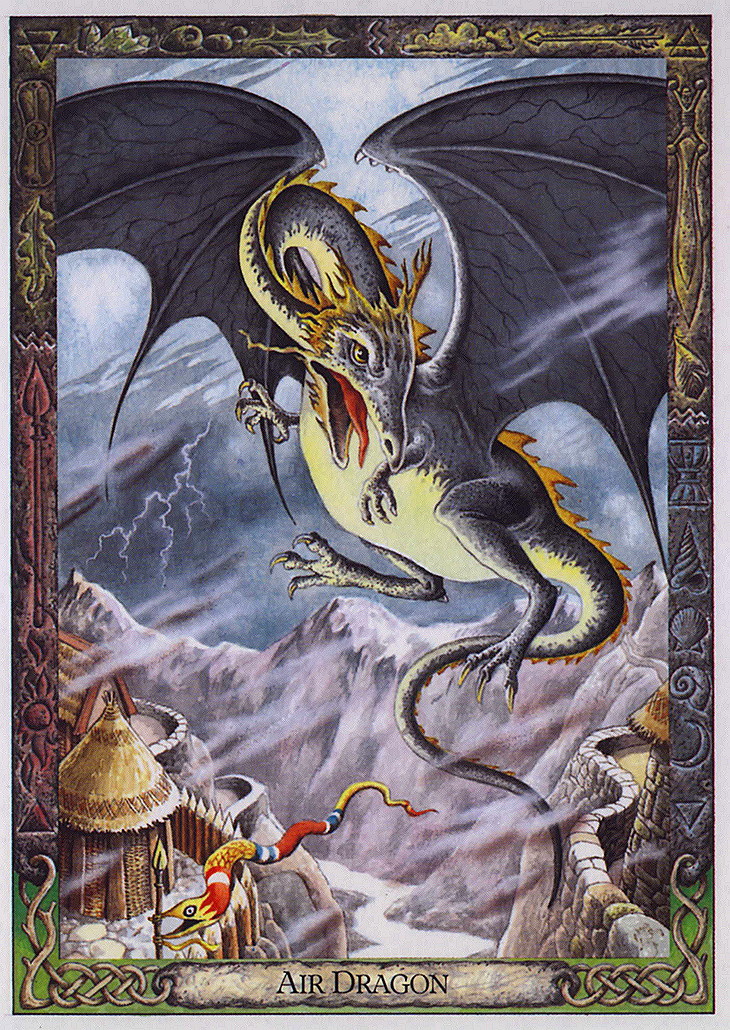
I say “met” because elemental encounters with beasts like dragons are gifts to celebrate. But was this draig-athar, the air dragon I first took it to be? Or maybe draig-teine, the fire dragon? Oh, too much mind, not enough listening.
The right wing was missing. I picked it up. Heavy as earth, and earthbound with that missing wing — probably brass, that fire metal composed of tin — and copper, a water metal. As a candle-holder, also linked with fire. All of them mined from earth. All four elements in one. Candle holder on the top of the head … in Chinese dragon lore, the dragon possesses a chimu, which enables it to fly. As the Han Dynasty scholar Wang Mu observes of the dragon: “Upon his head he has a thing like a broad eminence (a big lump), called chimu. If a dragon has no chimu, he cannot ascend to the sky.”
Let go of labels. But fly without one wing? Transmute! There was my augury, if I wanted one. Don’t let mere appearances decide your reality. Or, to make it short and sweet — fly anyway.
Five dollars lighter (paper standing in for coin — metal again), I carried the dragon from the shop to our car. Back in Vermont, he (she?) sits facing west on a window-sill near where I’m clearing a space for an altar. Just out the window is a thermometer. In other words, there’s enough symbolism here to keep me busy with metaphors and correspondences till both dragon and I dissolve into our component elements, the life force binding us long ago withdrawn.
Fly anyway.
Struggling with diet and energy levels and an ornery GI tract stillsorting itself out after radiation for a prostatectomy? Fly anyway.
A Druidic invitation to see possibility in limitation — the only place we find it. Fly anyway.
A one-winged brass dragon
What I want: “a return to how things used to be.” But what do I need, apparently, among other things? Greater compassion for myself, for others dealing with the body’s trials and challenges. Patience with changes already set in motion. Definitely a stronger capacity not to let mere appearances decide my reality.
That’s all you got?
No. But it’s more than I had.
A fair trade?
Wait and see.
Really? “Wait and see”?!
Can you imagine the missing wing — see it there, mirroring the left one, ready to sweep wide and catch the wind?
Yes, but–
So just because you can’t fly in one place, you stop flying in all the others?! Choose again.
Our bodies already know the Goddess – this is our oldest magic.
I relied on this insight in planning for the workshop at this year’s East Coast Gathering, whose theme was “Connecting with the Goddess.”
/|\ /|\ /|\
Goals and plans I had for the workshop:
The heart of the workshop is a hands-on look at various ways to make a physical book/scroll/altar object that explores/invites/incorporates ritual, ogham/runes, art, prayer, poems, questions, magic and daydreaming into a concrete “link” to the Goddess as we experience Her — or desire to experience Her. Think “book” as “portable paginated/folding/roll-up ongoing altar-in-process.” I’ll talk about inspiration, nudges, hints and ways to listen, inviting and hoping for participant sharing and input! The seed for the workshop comes out of the fact that I’m a prime example of somebody who doesn’t have a consistent Goddess practice (though She’s seeing to it that’s shifting, too), but when She wants my attention, She gets it, like with this book, and workshop.
It’s probably a good thing we don’t always hear how ambitious we sound. Young or old, you eventually learn to deal with the inevitable gap between vision and manifestation. If you’ve managed to hold on to any of that original and wonderful idealism of youth, you also realize that the gap isn’t a reason to despair, or to dispensewith vision, but rather a sign of just how important vision is.
The physical world, so important for manifestation, by its nature tends to lag behind the swiftness with which vision can appear. But that lag is precisely part of this world’s immense value: its inertia and density allow for greater permanency and resistance to change, so that we can experience the results of vision over time — and fine-tune it if we choose. Unlike in dream, where the subtle stuff of vision or imagination can wisp away so quickly, physical manifestation tries to linger.
/|\ /|\ /|\
The Goddess is generous. Or alternatively, if you prefer the cynical version, I belong to the OCD Order of Druids. Creativity, as the saying goes, is messy. I over-planned for the workshop, ending up with far more material than any mortal could begin to do justice to in a mere hour, and this post is my penance, or confession. Or further indulgence. And maybe — in the way it often arrives when we’re not paying attention, even in spite of ourselves — a spark of awen.
/|\ /|\ /|\
“Creating A Goddess Book,” with focus on “book” in order to free it from the psychological shrine many Druids, and Pagans generally, tend to put books in. Instead of paper, a book of leather, or metal, or cloth — individual sheets, or a single longer scroll. A nudge to try out the qualities of other substances than paper, than the admittedly inviting blank books on sale in chain bookstores, or even Ye Friendlie Lokal Paygan Shoppe.
Each workshop participant received a packet to practice with, consisting of a rectangle (approx. 3″ x 4″) of vegetable-cured leather and a similar-sized rectangle of .019″ aluminum, wrapped in a larger swath of canvas cut from a shop drop-cloth from Home Depot. A wood- and leather-burning tool, a few screwdrivers, some markers of various kinds, a few words about inspiration and the importance of working to manifest things on the physical plane as one powerful way to connect with the Goddess. Suggestions for inscribing/writing/ incising a short prayer, vow, magical name, etc. Reference tables of Ogham and runes for those who wanted to inscribe words with some privacy, as a personal meditation. I pointed out that you could cut all three materials with kitchen scissors. Besides the wood-burner, no fancy tools required. Then I shut up and let participants have at the materials. Done!
Hex Nottingham’s leather and metal “pages” — photo courtesy Hex Nottingham
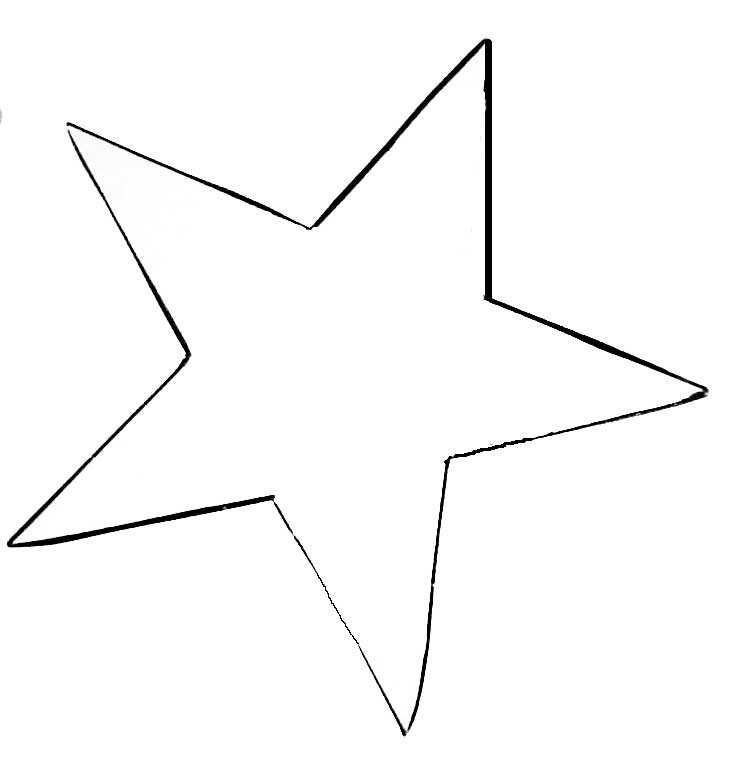
Except for the next flash of inspiration in the planning process, which would not let go: a “Nine-Fold Star of the Goddess” you can try out here at one of several websites that illustrate the steps.
/|\ /|\ /|\
A sampling, with some commentary and additions, from the workshop handout:
“Spirit must express itself in the world of matter or it accomplishes nothing. Insights of meditation and ceremony gain their full power and meaning when reflected in the details of everyday life.” — J. M. Greer, The Druidry Handbook, p. 138.
This world, here, is the realm of mystery. Spirit is simple — it’s this world that’s so surprising and complex in its changes and ripples, its folds and spirals and timings. Make something, I tell myself, labor with the body, and then I can often approach the Goddess more easily, dirt under my fingernails, sweat on my face. She likesbodies. I’m the one who keeps forgetting this, not her.
“Work with a Goddess long enough and you learn to hear Her call. You learn to pick her voice out above the noise of contemporary society, above the words of teachers and friends, and even above your own thoughts and feelings. Sometimes what you hear is not what you expect.” — John Beckett, “A Rite of Sacrifice,” Mar. 4, 2014.
“Shaper, you have made and shaped me. Honor and serenity are yours. I am your garment, you the indwelling spirit. Work with me in everything I do, that all may know you. Energizer, quicken me. Measurer, clear my path. Protector, guard me safely. Initiator, take my hand. Challenger, transform me. Savior, be my help. Weaver, make my pattern bright. Preserver, heal me. Empowerer, make me wise.” — adapted from Caitlin Matthews, Elements of the Goddess, p. 118.
Rilke’s fragment, a whole meditation in itself, or a daily morning prayer.
Oh, I who long to grow,
I look outside myself, and the tree
inside me grows.
— Rainer Maria Rilke
And Larkin’s poem “Water”:
Water
If I were called in
To construct a religion
I should make use of water.
Going to church
Would entail a fording
To dry, different clothes;
My liturgy would employ
Images of sousing,
A furious devout drench,
And I should raise in the east
A glass of water
Where any-angled light
Would congregate endlessly.
— Philip Larkin
After delighting in this poem, make an exercise of it. Choose one of the elements. It can be water, as in the poem, or one of the others. Finish the sentence: “If I were called in to construct a _____, I should make use of [element].” Keep going: a series of statements, a meditation on the one you just wrote, a free association. Whatever gets you putting words down. You can try this over several days with all the elements, or at a different pace, if you’re working with the elements on your own.
The ECG schedule this year put the Goddess Book workshop immediately after Thursday’s Opening Ritual, so people arrived still bubbling from the ceremonial jump-start for the weekend.
“In every world, in every form, in every way, I am near you, I uphold you, I comfort you, I guide you, I deliver you from each limitation until my freedom is yours. Your body is my chalice, your heart my echo, your form my shadow, your pulse my footstep, your breath my passing.” — from my own Goddess book.
/|\ /|\ /|\
1. Once you hold the Star of the Goddess in your hand, write the names of the four elements and Spirit, one near each of the points. Complete this step before reading further.
2. Which elements sit on either side of Spirit? Contemplate on their positions there. Are they elements that help support your spiritual life? Are they especially active? Are these the elements that need extra attention and balance?
3. Consider a section in your Goddess book for vows: experiment with them, not as harsh, unyielding obligations, but as tools for studying resolve, testing experience, practicing manifestation of your intent, and so on. They need not be “public” – write them in ogham, runes, etc. Start small and easily achievable.
/|\ /|\ /|\
Dedicating a Goddess Book: Blood, sweat, tears, spit, etc. can mark our books with our earthiness: a commitment to be honest with the Goddess about our path, its ups and downs, to remember her presence with us, and to acknowledge what we need, what we doubt, what we’re willing to work for – whatever feels right to include. Make a ritual of it. Do it quietly, simply, without fanfare, with silence making its own ritual. Or call out all the stops, bells and whistles. Then dance, feast and celebrate.
/|\ /|\ /|\
Allow a Goddess book — it could be a single sheet or “page” specifically intended for this purpose — to return slowly to the elements on an outdoor altar. Or bury it in the Mother’s good earth. Thus is the vow fulfilled that the Mother takes into Herself, as She will take all things back in time, and return them again.
“All things are holy to you. This book like all things lies among the faces you show to me; may I learn from you daily, drink deep from your well, and body you forth as your child.” — from my Goddess book.
/|\ /|\ /|\
A small ritual. Take a few deep breaths. Sing the awen, or other name or word that grounds and focuses you. Holding your cupped hands in front of you, say: “I make this altar for the Goddess, a space where she may act in my life.”
Holding the Star, or your journal, or other ritual object meaningful to you, or nothing else at all, ask yourself: What specific space or doorway exists in my life for the Goddess to manifest or to act in? Pay attention to hints, images and answers as they come.
/|\ /|\ /|\
And again: Our bodies already know the Goddess – this is our oldest magic.
[Related posts: Shinto & Shrine Druidry 1 | 2 | 3 || Shinto — Way of the Gods || Renewing the Shrine 1 | 2 || My Shinto 1 | 2 ]
Below are images from our recent visit to Spirit in Nature in Ripton, VT, some eight miles southeast of Middlebury as the crow flies. An overcast sky that day helped keep temperature in the very comfortable low 70s F (low 20s C). At the entrance, Spirit in Nature takes donations on the honor system. The website also welcomes regular supporters.
As an interfaith venture, Spirit in Nature offers an example of what I’ve been calling Shrine Druidry, one that allows — encourages — everyone into their own experience. Everyone who chooses to enter the site starts out along a single shared path.
The labyrinth helps engage the visitor in something common to many traditions worldwide: the meditative walk. The labyrinth imposes no verbal doctrine, only the gentle restraint of its own non-linear shape on our pace, direction and attention.
Beyond the labyrinth, a fire circle offers ritual and meeting space. Here again, no doctrine gets imposed. Instead, opportunity for encounter and experience. Even a solitary and meditative visitor can perceive the spirit of past fires and gatherings, or light and tend one to fulfill a present purpose.
Beyond the circle, the paths begin to diverge — color-coded on tree-trunks at eye-level — helpful in New England winters, when snow would soon blanket any ground-level trail markers. When we visited, in addition to the existing paths of 10 traditions, Native American and Druid paths branched off the main way, too new to be included on printed visitor trail maps, but welcome indicators that Spirit in Nature fills a growing need, and is growing with it.
The Druid Prayer captures a frequent experience of the earth-centered way: with attention on stillness and peace, our human interior and exterior worlds meet in nature.
The trails we walked were well-maintained — the apparently light hand that brings these trails out of the landscape belies the many hours of volunteer effort at clearing and maintenance, and constructing bridges and benches.
A bench, like a fire pit and a labyrinth, encourages a pause, a shift in consciousness, a change, a dip into meditation — spiritual opportunities, all of them. But none of them laid on the visitor as any sort of obligation. And as we walk the trail, even if I don’t embrace the offered pause, the chance itself suggests thoughts and images as I pass that the silence enlarges. I sit on that bench even as I walk past; I cross the bridge inwardly, even if it spans a trail I don’t take.
Sometimes a sign presents choices worthy of Yogi Berra’s “When you come to a fork in the road, take it.”
Perhaps it’s fitting to close with the North, direction of earth, stone, embodiment, manifestation — all qualities matching the interfaith vision of this place.
/|\ /|\ /|\
This is the 200th post at A Druid Way. Thanks, everyone, for reading!
In this post I enthuse about an early and continuing inspiration in my practice, and inevitably drag in other more idiosyncratic but hopefully still relevant associations along the way. So first, the “old magician” of the title. Scottish-born R. J. Stewart (b. 1949), a composer and author, is among the handful of contemporary practicing magicians whose work has done much to clear away accumulated Medieval and Victorian superstition and obscurity from magic. Why, for instance, should I intone or vibrate a particular name during a ritual, unless I know what it is and what it’s meant to accomplish?
Inspired by Celtic tradition and the teachings of his mentor Ronald Heaver (1900-1980), Stewart has developed practices designed to heal both magician and environment, among other reasons Druids may be interested in him. (His website deserves a visit if you want to learn more about him and his magic.) Along the way, with his Inner Convocations and Inner Traditions practices, he’s also helped to articulate a comprehensible theory of how magic works and can be effectively practiced, reflected in workshops, audio projects, and books like Living Magical Arts (hereafter LMA). That book was my first deep introduction to magic more than two decades ago, and I sit with my dog-eared copy in front of me now.
I value LMA in part because in it Stewart states basic truths succinctly and clearly — truths I find I need to come back to again and again. His work derives from personal experience. That means that unlike too many texts on “magic,” it is no pastiche of the work of others, or a mere catalog of magical correspondences that do little by themselves to advance actual magical practice. On the page, correspondences may look nice (or scary, depending on your own personal fear factor) and decorative for the armchair magician — and who isn’t one of those, with all the books on magic you could read and leave lying around to impress or intimidate guests?! But anyone half-way into a serious first-year study of magic can (re)create from experience their own list of equally effective correspondences. That doesn’t render them somehow invalid or useless, but shows that they’re dependent variables rather than constants. I wanted the constants, “unrealist” that I can sometimes be.
The fact that magical traditions worldwide share much common ground in things like tables of correspondences, while annoyingly refusing to agree on some presumed “basics,” like which direction is associated with which element, should of course give us a clue about what “matters,” what’s convention, and what the difference is. (For more on this, see Mike Nichols’ wonderful “13 Reasons Why Air Should Be North,” now promoted to the status of a “Sacred Text” at ISTA, the Internet Sacred Text Archive, which if you don’t know, you should know, if only to “waste” large amounts of time exploring.)
In LMA, Stewart offers overviews, rationales, and a coherent and profound magical philosophy for what he presents. As he defines it, “magic is a set of methods for arranging awareness according to patterns.” Worked with consciously, these patterns can help catalyze a transformation: “the purpose of magical arts is to enable changes within the individual by which he or she may apprehend further methods [of magic and transformation] inwardly.” This transformation can come about because “magic attempts to relate human consciousness to divine consciousness through patterns inherent in each.”
One reason for the magical dimension of human reality is simply that, as biologists have been discovering, we’re pattern-seekers and pattern-makers in profound ways. That’s how we make sense of the world, the “one great bloomin’ buzzin’ confusion” of things*. Find the pattern — or impose one, if nothing helpfully steps forward as a clue to whatever’s going on in front of our noses. Note that this predilection towards pattern-making is neither “good” or “bad” by itself — though it makes sense to assume, as at least a provisional view of reality, that if pattern-recognition is so successful as a survival strategy across so many species, it may actually have something to say about what “reality” is like, or how it comes across to consciousnesses still evolving to “grok” it.
For we share this “blueprint of consciousness” with other mammals, which is why I suspect we were ever able to domesticate animals like dogs, cats, sheep, geese, ducks, chickens, cows, horses, and pigs that have contributed so hugely to human civilization. They’ve served us as sources of food, clothing, transportation, power for machines, defense, pest control, and companionship. (Growing up, I remember a picture my dad displayed prominently in our house of five cows, each one representing a different breed of dairy cattle, with the caption “Foster Mothers of the Human Race.” We kept a herd of the familiar black and white Holsteins, the most common breed in the U.S., the breed most people think of when they think “cow,” but the other four breeds were still important enough to our farm family that as a child I also knew Brown Swiss, Jersey, Ayrshire and Guernsey cattle on sight.) If domestication isn’t a marvelous and far-reaching act of magic, what is?
So pattern-making is a “keeper” in our toolkit of magical strategies and techniques. I sense the shades of my born-again and otherwise Christian ancestors flinching and cringing and flagellating themselves. But magic is not a religion, and is certainly not anti-religion, but rather “a coherent set of traditions regarding human potential.” Or it’s becoming one, in the hands of competent modern magicians like Stewart. And he goes on to assert that the god and goddess images of religion are imaginative images “engineered to a high standard of performance.” What that means is that magicians, without ever denying the power or value of such images, work through and beyond them because they want to experience and work with the reality which lies behind images and which energizes them.
Stewart’s style both in LMA and later books is educated and not a breezy, colloquial one. If you’re hearing worship in my words, try again. I don’t expect everyone will (or should) agree with Stewart. I don’t always. But his common-sense, grounded, characteristically practical outlook is refreshing and unusual when you look at the sometimes careless, unscholarly, irresponsible and misleading books on the market which promise a lot and don’t deliver. Use your reason and intelligence fully, as Stewart would urge, because they’re tools too. He remarks late in the book, “if the intellect can be turned to prove to itself that conditioned life patterns are false, it becomes a useful tool towards liberation.” No quick fixes here (I’m usually suspicious of books which promise those anyway), but a path worthy of prolonged dedication.
/|\ /|\ /|\
Stewart, R. J. Living Magical Arts. Blandford Press, U.K. 1987.
*attributed to author and psychologist William James (1842-1910)

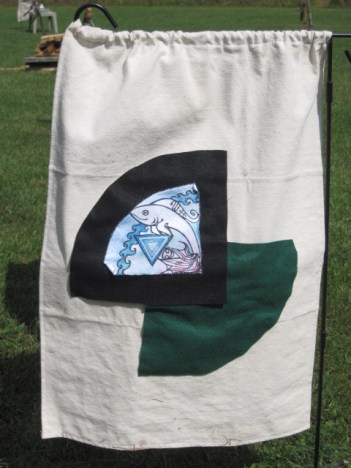
 “So how did the ritual go?”
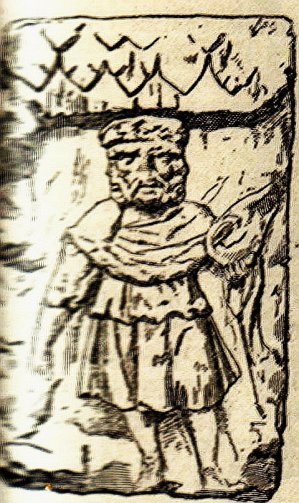
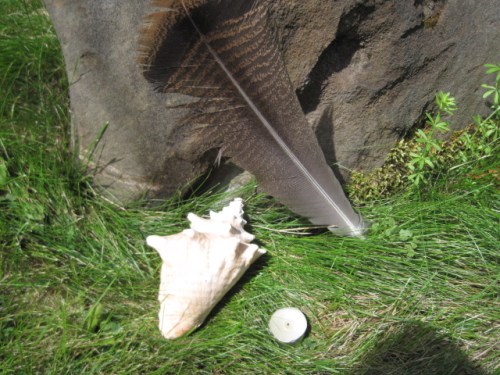

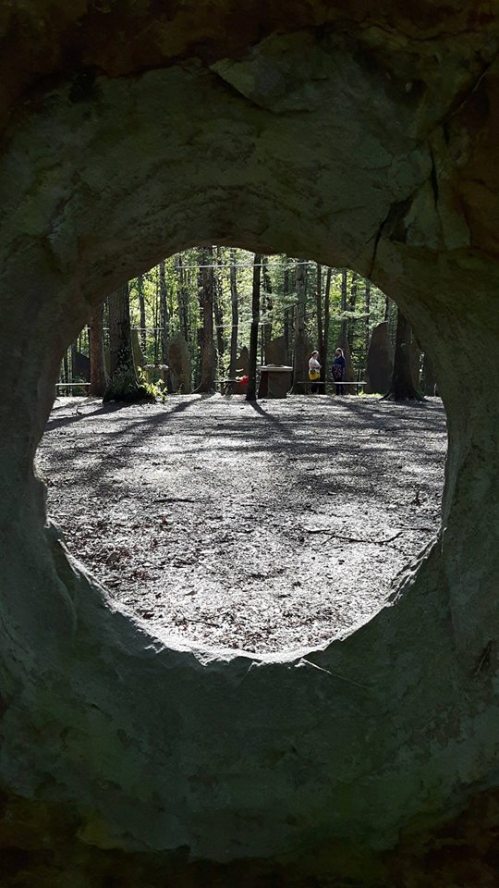
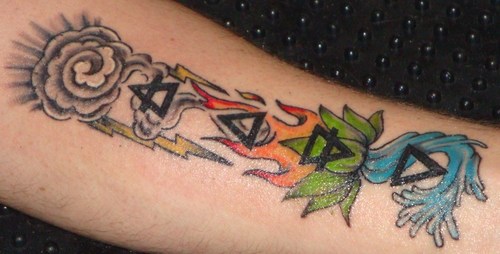

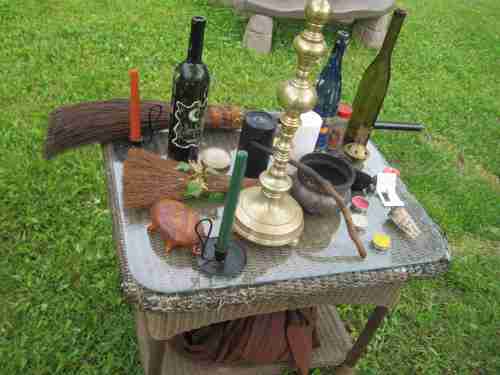

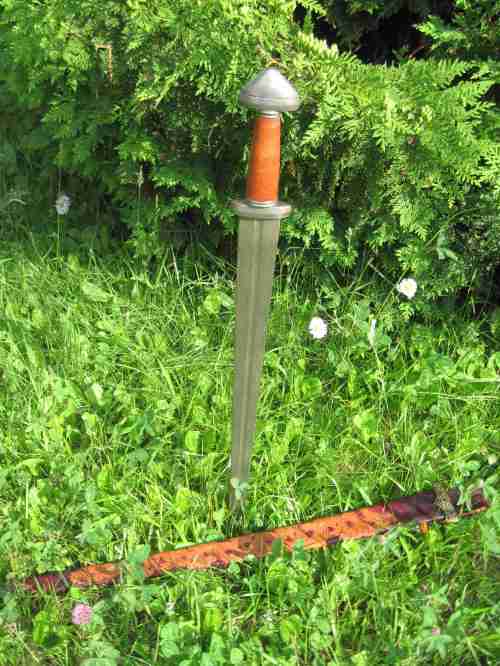


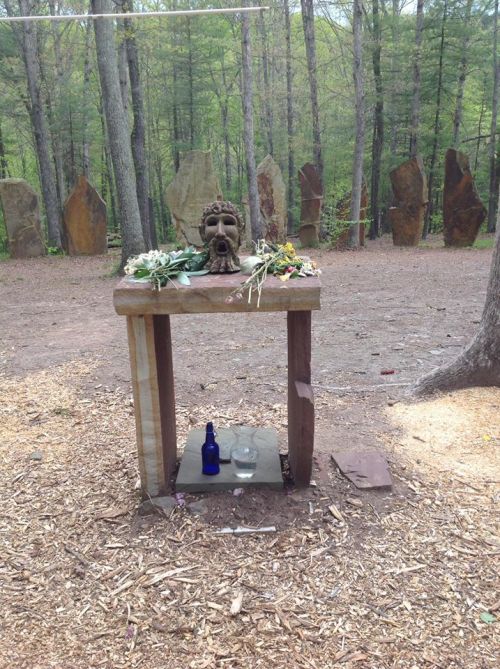

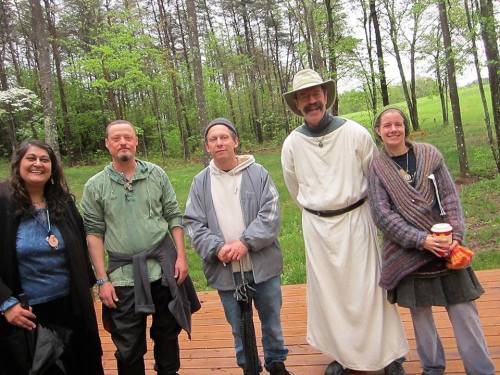

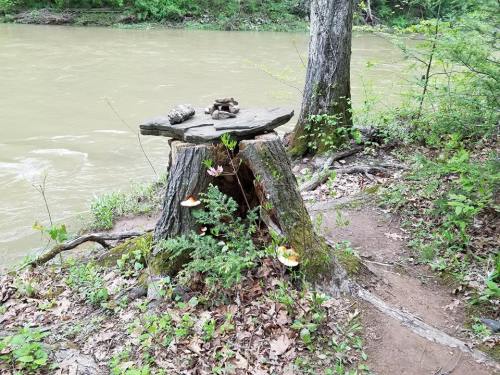

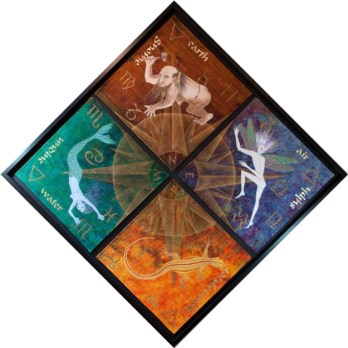 The energies of the elements feature widely in both Druidry and Christianity. John baptizes Jesus in the Jordan River, and water energies characterize the Bardic grade in many Druid traditions — inspiration and intuition, dream and emotion and astral awareness. The place of the Bard is the west, long associated with elemental water. Standing in the west, the bard also faces east — sunrise, beginnings, elemental air, perception and knowledge.
 What more earthy place to be born for a child of god — all of us children of the divine — than a stable? How fitting that in the traditional story, animals surround the holy newborn, with their hay and straw, along with the reek of dung and the puffs of animal breath. The Golden Tarot features the holy magician surrounded by beasts, implements and symbols of the elemental altar at his feet.
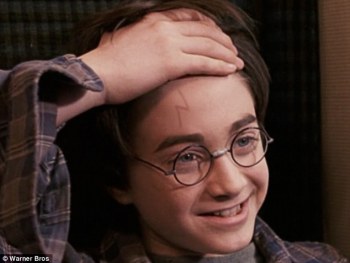 Trace the traditional order and position of each element in that sequence — North to East to West to South — and you describe a zigzag, a Harry Potter lightning flash.

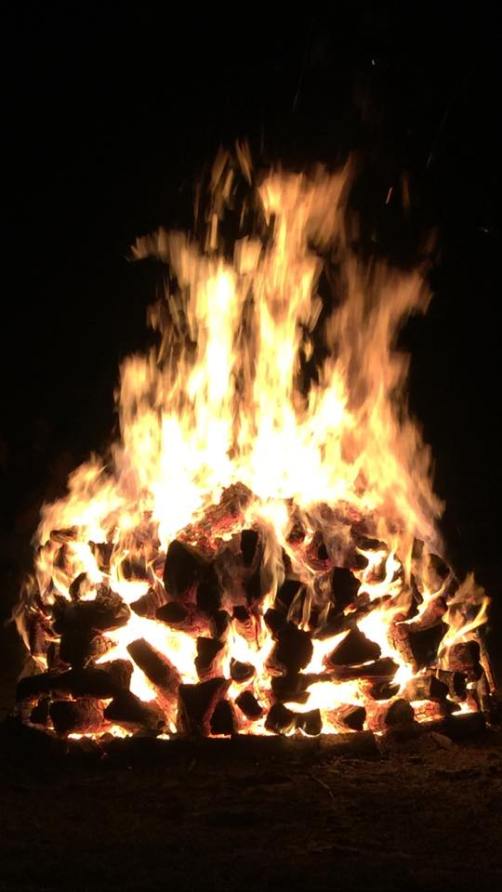


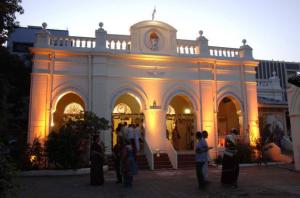
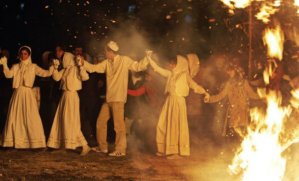
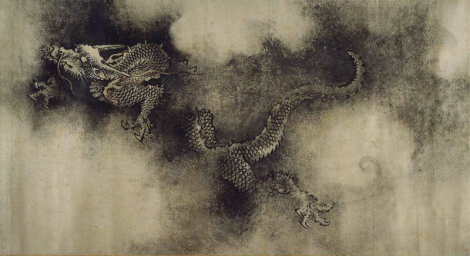
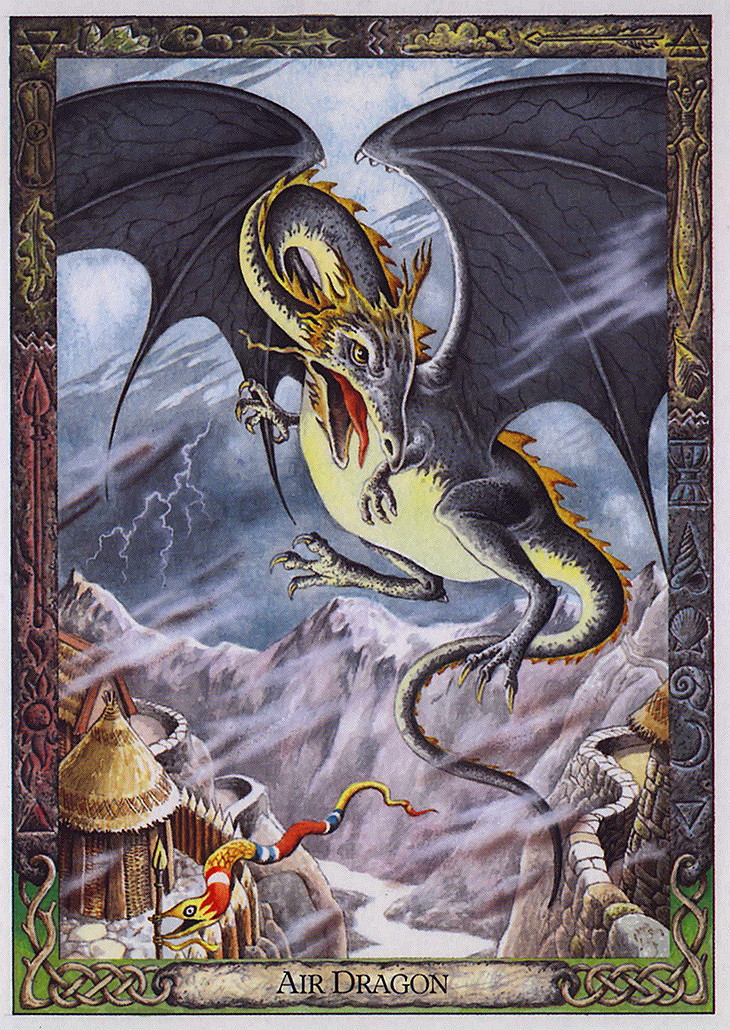


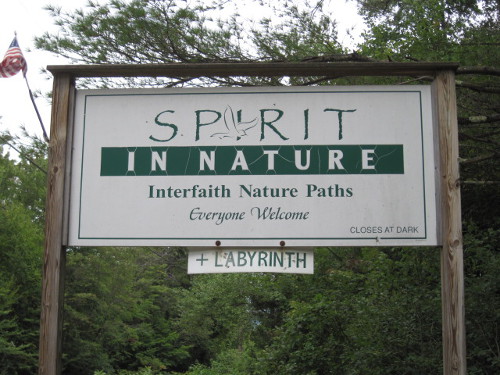

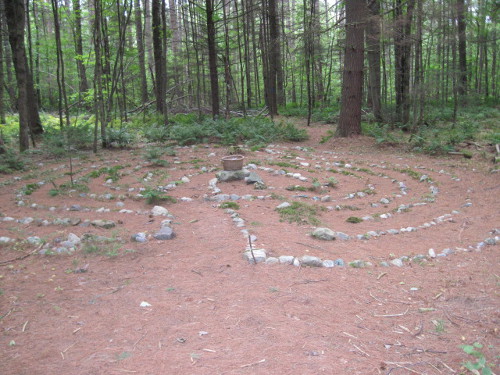
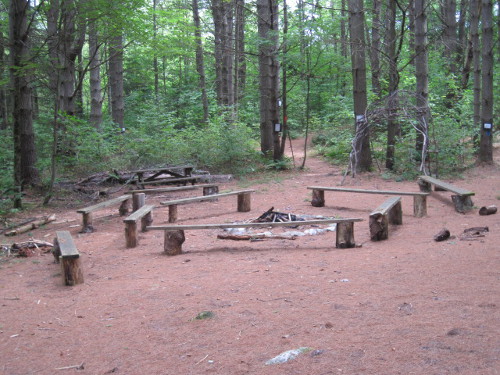
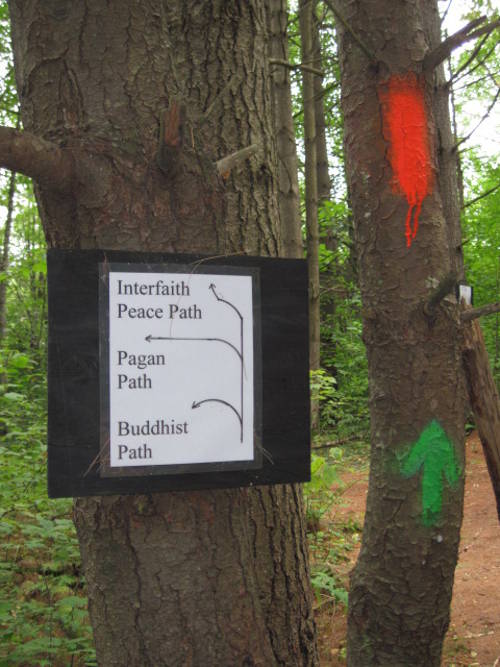
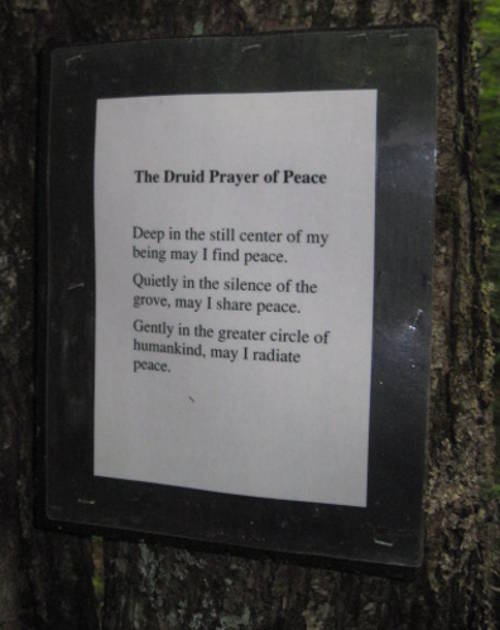
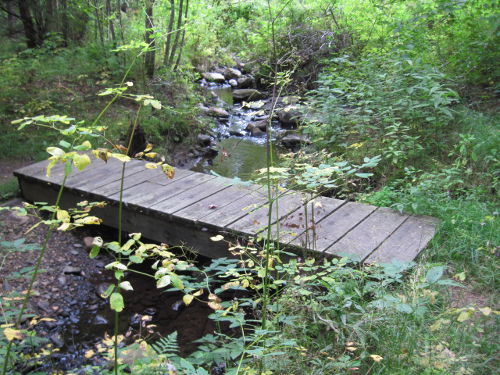
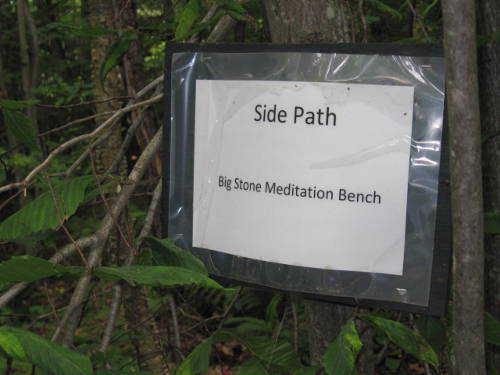
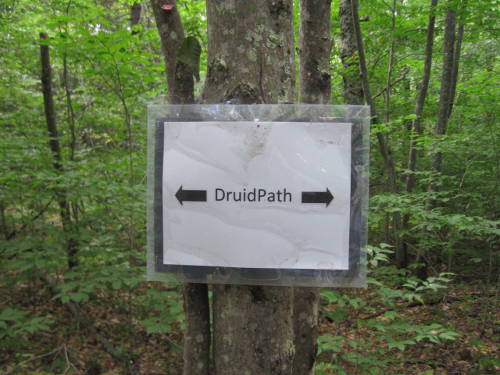
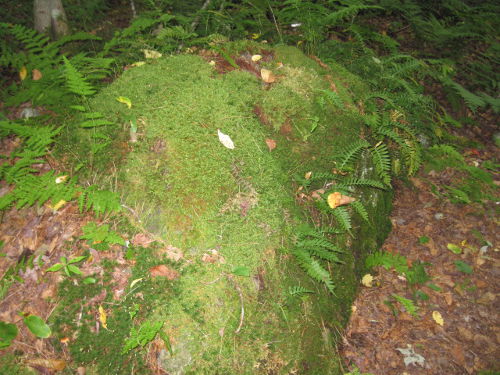
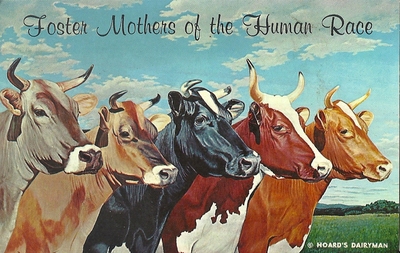


 A Druid Way


.jpg)