Archive for the ‘fire’ Category
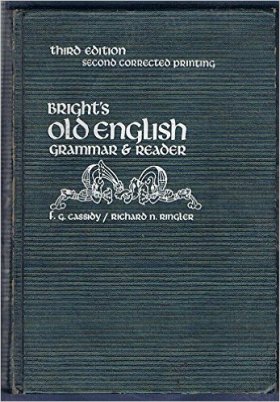 Years ago “in my other life”, while I was studying Old English, I found myself returning repeatedly to a dialog about 40 pages into our class text.
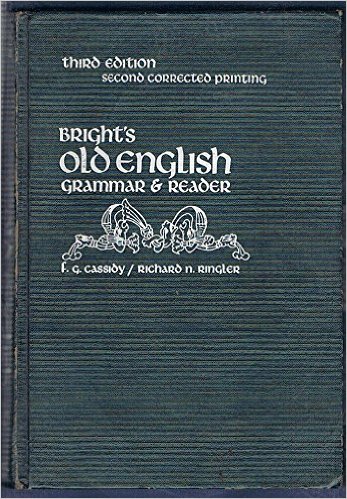
We were learning from Bright’s Old English Grammar and Reader, one of those standard hardcover textbooks you really can’t afford to buy new without a trust fund, the kind of book that generations of students dutifully underlined and annotated and highlighted and struggled through in one or another of its many editions and revisions. (My used copy has at least two previous owners, and the annotations and exclamation points to show for it.) Open to the copyright page and you see the first edition appeared in 1891, 125 years ago. The book itself is now part of a tradition.
Much of the text consists of tables of declensions and conjugations to memorize, alternating with Old English readings, both heavily footnoted. Fortunately, our teacher knew from experience that as long as you sought only to read, you could dispense with a good deal of that memorization. Learn a few core patterns and a high percentage of the time you could understand the grammar of the rest of what you read, recognizing a great deal by analogy and context.
But what about speaking? For “dead” languages — and what language is really dead if we still study it? — conversational examples are generally pretty thin on the ground. Language learning techniques have improved over the decades, especially for living languages. But many of those same strategies work just as well for tongues whose last speakers lived with horsecarts and cobblestones, hearthfires, oil lamps and emperors. So while you won’t necessarily be chatting right away (at least until you devise the needed vocabulary) about rap and drones and global warming, you can still access the living spirit of a language through conversation. So what amounted to a conversational fragment, really, still set my imagination turning.
Here’s that dialog in my translation, somewhat condensed. The tone of the original is just as heavy-handed and more than a little pedantic.
Teacher: Today we’re going to speak the language of the West Saxons. Are you ready? Tell me, students, what is that language?
Female Student: It’s the speech of our ancestors.
Teacher: That’s right. Our ancestors spoke it a thousand years ago.
Male Student: A thousand years ago? Those ancestors have been dead a thousand years? [Did he just wake up in class, halfway through the term?!]
Teacher: That’s right. Their bodies are dead.
Male Student: They don’t speak any longer. So then their language is just as dead as they are. What need is there for us to learn it?
You have to admit that this literal and clueless male student (in Old English, leorningcniht — in bad translation, “learning knight”) has a point. And if you’re thinking that Druidry, like any other human creation that once flourished and underwent a sea change over time, once faced a similar challenge, you’re not wrong. (History repeats itself to get our attention.)
If you’re wakeful enough this time of year, in spite of the tendency to drowsy half-hibernation that besets many of us in northern climes (or southern ones six months out from now), you may also be thinking that the problem is circular. I mean: As long as we see and treat something as dead, it has no life. We can always find someone or more than one asking plaintively, “What need is there for X?” But perceive it and use it as a living thing, and it revives in the doing. Our attention brings to it a very real and living fire.
That Old English dialog concludes in the next chapter:
Teacher: Well, young man, tell me now: everything that’s new, is it all good?
Male Student: No, sir. It’s not.
Teacher: And it’s also the same: not everything which is old is bad.
Male Student: Still, we can’t hear our ancestors.
Teacher: Miss, what do you say about this?
Female Student: I say that though we can’t hear their voices, nevertheless we can read their words.
Teacher: (Summarizes the deeds of the West Saxons). Now we are their heirs. If we don’t want to be foolish, let’s learn the speech of the West Saxons.
Now we are their heirs.
The ancient Hebrew people in exile in Babylon faced a similar problem: “How can we sing the Lord’s song in a strange land?” When the landmarks of your practice, whether cultural, geographical, psychic or some combination of all of these, are no longer present to support and sustain you along your path, the disorientation can be profound. What can you do?
“Still, we can’t hear our ancestors.” But it’s a choice to insist on being so literal.
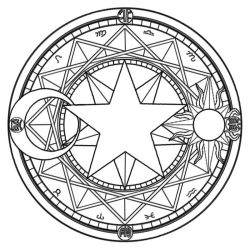 One of the weaknesses of modern practice, observes R J Stewart in his magisterial Living Magical Arts,
“is the literary emphasis on superficial technique; the right words, the correct authority, the proper way to extinguish a candle; such details are given quite spurious weight without recourse to the traditions in which they may have originated. Much of this nonsense is cut through cleanly by a simple magical law: seek to understand the tradition, and the techniques will regenerate within your imagination” (pg. 69).
In the case of a living tradition, the solution is self-evident: study the tradition. But what about traditions that have no living point of contact?
I take comfort from Stewart here: seek to understand the tradition. The effort itself can help lead us to sacred sites and other contact points, links, resources, people, spirits (and in the case of “dead” languages, texts and practices and those first faltering attempts to spell out our life in a new tongue).
Our attention is a living and revivifying fire. “The techniques will regenerate within your imagination.”
A gift of Yule. (And since I’ve been doing Old English: Glæd Ġeol! Glad Yule!)
The next post will examine how well this works in practice — for me, anyway — the only person I can understand from the vantage point of inside knowledge.
/|\ /|\ /|\
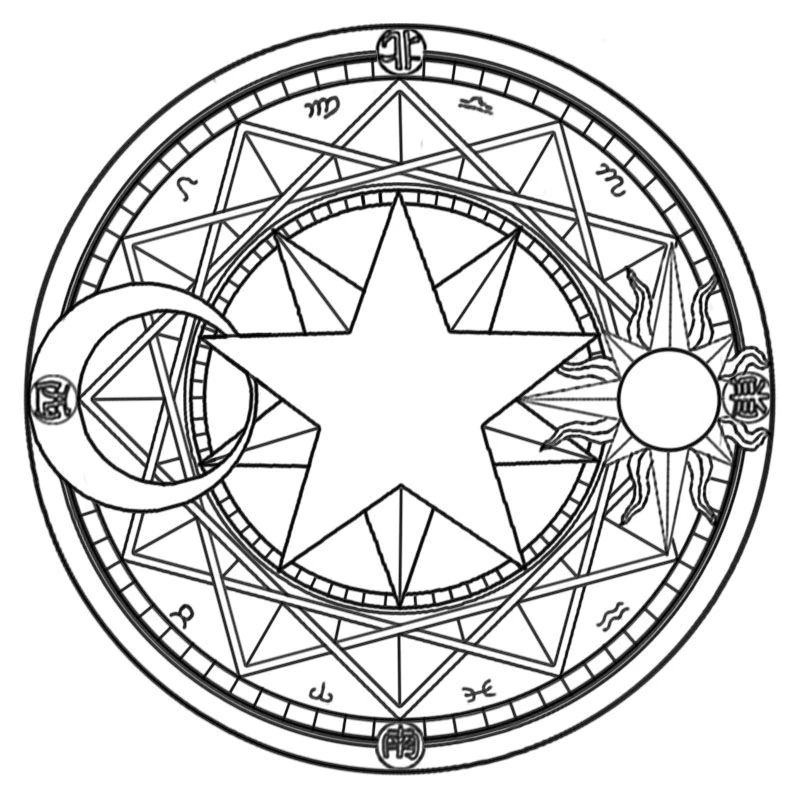
IMAGES: Bright’s grammar; magic circle.
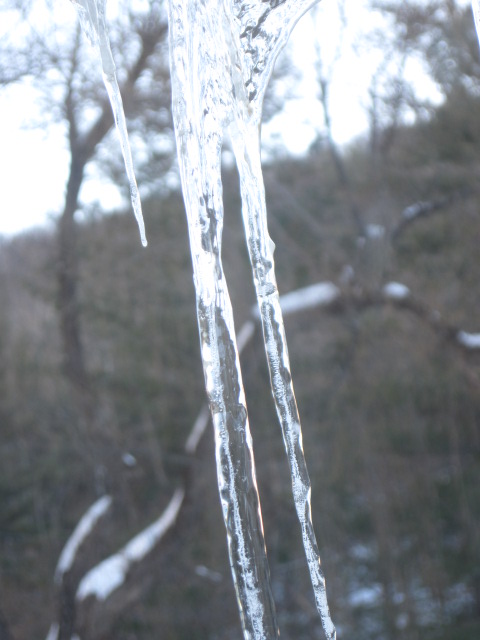
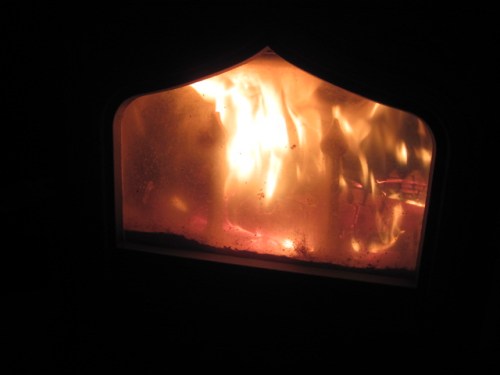
[Out our front window. Standing in place and turning 180 degrees, adjusting the camera for contrast, the window of our stove.]
The Atlantic online recently posted an article titled “Awesomeness is Everything” asserting that the experience of awe makes people kinder, tunes them in spiritually, and generally adjusts our overly-human world by clueing it in to larger ones all around it.
As vastness expands our worldview, it shrinks our ego. Awe makes spiritual and religious people feel a greater sense of oneness with others. And this oneness can make us nicer: Researchers found that inducing awe—say, by having people stand in a grove of tall trees—increased generosity, in part by stoking “feelings of a small self.” Awe also shapes our sense of time. One series of studies found that awe made time feel more plentiful, which increased life satisfaction, willingness to donate time to charity,and preferences for experiences over material products.
In winter, my physical world contracts significantly. True, a car could take me to other places, but unless I have the time and resources to drive south for most of a day, the climate will stay much the same. Ice and fire predominate, returning this human life more closely to proper proportions.
Mantle of Brighid about me,
Memory of Brighid within me,
Protection of Brighid around me
keeping me from harm,
from ignorance, from heartlessness,
this day and night,
from dawn till dark,
from dark till dawn.
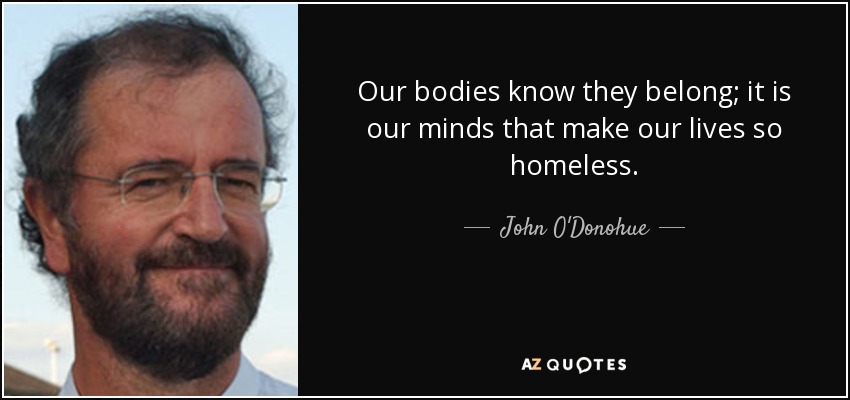
— John O’Donohue (adapted), The Four Elements, Transworld Ireland, 2010, pg. 109. (Also available in Random House editions.)
 I find in this poem a prayer most fitting for these darkening days till Yule and sun-return (never mind the ritual season). I add to it these visualizations as I say the opening triad of actions:
I see and feel the soft, warm cloak of Brighid furl and drop around me. I touch the weave of the cloth. I see the mantle extend outward, expanding the presence of Brighid all around me. “Beneath your mantle you gather us.”
I feel the memory of Brighid arrive as I whisper her name, her presence in thought and feeling, in the hearth-fire, in human warmth and affection, in animal caresses, in the sun’s brightness, hidden behind clouds or yellow in the December sky. Her mantle means we help manifest her, bring her here. “Remind us how to kindle the hearth.”
I feel the awen of the divine kindling in and around me whenever I put off despair and choose better. I sense the awen in others, upholding me even as I uphold them. I name them now, sitting or standing before any fire or flame or light, which I declare Brighid’s fire and flame and light.
O’Donohue writes: “One of the reasons for the modern poverty of spirit is amnesia. Even though there is a great harvest of healing energy within memory, people seem to make so little use of it. Rather than living from this harvest within them, they seem in the demented rush of modern life to live more out of their poverty” (pg. 113).
I hold my hands up before me and say more of this prayer-poem:
To keep it bright,
to preserve the flame,
your hands are ours,
our hands in yours
to kindle the light
both day and night.
And then I close, repeating the opening triad once or twice more as it feels right.
Mantle of Brighid about me,
Memory of Brighid within me,
Protection of Brighid around me.
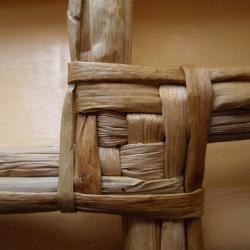
And I see Brighid’s cross, feel it foursquare, if I receive no other intimation of the goddess. I sein my thoughts, feelings, and actions of the day with it, sometimes continuously through the hours if I need it, to preserve, preserve, preserve the flame.
/|\ /|\ /|\
Image: Brighid’s cross. Pic w quote below:
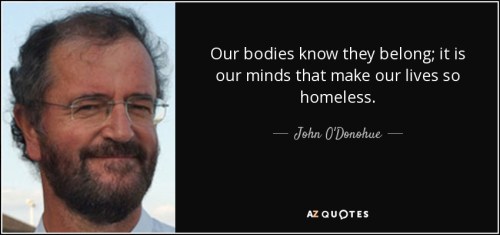
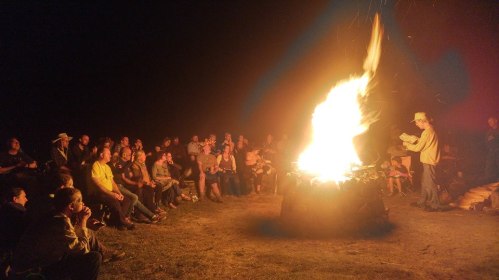
photo courtesy Hex Nottingham
Here’s the poem* I read by the fire** at Saturday night’s eisteddfod at ECG ’16. I’m also submitting it to Touchstone so you may run across it there if it’s accepted.
/|\ /|\ /|\
Drinking with the Ancestors
This poem ain’t no teetotal ritual:
let’s raise each cup, now, individual,
every mug and glass fill up now
and start drinking with the Ancestors.
Chat ‘em up — don’t merely greet ‘em;
the Dead are chummy when you meet ’em.
This good liquor in your tummy
gets you thinking: toast the Ancestors!
By and with the spirits near us —
“Don’t invoke us if you fear us” —
good advice, if we lose focus,
glasses clinking with the Ancestors.
A few more rounds, more pints and glasses,
may find us falling on our asses.
We strive to heed old voices calling
though we’re blinking at the Ancestors.
Yes, when morning comes, perhaps uncertain
if we dreamed or drew some curtain
on a world where it truly seemed
that we were linking with our Ancestors,
good liquor works its own true magic,
so never blame it – downright tragic,
if “hung over” is what we name it:
feel like sinking toward the Ancestors?
They come in all shapes, and in all sizes:
some are heroes, some no prizes
(they’re like us in all our guises)
familiar patterns – star or rose
tattoos we’re inking for the Ancestors.
Listen: they are singing, they are cussing,
they can advise us if we’re sussing
out the paths our lives might take
or leave shivers in their wake
that have us shrinking from our Ancestors.
Before a soul decides to curse them,
mutter charms that will disperse them
foil their harms and then reverse them,
all these stinking, damned Ancestors!
(Ah, do please remember)
we’re their consequence, not moot –
we got their genetic seed and root,
and we’re the payoff, crown and fruit,
we’re their future, built to suit,
so cheers to drinking with our Ancestors!
/|\ /|\ /|\
*I’d drafted the piece at ECG ’12, with the title/last line echoing in my head all weekend, then revised it a few days before this year’s Gathering.
**Hex remarked when he posted the image, “You have the complete attention of a long horned fyre god here, and it is blessing you with its aura.”
Some things glow with it,
flame-keepers, hearths we return to
whenever the world dulls and grays,
whenever bodies earth themselves
too deeply, those mornings each of us
can count all two hundred and six bones
stacked here in our skeleton houses.
Some things touch and smolder,
some kindle, flare once, no more.
Others spark and ignite everything around them.
Fire says: be done with cataloging. I
will renew. In the end, leave everything
for a bright journey. Burn
slow and long.
[ 1 | 2 | 3 | 4 | 5 | 6 | 7 | 8 | 9 | 10 | 11 | 12 | 13 | 14 | 15 | 16 | 17 | 18 | 19 | 20 | 21 | 22 | 23 | 24 | 25 | 26 | 27 | 28 | 29 | 30]
Beltane’s nearly upon us, and Alison Lilly’s most recent blogpost “Holy Adoration: Fire as Prayer” catches the energy behind this fire festival. For it is after all the day of the Fires of the Celtic solar god Bel, as even a traditional source like the BBC calmly informs us on their website. Some seasons you’ve just had enough of the world, and most of all yourself as a tame fire, to paraphrase Alison. Do check out her blog. She evokes and invokes Beltane in a personal and poetic meditation.
You too may long to spark, flare, burn and roar. Heap the kindling of my life and ignite, you whisper — or shout. Beltane is here for you.
Part of the Bardic training of Druid groups like OBOD and others, and much of the initial work in the outer grades of the magical Order of the Golden Dawn focuses on exploring and balancing the elemental energies flowing in and around us. We don’t — normally — want to burn up or out. But a healthy conflagration may burn off the wintry torpor that clings to our mood and outlook. Beltane is tonic, purgative, exhiliration, ignition.
The symbolism of the four physical elements of earth, water, air and fire persists in the cultural and magical imagination of the West because they express important truths about human life. They serve as a powerful shorthand for a whole cluster of ideas, images, experiences and memories, and their presence in ritual and story, song and myth will endure as long as we inhabit the same worlds where they manifest.
Their existence as physical entities endows them with the further potential to serve as sacraments. As always, though we keep forgetting, reverence and engagement are our choice, an opportunity like any other that we may welcome or reject. Here, too, fire can kindle us to possibility and change.
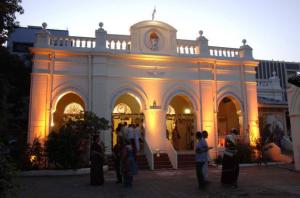
Fire Temple, Chennai, India
Further afield from Celtic-flavored European Druidry, fire is also central to the religious practice of Zoroastrians, the people popularly known as Parsis. Their Fire Temples offer just one more illustration of why reducing fire to an explanation like “rapid oxidation in an oxygen-rich environment like earth’s atmosphere” says nothing about our actual experience of fire, its light and warmth and flickering presence, and its long association in human consciousness with spiritual reality, energy and life. Anyone who’s experienced a good bonfire knows this to some degree. It’s our human art to extend these experiences and celebrate their effect as spiritual opportunities for transformation and joy.
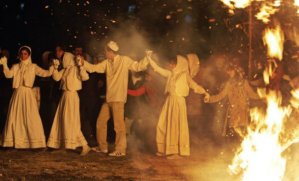
Zoroastrian Sadeh Festival
Fire calls to ancestral human memory. Cultural practices and beliefs that center on it only endow it with additional significance and power. Druids may say as part of ritual “Let us pray with a good fire,” an invocation traceable to the worship of the Hindu Agni and a hymn in the Rig Veda (Bk. 1, 26). And Wendy Doniger in her translation* notes that “When Agni becomes the priest, his robes are both the flames and prayers.” Thousands of years of human experience with fire has not dulled its power.
/|\ /|\ /|\
Whether you’re part of an OBOD Beltane gathering that follows the traditional ritual, or some other group and ceremony, or you’re a solitary celebrating alone in your own way, may you too share that shiver of anticipation and delight as the day and the rite opens for you at the birth of summer. May you and the Sun both grow in strength. “By the power of star and stone, by the power of the land within and without, by all that is fair and free, we welcome you to this rite of Beltane …”
/|\ /|\ /|\
IMAGES: Fire Temple in Chennai, India; Sadeh Festival;
*Doniger, Wendy. The Rig Veda: An Anthology. One Hundred Eight Hymns, Selected, Translated and Annotated. Penguin Books, 1981, pg. 100.
[Part 1 | Part 2 | Part 3 | Part 4]
Here we are, about two weeks out from Beltane/May Day — or Samhuinn if you live Down Under in the Southern Hemisphere. And with a Full Moon on May 3, there’s a excellent gathering of “earth events” to work with, if you choose. Thanks to the annual Edinburgh Fire Festival, we once again have Beltane-ish images of the fire energy of this ancient Festival marking the start of Summer.
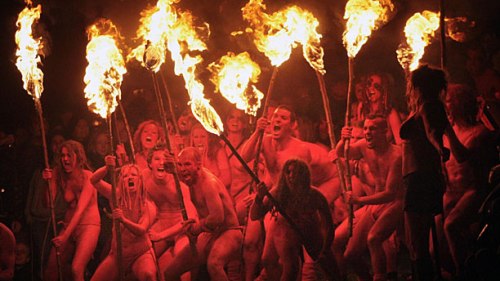
You may find like I do that Festival energies of the “Great Eight”* kick in at about this range — half a month or so in advance. A nudge, a hint, a restlessness that eases, a tickle that subsides, or shifts toward knowing, with a glance at the calendar. Ah! Here we are again!
For me, that’s regardless of whether I’m involved in any public gathering, or anticipating the time — because it’s never anything as rigid as one single day, but rather an elastic interval — on my own.
Yes, purists may insist on specifics, and calculate their moons and Festivals down to the hour, so as not to miss the supposed peak energies of the time. And if this gives you a psychological boost to know and do this that’s worth the fuss, go for it.
Below is Midnightblueowl’s marvelous painted “Wheel of the Year” (with Beltane at approximately 9 o’clock). With its colors and images, it captures something of the feeling of the Year as we walk it — a human cycle older than religions and civilizations. Or the cycle helped make us human, changing us as we began to notice and acknowledge and celebrate it. Try looking at it both ways, and see what comes of that.

Painted “Wheel of the Year” by Midnightblueowl. Licensed under CC BY-SA 3.0 via Wikimedia Commons
/|\ /|\ /|\
For today I take as divination the message below, which got promptly diverted to the spam folder: “This page decidedly has whole of the information I precious astir this dependent and didn’t make love who to ask.”
O crazy spam-scribe of the ethers, you stumbled onto one of the Great Paradoxes, best stated by William Blake, with his “infinity in the palm of your hand, eternity in an hour.” In that sense, yes: this page “decidedly has whole of the information” though it is also what it is, a finite thing. Like each of us, like the tools we use to connect to What Matters, like the sneaking suspicion that will not go away that there’s Something More. (Even if it’s just an explanation of what’s up with all these capital letters, anyway?)
And since Beltane’s approaching, there is indeed a “precious astir” at work as the energies swirl. Who or what is “dependent”?! The writer of the spam, not knowing “who to ask” and even acknowledging he “didn’t make love.” And all of us, dependent on the earth and each other.
I bless you, oh Visitor to this e-shrine, workshop, journal — the many-selfed thing that blogs can be and become. Who to ask? you inquire. Your inward Guide, always present and waiting for you where you are most true. Or the face of the Guide as it manifests again and again in your life — stranger at the market who smiles at you, bird that catches your eye, tune you find yourself humming.
How to get there, that place we all long for, that colors our thinking and follows and leads us in day- and night-dreams? Place that Festivals and holidays and time and pain and love and living all — sometimes — remind us of? Ah, you mean The Question! Love, gratitude, service — all things any of us can begin today; all things, it’s important to remember, we already do in some measure, or we would die. Too easy? Or you already know that? There’s also ritual — finite, imperfect ritual, our human dance. Mark, O Spirit, and hear us now, confirming this our sacred vow …
What’s your sacred vow? Don’t know yet? Got some work to do? Tune in to the next post for more.
[Part 1 | Part 2 | Part 3 | Part 4]
/|\ /|\ /|\
Image: Beltane Edinburgh Fire Festival; painted Wheel of the Year by Midnightblueowl
*The “Great Eight” yearly festivals with their OBOD names: Imbolc, Alban Eilir/Spring Equinox, Bealteinne, Alban Hefin/Summer Solstice, Lughnasadh, Alban Elfed/Autumn Equinox, Samhuinn, Alban Arthan/Winter Solstice. Many alternate names exist, and almost every one has a Christian festival on or near it, too.
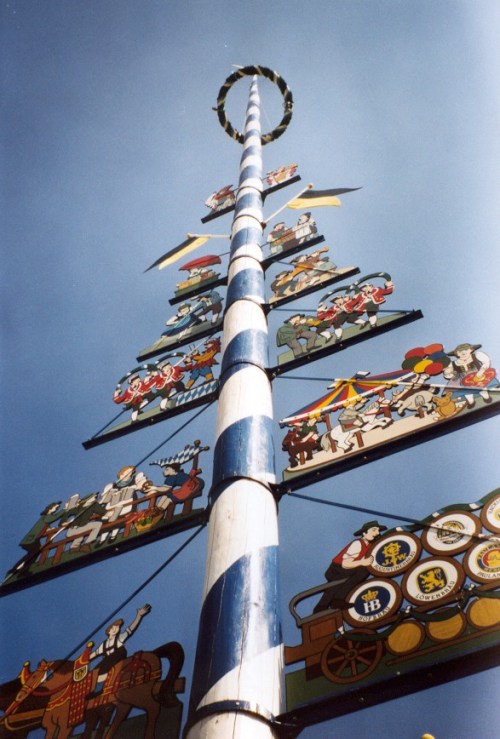
 Ah, Fifth Month, you’ve arrived. In addition to providing striking images like this one, the May holiday of Beltane on or around May 1st is one of the four great fire festivals of the Celtic world and of revival Paganism. Along with Imbolc, Lunasa and Samhain, Beltane endures in many guises. The Beltane Fire Society of Edinburgh, Scotland has made its annual celebration a significant cultural event, with hundreds of participants and upwards of 10,000 spectators. Many communities celebrate May Day and its traditions like the Maypole and dancing (Morris Dancing in the U.K.). More generally, cultures worldwide have put the burgeoning of life in May — November if you live Down Under — into ritual form.
 I’m partial to the month for several reasons, not least because my mother, brother and I were all born in May. It stands far enough away from other months with major holidays observed in North America to keep its own identity. No Thanksgiving-Christmas slalom to blunt the onset of winter with cheer and feasting and family gatherings. May greens and blossoms and flourishes happily on its own. It embraces college graduations and weddings (though it can’t compete with June for the latter). It’s finally safe here in VT to plant a garden in another week or two, with the last frosts retreating until September. At the school where I teach, students manage to keep Beltaine events alive even if they pass on other Revival or Pagan holidays.
 The day’s associations with fertility appear in Arthurian lore with stories of Queen Guinevere’s riding out on May Day, or going a-Maying. In Collier’s painting above, the landscape hasn’t yet burst into full green, but the figures nearest Guinevere wear green, particularly the monk-like one at her bridle, who leads her horse. Guinevere’s affair with Lancelot eroticized everything around her — greened it in every sense of the word. Tennyson in his Idylls of the King says:
For thus it chanced one morn when all the court,
Green-suited, but with plumes that mocked the may,
Had been, their wont, a-maying and returned,
That Modred still in green, all ear and eye,
Climbed to the high top of the garden-wall
To spy some secret scandal if he might …
 Of course, there are other far more subtle and insightful readings of the story, ones which have mythic power in illuminating perennial human challenges of relationship and energy. But what is it about green that runs so deep in European culture as an ambivalent color in its representation of force?
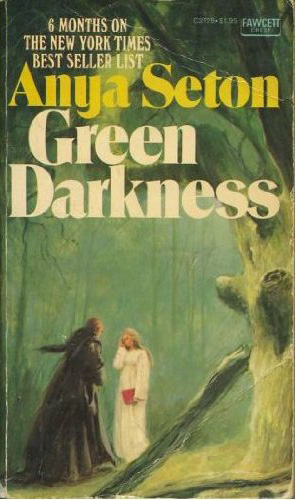
Anya Seton’s novel Green Darkness captures in its blend of Gothic secrecy, sexual obsession, reincarnation and the struggle toward psychic rebalancing the full spectrum of mixed-ness of green in both title and story. As well as the positive color of growth and life, it shows its alternate face in the greenness of envy, the eco-threat of “greenhouse effect,” the supernatural (and original) “green giant” in the famous medieval tale Sir Gawain and the Green Knight, the novel and subsequent 1973 film Soylent Green, and the ghostly, sometimes greenish, light of decay hovering over swamps and graveyards that has occasioned numerous world-wide ghost stories, legends and folk-explanations.
(Wikipedia blandly scientificizes the phenomenon thus: “The oxidation of phosphine and methane, produced by organic decay, can cause photon emissions. Since phosphine spontaneously ignites on contact with the oxygen in air, only small quantities of it would be needed to ignite the much more abundant methane to create ephemeral fires.”) And most recently, “bad” greenness showed up during this year’s Earth Day last month, which apparently provoked fears in some quarters of the day as evil and Pagan, and a determination to fight the “Green Dragon” of the environmental movement as un-Christian and insidious and horrible and generally wicked. Never mind that stewardship of the earth, the impetus behind Earth Day, is a specifically Biblical imperative (the Sierra Club publishes a good resource illustrating this). Ah, May. Ah, silliness and wisdom and human-ness.
We could let a Celt and a poet have (almost) the last word. Dylan Thomas catches the ambivalence in his poem whose title is also the first line:
The force that through the green fuse drives the flower
Drives my green age; that blasts the roots of trees
Is my destroyer.
And I am dumb to tell the crooked rose
My youth is bent by the same wintry fever.
The force that drives the water through the rocks
Drives my red blood; that dries the mouthing streams
Turns mine to wax.
And I am dumb to mouth unto my veins
How at the mountain spring the same mouth sucks.
The hand that whirls the water in the pool
Stirs the quicksand; that ropes the blowing wind
Hauls my shroud sail …
Yes, May is death and life both, as all seasons are. But something in the irrepressible-ness of May makes it particularly a “hinge month” in our year. The “green fuse” in us burns because it must in order for us to live at all, but our burning is our dying. OK, Dylan, we get it. Circle of life and all that. What the fearful seem to react to in May and Earth Day and things Pagan-seeming is the recognition that not everything is sweetness and light. The natural world, in spite of efforts of Disney and Company to the contrary, devours as well as births. Nature isn’t so much “red in tooth and claw” as it is green.
Yes, things bleed when we feed (or if you’re vegetarian, they’ll spill chlorophyll. Did you know peas apparently talk to each other?). And this lovely, appalling planet we live on is part of the deal. It’s what we do in the interim between the “green fuse” and the “dead end” that makes all the difference, the only difference there is to make. So here’s Seamus Heaney, another Celt and poet, who gives us one thing we can do about it: struggle to make sense, regardless of whether or not any exists to start with. In his poem “Digging,” he talks about writing, but it’s “about” our human striving in general that, for him, takes this particular form. It’s a poem of memory and meaning-making. We’re all digging as we go.
Digging
Between my finger and my thumb
The squat pen rests; as snug as a gun.
Under my window a clean rasping sound
When the spade sinks into gravelly ground:
My father, digging. I look down
Till his straining rump among the flowerbeds
Bends low, comes up twenty years away
Stooping in rhythm through potato drills
Where he was digging.
The coarse boot nestled on the lug, the shaft
Against the inside knee was levered firmly.
He rooted out tall tops, buried the bright edge deep
To scatter new potatoes that we picked
Loving their cool hardness in our hands.
By God, the old man could handle a spade,
Just like his old man.
My grandfather could cut more turf in a day
Than any other man on Toner’s bog.
Once I carried him milk in a bottle
Corked sloppily with paper. He straightened up
To drink it, then fell to right away
Nicking and slicing neatly, heaving sods
Over his shoulder, digging down and down
For the good turf. Digging.
The cold smell of potato mold, the squelch and slap
Of soggy peat, the curt cuts of an edge
Through living roots awaken in my head.
But I’ve no spade to follow men like them.
Between my finger and my thumb
The squat pen rests.
I’ll dig with it.

/|\ /|\ /|\
Beltane Fire Society image; Maibaum; John Maler Collier’s Queen Guinevere’s Maying; Soylent Green; Green Darkness; peat.
“When I wake up, the other side of the bed is cold,” says Katniss Everdeen, opening Suzanne Collins’ novel The Hunger Games as both narrator and protagonist, and launching a major theme and complex of imagery in the book.
 The widely-anticipated movie version of the novel arrives in a little over a month, in late March. The transformation of novel into film, with its inevitable directorial choices, budgetary limitations and too-specific casting of too-attractive young actors, will enchant some and disappoint others. No film can perfectly incarnate the word-world of a book to everyone’s satisfaction. (Here’s a link to an official trailer, in case you’re curious and haven’t yet seen it.) But it’s the novel I wish to focus on here.
The presence or absence of warmth is a recurring theme: heat — passion — violence — fire continually trade places throughout the story. Human warmth is, after all, what initially launches Katniss into the story. She volunteers on the spur of the moment to take the place of her beloved sister Prim, in the annual national lottery that selects a pair of youths from each of the twelve districts of a future North America and drops them into a televised death match. It’s blood sport with a vengeance.
**Spoiler Alert**
Prim is now safe, thanks to Katniss. But once Katniss is taken from her home, along with the other chosen youths who are now her rivals, she is pampered, buffed, polished, trained — and made over to show off an explicit fire imagery her stylists have conceived for her. As part of the lead-up to the competition, along with her rivals, she is interviewed and paraded on a nationally broadcast special program. But first, the finishing touches.
The team works on me until late afternoon, turning my skin to glowing satin, stenciling patterns on my arms, painting flame designs on my twenty perfect nails. Then Venia goes to work on my hair, weaving strands of red in a pattern that begins at my left ear … They erase my face with a layer of pale make-up and draw my features back out. Huge dark eyes, full red lips, lashes that throw off bits of light when I blink. Finally, they cover my entire body in a powder that makes me shimmer in gold dust. (127-128, pprbk. edition)
After the makeover, Katniss is dressed in her costume for the evening.
I can feel the silken inside as they slip it down over my body, then the weight. It must be forty pounds … The creature standing before me in the full length mirror has come from another world. Where skin shimmers and eyes flash and apparently they make their clothes from jewels … the slightest movement gives the impression I am engulfed in tongues of fire. (128)
I’m not perceiving something new here — other authors have gone further — there’s a book out titled The Girl Who Was on Fire which explores this theme in the novel in depth. Soon the gritty, violent death-match will replace this world of artifice and polish, and with the starkest contrast leave a trail of bodies dispatched bloodily, and even the survivors gashed, burnt, deafened, half-poisoned, dehydrated and starving. But the elemental world the novel has conjured persists in these sharply unglamorous forms. Fire of the spirit, the singular drive to survive. Fire of anger at the political motivation underlying the contest which deploys needless violence and death. Fire for cooking, fire as weapon, water for thirst and bathing, earth — a cave — for protection. Fire of human passion, whether genuine or contrived for show.
 The Hunger Games has already achieved the dubious distinction of banned book status, as if it advocated violence instead of patently demonstrating against it. But violence nevertheless permeates our world, and the younger readers who have taken this book to heart and made it into a phenomenon respond enthusiastically to a story and an author who acknowledges this fact honestly. Further, Katniss offers a strong female protagonist in place of the one-dimensional tag-along female romantic interest more typical of plot-driven stories with male leads. She manages to confront imminent death, make hard choices, and still retain her integrity in the face of what is after all adult manipulation and advocacy of institutionalized violence for political ends. The same human capacity for strong feeling that draws us toward violence can also lead us to bonds of strong affection and loyalty that are one antidote to violence. If that is fighting fire with fire, it often works.
Images: cover; banned.

 Years ago “in my other life”, while I was studying Old English, I found myself returning repeatedly to a dialog about 40 pages into our class text.





 A Druid Way

.jpg)


