Normally I steer clear of posts that border on the political, because they accomplish little except to harden opinions and positions, and sharpen arguments, without leading to a solution. But I make an exception in this post, for reasons I hope will become clear.
Especially in difficult times like these, we rely for perspective and direction on the supposed Wise Ones of our world, so it behooves them to be more cautious and informed in their public statements than this article by Tim Worstall in the U.K.’s Telegraph of May 16, 2012. The article byline for the author identifies him as “Senior Fellow at the Adam Smith Institute in London, and one of the global experts on the metal scandium, one of the rare earths,” so you’d think he’d exercise more care in an international forum like this newspaper. Here are his opening words, remarkable for their flippancy, misrepresentation and ignorance:
Apparently something terrible happens when we get to peak oil. I’ve never really quite understood the argument myself, but when we’ve used half of all the oil then civilisation collapses or something. I’m not sure why this should happen: we don’t start starving when there’s only half a loaf of bread left. But I am assured that something awful does happen.
That oil fields do get pumped out is obviously true – and also that you can have a good guess at when the ones we’re currently pumping will run out. The part I don’t get is the catastrophe. Some people seem to think that “peak oil” is when we can’t actually pump out a higher amount: that if we’ve got 70 million barrels a day, then that’s the most we can ever have, 70 million a day. Which is also called a disaster. Apparently this means that demand will move ahead of supply, which is simple sheer ignorance of the price system. There is no such thing as “supply” or “demand”. There is only either of them at a price. So, if there really is a limit on how fast we can pump the stuff up, the price will rise.
Worstall’s observations illustrate a confusion of realms, a common-enough misperception, and one we all make from time to time. In the case of a recognized expert, though, we expect greater wisdom and sense — he simply isn’t thinking things through. If you’re talking about the human economy of making brooms, say, or copies of DVDs of The Avengers, or oranges, or purebred Siamese cats, well and good. Then Worstall is right, and supply and demand will play out pretty much as he claims. Price is indeed the hinge between them. Even in extreme cases of demand, say for parts to an antique car that went out of production decades ago, you can probably find a craftsperson who will forge and finish them for you. Because they’re one-offs, they’ll cost you plenty. But if you want the parts badly enough, and you have the necessary cash or other acceptable medium of exchange, someone will oblige and supply your demand. That’s Econ. 101. It’s how modern economies are supposed to work. We get it.
But turn to the natural economy of the physical environment and a different picture emerges. The human and natural economies are NOT the same, and it’s dangerous to assume they are. In the natural economy, many materials aren’t renewable, and they’re simply not subject to supply and demand. A finite quantity exists, and when we use it up, there’s no more to be had, at any price.
Yes, we can grow more trees for wood, plant more fruits and vegetables for food. Many metals and other materials can be recycled, and so on. At least we’ve made a start on re-using and re-purposing. But oil and natural gas, to name just two resources, exist in finite qualities. Use more and we’ll run out sooner. Use less and they’ll last longer. Until we have replacements or other viable sources of energy, it’s only common sense to conserve and sip, rather than guzzle. It’s not like running out of milk and going down to the nearest convenience store, or ultimately putting another 10,000 cows into milk production. It’s rather as if I’m running out of air, trapped in a house-fire, or dragged underwater by a sinking ship. My demand for air may become extreme, but if the supply runs out, I eventually die. Life itself is finite, and no one has escaped its ending. No extensions for love or money. Demand for more hours or days has never obligated the universe to provide them, and no promise of payment or bribe suffices to keep our hearts beating a second longer. They stop.
In the case of oil and gas, unknown supplies no doubt still exist. Hydrofracking may prove helpful to buy us a little more time — or not. It may well go the way of ethanol, which for a while looked like the next sure thing. Yes, there’s petro-energy to be had, but if it costs more to produce than it’s worth, a different side of supply and demand switches on. For the geeks among us, that’s EROEI — energy returned on energy invested. We may have enough oil for 50 more years, or 75, or 100 or 200, but we willrun out. At that point, demand won’t budge the simple physical fact of an exhausted resource. At too high a price, it’s not worth it to anyone to extract a few more gallons or cubic meters. As in the Monty Python parrot sketch, it’s kaput, used up, done, extinct, no more.
Unlike many peak-oil doomsayers, I’m willing to concede that down the road we may well devise a marvelous technological solution to our mammoth energy needs. But until we do, it’s deeply stupid to continue using moreeach year, rather than less, now that production has recently peaked, even as peak oil historians predicted it would, six decades ago. How high must the price of a barrel of oil rise, and how much must the economies and households and peoples of the world suffer, until that’s clear?
But good things will emerge from this crisis, too. They may not be what we want, but as the Stones (almost) said, “we just might find we get what we need” in the moment. And there’s material for future posts.
I’ve been thinking over the last several weeks about the NBC midseason replacement series Awake. Maybe you’ve seen it or at least heard about it. (With the continually growing number of networks and choices, it’s become harder to find media experiences to talk about that most of us have in common. Besides, each of us is busy enough as it is, pursuing our own reality show called Life.)
In its eighth episode as of this post, the drama stars Jason Isaacs as L.A. detective Michael Britten. The premise is an intriguing one: after a car accident involving Britten, his wife and son, his reality splits: on alternating mornings he wakes to one life in which his wife Hannah survived the accident but not his son Rex, and in the other reality to a life in which Rex has survived, but not Hannah.
Britten is seeing two different therapists, one in each reality, each attempting to convince him that the current reality is the only “real” one. Britten experiences some “bleed-through” of both similar and different details and situations from each reality to the other. This naturally confuses him at times, but also gives him odd clues and insights into criminal cases he is working on, and into family dynamics that previously had too easily slid past him, until the accident forced him to pay more attention to the surviving family member in each alternate reality.
The series concept is a provocative one on several levels. Who among us hasn’t wondered at least a little how things would be different if (fill in your own blank here)? But more significant in Britten’s case is the immediate matter of his sanity. Is this schizophrenia? Can both of his realities be “real”? Or is one destined to win out, forcing the detective to abandon what one of his therapists insists is an unhealthy clinging to an illusion that is preventing Britten from healing? Which reality might prove “false” — one in which his wife Hannah is gradually coming to terms with their son’s death and planning a new life for them both, or the other, in which Britten is slowly learning to be a better father and to connect with the teenage Rex for the first time? Who could ask a person to choose between these two?
Both realities are internally consistent, and as far as Britten can tell, neither offers any evidence of being “more real.” Several spiritual traditions describe this consensus reality of ours as a kind of dream. By itself, however, that’s never been a useful piece of information as far as I can see. More helpful is guidance about how to live the dream fully and gracefully, and to shift in and out of this dream and other dreams. Most of us try not to leave a trail of dead bodies or broken lives behind us, and we generally see this as a good and admirable thing — not something we’d worry about if this were “merely a dream.”
I remember going through a period in my twenties of perhaps six months of very violent dreams, featuring me both as victim and perpetrator, but the experience didn’t disturb my waking world. No one arrested me as a serial killer, and the dream dismemberments, stabbings, shootings, beheadings and so on didn’t disturb my digestion or emotional life. (They didgive me useful material for contemplation and growth, but that’s a separate post.) The whole time of the dreams I was both actor and disinterested spectator in that curious way dreams can have. Obviously the quality of realities is different: waking and dreaming matter as category distinctions. If they didn’t, most of us would face radically different waking lives as a consequence of what we’ve dreamed! Unless you’re seriously repressing, you’ve had at least some dreams that would probably garner an X film rating. And if you don’t remember them, you’re missing out …
So if Britten is truly “awake” in both realities, he doesn’t need to choose, but simply to keep them straight. If you’ve ever had a lucid dream, however, in which internal consistency and conscious awareness approach, equal or even surpass that of waking reality, the distinctions can become much harder to sustain. Britten wears different colored wristbands to help him distinguish which reality he’s currently in. (Curiously, we don’t hear about his dreams. Perhaps “waking twice” consumes enough energy that he doesn’t need to — or can’t — dream.)
I have no idea how the writers of Awake intend to play this through. But it seems to me that it would be an enormous and series-destroying mistake ever to call one reality “true” and the other “false.” For better or worse, Britten logs parallel lives.
For most of us, both dream and waking are normally discontinuous. Each has its own interval of duration, and each eventually ceases before the other resumes. Under the influence of extreme fatigue, illness, or psychotropic substances, we can hallucinate and experience a “bleed-through” of dream-like perception into waking reality. For most of us this is a temporary state of affairs, perhaps useful or insight-producing up to a point, but not something we desire to sustain permanently. A good night’s sleep, a return to health, or the exit from an altered state of consciousness resets consciousness. Generally this is a good thing!
Yet when life goes flat, when the “same-old” of our daily experience — which is almost always a symptom of our inattention and soul-sickness — threatens to bore us literally to death, we need those moments of “awake now!” that may arrive with an accident, death in the family, close escape, or other major transition. Drama is punctuation to life — I don’t seek it habitually (unless I’m a bored teenage girl). Regular spiritual practice, as I’ve learned from experience (positive and negative, in the doing and in the ignoring), can both defuse the sense of “same old” and deliver us to smaller and less life-upsetting moments of insight, inspiration and — yes — transformation. We all dream of becoming more, better, greater, wiser, more loving, more fulfilled. Now is the always and only time to awaken in that dream — to “live twice,” awake both times.*
*Many of us “get” small bursts of at least the potential for transformation from art and music, or from sheer beauty on the playing field, or in a craft or manual skill. The Chinese poet Li Po exchanged poems with his contemporary and friend Tu Fu, and on one occasion exclaimed, “Thank you for letting me read your new poems. It was like being alive twice.”
Some teachings run you through their rituals.
Find your own way – individuals
know what works beyond the shown way:
try out drinking with the Ancestors.
Chat ‘em up — don’t merely greet ‘em;
such rites are chummy: do more than meet ’em.
(Spend your weekends with a mummy?)
But I like drinking with my Ancestors.
Another round of pints and glasses
will have us falling on our asses.
Leave off ritual when they’re calling —
you’ll be drinking with your Ancestors.
By and with the spirits near us —
“Don’t invoke us if you fear us” —
good advice: if you lose focus
though you’re drinking with your Ancestors,
in the morning you’ll be uncertain
if you just dreamed or drew the curtain
on some world where it more than seemed
that you were drinking with your Ancestors.
Alcohol works its own magic,
and not all good – it’s downright tragic
if you’re just hung over from what could
have been you drinking with your Ancestors.
They come in all shapes, and in all sizes:
some are heroes, some no prizes
(they’re like us in all our guises).
Listen: they are singing, they are cussing,
they can advise us if we’re fussing
over where our lives might go
or put on a ghostly show.
We’re the upshot, on the down low.
We’re the payoff, crown and fruit
(we got their genetic trash, and loot),
we’re their future – “build to suit.”
So start drinking with your ancestors.
* * *
Ancestor “worship” is sometimes a misnomer, though not always — some cultures do in fact pray to, propitiate and appease the spirits of the ancestral dead in ways indistinguishable from worship. But others acknowledge what is simply fact — an awful lot (the simple fact that we’re here means our ancestors for the most part aren’t literally “an awful lot”) of people stand in line behind us. Their lives lead directly to our own. With the advent of photography it’s become possible to see images beyond the three- or four-generation remove that usually binds us to our immediate forebears. I’m lucky to have a Civil War photo of my great-great grandfather, taken when he was about my age, in his early fifties. In the way of generations past, he looks older than that, face seamed and thinned and worn.
The faces of our ancestral dead are often rightfully spooky. We carry their genetics, of course, and often enough a distant echo of their family traditions, rhythms, expectations, and stories in our own lives — a composite of “stuff,” of excellences and limitations, that can qualify as karma in its most literal sense: both the action and the results of doing. But more than that, in the peculiar way of images, the light frozen there on the photograph in patches of bright and dark is some of the purest magic we have. My great-great-grandfather James looks out toward some indeterminate distance — and in the moment of the photo, time — and that moment is now oddly immortal. Who knows if it was one of his better days? He posed for a photo, and no doubt had other things on his mind at the time, as we all do. We are rarely completely present for whatever we’re doing, instead always on to the next thing, or caught up in the past, wondering why that dog keeps barking somewhere in the background, wondering what’s for dinner, what tomorrow will bring, whether any of our hopes and ambitions and worries justify the energy we pour into them so recklessly.
And I sit here gazing at that photo, or summoning his image from what is now visual memory of the photo, as if I met him, which in some way I now have. Time stamps our lives onto our faces and here is his face. No Botox for him. Every line and crease is his from simply living. And around him in my imagination I can pose him with his spouse and children (among them my great-grandfather William) and parents, and so on, back as far — almost unimaginably far — as we are human. Fifty thousand years? Two hundred thousand? A million? Yes, by the time that strain reaches me it’s a ridiculously thin trickle. But then, if we look back far enough for the connection, it’s the same trickle, so we’re told, that flows in the veins of millions of others around us. If we can trust the work of evolutionary biologists and geneticists, a very large number of people alive on the planet today descend from a relative handful of ultimate ancestors. Which seems at first glance to fly in the face of our instinct and of simple mathematics, for that spreading tree of ancestors which, by the time it reaches my great-great-grandfather’s generation, includes thirty people directly responsible for my existence (two parents, four grandparents, eight great-grandparents and sixteen great-great grandparents). Someone called evolution the “ultimate game of survivor.” And now I break off one line, stalling forever this one particular evolutionary parade, because my wife and I have no children.
The poem of mine that opened this entry, “Drinking with the Ancestors,” suggests we can indeed meet and take counsel with members of this immense throng through the exercise of inhibition-lowering and imagination-freeing imbibing of alcohol. Of course there are also visualization exercises and still other techniques that are suitably alcohol-free — more decorous and tame. Depending on who you want to talk to among your clan, you can have an experience as real as most face-to-face talks with people who have skin on. The difference between us in-carnate and ex-carnate folks is indeed the carne. No sudden dispensation of wisdom automatically accrues to us just because we croak. A living idiot becomes a dead idiot. Likewise a wise soul is wise, in or out of flesh.
It seems fitting to end with an experience of the ancestors. Not mine, this time — I keep such things close, because often when we experience them, they are for us alone, and retain their significance and power only if we do not diminish them by laying them out for others who may know nothing of our circumstances and experiences. Wisdom is not a majority vote. Even my wife and I may not share certain inner discoveries. We’ve both learned the hard way that some experiences are for ourselves alone. But it’s a judgment call. Some things I share.
So in my place I give you Mary Stewart’s Merlin, in her novel The Hollow Hills*, recounting his quest for Excalibur, and an ancestor dream-vision that slides into waking. The flavor of it captures one way such an ancestral encounter can go, the opposite end of the easy beery camaraderie that can issue from making the libations that welcome ancestral spirits to a festival or party, as in my poem. Note the transition to daytime consciousness, the thin edge of difference between dream and waking.
I said “Father? Sir?” but, as sometimes happens in dreams, I could make no sound. But he looked up. There were no eyes under the peak of the helmet. The hands that held the sword were the hands of a skeleton … He held the sword out to me. A voice that was not my father’s said, “Take it.” It was not a ghost’s voice, or the voice of bidding that comes with vision. I have heard these, and there is no blood in them; it is as if the wind breathed through an empty horn. This was a man’s voice, deep and abrupt and accustomed to command, with a rough edge to it, such as comes from anger, or sometimes from drunkenness; or sometimes, as now, from fatigue.
I tried to move, but I could not, any more than I could speak. I have never feared a spirit, but I feared this man. From the blank of shadow below the helmet came the voice again, grim, and with a faint amusement, that crept along my skin like the brush of a wolf’s pelt felt in the dark. My breath stopped and my skin shivered. He said, and I now clearly heard the weariness in the voice: “You need not fear me. Nor should you fear the sword. I am not your father, but you are my seed. Take it, Merlinus Ambrosius. You will find no rest until you do.”
I approached him. The fire had dwindled, and it was almost dark. I put my hands out for the sword and he reached to lay it across them … As the sword left his grip it fell, through his hands and through mine, and between us to the ground. I knelt, groping in the darkness, but my hand met nothing. I could feel his breath above me, warm as a living man’s, and his cloak brushed my cheek. I heard him say: “Find it. There is no one else who can find it.” Then my eyes were open and it was full noon, and the strawberry mare was nuzzling at me where I lay, with her mane brushing my face (226-7).
/|\ /|\ /|\
*Stewart, Mary. The Hollow Hills. New York: Fawcett Crest Books, 1974.
“I heard you saw the movie yesterday. So what’s it about?” “Jean and Bill are arguing again. What’s that about?” “OK, he tried to explain and it still doesn’t make sense to me. But you understand those kinds of things, so tell me about it.” And there’s the old-time newspaper seller’s cry: “Extra, extra! Read all about it!!”
This elusive quality of aboutness is core to so many of our ways and days. We spend years in education (and life) dividing things up into their parts and labeling them, and then at least as much time putting them back together, searching for the links and connections between them, so that we can “grasp” them, “get” them, understand them. Re-assemble and it might resemble what it used to be. We crave community, fellowship and friends along the way at least as much as we prize our American individualism and independence and self-reliance. We long for aboutness.
About is near, close, approximately, almost — good enough for daily reckoning, for horseshoes and hand-grenades. It’s about five miles. We’re about out of time. About is sometimes the guts, the innards, the details, all the juicy pieces. About is also the whole, the overview, the heart of the matter. If you know about cars or cooking, you don’t need to know every specific model or recipe to “know your way around them.” What you don’t know you can usually pick up quickly because of family similarities they share. If you under-stand, you know the sub-stance. Position yourself in the right place and time (apparently beneath what you desire to comprehend, according to the peculiar English idiom), and you’ll get the gist.
Layers, strata. This onion-like reality keeps messing us up with its levels. Its aboutness won’t stay put as just one thing, but consists of stuff piled on other stuff below it. Often you gotta dig down through the fossil layer to reach the starting point. Peel it all away, though, and sometimes all you have is peel. You may know the simple and lovely blessing — there are several versions extant:
Back of the loaf is the snowy flour,
back of the flour is the mill;
back of the mill is the wheat and the shower,
the sun and the Maker’s will.
Sometimes if you pay attention you can catch it like a melody on the wind, something that lingers behind the sunlight. We know more than we know we know. This is the natural mysticism that comes with living, however hard we may try to ignore it. This is the aboutness that underlies our lives and our days, while we scurry from one thing to another, in pursuit of happiness. So it follows us, shaking its head at our antics. It could catch up to us if we stopped, looked and listened, if we made space for it to live with us, rather than renting out a room next door, trying vainly to catch our attention.
Robert Frost is one of my go-to guys for insight, as readers of this blog discover. In “Directive” he begins with that sense of constriction, and our partial memory of a past that shines brighter because of what we’ve forgotten about its difficulties. Yes, the poem’s “about” dying New England towns and abandoned houses, but also about us:
Back out of all this now too much for us,
Back in a time made simple by the loss
Of detail, burned, dissolved, and broken off
Like graveyard marble sculpture in the weather …
If there’s a place and home for us, he goes on to say, it’s reachable only by misdirection. “You can’t get there from here,” because the “here” has no more substance than anything else. It won’t serve as a starting point. Time has wrenched it free of its moorings. Things drift.
The road there, if you’ll let a guide direct you
Who only has at heart your getting lost,
May seem as if it should have been a quarry—
Great monolithic knees the former town
Long since gave up pretense of keeping covered.
And there’s a story in a book about it …
Yes, there’s a story, maybe several stories, a hint or two that maybe somewhere else, or someone else, will do it for it us, will finally deliver to us what we’ve been seeking. The stories of art, of music, of the great myths we want to believe even when we can’t. Sometimes the hints are maddening, sometimes the only comfort we can lay hands on in our seeking.
Make yourself up a cheering song of how
Someone’s road home from work this once was,
Who may be just ahead of you on foot
Or creaking with a buggy load of grain.
Aren’t we almost there? Or is it merely illusion? Is this a path anyone else has traveled and succeeded in the end, or our own unique interstate roaring straight toward disaster? What lies are we telling ourselves today? And are we waking up to them at last? You gotta get in to get out, go the Genesis lyrics (the band, not the Bible). You have to get lost in order to be found. That experience is necessary, though painful. Not one of us is the son who stays at home. We’re all prodigals.
And if you’re lost enough to find yourself
By now, pull in your ladder road behind you
And put a sign up CLOSED to all but me.
Then make yourself at home.
Might as well get comfortable being lost, because it’s gonna last a while. Though we never can be wholly comfortable in illusions. No end in sight. The problem is that we don’t know this until the end actually IS in sight. What illusions do we need that will actually bring comfort for a time, at least? They’re not illusions until we outgrow them, live through and past them. In fact we need truths now that only later become illusions precisely because they will be too small for us anymore.
First there’s the children’s house of make-believe,
Some shattered dishes underneath a pine,
The playthings in the playhouse of the children.
Weep for what little things could make them glad.
Then for the house that is no more a house,
But only a belilaced cellar hole,
Now slowly closing like a dent in dough.
This was no playhouse but a house in earnest.
Our house in earnest, playhouse in our childhood, has collapsed, or will. Our old selves won’t do. They don’t fit. We shuffle them off like snake-skins that bear the imprint of what lived in them, down to scar and scale, and we mourn and mistake them for ourselves, another illusion, standing there in the mirror that consciousness provides.
Who then can show us the way? From this perspective, we need, not salvation, but someone to show us where we can walk on our own two feet. Not out of vanity or stiff-necked pride, but because we have to make our way ourselves. Otherwise it doesn’t stick. It vanishes like a dream on waking. Yes, others have carried us there briefly, by art or alcohol or sex or those moments of ecstasy that come on us unannounced and unsought, glimpses of home through the fog.
Tolkien has Gandalf and Pippin touch on it briefly in The Lord of the Rings:
Gandalf: The grey rain-curtain of this world rolls back, and all turns to silver glass. And then you see it.
Pippin: What? Gandalf? See what?
Gandalf: White shores … and beyond, a far green country under a swift sunrise.
Frost continues, wise old poet-guru. (Sigmund Freud once remarked, “Everywhere I go, I find that a poet has been there before me.”)
Your destination and your destiny’s
A brook that was the water of the house,
Cold as a spring as yet so near its source,
Too lofty and original to rage.
We keep flowing — we’re not meant to stay put. Heaven as stasis, as a static destination, an endpoint, a final arrival, nothing beyond, is a false heaven. Enchantments of different kinds surround us. Some deceive, and some actively conceal what we know we must have in order to live at all. Yet what we seek also and paradoxically lies hidden in plain sight. The water was “the water of the house.” It’s right here. What can we use to gather it up?
I have kept hidden in the instep arch
Of an old cedar at the waterside
A broken drinking goblet like the Grail
Under a spell so the wrong ones can’t find it,
So can’t get saved, as Saint Mark says they mustn’t.
(I stole the goblet from the children’s playhouse.)
Here are your waters and your watering place.
Drink and be whole again beyond confusion.
Be whole again. What was lost is now found. Restoration. Return to what is native to you — your watering place. This is the command that drives us onward, the quest buried in our blood and bones. Reach for it. Whole again beyond confusion.
Yes, secrets can be dangerous. But live long enough and you notice that most things which may be dangerous under certain conditions are often for that very reason also potential sources of valuable insight and energy. Poisons can kill, but also cure. Light can disinfect, and also burn. Different societies almost instinctively identify and isolate their favorite different sources of energy as destructive or at the least unsettling, just as the physical body isolates a pathogen, and for much the same reason: self-preservation.
For many Americans and for our culture in general, sex is one great “unsettler.” We need only look at our history. Problems with appropriate sexual morality have dogged our culture for centuries, and show no signs of letting up, if the current gusts of contention around contraception, abortion, homosexuality and abstinence education mean anything at all. Wall up sexuality and let it out only on a short leash, if at all, our culture seems to say. Release it solely within the bonds of heterosexual monogamy. Then you may escape the worst of its dangerous, unsettling, even diabolical power. You can identify this particular cultural fixation by the attention that even minor sexual miss-steps command, surpassing murder and other far more actually destructive crimes. Let but part of a breast accidentally escape its covering on TV or in a video, even for a moment, and you’d think the end of the world had truly arrived.
a Mikvah -- ritual bath
Other cultures diagnose the situation differently and thus choose different energy sources to obsess about and wall up, or shroud in ritual and doctrine and taboo. For some, it’s ritual purity. At least some flavors of Judaism focus on this, with the mikvah or ritual bath, various prohibitions and restrictions around menstruation, skin diseases and other forms of impurity, and the importance of continuing the family along carefully recorded bloodlines. The first five Biblical books, from Genesis to Deuteronomy, list such practices and taboos in often minute detail.
The Bible also testifies, in some of its more well-known stories, to the fate of individuals like Jacob’s brother Esau, who married outside the family, and thus forfeited God’s blessings and promises that came with blood descent from their grandfather Abraham. And one need only consider Ishmael, son of Abraham but not of an approved female, who is driven out into the wilderness with his mother Hagar, a slave and not a Hebrew. This Jewish Biblical story accounts for the origins of the Muslims, descendants of Ishmael or Ismail. (The Qur’an, not surprisingly, preserves a different account.) The flare-ups of animosity and sometimes visceral hatred between Jews and Muslims thus originate quite literally in a family inheritance squabble, if we take these stories at their word.
If secrets have at their heart a source of potent energy and culture-shattering power, no wonder Americans in particular suspect them. We like to think we can domesticate everything and turn it to our purposes: name it, own it, market it, even cage it and sell tickets for tourists to see it in captivity, properly chastened by our mastery. But the numinosity of existence defies taming.
Such an oppositional stance of course almost guarantees conflict and misunderstanding and ongoing lack of harmony. But the experience of some human cultures tells us that we can learn to discern, respect and work with primordial forces that do not bow to human will and cleverness. (Likewise, Western and American culture have demonstrated that fatalism and passivity are not the only possible responses to disease, natural disasters, and so on.) Master and servant are not the only relations possible. For a culture that prizes equality, we are curiously indifferent to according respect to sex, divinity, mortality and change, consciousness and dream, creativity and intuition as forces beyond our control, but wonderfully amenable to cooperation and mutual benefit.
So how do secrets fit in here? The ultimate goals of both magical and spiritual work converge. As J. M. Greer characterizes it,
… the work that must be done is much the same–the aspirant has to wake up out of the obsession with purely material experience that blocks awareness of the inner life, resolve the inner conflicts and imbalances that split the self into fragments, and come into contact with the root of the self in the transcendent realms of being (Greer, John Michael. Inside a Magical Lodge, 98).
Of course, much magical and spiritual practice does not (and need not) habitually operate at this level — but it could. “By the simple fact of its secrecy, a secret forms a link between its keeper and the realities that the web does not include; a bridge to a space between worlds,” Greer notes. This space makes room for inner freedom, and so the effort of maintaining secrecy can pay surprising psychological dividends.
Keeping a secret requires keeping a continual watch over what one is saying and how one is saying it, but the process of keeping such a watch has effects that reach far beyond that of simply keeping something secret. Through this kind of constant background attention certain kinds of self-knowledge become not only possible but, in certain situations, inevitable. Furthermore, this same kind of attention can be directed to other areas of one’s life, extending the reach of conscious awareness into fields that are too often left to the more automatic levels of our minds … Used in this way, secrecy is a method of reshaping the self … (Greer, 116-117).
Thus, the actual content of the secret may be quite insignificant, a fact that baffles those who “uncover” secrets and then wonder what the fuss was all about. Is that all there is? they ask, usually missing another aspect of secrecy: “things can be made important–not simply made to look important, but actually made important–by being kept secret” (Greer, 118). The effort of maintaining secrecy and the discoveries that effort allows can mean that the supposed secrets themselves are often next to meaningless without that effort and discovery.
In this case, the danger of secrecy lies in what it reveals rather than what it conceals. Once we discover the often arbitrary and always incomplete nature of the web of communication (and the cultural standards based on that web), we perceive their limitations and ways to step beyond them. Here secrecy has
a protective function on several different levels. To challenge the core elements of the way a culture defines the world is to play with dynamite, after all. There’s almost always a risk that those who benefit from the status quo will respond to too forceful a challenge with ridicule, condemnation or violence. Secrecy helps prevent this from becoming a problem, partly by makng both the challenge and the challengers hard to locate, but also by making the threat look far smaller than it may actually be (Greer, 127).
Secrecy forms part of the “cauldron of transformation”* available to us all. Most of us balk at true freedom and change. We may have to relinquish comforting illusions — about ourselves and our lives and the priorities we have set for ourselves. So like a mouse I take the cheese from the trap and get caught by the head — I yield up the possibility of growth in consciousness in return for some comfort that seems — and is — easier, less demanding. All it costs is my life.
Guard the mysteries; constantly reveal them, goes an old saying of the Wise. The deepest secrets we already know. That is why awakening confers the sensation of coming home, of return, of reclaiming a birthright, of dying to an old self, of extinction of something small that held us back — so many metaphors that different traditions and cultures and religious and spiritual paths hold out to us, to suggest something of the profound, marvelous and most human experience we can have.
Secrecy often emerges as a national issue in times of crisis. Recall the debate over the Patriot Act enacted in the wake of the Sept. 11th attacks, and the kinds of broad governmental powers the Act authorized, including significant reductions of citizen privacy. Secrecy can become central to state security, and exists in uneasy tension with the “need to know.”
President Kennedy declared in an April 27, 1961 speech that unjustifiable secrecy is repellent, dangerous, and virtually un-American:
The very word “secrecy” is repugnant in a free and open society; and we are as a people inherently and historically opposed to secret societies, to secret oaths and to secret proceedings. We decided long ago that the dangers of excessive and unwarranted concealment of pertinent facts far outweighed the dangers which are cited to justify it.*
Of course, he was addressing the American Newspaper Publishers Association, and also standing implicitly against the Communist bloc and its perceived threat to the West. (You can listen to a portion of Kennedy’s speech on Youtube here.) Nevertheless his points are well-made, and still almost painfully applicable today, in the wake of Wikileaks and similar events.
Yet secret societies, in spite of Kennedy’s assertions, do have a long and well-established place in the history of America, and many still thrive today. They flourish at many colleges like Yale, with its Skull and Bones the most famous — or notorious — of several societies for college seniors. Another similar and infamous example, though not affiliated with a school, is the Bohemian Grove. Both have generated entertaining conspiracy theories, books, films, and news articles, all of which occasionally offer pieces of the truth. Both exist, and both count among their membership some of the most powerful and influential people in the world. Bohemian Grove counts among its members George H. W. Bush, Clint Eastwood and the late Walter Cronkite, according to a Univ. of California Santa Cruz website.** Should we be worried?!
Opening Night at Bohemian Grove
Many sororities and fraternities also share elements of secret societies, depending on their charters and missions. Still other similar organizations enjoy spotless reputations, such as the PEO Sisterhood, mostly public in its support for education, but still retaining some secret aspects.
Secret organizations are in fact particularly American, or were in the past. At the nation’s founding, all but two of the signers of the Declaration of Independence were by some accounts members of the Masons or other society. In the late 1800s, roughly 40% of the U.S. population belonged to the Freemasons, Odd Fellows, Knights of Pythias, the Grange, Knights of Columbus, Order of the Eastern Star, or other secret, service, fraternal or social organizations. The 19th century was in many ways the heyday of such groups, which have declined since, even as Americans began to lament the loss of community cohesiveness and devotion to public service, unaware of the irony.
To step even further back in time, secrecy was after all crucial to the survival of Christianity, which took form as a sect within Judaism, and within a generation was perceived as a threat to Rome. Suspected Christians were arrested, forced to worship the reigning Roman emperor (who in some cases claimed divinity) and recant their faith, or face execution in various bloody forms, including by wild animals, in the Circus Maximus, Colosseum or Amphitheater. Until the emperor Constantine in the 300s made the religion a recognized faith of the Empire, Christianity was often an underground practice, with the ichthys (sometimes called the “Jesus fish”) as one of its secret signs, by which fellow believers might recognize each other.
The range of contexts in which secrecy manifests can be surprisingly wide. The discipline of keeping a secret sometimes serves as a test for membership in a group. If you can keep a secret about something insignificant, then you may earn the right to gain access to the greater secrets of the group, because you’ve demonstrated your integrity. Shared secrets are a key element to defining in-groups and out-groups. In the Middle Ages, much knowledge was automatically assumed to be secret. If it was disseminated at all, it appeared in a learned language like Latin or Greek which only literate persons could read and access, and as often it was a zealously-guarded guild or trade secret which only guild members knew. Significantly, the Old French word gramaire meant both “grammar” and “magic book,” and is considered the most likely source of the word grimoire, also meaning a magic book. Inaccessible or secret language and hidden or secret knowledge were the same thing, and occult meant simply “hidden.”
Some kinds of knowledge are experiential and therefore in a different sense hidden or secret from anyone who hasn’t had the experience. Consider sex: there is no way to share such “carnal knowledge” — you simply have to experience it to know it. And thus Adam and Eve “know” each other in the Garden of Eden in order to conceive their children. Many languages routinely distinguish “knowing about” and “knowing” with different words, as for instance German kennen and wissen, French savoir and connaitre, Welsh gwybod and adnabod, Chinese hui/neng/zhidao. The kinds of experiential knowledge humans encounter in a typical lifetime are substantial and significant: first love, first death, first serious illness and so on. Note how these are often connected with the experience of initiation, discussed in a previous post.
It’s vital here to note that it is not secrecy itself but the nature of the secret that is crucial in assessing its significance accurately and dispassionately. I continue to cite J.M. Greer for his lucid and keen observations about the importance and potentials of secrets and secrecy, and the influence of his thinking pervades this series of posts. I mentioned in Part One that though we all take part in the web of communication, there are ways to see it from the outside and more objectively. We can occasionally and briefly free ourselves of its more negative effects and minimize its compulsions, then return to it for its positive benefits of human solidarity and companionship. As I’ve mentioned, solitude can temporarily ease its influence, and grant us a clearer space for reflection. Another group which experiences a consciousness apart from the web are sufferers of mental illness, who are sometimes involuntarily forced outside it. There they may perceive the arbitrary nature of cultural assumptions and behaviors, the “blind spots” inherent in every culture and human institution, and the hollowness of social convention. Their unwitting shift away from the web can make their perceptions, words and actions bizarre, frightening and difficult to manage. Clearly there is danger in breaking the web, or leaving its patterns of coherence that allow us to make sense of the world.
Greer observes:
To have a secret is to keep some item of information outside the web, so that it does not become a part of the map of the world shared by the rest of society. A gap is opened in the web, defined by the secret, and as long as the secret is kept the gap remains. If the secret in question is something painful or destructive, and if secrecy is imposed by force rather than freely chosen, this kind of breach in the web can be just as damaging as the kind opened by madness. If secrecy is freely chosen and freely kept, on the other hand, it becomes a tool for reshaping awareness, one with remarkable powers and a range of constructive uses.**
An examination in the next post of the conscious use of secrecy for positive ends will conclude this series.
/|\ /|\ /|\
*A transcript of Kennedy’s entire speech is available at the JFK Library here. (The quoted portion above begins in section 1, after the prefatory remarks.)
If you believe that everything should be “out in the open,” you’ll probably admit to a certain impatience with concealment and secrecy. We’ve heard the old saw: “If you’ve got nothing to hide, you’ve got nothing to fear” and up to a point we believe it. Particularly in the U.S., we equate openness with being “aboveboard” and honest. “Don’t beat around the bush.” “Say what you mean.” “Be upfront about it.” We admire “straight talk.”
The Freedom of Information Act helped make at least some government activities more transparent, and we often welcome “full disclosure” in a variety of situations. We still think of ours as an “Open Society,” and the current practice of large and anonymous campaign contributions from corporate sponsors has some American citizens up in arms. We’re wary of the con, and we tend to suspect anyone who doesn’t “tell it like it is.” We’ve got talk shows where people “spill it all,” and public figures starting at least with Jimmy Carter who began a confessional politics by admitting he had “lust in his heart.” But not all secrets are sinister. They do not automatically concern information anyone else needs to know. Each of us has some things that are innocently private. And in fact, well beyond this concession, secrecy can serve remarkable purposes that conspiracy theorists and even regular citizens rarely acknowledge.
Some secrets, of course, appear to be built into the stuff of the Cosmos. Robert Frost captures this in a brief two-line poem, “The Secret Sits”:
We dance round in a ring and suppose,
But the Secret sits in the middle and knows.
We circle the thing we’re after, all the while convinced it’s there, that something will answer to our seeking, but somehow we still persist in missing it. In spite of a couple of hundred years of scientific exploration, and prior to that, millennia of religious and spiritual investigation, existence and meaning and purpose often remain mysterious and not easily accessible. What matters most to us springs from sources and energies we can’t simply subject to laboratory scrutiny and then write up in learned journals and magazines. As some of the Wise have put it, “the eye sees, but cannot see itself” (at least not without a mirror). Something about the nature of consciousness blocks us from easily comprehending it.
In our search, we reduce matter to atoms (literally, “unsplittables”) and think we’ve arrived at the true building blocks of the universe, only to learn that atoms can indeed split, and that they’re composed of subatomic particles. Quantum physics further reveals that these particles are probabilities and exist only with the help of an observer. Space-time itself is generated by consciousness. We live in a “nesting doll” universe, worlds inside other worlds, an onion-like cosmos of endless layers. True secrets, it appears, can’t be told. They’re simply not part of the world of words. As the Tao Te Ching wryly has it, “The Way that can be talked about isn’t the real Way.” If that doesn’t have you pulling your hair out, it can at least cast you down into a terminal funk. Where can a person get a clear answer?
Serious seekers in every generation come to experiment with some form of solitude, and if they persist, they may discover some very good reasons that underlie the practice of removing themselves even briefly from consensus reality and the web of communication we’re all born into. This web helps us live with each other by building enough common ground that we can understand each other and cooperate in achieving common goals. But it also builds our entire world of consciousness in ways we may not always want to assent to. However, solitude by itself isn’t reasonable for most people as a lifestyle. As my mother liked to remind me, “You have to live in the real world.”
But this “real world” runs surpassingly deep and wide in its influence. Author, blogger and Druid J. M. Greer notes,
The small talk that fills up time at social gatherings is an obvious example. There might seem to be little point in chatting about the weather, say, or the less controversial aspects of politics, business, and daily life, but this sort of talk communicates something crucial. It says, in essence, “I live in the same world you do,” and the world in question is one defined by a particular map of reality, a particular way of looking at the universe of human experience.*
We need maps – there’s a reason we developed them. But they limit as much as they guide. We could even say that this is their genius and power – they guide by limiting, by reducing the “blooming buzzing confusion” of life to something more manageable. Advertizing does this by simplifying our desire for meaning and connection and significance into a desire for an object that will grant us these things. Trade one symbol – money or credit cards, paper or plastic – for another symbol, a status symbol, an object sold to us with a money-back promise to grant wishes like a genie’s lamp or the cintamani, the “wish-fulfilling” gem of the East. (If that’s not magic, and a questionable kind at best, I don’t know what is. How much more wonderful it would be – how much closer it would come to “true magic” — if it actually succeeded in quenching that original desire, which is merely sidetracked for a time, and will re-emerge, only to be distracted again, by another “new and improved”** model, spouse, diet, house, product or lifestyle. We need a remarkably small minimum of things to flourish and be happy. In a territory far beyond the blessed realm of that minimum, the market survives, yes, while the heart slowly dies.***)
Greer continues,
We thus live in an extraordinarily complex web of communication, one that expresses and reinforces specific ways of thinking about the world. This is not necessarily a problem, but it can easily become one whenever the presence and effects of the web are unnoticed. To absorb the web’s promptings without noticing them, after all, is also to absorb the web’s implied world-view without being aware of the process – and what we do not notice we usually cannot counteract.
The very common habit of passivity toward our own inner lives, a habit that is responsible for a very large portion of human misery, shows itself clearly here. It’s one thing to accept a map of the world as a useful convenience, one that can be replaced when it’s no longer useful, and quite another to accept it unthinkingly as the only map there is—or worse, to mistake the map for the world itself.*
A secret breaks the web. It remains something apart, the fragment that doesn’t fit. It’s the puzzle piece left over that doesn’t match the gap in the nearly-finished picture staring up at you, that one annoying bolt or washer or other component remaining after you’ve put together the “easy to assemble” appliance or device. It’s the hangnail, the sore thumb, the mosquito bite of awareness that something’s off-kilter, out of whack, out of step, no longer in synch. We have words for these things — we can name them, at least — because they happen to us frequently enough to break into the web. And we struggle to fix them as soon as we can, or barring that, ignore them as much as possible, that uncomfortable fact, that inconvenient discovery. As Churchill quipped, “Men occasionally stumble over the truth, but most of them pick themselves up and hurry off as if nothing happened.”
I’ll continue this topic in Part Two.
/|\ /|\ /|\
*Greer, John Michael. Inside a Magical Lodge, pp. 114-115. I reread this book about once a year, and its lucid style makes this pleasurable apart from its subject matter. In addition to being a “guided tour” of the workings of lodge dynamics (fraternal, magical and social) and group magical practice (with an example magical lodge that Greer examines in considerable detail), the book is a clear, demystifying meditation on group consciousness, secrecy, and the magical egregore or “group mind” at work in all human organizations, institutions and collectives, including families, churches, political parties, companies, clubs, sports teams — the scope is immense.
**As comedian Chris Rock says, “Which is it, new or improved?!”
***As a teacher at an expensive private school for students whose parents expect them to gain admission to the top colleges and universities in the country, I here acknowledge that I myself participate in another kind of wish-fulfilling enterprise marketed to a considerable degree to that now widely suspect 1%. In defense of the school, however, if not of myself, every year scholarship students are admitted solely on merit. They succeed out of all proportion to their numbers in earning top class rankings and coveted admission letters to the best schools.
If you’ve read previous posts here, you’ve heard about my Nanowrimo experience. One of the perks of such an online endeavor — beyond the solace of knowing that thousands are struggling right along with you, engaged in the same mad attempt, maybe chewing the end of a pencil like a trapped animal gnaws off its own leg to escape, or staring blindly at a computer screen, in either case despairing of ever writing another readable word — is the series of pep talks by published novelists.
Towards the end of the Nano-month, author Janet Fitch posted one such talk which I’ve copied and saved — both for my own benefit and for the writing classes I teach. As I was re-reading it recently, it struck me as peculiarly applicable to our own lives. You probably suspected we’re all just characters in somebody’s novel — it’s not a new idea. But this should be no surprise in any case — we tell stories constantly. Why shouldn’t storytelling advice also bear some connection to living IRL?
Here’s Fitch writing about “getting stuck” with a character, and what to do about it:
So you have these options, but which one to go for? When in doubt, make trouble for your character. Don’t let her stand on the edge of the pool, dipping her toe. Come up behind her and give her a good hard shove. That’s my advice to you now. Make trouble for your character. In life we try to avoid trouble. We chew on our choices endlessly. We go to shrinks, we talk to our friends. In fiction, this is deadly. Protagonists need to screw up, act impulsively, have enemies, get into TROUBLE.
The difficulty is that we create protagonists we love. And we love them like our children. We want to protect them from harm, keep them safe, make sure they won’t get hurt, or not so bad. Maybe a skinned knee. Certainly not a car wreck. But the essence of fiction writing is creating a character you love and, frankly, torturing him. You are both sadist and savior. Find the thing he loves most and take it away from him. Find the thing he fears and shove him shoulder deep into it. Find the person who is absolutely worst for him and have him delivered into that character’s hands. Having him make a choice which is absolutely wrong.
You’ll find the story will take on an energy of its own, like a wound-up spring, and then you’ll just have to follow it, like a fox hunt, over hill, over dale.
Imagine this as the rule of thumb that God (fill in your favorite entity to blame — corporations aren’t exempt, now that they’re people too) follows with us, and our lives may start to make a lot more sense. If it’s true that all the growth is in the hassle, maybe we should seek out a moderate degree of hassle from time to time, rather than letting it back up and accumulate and swell until it spills over and clobbers us when we’re least expecting it. Instead, take it on in smaller doses. But whatever we do, you’ll have noticed that we end up in relationships with people who manage to uncover our weaknesses with uncanny accuracy and poke and prod them in their most sensitive spots, as well as with people who will love us regardless — quirks, warts, fetishes and all. And we provide the same service to others.
As we become more fully conscious, and assume at least some of the responsibility for the characters we play, we even get to revise them. Meanwhile, when you think your life’s a disaster, it may just be going through some heavy rewriting behind the scenes. Whole chapters get chucked. Motivations get rearranged. You’re on your way to a normal daily ordinary even humdrum lunch, and something changes in your life forever. Or, on the other hand, if nothing is happening and nothing just keeps on happening in your life, maybe the show is on a commercial break, or mid-season hiatus. Don’t change the channel yet — stay tuned for the next episode.
Writer and AODA Archdruid John Michael Greer observes in a 1/11/12 blog post:
As human beings, we think with stories as inevitably as we eat with mouths and walk with feet; the stories we tell ourselves about the world define the way we make sense of the “blooming, buzzing confusion,” in William James’ phrase, that the world out there throws at our sense organs. In what we are pleased to call “primitive societies,” a rich body of mythology and legend provides each person with a range of narratives that can be applied to any given situation and make sense of it. Learning the stories, and learning how to apply them to life’s events, is the core of a child’s education in these societies, and a learned person is very often distinguished, more than anything else, by the number of traditional stories he or she knows by heart.
In one very real sense, then, Druidry is “merely” a rich source of stories that provide alternative ways of understanding our existence and experience. The important thing is to have, ready at hand and from a tried and wise source, an ample supply of story alternatives that teach us and help us and entertain us as they do so. The “single story” of much modern life just isn’t enough. I’ll be talking more about this in a coming post.
Historical novelist Mary Stewart writes vividly of 500 C.E. Britain in her “Merlin Trilogy,” which begins with The Crystal Cave and the childhood and youth of Merlin the enchanter, who will become Arthur’s chief adviser. Here (1970 edition, pp. 174-5) are Merlin and his father Ambrosius discussing the Druids. At this time, in Stewart’s conception, laws are already in place banning Druid gatherings and practices. Merlin has recently discovered that the tutor his father has arranged for him is a Druid.
* * *
I looked up, then nodded. “You know about him.” It was a conclusion, not a question.
“I know he is a priest of the old religion. Yes.”
“You don’t mind this?”
“I cannot yet afford to throw aside valuable tools because I don’t like their design,” he said. “He is useful, so I use him. You will do the same, if you are wise.”
“He wants to take me to the next meeting.”
He raised his brows but said nothing.
“Will you forbid this?” I asked.
“No. Will you go?”
“Yes.” I said slowly, and very seriously, searching for the words: “My lord, when you are looking for … what I am looking for, you have to look in strange places. Men can never look at the sun, except downwards, at his reflection in things of earth. If he is reflected in a dirty puddle, he is still the sun. There is nowhere I will not look, to find him.”
Of course, anyone who followed this noble-sounding principle to even reasonable lengths would have a very interesting and possibly very exhausting time of it. As I mentioned in my post about Open Source religion, when virtually every human practice with any numinous quality about it can be and has been pressed into service as a vehicle for religious encounter and a means to experience a god or God, then sacred sex won’t even top the list of things a person might do “to find him.”
Yet Merlin (and Stewart) have a point. Spiritual inquiry and practice require a kind of courage, if they are to remain fresh and not decline into dead forms and mere gestures of religion. It is these things that the media quite rightly criticize. When I’m in the grip of a quest, I only hope I can continue to be brave enough to follow out conclusions and — if need be — “look in strange places.” It looks like courage to an observer, but I find that ultimately it’s a kind of honesty with oneself. I want to keep looking. Anything less feels suffocating and aggressively pointless, like painting garbage or eating styrofoam. Any self-disgust we feel almost always arises from living a lie, which poisons our hours and toils and pleasures.
“Things of earth” cannot ultimately satisfy the inner hunger we feel, but they are valuable pointers, sacraments in the full sense, vehicles of the sacred. To return to everyone’s favorite numinous topic, pursue sex of any variety, sacred or otherwise, and you’ll prove again for yourself one of Blake’s Proverbs of Hell: “The road of excess leads to the palace of wisdom.” Of course, along the way, as a witty recent post on Yahoo Answers has it, it may often happen that “The road of excess leads to the All-You-Can-Eat Buffet of Gluttony, which leads to the Bordello of Lust, which then leads to the Courthouse of Divorce, the Turnpike of Bankruptcy, the Freeway of Despair, and finally, the Road to Perdition.” Blake did after all call these the Proverbs of Hell.
We just don’t discuss what comes after Hell. Blake says it’s wisdom. Hard-earned, yes. And there are easier ways, which is one good thing that the Wise are here for. Rather than following any prescription (or Prescriber) blindly, I hope to ask why, and when, and under what conditions the strictures or recommendations apply.
So we return and begin (again) with the things of earth, these sacred objects and substances. As sacraments, earth, air, fire and water can show us the holy, the numinous. Their daily embodiments in food and drink and alcohol, precious metals and gems and sex, pleasure and learning and science, music and literature and theater, sports and war and craft, are our earliest teachers. They are part of the democracy of incarnate living, the access points to the divine that all of us meet and know in our own ways.
Drink deep, fellow traveler, and let us trade tales over the fire. And when you depart, here’s an elemental chant by Libana, well-known in Pagan circles, to accompany you on your going.
With energies flowing around us from so many end-of-year holidays and celebrations, it seemed fitting to think and write about initiation. It’s one more piece of a Religious Operating System (ROS), it’s an important key to Druidry and — most importantly — it’s something we all experience. For good reason, then, the subject cuts a large swath through spiritual, religious and magical thought and practice. As author Isaac Bashevis Singer opens his book The Chosen, “Beginnings are difficult times.” That’s one reason New Year’s resolutions often end up on the cutting room floor of the film version of our lives. (Some ways to keep them alive and well and not merely part of the special extended version of our lives that may not see wide release into the “real” world will be the subject of a post upcoming in the next few days.)
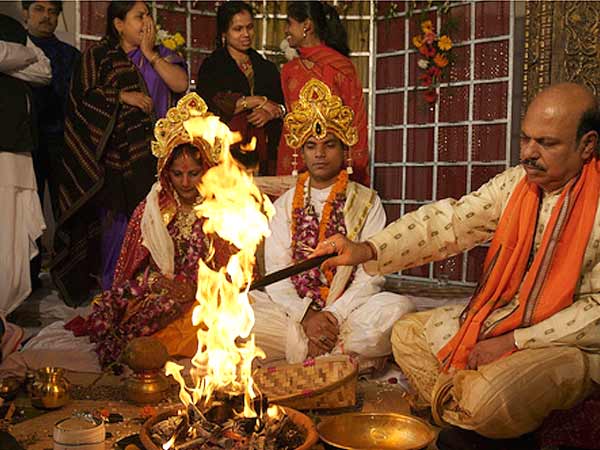
Some opportunities for initiation recur each year, and are built into our cultures. Right now the festival holidays of Hanukkah, Christmas, Diwali, Kwanzaa and so on are opportunities for annual initiation — if we let their celebrations reach into us and change us. As breaks from “profane” or ordinary time, holidays take us into altered if not sacred space, and then return us to our lives somehow — ideally, anyway — changed. Of course, specific religions and spiritual paths each offer their own initiations. For Christians, it’s baptism (and for Catholics and some other denominations, confirmation as well). A Jew passes through a bar or bat mitzvah, and so on.
But we needn’t look so far or so formally. First kiss, first love, first sexual experience, first drink (consider the particular sequence of these in your own life). Driver’s license, prom, graduation, military draft. Each transforms as a rite of passage. We “pass through” and come out on the other side, different, in ways others may or may not notice. We ourselves may not fully absorb the changes until much later.
As with the kinds of freedom I considered in a previous post, there seem to be both “transitive” and “intransitive” initiations — initiations which enable or empower the initiate to do something — typically in the future — and initiations which recognize a standard or awareness already attained, and put a “seal of approval” on it. Of course these need not be separate. Both kinds can occur simultaneously. Initiation is a “beginning” (from Latin initio “start, beginning”) both a path or direction that another agency, power or person starts us on, and also something one does or experiences oneself.
Some big initiations are inclusive. Like annual holidays, we all experience them. Though we may not often think of it, death — our own, or that of a loved one, or of a public figure with symbolic power, like a John F. Kennedy or a Princess Diana — can be a powerful, transformative initiation. Through the grief and the inevitable breaks in familiar routine that come with the first shock, the family gatherings, the arrangements and the funeral itself, we’re brought to face loss, change, mortality, and endings and beginnings in ways. We may take on new, unfamiliar roles, like caretaker, mourner, survivor, with all the challenge and growth they can bring. The first death we encounter (apart from pets), given the usual number of years between generations, comes almost like clockwork sometime in our teens, with the passing of a grandparent. In the freshman dorm at the boarding school where I teach and serve as adviser, there are four or five deaths of grandparents each year, and all the myriad changes they carry with them for those involved. It’s a close study in family dynamics (and our capacity as advisers to provide support) to witness how kids and their families deal with it all.
Marriage often seems to occupy a sort of middle ground as far as these categories operate. On the one hand, no one is married in the eyes of either the law or a religious organization until they pass through the requisite ceremony. Yet we all know couples who are already “so married” that the ceremony confers nothing that they don’t already manifest in abundance. In this case, the initiation of marriage simply recognizes and formalizes a connection and a state of relationship that already exists and — if the ritual or ceremony still carries any power — blesses and charges the thing consecrated. My wife and I have two anniversaries, ten days apart, and each conveyed to us different energies. First was a spiritual ceremony by a cleric in our tradition, and second came the state ceremony, performed by a justice of the peace. Interesting, too, who we see as performing or undergoing the initiation. Ideally, to my mind, the one experiencing the initiation should play at least some part, if not an active role, in its enactment. For initiation takes place both outwardly, where it is often witnessed by the state if not also by family, and more importantly inwardly, on the subtle planes (which deserve their own post or series of posts).
“Where is wisdom to be found?” goes the old query. Initiation is one major source. Not all initiations “show” right away, or even ever. What we begin may never end. It can take a lifetime to sort out the effect of even “lesser” initiations, to say nothing of the big ones. Those “long” words, never and always, very much belong with initiations.
“Whenever I get bored or depressed, I do laundry,” said an acquaintance. “Afterwards I may still be bored or depressed, but at least I’ve done something that needed doing. And often enough I feel better.” As a treatment, the success rate of this strategy may or may not equal that of therapy or medication, but as far as clean clothes production goes, it’s got the other two beat hands down. At least I can be depressed and dressed.
How different the quiet of depression and the quiet of peace! (I’m writing about peace and using exclamation points. Hm.) One deadens and stifles, the other ripples outward and invites attention, a kind of relaxed wakefulness. We say we want peace, and the holiday season bombards us with prayers and songs and sermons and wishes for it. There are prayers for peace in the ceremonies of many religious teachings and spiritual practices, Druidry included. But rather than asking somebody else for it, I can begin differently. Peace starts in the center, and that’s where I am — or where I can put myself, with the help of recollection and intent. “Come back to yourself,” my life keeps saying, “and remember who you are and what it is you want.” If I start peace (or anything else) within myself, however small, however tentative, it spreads from there outward. After all, it works for every other state I create, whether positive or negative — and I know this from sometimes painful experience! “Be the change you wish to see in the world” is still some of the best advice ever given. If I want change, who else do I expect to bring it about? And if someone else did, how in the world would such changes be right for me? Gandhi knew the secret lies in the approach.
In my early twenties, Lou Gramm and Foreigner were singing “I want to know what love is. I want you to show me.” It’s a lovely ballad — I’ve got it playing on Youtube the second time through as I write this paragraph, nostalgia back in full force — but it’s precisely backward in the end. As loveless as I can sometimes feel, if I start the flow, jumpstart it if necessary, I prime the pump, and it will launch within me from that point. Do that, and I become more loveable in a human sense, because in the divine sense I’ve made myself another center for love to happen in, and from which it can spread.
But neither love nor peace are things I can hold on to as things. “We are not permitted to linger, even with what is most intimate,” says the German poet Rilke in his poem “To Holderin” (Stephen Mitchell, trans.) “From images that are full, the spirit plunges on to others that suddenly must be filled; there are no lakes till eternity. Here, falling is best. To fall from the mastered emotion into the guessed-at, and onward.” Whatever I long for in a world of time and space needs to be re-won every day, though in that process of re-winning, not always successful, it begins to gather around me like a fragrance, a habit. Both the customary behavior, and the clothing a monk or nun wears, have the same name. The connection’s not accidental.
The American “farmer-poet” Wendell Berry captures it in these lines:
Geese appear high over us
pass, and the sky closes. Abandon,
as in love or sleep, holds
them to their way, clear
in the ancient faith: what we need
is here. And we pray, not
for a new earth or heaven, but to be
quiet in heart, and in eye,
clear. What we need is here.
So if we’re looking for a “religious operating system,” a ROS, we’ve got some design parameters that poets and others tell us are already in place. “What we need is here.” But try telling that to an unemployed person, or someone dying of a particularly nasty disease. And of course, if I tell someone else these things, I’ve missed the point. What they need is indeed here, but my work is to find out this truth for myself. I can’t do others’ work for them, and it wouldn’t be a good world if I could (though that doesn’t stop me sometimes from trying). I don’t know how their discoveries will change their lives. I only know, after I do the work, how my discoveries will change mine.
A recent article in the New York Times about the rise of the Nones, people who aren’t affiliated with any religion, but who aren’t necessarily atheists, offers this observation, from which I drew the title for this blog entry:
“We need a Steve Jobs of religion. Someone (or ones) who can invent not a new religion but, rather, a new way of being religious. Like Mr. Jobs’s creations, this new way would be straightforward and unencumbered and absolutely intuitive. Most important, it would be highly interactive. I imagine a religious space that celebrates doubt, encourages experimentation and allows one to utter the word God without embarrassment. A religious operating system…
A singe grosbeak inspects our feeder, and as I look out through the living room picture window at the bird plumped against the cold, there’s a reflection in the glass of flames from the woodstove inside. In its orange vigor, my fire faces west, Druidically inappropriate, but very welcome on this grade A gray day.
In the northern U.S. that’s an image of this time of year: reflections, of heat inside, of life still proceeding outdoors and in, of the time of year itself.
The interval between Thanksgiving and the December holidays can be a delicious space, a “meanwhile” or middle-time for re-tooling and starting to close up shop on the current year. To feel that it’s often too busy, or merely filled with worsening weather forecasts, as though that is all it has to offer, is to miss something profoundly meditative about these days. What’s the opposite of miss? Attend, intercept, catch, be there. Whatever it is, that’s what I want to do.
There is as well in November and early December a late-autumnal melancholy, it’s true. The peak of Thanksgiving has passed, and some may see the next months as a pretty solid trudge through the valleys (in our boots, scarves and gloves, and hauling snow-shovels) until the climb to the next holiday.
So when I can take a look from this end of the year at a season at the other side of summer, I do. Off to that start of spring transience which mirrors something in us now as well. I followed a link from an article in today’s NY Times and there on the page was the sudden pure pleasure of “Sakura Park,” a poem by the late Rachel Wetzsteon (pronounced “wet-stone”). Take a visit to late spring, six months ago, or six months to come. The cherry trees (the sakura of the title) are in bloom …
Sakura Park
The park admits the wind,
the petals lift and scatter
like versions of myself I was on the verge
of becoming; and ten years on
and ten blocks down I still can’t tell
whether this dispersal resembles
a fist unclenching or waving goodbye.
But the petals scatter faster,
seeking the rose, the cigarette vendor,
and at least I’ve got by pumping heart
some rules of conduct: refuse to choose
between turning pages and turning heads
though the stubborn dine alone. Get over
“getting over”: dark clouds don’t fade
but drift with ever deeper colors.
Give up on rooted happiness
(the stolid trees on fire!) and sweet reprieve
(a poor park but my own) will follow.
There is still a chance the empty gazebo
will draw crowds from the greater world.
And meanwhile, meanwhile’s far from nothing:
the humming moment, the rustle of cherry trees.
Yes, that’s a poet for you — insisting on a connection between cherry petals and the growth of self, when all the cherry need do is be a self beautifully ready to attract bees, produce fruit and fulfill its cherry-tree-ness.
And yes, there’s a whiff of early middle-aged cynicism creeping in here (Wetzsteon died at 42), the dry rot that afflicts so many who tell themselves to be content with meanwhiles. “Give up on rooted happiness!” she urges. There is still green chance and raw luck and sweet grace in the world, but until they salvage something greater than what’s at hand, be content with meanwhiles, the poet advises, the “far from nothing” moments that hum with possibility even now. So it’s back to trees, where maybe we should have remained.
Too often we are literally “self-important.” We worry about the self like a barefoot child abandoned in a parking lot, or an opened can of tuna that will spoil unless we eat or cook or refrigerate it. The cherry tree sends out blossoms unworried about November. Not because November won’t come, but because it’s not November when it’s April. And when November comes, the tree will be a cherry in November, awaiting the next humming moment.
And yes, if I meditate among the swaying branches and crackling leaves this time of year (trying to fluff myself against the cold like an outsized bird, so I can sit or kneel a few minutes without shivering and breaking my focus), the “stolid tree on fire” matters more than it did before, and my own concerns matter less. Restoration that we seek, visit all who long for it. Find it in the silent witnesses of trees. We who listen for “a voice that will save us” forget what burns in front of us, the fire in the stove in the living room, this day passing with us into “later” and darkness and tomorrow, the trees wintering, summering and wintering again, the air itself, with its metallic crispness on the tongue and in the nose, the fire that burns in all things.
/|\ /|\ /|\
The 50,000-word deadline this Wednesday 11/30 at midnight looms before us “wrimos,” and I’m finally within range. Woo-hah! The Nanowrimo site obligingly lets participants grab icons of progress — anything to keep us writing. Much of what I’m drafting now is detail, filling in missing scenes, background, snatches of dialog with disembodied characters, pieces of Harhanu physiology and psychology — and I suppose, not surprisingly, a brand-new and potentially primary character — because of course what I expressly did not need at this point is a strong new presence telling me “when you are done, you are not done, for I have more” — to paraphrase Omar Khayyam in his Rubaiyat. He already has a name (Tehengin) which he obligingly repeated to me till I got it right. But, probably, I do need him — in some way which I’m sure he’ll inform me about. In detail.
So anyway, here I dance at 44212 words, taking a break to blog, before I return to dance some more. Wish me well in this home stretch.
With so much attention to freedom these days, both freedom from and freedom to (they can feel like — and amount to — very different things), it’s strange there’s so little discussion of what to do with it once we get it. We’re supposed to know intuitively, like eating or breathing. Let me “do my own thing,” “don’t fence me in,” “don’t tread on me,” “a man’s home is his castle,” “do what you want,” and countless other phrases and proverbs and old saws and aphorisms to capture that sense of a supposedly “inalienable right” to do — what? Along with life and the often asymptotic* happiness we’re supposedly in pursuit of, this third leg of the American Independence tripod got declared and delivered to us and we haven’t done a paternity test to see whether it’s our baby. Liberty. As in “see Statue of.” As in Patrick Henry, who gave himself and his audience only two choices (“liberty or death”), proving he was definitely not a true American, because as we all know, Americans love their choices. “Have it your way,” goes the old Burger King advertizing jingle. OK, my way. But once I get it, how do I know I have it? Is it like a lottery ticket — changing in value by the day, and up to me to claim it if I won it? And then what? What’s freedom for?
More to come in Part II.
*An asymptote, if the Wikipedia definition above doesn’t do it for you, is a curve that keeps edging ever closer to a line, but never actually arrives. (Unless you want to count infinity.) Think of it as a geometric tease.
/|\ /|\ /|\
Passing the halfway mark of 25,000 words a couple of days ago felt as big this year as reaching 10K last year did — a milestone. Inevitably I’ve fallen behind — this time by about 5000 words. Got nothing written at all on Monday, and Tuesday was little better. Today’s quota is 30K. I’ve gotten down 3000 words so far, in a burst of catching up, and hope for another few hundred by day’s end, which will bring me within striking distance. I’m at 28,125 as I write this. (Yes, my break from writing a novel is writing a blog entry.) Definitely some interesting material has come through. I’ve put my poor succubus Alza in a number of implausible, erotic, challenging, historical and dangerous situations, just to see what sticks.
I’ve also found out that in order for an important historical meeting to occur, she needs to be about a century older than I’d made her. Not sure how she feels about that. Will no doubt find out. And I’ve gotten down a description of her original appearance that she has just discovered, the “face she had before she was born,” as the Zen masters like to say — before she shape-shifted the first time in her life among humans. That discovery seems to give her a stability and sense of self nothing else has. Here’s a striking image I found online and used for inspiration as Alza. It comes, both appropriately and ironically at once, from an Australian evangelical website, in the form of a pamphlet providing counsel to victims of Incubi and Succubi.
A spiral differs from a circle. There’s motion in it, and change. The track or trail of movement is itself motionless. (Well, comparatively: the boat’s wake dissolves in ripples, the jet trail fades, but some time after, at least; the jet’s long gone.) It records the journey. But journey in a spiral is not repetition. It’s recognition, re-encounter from a fresh perspective. History, planetary or personal, doesn’t repeat itself, but it does often spiral.
[Originally when I took the photo I was simply looking for a background that would contrast with the bowl. Only later after I’d uploaded the photo did I realize that the grain of the wood holds at least as much interest as the spiral design of the bowl. Talk about not seeing the obvious.]
You may remember the chorus in Joni Mitchell’s lovely song “The Circle Game”:
And the seasons they go round and round
and the painted ponies goes up and down
We’re captive on the carousel of time
We can’t return we can only look behind
from where we came
and go round and round and round
in the circle game.
Joni, it’s lovely, and it’s easy to be seduced by the beauty of your song, but you’re wrong. Or at least, you’re right only about one choice among many. It’s a game, and therefore we’re no more captive than any player is who agrees to the rules in order to play at all.
We can choose to play the game this way and be participants in time. That’s the only way to live in a material world anyway, from what I’ve seen: in time. Once we release the drive to “get ahead” or “win the race,” we can begin to jump through time, from moment to moment, recognizing “infinity in a grain of sand, and eternity in an hour,” as William Blake has it. Time is illusion, yes — but in the sense of play (Latin ludere, lusus, illusio = in+ lusio — “in the game”): a set of rules to make sense or pattern out of the flow of experience, which is e-lusive. We need “before” and “after” in order to begin (or return) to experience “now.” The moment of illusion, of play, then broadens and deepens.
“Time is the stream I go fishing in,” says Thoreau. I use this as a mantra when I get stressed about deadlines, minutes ticking, the illusion gaining hold in a way that’s no longer a game, no longer pleasant to be playing. There’s nothing wrong or cruel about time, once we let go the fear that comes with clinging to any particular moment — of resisting the play because life is supposedly such a serious thing. “Eternity is in love with the productions of time,” Blake says in another poem.
These “long lessons” are ones I keep learning. Most of us do — most of us are slow learners — earth’s a place for those with “special needs.”
To live any other way is to suffer needlessly — never my favorite thing to do, anyway — and to be trapped in regret and loss. We’ll all have a taste of these if we live long enough, as part of the balance that comes with fullness of life — why seek out more, and worse, elevate them to a kind of icon of authenticity? “I’m not human unless I make a fetish of my suffering,” some people seem to say. “I AM my suffering,” say others.
The Circle Game goes best when we treat it as a game, as a shape of experience. But it’s not the ONLY one. We hear of people being “lost in the past.” How about seeing what it’s like to lose yourself in the present? Nowhere is now here, to make a linguistic jest with wisdom at its core.
Robert Frost was on to it in “Birches.”
I’d like to get away from earth awhile
And then come to it and begin over.
May no fate willfully misunderstand me
And half grant what I wish and snatch me away
Not to return. Earth’s the right place for love:
I don’t know where it’s likely to go better.
If I don’t experience it on this curve of the spiral, it won’t be there for me the next time to “come to and begin over” in that “can-be-delightful” encounter of the “familiar-new” that often flavors our experiences. I cheat myself of so much joy, thinking there’s someplace “where it’s likely to go better.” Now, here, is when and where it’s at.
As editor of a collection of essays, The Rebirth of Druidry, OBOD‘s Chosen Chief Philip Carr-Gomm attempts to characterize something of the appeal of the spirit of Druidry in human terms. I quote his article at length because in its effect it is all of a piece, and because it provides a suitable introduction to some things I want to say about the Goddess:
Druidry is the perfect lover. You fall in love with her so easily because she is so romantic. She whispers to you of the magic and mystery of the turning stars and seasons. She loves trees and Nature above all things, and you yearn for these too. She tells you stories of Gods and Goddesses, the Otherworld and fairies, dragons and giants. She promises secret lore — of sacred trees and animals, of herbs and plants. She points deep into the past, and ahead towards a future which is lived in harmony with the natural world. But just when you are convinced you will marry her, because she is so beautiful, so tantalizing, so romantic, she turns around and there she is, with rotten teeth and hideous face, cackling and shrieking at your naivety. And she disappears, leaving you with just her tattered cloak, made up of a few strands: some lines from the classical authors, whose accounts are probably inaccurate anyway, a few inferences drawn from linguistic and archaeological research, which could be wrong, with the rest of the cloth woven from material written from the eighteenth century onwards, replete with speculation, forgery and fantasy.
You feel a fool. You don’t tell your friends about your lover. You feel tricked and defrauded, and decide to follow something more authentic, more established, more substantial — like Buddhism, or Christianity, or Sufism, or Taoism — something serious. But then you go out walking. You follow the old trackways, you come to the old places. You see the chalk gods and stone circles. You pause and open yourself to the Land, and there She is again. But this time she is even more enchanting because you can see that she is not just a beautiful woman, full of romance and seduction, you can see that she is also a wise woman, who will provoke as well as seduce you, who will make you think as well as make you feel. And then you suddenly know why she has been the object of fascination for so many through the ages. She is the Muse, the Goddess behind Druidry, the bestower of Awen, of inspiration.
Obviously the imagery here from a male author conveys part of how a man may first encounter the “Goddess behind Druidry”; it may not appeal to women, who find their own powerful ways of connecting with Her. In mythic terms, however, this account very much reflects the changeability of the Goddess — what has inaccurately been called her fickleness, and which has caused many accustomed to meeting deity in a single, invariant form to confuse variety with unreliability or untrustworthiness. Westerners in particular have largely been cut off from experience with aspectual deity, which the Goddess so clearly manifests. Rather than manifesting a loving and compassionate presence, “[t]he deity may appear in wrathful or challenging forms, but these should not be considered hostile. She is the kernel of truth at the heart of everything, and if she appears in challenging forms to you, look more deeply, considering why this may be so,” suggests Caitlin Matthews in her slim but potent book, The Elements of the Goddess. “Many of those who venerate the Goddess are unhappy with her supposedly dark aspects because they associate ‘dark’ with ‘evil.’ In order to save her child about to do something dangerous or silly, a mother will get angry, shout or scream, but this doesn’t mean to say she loves her child any less.”
My first encounter with the Goddess came unbidden, unsought, when I was 25. (You need to know: I’m not especially sensitive or psychic. Friends who are say anyone who wants to reach me has to raise quite a ruckus to get my attention. If you’d asked me then I’d say — still would probably, even today — that half of what people experience in such situations is imagination. But now by “imagination” I mean something considerably larger and more potent than I did then. More about that later.) It was a frosty autumn day, and I was wandering the fields and scattered woods of a farm my father had recently bought in western New York, south of Rochester. I paused in a swampy grove of trees, with several fallen and decaying trunks to sit on. A mood or atmosphere of autumn pervaded the place, almost palpable. The air lay perfectly still. The musty-sweet smell of dried dead leaves filled the air, along with a tang of rot and manure from a nearby field, and a hint of woodsmoke. Over the hills from a distance came the faint roar of some town maintenance vehicle — they were always patching roads in the area. But distant sounds simply deepened the stillness by contrast. As this meditative silence spread and enveloped me, I became aware of a presence that filled the grove and towered over me, fifty, sixty feet tall. Immense. One face of the Goddess. Conscious encounter. Her.
She didn’t knock me on my ass, though that might have been useful too, given how dense I can be. But though I describe it here in mild enough terms, the experience was unforgettable, not for any one detail, but for its undeniable — and familiar — quality. This was someone I knew. Not someone or something alien, or to be feared, or a matter of belief, any more than I need to believe in the tree-trunk I sat on. It was like finding a limb which, when you found it, you knew had always been a part of you all along. You just hadn’t been aware of it. As if it had been asleep, but for its waking you finally twitched a muscle in it, and in feeling it respond you felt it.
So what’s the big deal, you say? “He met the Goddess, in some ways it was an anticlimax though also somehow memorable, he got over it, it was years ago. So?”
A year later I was in the throes of my first love affair (can anyone say “late bloomer”?), a tumultuous relationship in which I did get knocked on my ass. Among all the other things this Goddess encounter was, it was preparation, or warning. I needed greater emotional experience, insight, maturity. I was about to get it.
In between the divine and human realms is an archetypal one — a place, often, of dream and vision, and the idealized images of Others for men and women which “haunt our imagination and often make our love-lives incredibly tortuous until we realize that these daimons will never become physical realities. They are messengers between the divine realms and the human levels of our experience” (Matthews, 13). This was part of what I needed to learn firsthand. No book knowledge this time. It was an initiation of its own.
So this fall at OBOD’s East Coast Gathering, in a meditation involving an encounter with the Goddess in her guise as Cerridwen, I felt a surge of panic — again. “Cerridwen is bad. She tricked Gwion Bach in the old Welsh tale.” But it was old programming. Incomplete knowledge. Fear of that “fickleness” I mentioned earlier. “The old, outworn, dualistic concept of the Goddess as cruel and capricious must be viewed for what it is: a reflection of our shadow-side, a terrible polarization of social responsibility with which women have been burdened as a sex” (Matthews, 24). But now I had more tools to begin to deal with it. At Samhain I did specific work with the Goddess. I needed to. Is it any wonder I also spent 15 years working in a freshman girls dorm as a house parent? Training up close and personal. “The Goddess stands at the heart of life, death and further existence and she will assume the forms which are most appropriate in her dealings with our world” (Matthews, 24). Or as a teacher in the other path I follow related, when he talked about his own experiences with inner and outer realities, “They had to get me to stop bowing every time they appeared, so they could actually work with me and get some work out of me.”
Matthews continues, in ways particularly useful for a male bard like me. “Men experience the Goddess through their creative side. She makes manifest their ideas by animating their dormant creativity. There is a strong sense of ebb and flow about these energies which give men an experience of the cyclical nature of the feminine menstrual cycle. This kind of relationship is rarely recognized for what it is, yet all men can discover and welcome this experience. Although the effect of a Goddess upon a man is less immediately physical than in a woman, it is nonetheless potent” (15).
There is much misunderstanding of gender and sexuality, and what constitutes the self and its connection to the world, perhaps nowhere more so than in the West, with its addiction to pornography, its fear of homosexuality, its violence against women, and its frequent indifference to children. I’ll let Matthews have her last word here. “Every human being is a child of the Goddess … The way of the Goddess is one of natural law and natural wisdom … It is primarily the people of the West who are orphans of the Goddess. The social and political reasons for this desolation have been documented in many books … Both women and men need to find their Mother, relating to her and her creation in fresh and balanced ways, for every one of us needs to drink of her wisdom and realign ourselves with her natural laws.” This is not a matter of belief but of incarnation — our own — to live fully, gratefully and passionately in this world, until we leave it.
/|\ /|\ /|\
Nano update time. Is it any wonder, in light of this post, that I’m writing about a succubus?! And sympathetically — as a main character?! Must be some sort of assignment from the Goddess. Further training. God knows if it’s publishable. (Goddess may know, but if she does, she ain’t tellin’.) Reached 17,804 words: over 1/3 of the way there. Need to hit 20,000 today to be fully caught up, including today’s work. Should be able to do it. Major scene yesterday, in which Alza connected with the man she needs for her magical work, showed him her nature in a brief feed and reversal of energies to restore him, bypassing the mental level altogether, where the idea of a succubus would have completely flipped him, and left him with a medallion magically linked to her — ongoing physical contact to reinforce the dynamic. The resulting reactions when he deals mentally and emotionally with what he already knows will be interesting to capture, but the heavy lifting for that scene is done.
I’d been including more fire imagery in description and action, since Alza’s succubus nature seemed increasingly to resemble that of a fire demon. And then, as a break yesterday, doing some research on demons and succubi in other cultures, I happened on this quotation from the Qur’an: “And the jinn, We created aforetime from the smokeless flame of fire” (Al-Hijr, 15:27). And in an email yesterday from the university where I’m taking a seminar, advertising a weekend workshop for men: “FRIDAY, 11/11/11 – SUNDAY, 11/13/11 – ON THE EDGE OF FIRE: A MEN’S SPIRITUALITY RETREAT.” Right between the eyes — the kind of serendipity and synchronicity and happy accident one hopes for in writing. So I’m on some kind of track. I’m just still discovering what it is. And that’s much of the deep pleasure of this verbal marathon.

 Normally I steer clear of posts that border on the political, because they accomplish little except to harden opinions and positions, and sharpen arguments, without leading to a solution. But I make an exception in this post, for reasons I hope will become clear.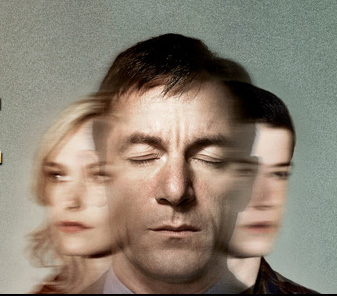




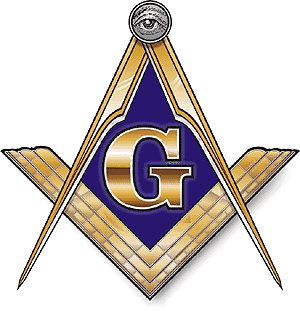

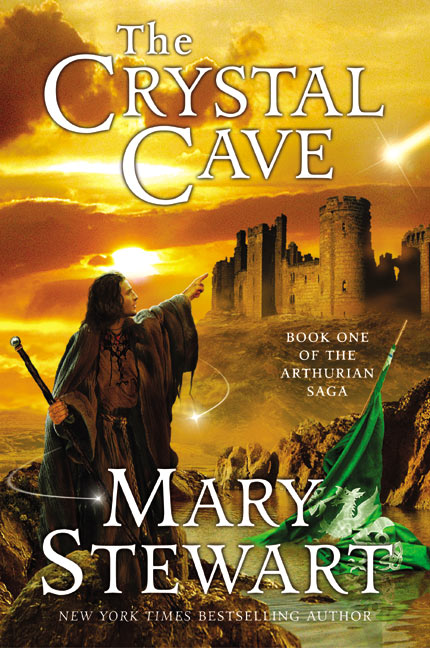









 A Druid Way