— not just survival. That’s much of what I aim for with this blog. (You know almost as well as I do how I don’t always hit the target.)
Not tools for “social transformation” or “regime change” or advocating for somebody else’s large-scale fixes that may or may not ever reach me (or you) in anything like helpful ways. In U.S. terms, that means neither Trump nor Hillary will help more than they will hurt. (Only differently.) In U.K. terms, that means “to Brexit or not to Brexit” isn’t the question. Generally, that means binary choices often aren’t very useful ones.
Whoever “wins” won’t change what needs changing. (That ultimately lies with me. I win as I listen to what yearns to be heard most deeply.) Forces in motion that we launched decades ago, larger than politicians or parties or even empires, will see to changes. A wiser course, for me at least, is to work with forces that build, and learn to ride the ones that don’t, as skilfully as I can. Those aren’t up to a vote. They’re not democratic. If I want, I can put myself in agreement with their effects through anger or ignorance or blind acceptance. But I keep learning the hard way that none of those are profitable responses.
What’s the third — or at least a third — option? (There are always more than two options. If I don’t see them yet, right there is a place for me to work at listening and paying attention.)
Do the necessary work on myself and, as much as possible, avoid feeding energy to the rising political hysteria — of any flavor. “Chop wood, carry water” is a beginning. Yes, but also honor the trees as I do so. Bless the waters, waste less, thank more. In-form the heart, not out-form it. Love works better as a fountain, ever-flowing, than as a reservoir of “hold on to what you’ve got.” Turn down the volume on the shouting. Duck when necessary. Plant seeds for the long view. Share even modest harvests. Stay mindful of the Dao De Jing’s counsel: “Extremes do not last long.” And also: “This world is a spiritual vessel. It cannot be ‘improved.'” Or if you prefer, as humble recipes say, leaving it up to us in the end: flavor to taste.
So I keep bringing back my monkey-mind to focus here on what I can create and transform through awareness and co-operation, hoping to model in my limited way a version of what I see others I respect trying out in their lives and succeeding at.
When building, start small.
Start small, because in the end that’s the only place anything starts anyway. But watch for when I touch infinities in those grains of sand I garden in. Revel in eternities that spring from my hours.
Have you ever reached a limit to joy? Not happiness which — often — is superficial, and — often — not worth pursuing: peace to that old Declaration we claim to fancy and which offers such pursuit as one leg of a Founding-Fathers triad that provoked a 240-year-old Exit of our own.
No, I mean joy, a stranger to many, it seems. What Tolkien’s hobbit Pippin could perceive, in the middle of all-out war, in the Maia Gandalf:
Pippin glanced in some wonder at the face now close beside his own, for the sound of that laugh had been gay and merry. Yet in the wizard’s face he saw at first only lines of care and sorrow; though as he looked more intently he perceived that under all there was a great joy: a fountain of mirth enough to set a kingdom laughing, were it to gush forth.*
True kingdoms to you.
/|\ /|\ /|\
Tolkien, J. R. R. The Return of the King, Chapter 1, “Minas Tirith.”
In addition to whatever religious, ritual or secular calendars you may follow, you’ve probably begun to recognize and honor your own holy days. You know, the ones that fall between the official dates on the calendar that hangs on your wall or scrolls from your desktop. Some difficult, some joyful. It may be that you count your birthday or some other similar day among them. Hobbit-like, you may have come to enjoy gifting others rather than yourself on those days, with a feast, or outing, a picnic, perhaps in a back yard, garden, or favorite annual reunion campsite that has begun to take on numinous qualities, because your love has helped to make it so.
A valuable piece of wisdom there, in the transformation our love and our repeated attention can make of almost anything.
For me, my parents’ anniversary on the 26th of June plays that role. Long ago my father and mother set the tone, because they almost always made it a larger family event. A month later in July, my father’s sister celebrated her anniversary, and with a number of May family birthdays preceding it, the late June date falls squarely in the middle. The typically good weather here in New England, together with the first early garden produce (strawberries! asparagus!), make it a perfect candidate for a holiday gathering, a cookout or garden party. This year would have marked my parents’ 60th anniversary (they made it to 46), and for me the date’s taken on a “second solstice” quality. Cherish such days in your year. If you’re like me, such personal calendars subtly shift and re-form over time.
So yesterday a libation and some quiet reflection, a walk through my new Druid grove awaiting its formal consecration, and the working out of some light physical karma that has come to flag for me a potential shift in consciousness. “Pain is often the creator of awareness,” one of my teachers like to say, rather ruefully, and it’s proven true for me. When I wake up enough to know once again I’m in the hands of Spirit, minor pain and discomfort can open a chance for sharpening awareness quite effectively.
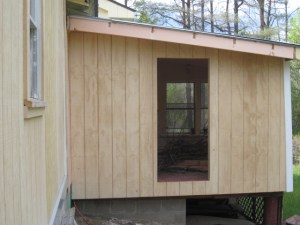
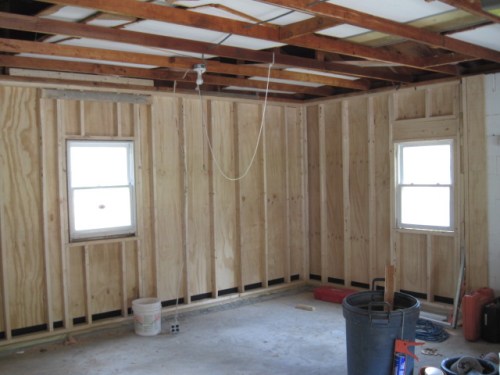
Outwardly, builders recently finished repairing the foundation and rear wall of our garage, a necessary dedication of resources if it wasn’t to fall down our sloping back yard.
And just as true as the seemingly mystico-magical but quite practical saying “if you build it they will come,” if you’ve already come to a place, sometimes you have to (re)build it in some way to flourish there. And when you do, everything else re-equilibrates to the new harmonic you’ve established. Energy will flow first along the easiest channels it finds, and I’ve learned that often means right through the middle of any weakness, hole, or gap in my being and circumstances. I perform that service, I’m that easiest channel, a part of any dynamic I seek to transform, and the sooner I get that, the less wear and tear on the earth, water, air, and fire bodies that Spirit wears locally, in what I am pleased to call me, my life. No distinction, really, as I keep relearning. Jiji muge, the Zen Buddhists say. Between one thing and another is no separation.
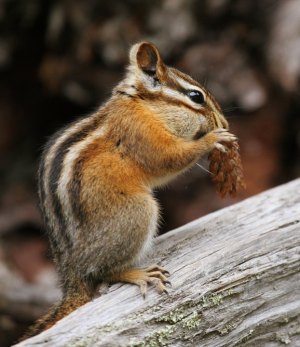
Tamias Minimus, aka chipmunk
So we must act mindfully and vigilantly at all times, they tell us. Nope. Not at all. Fat chance of that happening! snarks my inner brat. I don’t know about you, but I mess up all the time. That’s where the learning and growth is, the crack in the sidewalk where weeds finally push through, the shell the chick pecks open to move to the next stage, the new home the hermit crab must seek when it outgrows the old one.
Life’s what happens when you’re busy making other plans, John Lennon reminds us. Well, yes, and that’s a very good thing indeed, whispers the chipmunk, my inner guide for the month. (A mated pair lives beneath the roots of the evergreens that line our driveway.) Keep learning to listen, and you’ll plan wider.
Solstice light, blessings and inspiration to you all! And to everyone Down Under at the official start of winter, may the Light grow within and without!
With this post I finally complete the “Thirty Days of Druidry” series I began back in April. And ever as one cycle ends, another begins. We enter the dark half of the year with the greatest light and energy, a lesson in itself that things are never wholly as they appear, that each thing bears its apparent opposite in its bosom, as the Dao De Jing gently urges us to realize.
Beyond the binary surface of the polarities all around us lie multitudes of other relationships to explore. Water offers itself as a teacher: we’re either above or below the surface. But what about right at the face of the water? There we encounter surface tension, the point of contact, where air and water meet and the silver mirror may open in either direction to allow us entry. Or dancing. Water striders live at the boundary and let it support and sustain them. Air and water together allow for dancing as well as power. What other such natural meetings may we attend?
Texas Falls, Hancock, Addison County, Vermont
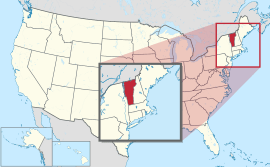
Here in Vermont in the NE part of the U.S., summer moved in weeks ago, with days in the high 80s and low 90s (27-31 C), and blessed nights in the 50s and 60s (13-17 C), perfect for sleeping. With open windows, birds wake us between 4:30 and 5:00 am, sometimes, it seems, just because they can. They’re out and about, so why shouldn’t the rest of the world be? Or in the middle of the night, the pair of owls that nest nearby rouse us with hunting calls under a moon full last night.
Sometimes life consists of what you can sleep through, and what grabs you drowsing and drags you back to consciousness. War, pestilence, earthquake, songbirds, rain on a standing-seam roof, gentle breathing of your bed-mate. De-crescendo. Wake, or sleep on?
The chimney sweep came this last Friday to brush and vacuum. Even with filters and professional care, for an hour after he left, a trace of ash and soot perfumed the air indoors. And we await delivery next week of the three cords of wood that will see us through to next summer. Bars of gold, sunlight stacked in tree-form. Solstice days.
/|\ /|\ /|\
I ask for divination. Over the last weeks the nudge has come to build a small Druid circle in our back yard. It’s another liminal place. Leave it unmowed, and blackthorn and milkweed eagerly launch a takeover. Not sunny enough for a garden, though it gets about two hours of light mid-morning. But here, by 11:50 am at midsummer, it’s already mostly in shade. Here’s the space, looking north, our small pond to the left beyond the uncut grass.
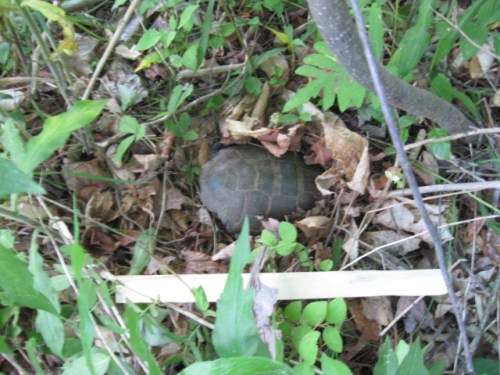
The first divination came a few days past, as I was finishing mowing. A box turtle animated by the day’s heat, crawling north across our yard. As quick as I was to grab my camera, here it is at the treeline. Unhappy with my attempts to stage it in order to get a better picture, it’s nosed its way under leaves. A foot-long paint-stick lies next to it, to give a sense of scale.
What does it “mean”? Divination benefits from context, and I’m going for three readings, a small but proven sampling of the currents of awen afoot.
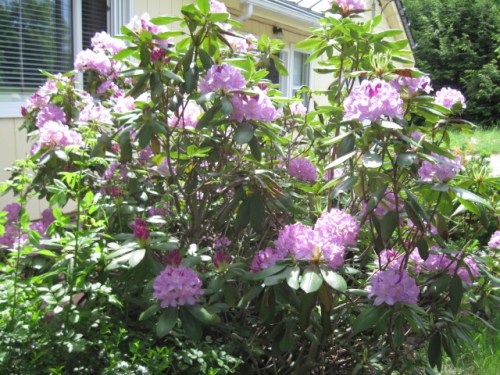
Rhododendron in bloom in our front yard, loud with bees
Since I laid out “Seven Shoulds” for Druids in the previous post, it’s only fair that I should account for how, and how well, I myself manage to do them. Here goes …
1–”Druids should have a practice.”
Ha! I laugh ruefully, because I follow two paths. Sometimes that seems double the challenge. Who needs it? I sometimes think.
But I find that if each day I can manage a practice from even one path, it “spills over” to the other path. They link — a topic for a whole book, I’m beginning to suspect.
I “get credit” on both paths, to put it crassly. Yes, practicing for “credit” means I’m pretty much scraping the bottom of the awen (inspiration) barrel, but sometimes ya gotta go with what you get. Not every day is Lucas Industrial Light and Magic. (If it was, I’d fry and blow away.)
Having a practice also means keeping the ball rolling, the flame burning, even and especially when you don’t feel like it. Then the gift comes, luck turns things around, chance plays things our way, and a god or two peers at me directly for a moment. Because of our efforts? Not always directly, like calculating a sum in math. The universe is more than a spreadsheet. But without the practice, it’s funny how whatever luck and chance and grace and gift I experience will begin to dwindle, dissipate and drain away.
The Galilean Teacher observed, “Those who have will be given more, and those who have little will lose the little they have.” At first encounter, this piece of gnomic wisdom sounded to me like some kind of nightmare economics. Punish the poor, reward the 1%, and all that. But when I look at it as an insight about gratitude — a practice all its own — it starts making a lot more sense. Unless we make room, there’s no space left in us for more. We have to give away to receive. It’s neither more blessed to receive or to give. Both are necessary for the cycle to operate at all.
If I blog or compose verse or do ritual, if I chant or contemplate or visualize, if I love one thing freely without reservation or thought of what’s in it for me, I’ve reached out to shake hands with Spirit. I find that “energy hand” is always held out to us, but unless I offer my half of the handshake and complete the circuit, nothing happens. “What’s the sound of one hand clapping?” goes the Zen koan. More often for me it’s “What’s the greeting of one hand offered?” Pure potential, till I do my part.
2–”Druids should be able to talk about Druidry.”
If inspiration fails, I fall back on John Michael Greer’s fine lines to prompt me into my own “elevator speech”: “Druidry means following a spiritual path rooted in the green Earth. It means embracing an experiential approach to religious questions, one that abandons rigid belief systems in favor of inner development and individual contact with the realms of nature and spirit” (1).
Of course, trot that out verbatim in reply to most casual inquiries, and you’ll probably shut people down rather than open up a conversation. I’m a book addict myself, but I don’t need to talk like one.
So here’s a more conversational version. “For me, Druidry means walking a spiritual path that’s based in the earth’s own rhythms. I try to take an experiential approach to questions big and small. That means I value inner growth and personal contact with nature and spirit.” I find something like that offers plenty of handles if anyone wants something to grab onto. It also has the Druidic virtue of consisting of three sentences.
3–”Druids should show their love of the earth.”
Sometimes this can be more far reaching than just what we ourselves do. Our choices reach more widely than that. Who we interact with also has consequences. We had a builder in recently to rescue our garage, which for every one of the eight years we’ve lived here has been sliding another half-inch down the slope of our back yard.
It took us a fair while to find him. Referrals and ads and word-of-mouth turned up people we eventually chose not to work with. But this fellow was different. Just one proof among several: his attention to reseeding the lawn and cleaning up construction waste after he’d completed the repairs helped us show our love of the earth through our choices of our interactions with others. We didn’t see or know this fully until after the fact, of course. But it was confirmation — the sign we needed. Some days it’s all we get to urge us to keep on keeping on.
I chose this example rather than any other because it was subtle in coming, though just as important as recycling or using less or any of the other things we try to do to “live lightly.” Druidry need not always “speak aloud” to have effects and consequences. Ripples spread outward, hit the far shore, and return. “What you do comes back to you.”
4–”Druids should keep learning.”
Many Druids made this a habit long ago. They have another book or five ready when they’re done with the current one. That’s me. It’s a competition, I’ve come to believe, who will win, my wife or me. She’s a weaver and has baskets and boxes of thread, heddles, wrenches, loom-parts, table-looms, tapestry manuals, and two car-sized looms, all striving for space with my shelves of language books, histories, Druidry and magic texts, boxes of novel and poem drafts, newspaper clippings, letters, and more.
But as J M Greer notes, “Druidry isn’t primarily an intellectual path.” Thank goodness! I’m saved from the limits of intellect, however well I’ve trained and domesticated it! Greer continues: “Its core is experiential and best reached through the practice of nature awareness, seasonal celebration, and meditation” (2).
Druids find themselves encountering people to learn from, the aging carpenter or herbalist or gardener who’d love for an apprentice willing to put in the hard work. So then we happen along and appreciate them and “apprentice for a moment” if not a decade. They’re often self-educated, regardless of what level of school they’ve completed. They seek out people to learn from, and recognize and honor the same impulse in others. Druidry, among all the other things it is, proves itself a wisdom path.
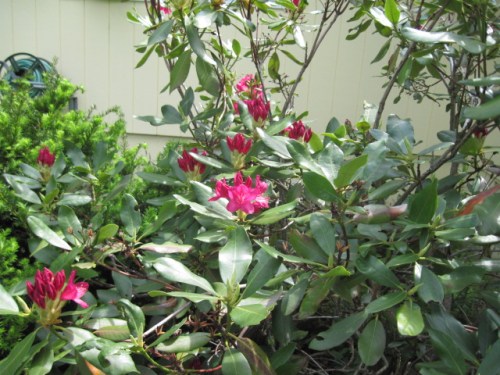
Companion rhododendron in rose, always blooming a week later
5–”Druids should respect their own needs.”
Oh! This is sometimes so large it’s like the air we breathe all our lives, easy to forget. Rather than scold ourselves for lapses, failings and limitations, celebrate what we have done. “More than before” is a goal I take as a mantra. Even two steps backwards gains me some insight, however painfully won, if I look and listen for it. And it gains me compassion for myself and others in our humanness– no small thing. As a Wise One once remarked, who would you rather have around you, someone right or someone loving?
Some six years out from cancer surgery and radiation treatment and I still don’t have the energy I once did. I’m also that much older. But I can rage against and mourn new physical limits, or I can find work-arounds for what I need to do, and set clearer priorities for what really matters, so as not to squander what I do have. Sure, it’s still a work in progress. But I find I can detect small-minded attitudes and deep-seated prejudices in myself more quickly, and do the daily work of limiting their influence and filling their space with more positive thoughts and actions. That’s a gain.
Ever danced your anger? All emotions are energy responses. But I don’t need to sit and stew in them. I can use them to propel myself to new places and spaces and states. It’s an older-person magic, perhaps, or maybe just one I’ve been a long time in realizing and appreciating and practicing.
6–”Druids should serve something greater than themselves.”
Looking back at the list I included — “a person, a spirit or god, a relationship, a practice, a community, a cause, an ideal, an institution, a way of life, a language” — I realize I’ve served all of ’em at some point. Some people stick with one their whole lives. It becomes their practice.
Right now, underemployed as I like to say, I’m more of a homebody than I’ve been, and consequently around the house more. If I find myself sparked to annoyance or anger at my wife for some petty thing, as can happen in the best of relationships, I try to remember to serve her, to serve the relationship. Again, can I use my anger, rather than just seethe? Can I remember to bless my anger, transform its energy and spend it to uncover an underlying issue? What’s the pattern I’ve been feeding? Do I want or need to keep feeding it? Serve myself in this way, in the deepest sense, and I serve others, and vice versa. No difference. To paraphrase, all things work together for good for those who love something that lifts them out of smallness and limitation.
7–”Druids should listen more than they talk — and we talk a lot!”
I’ve certainly demonstrated that here in this post, to say nothing of this whole blog.
Fortunately, one of my go-to practices is listening. Do I do it enough? Wrong question. “Some — any — is more than before.” Both paths I follow commend practices focused on sound as a steady daily method of re-tuning, so that Spirit can reach me through every barrier I may erect against it. Chanting awen, listening to music that opens me, finding literal in-spiration — ways to breathe in what is needed in the moment — letting the song roll through me and back out to others in quiet daily interactions — these are the practices I keep returning to. Listen for the music, whispers my life.
The Great Song keeps singing, blessedly, through my intermittent disregard and obliviousness, till I remember to listen again, and join in.
/|\ /|\ /|\
Greer, John Michael. The Druidry Handbook, qtd. in Carr-Gomm, Philip. What Do Druids Believe? London: Granta Books, 2006, p. 34.
In a recent NY Times article (“The Danger of a Single Story,” April 19, 2016), conservative columnist David Brooks writes,
As in life generally, every policy has the vices of its virtues. Aggressive policing cuts crime but increases brutality. There is no escape from trade-offs and tragic situations. The only way forward is to elect people who are capable of holding opposing stories in their heads at the same time, and to reject those who can’t.
There, right in our faces, the challenges of a “single story”: even as he strives to diagnose the dangers of binary thinking, Brooks beautifully illustrates it: “the only way forward.”
There are, of course, nearly an infinite number of ways forward. (The larger the group you look at, the fewer the ways. So look smaller, instead. We each of us will make, are making right now, our own ways forward, different from everyone else because we’re different. This post, this blog, is my set of ways. They don’t negate yours. Both-and, not either-or.)
Right now, more than in the past, we face difficulty identifying what “forward” looks like. Oh, there’s always a raucous chorus of voices who will tell you their versions. Mostly we suspect it’s “not what we have right now.” But that’s not at all the same thing as some kind of straight-jacket on reality that drops us into one kind of cosmic “only,” a limited-time offer from the gods.
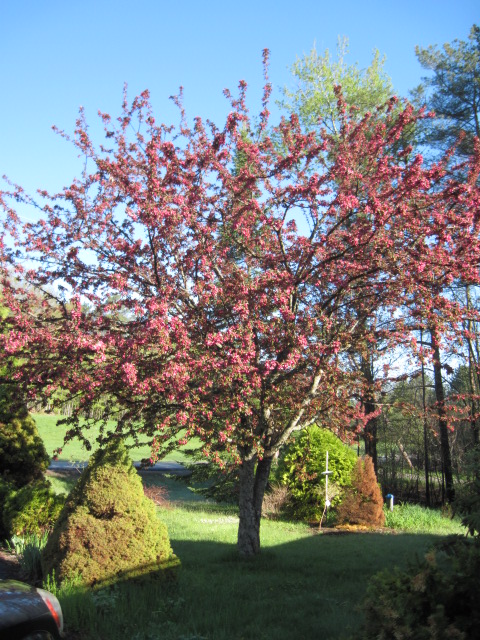
[Pause for Druid meditation on the rhododendron almost ready to bloom, on the crab apple already loud with bees.]
Back again. Readers of this blog know I work mostly in the personal as opposed to the political. And I’ll continue to insist they’re two distinct things. Of course they frequently intersect. Don’t most things in our universe?
Partly that’s a matter of scale. We’re beginning to realize, painfully, that we can only effectively know the local and personal. I can and do pretend from time to time to have wisdom about things outside my experience. (Sometimes I even get away with it.) Prophets and Wayshowers manage to pull it off with panache, and get others to buy in.
But as soon as I can, I’m taking this discussion out of the abstract and into the individual. Name a policy and I’ll show how it erases the unique, the personal, the distinctive. Policy tends to exemplify the tyranny of abstract, one-size-fits-all thinking. Draw a line in the sand and that line starts to matter more than people do, regardless of which side of the line they’re on. Is that ever right, we ask? And our answer determines our experience. There’s no such thing as free will — because we will it so.
[Pause for second Druid meditation, on appearances and other realities. Not just one reality. Boring. Not even just two. Almost as boring. Multiple, endless. Now we’re talkin’.]
I want to hold multiple stories in my head, not just one, even though I’m not running for office or proclaiming my way forward as the ONLY, as if all other options, all other universes, are BAAAAAD. No, I want to hold multiple stories because they’re beautiful, and beautifully true, together or separately, at one time or another. Each one a drop of dew, mirroring the blades of grass nearby, but also the sky. Dreamer, you cry. At the risk of riding on Lennon’s coattails, “you say I’m a dreamer, but …” We’re not there yet. That’s one thing dreaming’s for.
Fall in love with the universe, I hear, as both command and prayer, fall in love with it, and you don’t seek policies, you seek the beating heart of each thing, to know it better, to celebrate with it in its own way, orgy or restraint, sowing or boundary. Yes, as I plant my garden and keep out the rabbits and squirrels, and sweat a little in order to live here at all, I can celebrate at the same time. No single story for me. Work and rejoice. They’re not opposites. Things together. The universe, I find, is a marrying kind of place, for worse, and for better.
For my birthday earlier this month, my father in law sent along a card with a cover picture of the four (five) characters from The Wizard of Oz. In the cartoon bubbles above each one are their familiar goals: a heart, some courage, a brain, a home — and Toto as a stealth fifth character gets his say, too: “Maybe a chew toy?”
Druidry has grown sufficiently into its potential that it has a green and beating heart. As for courage, many Druids do try to “walk their talk” as far as they can, at least keeping the two yoked together and pulling in the same general direction. Not all of us, and maybe not even a majority of us at any one time. But any is more than none, enough for a start, more than before. Step forward, live one’s values openly, whatever others may think of them, or quietly (still matters): against fracking, for preservation, against excess (except maybe during festivals, when mead and love-making and all-night drum circles get to play their vital parts in making Druidry just slightly less than completely respectable).
And against dogmatic certainty, if we can, allowing for enough skepticism that we swallow fewer baited hooks. Small successes: a river cleaned and reclaimed, legislation to preserve rather than consume (or at least consume and restore, replant, restock, re-establish). Is it enough, against the slide and careen of our times? We may not be able to know right now. Maybe our current pessimism is part of a useful course-correction, long in coming.
But it counts for something — all things have their weight and presence. The planet’s learning and growing too, a hive of beings that, if they soil their home, will nevertheless still die and be remade in some form, if only as atoms that were Christ and Hitler too, to work out all the consequences, bad and good together. If not me as me, some of my kin will be here in years to come. (Does it matter in one sense if I have been here before? I’m here now.)
A keen-edged kind of justice: the physical world doesn’t appear to do mercy, unless you count cosmic balance as a kind of far-seeing compassion, impersonal in its workings. The gods and spirits, I notice, do sometimes save, but not us from ourselves when we walk away from their counsel.
Brains, too, haven’t been lacking since Druidry’s earliest days, admittedly along with sometimes generous portions of looneyness. The Revival brought out themes and practices many Druid groups like OBOD still draw from, and the more purist Celtic Reconstructionists have increasingly founded their practices on what can be recovered from the past and from mostly careful and informed deduction.
As for a home, well, here we are. Living in and on it, nourished by it, drinking from it, giving back to it what we choose to give to future generations — to our future selves if you hold deeply to full-on recycling.
Which leaves the chew-toy. What things might correspond to that? The tides of current fashion and flaming opinion, sure. Scandal and media obsession, the so-called Witch Wars, the poly-, duo-, mono- and a- theist speculations that usually lead no further, sometimes, than mild clarification or further obfuscation. One or two or ten people finally turned toward practice rather than pontification. A slight deviation away from head-stuff, into things heads deal less well with, but other parts of us say home, home, I’m in native inner country here.
A seemingly casual and causal sidestep into worlds where those old questions get traded for quietly larger and equally old ones. The slant of sunlight at dawn. Dew on bare feet, now that summer’s nearing. Trill of birdsong. Instinct to breathe in the chi, prana, nwyfre, elan, vital energy alive and pulsing all around. Breathing it out as I live my life. A nudge, maybe no more, to serve in some specific way in my neighborhood: an old backyard dump to be cleaned up, a gathering to organize or attend, a seemingly chance conversation that changes the paths of the participants, infinitesimally, modestly, significantly. A move around or out-of-state. A relationship ending, a relationship beginning. A season to plant, to harvest, an injury healed, a new wrinkle, scar, perspective, discovery, wonderment.
What I chew on comes second. Remember, I say to myself, remember that sequence, that priority. My jaws don’t have to be the strongest thing about me.
[Some days, about all I can muster is a good gray awen.]
[Gray, grey. “If it’s good enough for Gandalf, then it’s good enough for me.”]
[Gra/ey magic(k). 1) a hair coloring product. 2a) Magic not performed for specifically beneficial purposes. 2b) (derogatory) Magic which avoids annoying ethical considerations. 2c) Magic practiced to confuse, mislead or perplex others. Roy Bowers’ version (link to article): “your opponent should never be allowed to confirm an opinion about you but should always remain undecided. This gives you a greater power over him, because the undecided is always the weaker.”]
/|\ /|\ /|\
“Light is the left hand of Darkness.”
Finally the Chief of the Urdd Awen Ddu rose and called for silence with a curious circular gesture. He was a slim, short man who nevertheless had a commanding presence. His simple black robe accentuated his dark eyes. Power spoke in his voice.
“Opposition strengthens us, like a good resistance training exercise. Contrary to the fears of our opponents, it’s not our intention to ‘cover all the lands in a second darkness.’ Our opponents grow stronger as well. But we have a secret they do not know.”
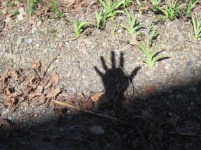
Almost no shadow
He paused to scan the room and gather eyes. “In the darkness we cast almost no shadow at all. With this energy freed, this psychic weight lifted, we may work our will with advantage. We read in the Hebrew scriptures how even God says, ‘I will give you the treasures of darkness and the hoards in secret places.’* And we have learned together how to recognize and gather these treasures that those who work in light never see, nor ever know. They cannot, not as long as they resist polarity, or think to vanquish one half of the universe.”
A good speaker weaves enchantment over an audience, and the Chief did so now. “Others may fear the Dark. But we have learned, my brothers and sisters, to know and respect its nature and its extent. Identifying with it, its reach becomes our own, and from the concealment darkness offers, we may extend our grasp to life in a way that light cannot. Anciently the Wise have declared, ‘Light is the left hand of Dark.’ Once prepared, as we have prepared ourselves, we can welcome it and grow from it — from the Dark.”
/|\ /|\ /|\
“Moreover it doth not yet appear that these arts are fables: for unless there were such indeed, and by them many wonderful and hurtful things done, there would not be such strict divine, and human laws made concerning them …” (Henry Cornelius Agrippa, Three Books of Occult Philosophy. First published 1531. This edition translated by James Freake, edited and annotated by Donald Tyson, Llewellyn Publications, St. Paul MN, 8th printing, 2005).
Of course, this and the previous two posts on the hypothetical Order of the Black Awen are hardly the last word to be said on the subject, nor infallibly workable truths about either the Dark or the Light such as the unwary might conclude, but they are nonetheless one entry, one doorway, one path in themselves.
[Here’s the second half of a topic begun in the previous post.]
In the way the universe moves, as soon as I focus on health and healing, results come back from blood-work a few weeks past. The naturopath I consult phones me to share the data, and the numbers aren’t altogether positive. We agree to some diet, exercise and supplement changes, and a follow-up blood-draw in three months to see whether some of the more worrisome numbers are a blip or part of a concerning trend.
I mention this not to garner any sort of sympathy — I’ve been vague enough here I hope that’s clear — but to consider for a moment a couple of things. I use my life as material because I’m in it. I trust it’s part of our common experience, and countless experiences of feedback prove to me that, mostly, it is. (I reserve just a few quirks as my own indulgences.) From my perspective, we’re all in this life-lab together, here to try things out. I understand my own experience better than anyone else’s, and every writer can’t help but mine autobiography for material, however coy or deflective they may be about that fact when you ask.
So here goes. First, you may call it the merest coincidence that in post 14 in this series I examine health, and the next day medical tests come through, and I take it as part of a divination. The pending results were on my mind, you say, and naturally enough they emerged in a post. Nothing mysterious about it. Well, I don’t know about mystery. (That’s why they call it mystery.) But I’ve found that strikingly few things are “mere coincidence.” The dangers of over-reading such circumstances as “signs” or “spirit communications” or “meaningful data” pale in comparison to missing the opportunities for discovery, growth and change that such events offer. As an unreconstructed animist, I know that everything’s alive (especially rocks, and even more especially Vermont rocks!), everything’s affected and influenced by everything else, and everything talks constantly about it all. I like to join that conversation.
Second, I get to try out my spiritual toolkit, as soon as I remember I have one. (You shouldn’t be surprised at our capacity for ignoring resources already in our hands. We love sympathy, until it gets boring or annoying, and then we often swat it away. I loathe self-pity, and have been known to turn away well-intentioned compassion at every turn.)
I take hawk-guise and soar over the problem or challenge. Below, on the field of my life, personalities and forces and energies can stand out more clearly. As the seer of my own life, I can regroup quite literally. Who and what shall I pair or separate? What lies off the horizon that touches on this moment? What offers itself to me? Where I can I offer myself to others? If I want this clue, this cure, this healing, where I can be a part of such a cure and healing and solution for others? How can I take without giving? Yes, of course. But how I can give without taking? What circles and cycles wait for me to complete them, ones that only I can? Not because I am “special” or “gifted” or “unique,” but simply because I am. I exist, in this place, in this time. The stubbornness of the particular is a clue to meaning, as well as much else of value.
Yes, I’ll even concede that “every problem has a spiritual solution,” if we can also agree that “spiritual” may sometimes mean a warm bath, a glass of wine or mead, time and space for reflection. Sometimes it’s a bit longer than that. I turn and see it’s a whole life-project: part of the reason I seem to be here at all, one of a small set of Big Kahunas, a major theme for this incarnation. Druidry reminds me constantly that this physical world is a vital resource and a field for discovery. With all its pain and uncertainty and possibility and simple pleasure, it’s a toolkit all its own, one of astounding quality and diversity and energy. Herbs, totems, power objects, shrines, wise trees and beasts, spirits, fatigue, rest, hot and cold, the seasons, human physical contact and presence. I could devote (I feel I have devoted) many lives just to exploring these things, never mind the array of things on other levels of reality.
Salmon, Dragon, Bee, companions on the Way, I thank you for your wisdom, and through the transmutations of identity and experience, I offer some wisdom of my own.
“But wait! There’s more!” Whenever any cycle ends, it marks the beginning of another larger cycle that contains it. Time, it appears, curls back on itself, or rests inside its own loops and curves like an infinite series of Russian nesting dolls. If there’s indeed any end to cycles, no one’s seen it yet. Dragons may know, but they’re not telling. (Some suspect they may dip in and out of time at will. Dragon wisdom is well worth pursuing, but it can be a difficult teaching, this lore of fire and music at the heart of the world.)
The sweep of energies surrounding cyclical change can be confusing, and to anyone within the radius of a particular cycle, the opening of the next cycle may be obscured in the debris — physical, emotional, psychic, spiritual — of the closing one. Creation, including the destruction of the ends of the old cycle to clear the way for the new, is messy. Even the birth of the new in the midst of the old, not replacing but augmenting it, can be hard. The two things human dread most: change, and the same old thing.
Those of us outside the cycle may nod or smile knowingly, feeling even a little bit superior to it all, if the ends of the cycle don’t happen to lick our ankles or caress the napes of our necks. Ah, but then it’s our turn.
The Spring-in Winter of April ’16 in VT
The field of energies at work in the physical cosmos looks to be in rough equilibrium. That doesn’t mean stasis. Change still ripples and tears through from time to time. Yes, we face our storms and floods, earthquakes and volcanoes, and occasional meteors. And yes, they can be devastating and destructive. But overall — and life itself’s the best evidence here — the planet’s remarkably stable, and has been over very long periods of time. How else can a world be a home?
I find myself in a chair set down near a soundstage. The floodlights are off, though there’s a rather dim and diffuse glow coming from some back lighting, and there’s a bustle of stagehands as a scene change gets under way. Next to me a Druid sits at his ease in the director’s chair, sunglasses perched atop his head, flipflops dangling from his outstretched feet. In this short break in the filming he looks to be sleeping, but a moment later he opens his eyes and favors me with a wink. He leans toward me and whispers, “Avoid comparing the raw footage of your own life to other people’s highlight reels.”
“Lately I have succumbed to an old atavistic urge: the worship of trees.”
So goes the opening line to the Telling the Bees’ marvelous song “The Worship of Trees.” On the particular Youtube version below, these words come just a little after the 1-minute mark. Druids are named for their association with trees, and I can think of no better way to communicate a Druidic response to the previous post, where in one section I talked about salvation as just one religious and spiritual alternative in spiritual practice. Druidry doesn’t seek salvation so much as wisdom and connection. If this is atavism, let’s make the most of it!
“Something deep inside of me yearns to be free.” This freedom is not merely a negative “freedom-from,” but a positive “freedom-for.” What do we long to do, what wouldwe do, if we could? Unlike in “spiritual pollution” religions, in Druidry sin doesn’t eternally hold us back (though poor choices can for a time). The blessings of the natural world can heal more than we imagine. Especially when we see how large the borders of the “natural” reach, and how we and our bodies and our sciences and arts and spiritualities, our planet and solar system and galaxy, fit cozily in one small cosmic cubby.
“Lately I have touched the sublime, out of sight out of mind: the worship of trees.” It’s dangerous to state absolutes about something as fluid as Paganism or Druidry specifically, but I will nonetheless: most Druids accept the existence in some form of more than one plane of existence. Note I don’t say “believe “– it’s not a creed to recite each full moon, but an experiential awareness that the cosmos vibrates up and down a very wide range, and our human experience is only part of the bandwidth. Ecstatic experience can for a time open us to other portions of the band, and broaden our sense of its range and of what’s humanly possible too.
“Lately I have been flung into rustication: the worship of trees.” Part of the Druid experience — again, here I can generalize — is a sense of being part of something much larger than human only, something that sweeps us up in its flow and carries us with it along with everything else, in a direction that isn’t different from where we’re going anyway. It’s a harmonic of existence, and so it’s not something to fear or resist, but to study and harmonize with in our own ways, as each species does. Note that the existence of so many distinct species shows the flow needn’t extinguish individuality — it can also manifest through it. What is it in the flow that calls us with such a strong imperative? Only as humans can we deny or ignore the summons, though ultimately we’re borne along willy-nilly anyway.
“I’m too far in …”: some practices and ways of being in the world aren’t wholly “safe.” They may change you, change the environment, and have unforeseen (though not unforeseeable) consequences. John Beckett talks of “a certain forest god” he serves, Cernunnos, whose worship isn’t always comfortable or easy.
And to take things one more step, to the madness which exists in so many shapes we might say we’re all mad to a degree. We have our fixations, obsessions, relentless habits and cherished opinions. Some days it doesn’t take much to shove us a little further in one direction or another that may well land us outside what’s socially acceptable. The gods may be fine with our eccentricity. It’s other humans who get left shaking their heads — or burning down our houses and chasing us out of town. But in that madness, an ecstasy may empower you to open doors no one else can open, and you fulfill a great purpose that answers that “yearning to be free deep inside” which not just you but many feel. And like the leaves a tree drops each autumn, madness is one way to receive and transmute energy.
After all, I ask myself, would I really value a religion or spirituality that doesn’t include an edge?!
Staring at the pecs and thighs of the gods,
stupid voyeur that I am, that immortal gloss
and sheen no tanning bed or airbrush skill can give,
or sampling on the sly from that moonshine still
where they refill their goblets, at last I think
I see them true, the outsized celebrities they’ve
always been for us: golden child, outcast, neurotic,
sex-addict, the pantheon’s drunk, slut, tyrant, monster —
the whole extended family a Jerry Springer dream finale.
But hear one speak with power, watch the mask slip,
face and form fade out to nothing like our own.
Now stone or star, volcano, cave, or lake, she or he
fires your heart or brands your brain, and you’ll
never live the same. The gods aren’t yours.
You’re theirs. Beyond wrong or right,
death, life or other toys to play with, you belong.
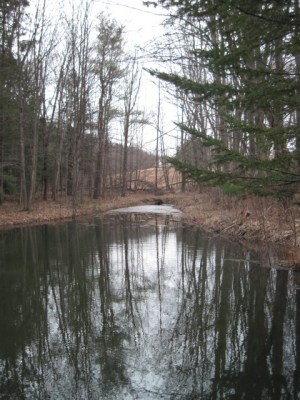
The fish-pond the previous owner built on the east side of our two and a half acres skews the elemental associations I inherit from my Euro-Druidry. So I read my pond-rune for its wisdom, in spite of the dislocation. Water to the East, the pond a surrogate for the Atlantic surging beyond it a mere hundred miles further off. Be ready to shift your perspective for what it can teach you, says my Druid guide.
Over-caffeinated this morning, I’m giddy as I try out this re-orientation, going for the literal first. Widdershins and we’re off, a banishing of the old order. Air to the North, then? Because nothing halts Canadian weather from turning intermittently south to us, troubling and training our meteorologists all year long to keep humble. It fits, too, because that first warm day of spring is air breathing its promise of new life, before the earth has quite let go its permafrost. Frost-heave warning signs still mark the worst of the bumps and dips in Vermont back-roads as the ground slowly gives up winter.
the grove to the west, as the sky clears
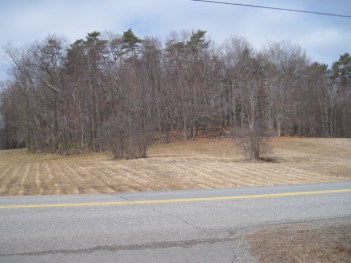
Earth to the West, a tree-covered rise just across the road in front of our house. From time to time I build a dream-shrine there, or imagine it alive with some rite in progress, all without disturbing in the least the neighbor who actually owns the land. For three seasons the trees gather the light each day at sunset, their branches embracing orange and peach and golden afterglow, except for summer’s green crowding out all other colors.
And last to the South and Fire. Most immaterial of the elements, only you remain unchanged. I’m intrigued. The polarities work, too. Earth and Water, both traditionally feminine, face each other across the east-west axis, as do Air and Fire, traditionally masculine, across the north-south one. In fact, the realignment accords reasonably well with Mike Nichols’ article “Rethinking the Watchtowers: 13 Reasons Air Should Be in the North.” Here’s the second from his list of reasons:
PARALLEL CULTURES: Although arguing from parallel cultures may not be as convincing, it is still instructive to examine other magical aboriginal cultures in the Western hemisphere. For example, the vast majority of Native American tribes (themselves no slouches in the area of magic!) place Air in the North, which they symbolize by the Eagle. (Aboriginal cultures lying south of the equator typically have different associations, for reasons I will discuss next.)
Here’s a set of new meditations ready to hand: what follows from such a re-alignment? What new insights? What new ritual possibilities? As Druids emerge across the planet and walk their own lands, how do we adapt our practices and teachings, and what do the adaptations and changes teach us in turn? The pulse of our world is one, yes, even as each vein and artery flows with its own unique current and energy and direction, nourishing distinct organs and tissues. The metaphor’s merely another tool, and the question as always is: does it help us feel our way into accord with the spirits of the land where we dwell?
/|\ /|\ /|\
Oh earth of my bones, earth of my ancestors’ abode, earth that my feet and this house and our lives all rest on, I give thanks for breath and blood and day, the four elements in their shifting guises now complete. The fifth, Spirit Within, Spirit at the Center, hail and always welcome.
Sometimes an evocative line can serve up a good day’s worth of Druid meditation. An article on schizophrenia in the current New Yorker offers this fabulous paragraph on the development of the brain, with its potent last line:
The human eye is born restless. Neural connections between the eyes and the brain are formed long before a child is born, establishing the wiring and the circuitry that allow her to begin visualizing the world the minute she emerges from the womb. Long before the eyelids open, during the early development of the visual system, waves of spontaneous activity ripple from the retina to the brain, like dancers running through their motions before a performance. These waves reconfigure the wiring of the brain—rehearsing its future circuits, strengthening and loosening the connections between neurons. (The neurobiologist Carla Shatz, who discovered these waves of spontaneous activity, wrote, “Cells that fire together, wire together.”) This fetal warmup act is crucial to the performance of the visual system: the world has to be dreamed before it is seen.
I find myself wanting to draw out this image, to extend its reach, then try out those extensions to see whether and how they might be true. Dream a world and you can see it. Sing before you can hear anything, let alone the music of the spheres. Limn the deeds and character of a deity, and she begins to manifest at the invitation of this earliest devotion. Imagine with whatever awen drops into your awareness, and the transformation of that subtle primordial seed-stuff proceeds apace. We nurture energies and impulses, not merely passively experiencing them, and they weaken and die or grow and thrive in the womb of human consciousness. How many things are literally unthinkable until that first person somewhere thinks them? What can I give birth to today? (Schizophrenia, and creativity too, have physical correlates — according to research cited in the article they both issue from the processes mentioned of strengthening and loosening connections between neurons.)
Old Billy Blake, sometime-maybe Druid, maybe madman, says in the last lines of his poem “Auguries of Innocence“:
We are led to Believe a Lie
When we see [with] not Thro the Eye
Which was Born in a Night to perish in a Night
When the Soul Slept in Beams of Light
God Appears & God is Light
To those poor Souls who dwell in Night
But does a Human Form Display
To those who Dwell in Realms of day.
Praise be then to the Keepers — and Seekers — of such Double Vision. And I ask myself: Can we see the world whole in any other way? Hail, Day-dwellers, Night-dwellers, Walkers of Both Worlds!
We look for things that will acknowledge and value and nurture the overflowing spirit that is our humanity at its best. We literally grow larger than one self in our relationships with other beings. This isn’t merely a lonely, impotent and mortal self desperately seeking an echo, a mirror, before the dark comes on, though that can be one part of it. Our curiosity and empathy mean we can feel ourselves into the oddest and most splendid corners of the universe. And then keep going even further. Because we can. But just as much because those corners are there, endlessly inviting. The cosmos beckons. “House made of dawn,” says the Navaho night chant, “house made of the evening twilight …”
Of course, other humans offer a ready first “target” for this quest. We fall in love, we bond, we befriend, we seek connection. What’s remarkable to me is not the number of times we face disappointment or disaster in our human relationships. You might almost expect that, given the universe around us where fish spawn and the majority perish before reaching adulthood. Nestlings don’t all make it. Flowers and trees cast thousands of potential offspring to earth and wind and water, and how many survive?
But the number of times things actually go well can astonish. Life, quite simply, abounds. It beats the odds. And even looking narrowly for a moment at just the human world, at friends, family, co-workers, allies, strangers who perform those random kindnesses — well, live among other humans and we can strike you as a varied and quarrelsome bunch at times, to be sure, but more remarkable still for wanting to connect, to be counted, to know and be known. And we talk endlessly about it all, thinking words will bring us together. Sometimes, surprisingly, they do.
And the natural world? Both womb and tomb, it still manages to be other enough that our super-enlarged brains have plenty to do to figure out whether we do or don’t really “belong.” Hence the need for wisdom, for something more than the givens of a human life: birth, food, sleep, learning, sex, work, play, illness, joy and death. Because to the question “Is that all there is?” the answer is almost always “No.” That “no” is so reliable, in fact, that things like Druidry provide marvelous tools for exploring the “all that is.” But if Druidry or Plan B doesn’t happen to work for you, by all means find (or make) something that does.
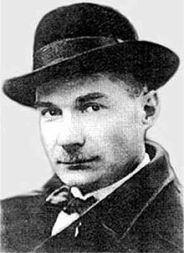
Yevgeny Zamyatin
We can go and quite readily have gone to other people’s faiths and ideologies and isms that offer answers and creeds and dogmas. But we can also look, more provocatively and more productively, for great questions. As the Russian writer and philosopher Yevgeny Zamyatin (1884-1937) remarked, “Dealing with answered questions is the privilege of brains constructed like a cow’s stomach, which, as we know, is built to digest cud.” Foolish questions are a risk along such a path, of course, but they are only “foolish to a civilized man who has a well-furnished European apartment with an excellent toilet and a well-furnished dogma.” Better a few foolish questions along with many more useful ones. And far better than no questions at all. Yes, that’s next door to a dogma in my book, if you want to know.
“In a storm,” Zamyatin observes, “you must have a man aloft. We are in the midst of storm today, and SOS signals come from every side.”* It’s no accident that new forms of spirituality sprang into existence over the last 50 years or so. From a Druid perspective, you might say, like a bird or bush moving into a new ecosystem, a niche opens and life explores it for fit, changing it or changing itself. Or both. A trust in the power of spirit to manifest new forms at need is one of the gifts of Druidry. And the lifelong learning to work with that spirit and those forms is a fitting Druidic quest.
*Zamyatin, Yevgeny. On Literature, Revolution, Entropy and Other Matters. 1923. The translations here appear in Ginsburg, Mirra, A Soviet Heretic : Essays by Yevgeny Zamyatin (1970).
All around me, the formless. Everywhere I look, the track of some local thing I mistake for itself only, when it’s also a sign of the Mystery. In the end, it can feel like all is sign, one “it,” then another and another, each ceaselessly signifying the whole, each the center of Mystery, because each points to itself but also beyond and back again.
Everything’s in motion, no final self to stop and reckon with. Not just one thing becoming another, but everythingbecoming everything else. People age almost before our eyes, and a year that seemed long may turn and whisk itself into the past. Snow, sun, wind, tides — the hands of Spirit always reshaping the world. Already we edge closer to the third decade of the 21st century. Everywhere I see the mark of one thing passing into others, leaving spoor and benediction for those to follow who will.
I stalk Spirit in its many guises. Just when I think I’ve cornered it, something slips past uncommonly like a bird or feathered thing. Its pinions brush my cheeks. But when I meditate, when I remember to let go of catching anything, it comes to nestle in my lap. I feel its breathing stir my hair, and unexpected warmth sends a shiver down my spine. Remember, the voiceless thing says in my ears. Remember. Witness.

 With this post I finally complete the “Thirty Days of Druidry” series I began back in April. And ever as one cycle ends, another begins. We enter the dark half of the year with the greatest light and energy, a lesson in itself that things are never wholly as they appear, that each thing bears its apparent opposite in its bosom, as the Dao De Jing gently urges us to realize.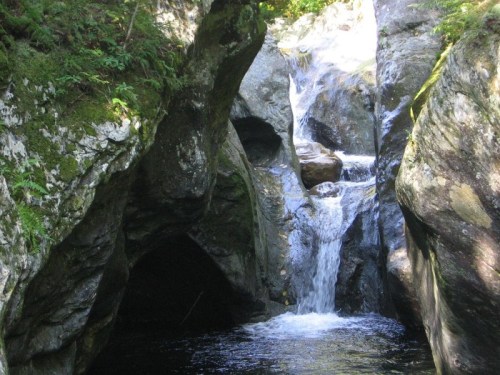
 Here in Vermont in the NE part of the U.S., summer moved in weeks ago, with days in the high 80s and low 90s (27-31 C), and blessed nights in the 50s and 60s (13-17 C), perfect for sleeping. With open windows, birds wake us between 4:30 and 5:00 am, sometimes, it seems, just because they can. They’re out and about, so why shouldn’t the rest of the world be? Or in the middle of the night, the pair of owls that nest nearby rouse us with hunting calls under a moon full last night.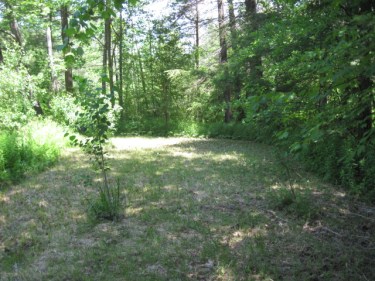
 A good speaker weaves enchantment over an audience, and the Chief did so now. “Others may fear the Dark. But we have learned, my brothers and sisters, to know and respect its nature and its extent. Identifying with it, its reach becomes our own, and from the concealment darkness offers, we may extend our grasp to life in a way that light cannot. Anciently the Wise have declared, ‘Light is the left hand of Dark.’ Once prepared, as we have prepared ourselves, we can welcome it and grow from it — from the Dark.”



 A Druid Way

.svg)


