An excursus on tradition, culture and purpose follows. If you’re not interested and you just want to pick up the story of Gawain and his deadly appointment where the last post left off, scroll down to the first break below marked by the triple awen /|\.
You’re still here? Part of my intent in this series of posts about Arthur and Gawain is to begin examining a native source of wisdom that’s not wholly Celtic in origin. The story of Taliesin from the Welsh tradition has been fruitfully mined by many modern Druid orders. But we can also seek more widely and find fertile sources of insight, wisdom and technique within other English language traditions, demonstrating how much of our lore, Arthurian and other, truly is a marvelous mix of multi-cultural magic. And this holds true with many cultural and linguistic traditions — what we need are explorers to locate and bring these half-forgotten treasures back to wider awareness. The sense of restlessness, rootlessness and apathy that beleaguers many people today has both real causes and real solutions.
In other words, as vital and growing traditions like Wicca and Druidry already have demonstrated, we don’t need to focus our spiritual journey only on Shamballa, or join an ashram in India, or sit under a Bo tree in meditation in a quest for wisdom and enlightenment beyond the physical and financial means of most people outside those traditions. These are all fine and worthy resources — but closer ones have also always stood lurking shadow-like on the edge of our vision.
Of course, it’s not a case of either-or, but both-and. The cultural garb that wisdom occupies, and the training any one culture gives in moving within that specific garb, properly belong to that culture. Wearing that cultural garb, to continue the metaphor, when I’m not entitled to it by participation in that culture, is indeed a kind of impostership. That’s cultural (mis)appropriation.
Tlingit totem and community house
But the wisdom which the cultural garb clothes is the common inheritance of all of humanity. I can’t rightly erect a Tlingit totem in my living room or front yard, to cite a single example, and claim to be a Tlingit shaman empowered to pass on Tlingit cultural forms to cash-flush weekenders looking for a quick psychological pick-me-up in a workshop — or even a serious course of study. But shamanism itself is a worldwide phenomenon with common features across cultures, and it can be learned without raiding anyone’s cultural heritage.
And so stories like Sir Gawain and the Green Knight offer immediate hints of ways that Druidic and Christian themes, images, precepts and practices may be fruitfully explored and adapted to modern life without injury to or theft from either tradition. Even questions like “But can you be both Christian and Druid?” are found to dissolve in actual practice, when each way illuminates the other. It’s typically those on the outside of a practice who ask that question, after all. We’d rather justify our opinions to others than genuinely test their validity for ourselves.
It betrays an unseemly and groundless fear of a universe permeated with the divine, if we shy from investigating any of its corners and crannies. Certainly such fears have no place in modern Paganism, nor should they find any home in Christianity either. For the latter tradition, to put the matter in explicit Christian and Biblical language, such fears betray a painful lack of faith in an all-powerful God who declared his original creation “good,” whose Son incarnates out of love of that creation in order to redeem all things, and whose divine will is sovereign.
The fact that whole traditions like Christianity have become toxic for many people is actually a most helpful guide when we come to look at Celtic Christianity, and particularly at movements like the Gnostic Celtic Church, which gently points out that the practice of sacramental nature spirituality “can be pursued apart from the various pathologies of political religion” (article at GCC link above) and serve all life, not just an in-group.
Beyond such immediate hints, then, deeper study, practice and contemplation of stories like Sir Gawain and the Green Knight reveal a wealth of images, lessons, techniques and perspectives useful not just to “those on a spiritual path” but to anyone alive today.
All right — back to our regularly scheduled program.
/|\ /|\ /|\
Over the next three days at Bertilak’s Castle, Dec. 29th, 30th and 31st, Gawain faces a perfect triad of temptation, reward and opportunity. It’s just hard for him (and us) to tell which is which. On each of the three days Bertilak returns from the hunt, he has different game to offer his guest, and though his wife plays the same game of flirtation with Gawain while her lord is away, she skilfully ratchets up the sexual tension each time. She speaks:
And right here you lie. And we are left all alone,
with my husband and his huntsman away in the hills
and the servants snoring and my maids asleep
and the door to this bedroom barred with a bolt.
She should know — she’s the one who barred it behind her!
I have in my house an honored guest
so I’ll take my time; I’ll be talking to him for a while.
You’re free to have my all,
do with me what you will.
I’ll come just as you call
and swear to serve your will.
(Armitage translation, pg. 103)
The Middle English of those last four lines is even more explicit: ” Ye ar(e) welcum to my cors (body)”!
The delicate challenge of the situation, as the original audience to this poem knew well, is one founded in the Medieval traditions of Courtly Love: if Gawain is to uphold his reputation and preserve both his own honor and the Lady’s, he must do what she asks, while at the same time not giving in to the temptation she clearly offers him.
Toward the end, before they negotiate things to just a kiss, she even scolds him: you can’t be the famous Gawain, she exclaims, or you would have acted long before now and taken what I offered.
Well, then, he replies, “I schal kysse at your comaundement … so pleade it no more.” Thus he succeeds this first time in walking a very fine line. His good name and the Lady’s still secure, he bounds up from bed, dresses and dashes off to Mass.
Immediately the scene shifts to the hunt, with explicit details over some 40 lines of the gutting, butchering and feeding of the innards to the dogs, with the dressed carcass at length hauled back to the Castle. The first day the hunters bring back deer — a haul of venison the biggest Gawain’s “seen in seven years.” And in exchange he gives Bertilak a kiss — all he’s had from the Lady. They renew their pact.
Day Two moves things along, with the hunt in pursuit of a boar this time, and the same graphic description of flaying the carcass and butchering it. “Back at the Castle” in Gawain’s chamber, the lovely Lady makes it clear to Gawain that he should take from her what he wants and what she’s already offered, and if he’s rebuffed, why then he’s certainly got the youthful strength to take by force.
But that’s not the custom in my land, replies Gawain, nor the practice for “each gift that is geven not with good wylle.” The Lady chides him again: For somebody so famous, lord, can it be you’re truly ignorant of love, or don’t know how to take full advantage of a lady who’s shown she’s interested?
But at last they bargain things down to two kisses this time, and so once again Gawain barely escapes with reputation and honor intact.
That evening, on Bertilak’s return, Gawain delivers the two kisses according to their pact, which they again renew. He resists all teasing inquiries about the how’s and who’s of the kisses.
The Lady, meanwhile, is still so intent on Gawain, “so loving … with stolen glances and secret smiles,/ that it muddled his mind and sent him half mad …” (Armitage, pg. 131). Somehow he keeps his composure — it’s a near thing — and does not turn from her rudely for his own self-preservation, but courteously engages her all evening.
Edmund Leighton’s God Speed!
Bertilak for his part delights in his guest’s honor — so far. Gawain begs to leave early the next morning to be sure of arriving on time, but Bertilak will hear none of it. He declares to his guest: You’ll reach the Chapel well before dawn in the light of the first day of the New Year, so don’t concern yourself with that. “For I have fraysted [tested] you twice, and faythful I fynd thee. Now ‘third time throw best,’ think in the morn./ Make we merry while we may!” and they drink and at length agree to fulfill their original pact through the third day. If you’re thinking at this point that Bertilak has a pretty good idea what goes on at home while he’s out on his winter hunts — well, you’re not wrong!
It’s Day Three, the third hunt takes Bertilak and company off on the trail of a fox, and we know from prior experience with threes and with past stories that this third time will be the true test.
And so it is. The Lady certainly pulls out all the stops. The next morning she arrives at Gawain’s chamber scantily clothed, her shoulders and back both bare, the cut of her shimmering robe scarcely covering her breasts, clusters of tiny gems sparkling in the tresses of her hair. As before, she bars the door from inside, and in Gawain “a passionate heat takes hold in his heart” (Armitage, pg. 137). The Lady lowers herself onto him and kisses him, and when he doesn’t take things further, berates him for not loving her now that things have gone so far between them. “Telle me that now trwely,” she insists: there must be somebody else. Another lady, perhaps?
No! says Gawain. No one!
“That is a worde,” answers the Lady, “that worst is of alle.” You reject me for no other reason than myself. But surely then you have some gift, some token to give me, to ease the ache of memory when I recall you and our meeting?
Alas, Gawain replies, on this journey I brought nothing to such an unknown land that would serve. The best I could do would be one of my gloves.
Well, says the lovely Lady, “though I have naught of yours, yet shall you have of mine.”
First she offers a ring, which he refuses. And then a green silk girdle, which he treats likewise — until she reveals something of its worth:
“And now he sends back my silk,” the lady responded,
“so simple in itself, or so it appears,
so little and unlikely, worth nothing, or less.”
But if he only knew its value: “the body which keeps it
buckled robustly around him,
will be safe against those who seek to strike him
against any trickery in the world.
Gawain finally relents at that, hoping, we understand, to up his chances at surviving the axe-blow tomorrow. Then tell my lord nothing, the Lady entreats him. Gawain consents to this as well, and
His thanks are heartfelt then.
No sooner can he say
how much it matters, when
three kisses come his way.
(Armitage, pgs. 144-5)
Bertilak returns, receives from Gawain the three kisses (and nothing else), and laments he has only a stinking fox-hide to offer in return. They feast and drink again, the lord celebrates Gawain’s perfect gift of three kisses, agrees to offer him a guide to the Chapel in the morning, and they part to their bed-chambers.
The Medieval poet closes this third of four “fitts” or sections of his poem like this:
If Gawain sleeps soundly or not, I can’t say.
For he had muche in the morn to mind, if he would, in thought.
Let him lie there stille,
he has near what he sought;
If you will a while be stylle,
I schall telle you how they wrought.
In the previous post, in the tradition of cliff-hangers everywhere, we left Gawain in Camelot, no doubt in a daze. He’s just accepted and accomplished the first half of the challenge of the beheading game from the Green Knight.
The unseely green holiday visitor to the fabled court of Arthur has, in turn, taken Gawain’s best blow and withstood it. He both lost his head and retrieved it, apparently none the worse for wear. Clearly he’s magical, or divine (when did those two split, to our great loss?), though the poet makes no mention of this. No need, when the deed speaks for itself.
“Lud’s Church,” Staffordshire, UK — one possible candidate for the “Green Chapel”
And in a year and a day — an interval both long enough and one that will spin by all too quickly — Gawain must present himself at the Green Chapel, somewhere vaguely to the north of Camelot, to fulfill the second half of the challenge game. This time it’s his neck that goes under the axe. “Come, or be called coward forever!” The Green Knight’s words still ring in his memory.
And the devil of it all is that Gawain’s clearly asked for this. Nobody else he can blame. He rose from among the gathered court to seize both challenge and axe from the hands of his uncle the king. Clearly both men thought the challenge would end then and there, with the foolish visitor’s head bouncing across the floor. But you never know for sure when magic will intervene, nor how it will shape what comes next.
So the Medieval poet’s got the “death” part of the title already in play. We all know we’ll die, somehow, someday. As for sex, so far we can find plenty in the lively and erotic holiday atmosphere of the court, lords and ladies celebrating together in a two-week-long revel, food and drink in abundance. A Christian holiday, indeed, but not one that excludes the secular delights of feasting and dancing, flirtation and dalliance. For Gawain, there’s added pleasure in his seat of honor beside the lovely Guinevere, Queen and chivalric ideal.
But wait, as the poet might have said, there’s more and better to come.
/|\ /|\ /|\
A brief magical interlude here. Alert to what we can learn from the “wisdome of olde bookes,” we can consider a portion of what this story may have to teach us. From one point of view, Arthur has set up magical intentions and chosen the moment. After all, the time is right for them, with all the swirl of energies around the winter solstice and new year.
The king, the male half of the royal spiritual self, will not eat until all are served, opening his heart with generosity and fellow-feeling. All parts of our own kingdoms benefit from this. And he likewise won’t eat till either a marvel manifests or — another kind of marvel — some challenge or “game” presents itself. It’s surprising what we may chance to discover and experience, when we choose to look with such preparation. And the Queen? She is a chess-piece in the larger game, but also the most powerful figure, once the pawns and knights move out of her way.
/|\ /|\ /|\
A year and a day lasts long enough to permit some really magnificent bouts of denial and procrastination. As a period of magical testing, it can sort the committed from the undisciplined, the patient from the reckless.
At Michaelmas, late September, the poet tells us that the moon itself signals to Gawain that his appointment draws near. Yet a month later, on All Saints, the Christian Samhain, Gawain lingers still at the court, reluctant to depart. Finally, after more feasting, and loads of unsolicited advice from other knights at court, Gawain presents himself to Arthur and asks for permission to go: “Now, liege lord of my lyfe, leave I you ask.”
Here in a modern conception, the Green Knight is clearly a giant. Note Gawain’s shield adorned with pentacle/pentagram.
And the poet moves on to describe Gawain’s apparel and weaponry in splendid detail, focusing for some 30 lines on a careful exposition of the meaning of the pentangle on Gawain’s shield, though he concedes it “must tarry him in his telling.”
This passage alone, in a poem plainly dating from the 1400s, should at least temper the silly hubbub that arises every year around Halloween from certain quarters about Satanists and their evil pentagrams or pentacles. But of course, it won’t.
Here, centuries before Anton LaVey with his Church of Satan was even a twinkle in his ancestors’ eyes, the pentagram is clearly a Christian symbol. Thus, among other things, the five points of this “pure pentaungel” signify here “the fyve woundes that Cryst caught on the cross, as the Creed telles.” As a holy symbol of power, it’s been around for much longer than Christianity, of course, and will be long after Christianity is a legend and other faiths overtake it. And it will continue to acquire and shed secondary associations that may help or hinder any seeker from recognizing the pentagram as nothing less, and nothing more, than a symbol of spiritual reality beyond human opinion and (mis)perception.
Off Gawain goes on his faithful steed Gringolet, through the land of Logres — a Welsh word for England, and famous over centuries in legend and stories both old and more recent, such as C. S. Lewis’s Narnia and Susan Cooper’s Over Sea, Under Stone.
After some eight weeks of winter travel north — no modern M5 and M6 motorways for him to gallop along — Gawain arrives, weary and weather-stained, by chance as it seems on Christmas Eve, at a noble castle whose inhabitants welcome him warmly.
Three persons hold his particular regard — the castle’s lord Bertilak, an obvious focus, but also two noble women, one ancient, who notably sits at the table in the seat of highest honor, and the young and lovely lady of the lord — so fair in “her face, her flesh, her complexion, her quality, her bearing, her body, more glorious than Guinevere, or so Gawain thought” (Armitage translation, pg. 85).
After Mass they “feast and dance” for three days, and on the 27th of December, St. John’s Day, other guests depart, and Gawain, explaining his purpose to Bertilak in detail, announces he must also set out on the final leg of his journey to find the mysterious Green Chapel, and fulfill his pledge with the strange knight.
But there’s no need, exclaims the lord, laughing. “Ye schal be in your bed at thyne ease” till “the first of the yere.” As for the “grene chapayle … it is not two miles hence.”
Now let’s attend to the time till then, Bertilak continues. You promised to obey my will here, and you may linger in bed till morning Mass, then pass the day with my lovely wife, while I’m off hunting away from the castle. But let’s agree to a game of exchange. Whatever I win while I’m out, I’ll give you on my return, and just so, you must give me whatever you receive.
Agreed! says Gawain, always — we’re beginning to understand — up for a game or challenge, however much he may come to regret it later.
And so they each raise a glass together to drink on it to seal their pact.
Now at his ease after weary weeks of travel, Gawain has already taken much comfort in the lovely lady, enjoying her conversation, and sitting head to head sharing confidences. It’s innocent up to this point. Courtly love shows here at its best — no “foulness,” the poem emphasizes, attaches itself either to their words or manner. Reputations and honor have held them both to clear boundaries. But they do grow increasingly intimate and relaxed under the influence of youth, proximity, holiday revels, and the easy hand with which Bertilak holds his realm.
From the original manuscript: the Lady and Gawain
Bertilak leaves with the hunt early next morning, and Gawain, still abed, hears “a lyttel din at his door.” So he “heaves up his hed out of the clothes. A corner of the curtain he caught up a lyttel, and waits warily thitherward what it be might. It was the lady, loveliest to beholde, that drew the door after her dernly [secretly] and stille.” Less innocent now … and definitely more interesting!
The story will continue in Part Three.
/|\ /|\ /|\
Images: the Sir Gawain manuscript, formally named MS Cotton Nero A X, located at the British Museum; Lud’s Church, Gradbach, Staffordshire, UK — one of the possible sites of the poem’s “Green Chapel”; Gawain, shield and Knight; The Lady and Gawain, from MS Cotton Nero A X
*For the curious, the first line of the mauscript in the top image above reads: “Sithen [since] the s(i)ege and the assau(l)t was sesed [ceased] at Troye …” The anonymous poet opens by giving his poem a Classical backstory.
Armitage, Simon. Sir Gawain and the Green Knight. New York: W. W. Norton and Company, 2007.
With this post, A Druid Way marks its 4th anniversary — I started this blog on October 7, 2011.
I’m also committing to at least a weekly post each Wednesday. A hearty thank-you to you, readers of A Druid Way, for your encouragement and support over the past months and years!
This post and the next one pick up the theme of Arthurian myth and legend from the previous one. The “Matter of Britain” as it’s often called is an inexhaustible well of inspiration, of course. This time, however, I want to transition from King Arthur to his nephew Gawain and the Green Knight (and the Middle English poem by the same name), to the mysterious Lady that Gawain also encounters in between his meetings with her husband Bertilak, and more largely to the peculiar and delicious Medieval blend of Paganism and Christianity that surfaces in their story.
So what do we do until Arthur returns?
In the Arthurian peace and flowering of Britain which underlies much of the initial formation of the legend, the focus shifts from Arthur to his court, and more particularly to his knights and ladies, who leave Camelot to set off on their own adventures. A pattern to consider: first, achievement; but then, further exploration and spiritual challenge. Or the opposite — after a few iterations, it amounts to the same thing.
Round Table and vision of the Grail, from an illustrated manuscript, ca 1470, by Evrard d’Espinques.
After all, once Arthur wins through to his throne, marries, and begins to assemble his court, he himself can seem less interesting (at least until time whirls round again to the Battle of Camlann, his final and fatal engagement with his bastard son Mordred). So singers and storytellers started to look for adventure elsewhere, with knights inspired by Arthur’s example and by the fellowship of the Round Table. King and Queen on the throne, or knight on a noble/ hopeless/ mysterious/ romantic quest — it’s easy to see where the greatest dramatic potential lies.
The Medieval poem Sir Gawain and the Green Knight sets forth one version of the story in 600-year-old English. The language is intermittently still quite comprehensible to us moderns, if you make some allowances for spelling (I’ve done very minimal editing):
Astrid Berges Frisbey as an archetypical young Guinevere in the upcoming (2016) film Knights of the Round Table: King Arthur.
“This kyng lay at Camylot upon Krystmasse” and “was cummen with knyghtes into the halle.” And there Guinevere rules beside him as queen, a Guinevere as yet untouched by the scandal of any affair with Lancelot, “full gay, graythed [arrayed] in the midst” of the noble gathering. And a more lovely lady, “sooth [truly] might no man say.” Here then are the archetypes, before they decline into stereotypes. Here are the originals, magical king and beautiful queen. Part of their appeal is to our own psyches, to the beauty and power we instinctively know both genders possess — or could possess, if only …
The story setting is the three-part holiday of Christmas — New Year’s — Epiphany, the ancient tradition — and ultimate source of the song — of the Twelve Days of Christmas. Midwinter, birth of the Son, rebirth of the sun, the new year at hand. The Court’s right in the middle of its fortnight of feasting. Shortly, it’s New Year’s Day. And as such gatherings and festivals and holidays so often do, this revel has already begun to spin off its own local customs. After all, when does your family open presents on a gift-giving holiday? And what rituals have you perhaps built around it? Or if not you, a relative or friend?
Not surprisingly, in Camelot it’s Arthur himself who starts it, ritualizing the festivities. “The kyng wold not ete til al were served.” It’s a gesture wholly in keeping with the holiday season of generosity and joy. And the king extends the ceremonial atmosphere still further, also refusing to eat before he hears a story: “he wold never ete upon such a dere [dear, special] day ere him devysed were of sum adventurus thyng an uncouthe tale …” Or until someone challenges one of his knights “to joyne with him in joustyng, in jeopardy to lay … life for life …”
And things Medieval and magical being what they are, if you’re Arthur — if you recognize and live from the throne of your spiritual sovereignty — sometimes the “uncouthe tales,” marvelous stories previously unknown — come to you.
The Green Knight, William O’Connor, 1996
Right in the midst, then, of all the noble knights and fair ladies, heaping platters and heavily laden tables, sprightly servants and bold banners, talk and revelry, the Green Knight suddenly barges in on horseback. For a moment he just sits his mount, framed by the main door, towering over everyone. The perfect Medieval photo op.
Huge and red-eyed and green is he indeed: “for wonder of his hue men had.” Likewise “his strayt cote” and “his hood bothe” and on his legs “hose of that same grene.” A marvel! The hair on his head, “the barres of his belt and other blythe stones,” even the steed he rides, “a grene hors grete and thikke” — everything’s green! In one hand he holds a branch of holly; in the other, an enormous axe.
Then he spurs into the great hall. “Where’s the governor of this gang?” he demands, haughtily. “To knightes he cast his eye.” For an instant — no surprise — silence greets him. “Each mon had marvel what it might mean” that man and horse both shone “grene as the grass, and grener it seemed.”
Green Man, Bamberg Cathedral, Bamberg, Germany, ca 1300s
Green can be unseely — Northern dialect for “unlucky, unholy.” Corpses and cheeses rot to green, metals like bronze corrode, swamps give off their ghostly phosphorence, moss and weed, creeping vines and algae, all overtake things each in their green fashion. Even the Devil himself gets rendered in green in more than one Medieval painting.
With modern commerce and ecology, green is almost wholly a good thing — not so in Medieval times. It represented a mixed bag of lust and youth (we can still be green with envy, too; and an untried youth is still sometimes called a “greenhorn”), nature and fertility, and early versions of the Green Man beloved of Pagans. Another post on this blog, about Beltane, also treats of greenness in some detail.
[Most clearly, perhaps, we see and hear and feel this enchanting but deeply ambiguous green in Dylan Thomas‘s wonderfully Bardic poem “Fern Hill” : “Now as I was young and easy under the apple boughs/About the lilting house and happy as the grass was green” and later “I was green and carefree” and later still “And green and golden I was huntsman and herdsman” and “it was air/And playing, lovely and watery/And fire green as grass” and then nearly done “And nothing I cared, at my sky blue trades, that time allows/In all his tuneful turning so few and such morning songs/Before the children green and golden/Follow him out of grace” and last of all “Oh as I was young and easy in the mercy of his means,/Time held me green and dying/Though I sang in my chains like the sea.” A poem that doesn’t merely describe but evokes … Follow the link to the poem and read it aloud.]
To return to the Medieval poem: Arthur answers the arrogant Knight with courtesy — the Medieval cortaysye — bidding him join the feast and tell his errand later. It’s an age-old gesture of hospitality, one that dates back to Homer, the traditional and trusting host’s welcome to a stranger. Eat and drink first, and only then speak your will, or recount your story.
Still haughty, the Green Knight declares his nature means he has no intention of lingering. I come, he declares, because of the fame of Arthur’s realm: castle and court are called “the worthyest of the worldes kynde.” The axe I carry, he announces, is no threat. Look to the holly sprig. Be sure “bi the braunch I bere here that I pas in peace.” If I wished for war, I’ld have come fully armed. “But if thou be bold as all folk tellen, thou wil grant me goodly the game that I ask bi ryght.” A Christmas challenge: “I crave in this court a Crystemas gomen.”
Besides, if he were spoiling for a bout, he’d win easily, he boasts. All he sees on the benches around the hall are “berdless children.” But if anyone’s got the guts, “leap lightly to me and latch this weapon. I schall give him of my gifte this axe, to hondele as he likes. I quit-clayme it for ever — keep it as his own. And I shall stond him a stroke” and promise “the doom to deal him an other … and yet give him a respite, a twelve-month and a day.” And again we’re into magical territory, the “year and a day” of testing and challenge, mystery — and mastery — and cyclic completion.
The Knight taunts the company further, and when no one rises to accept the challenge, Arthur himself reaches for the axe. But his nephew Gawain intercedes and claims the right, pointing out that with warriors in the Court to uphold its honor and reputation, the king needn’t lower himself to accept such a challenge. Gawain reasons further with him: besides, as your nephew, if I die, the loss is less.
To make short work of the next few stanzas, Gawain readies the axe, the knight stands with neck bared to receive the keen edge, and Gawain gives him a fierce blow that lops off that green head. Through fat and flesh, the blade bites the floor. Blood spatters those nearest, and they kick at the head as it rolls past the benches.
The Knight, however, strides forward undaunted, retrieves his head, and turns back to his horse. “The brydel he cachches, steps into stirrup and strydes aloft, and his hede by the here in his hondes holdes.” And he speaks one last time: “On New Year’s morn, Gawain, come to the Green Chapel, I charge thee, to receive such a dint as thou hast dealt and now deserve …” And then, as British poet Simon Armitage* renders it in his fluent and lively translation, “So come, or be called a coward forever” (pg. 51)!
Knight, horse and now chapel — green and Christian mixed. The whole game’s unseely! The Knight departs, more food, drink and dancing displace everyone’s fears — except Gawain’s.
Thus the original anonymous Middle English poet closes this first of his four sections (here again is Armitage’s translation*): “But mind your mood, Gawain, keep blacker thoughts at bay, or lose this lethal game you’ve promised you will play” (pg. 53).
*Armitage, Simon. Sir Gawain and the Green Knight. New York: W. W. Norton and Company, 2007. (There are other good translations — notably one by J. R. R. Tolkien. But I like this one, partly because my high school seniors liked it when we read it in our British Lit. class, and also because it provides the Middle English text on the facing page, for linguistic nerds like me who enjoy fine language for its own sake. You can find it used and in paperback. Or get thee hence to thy local library.)
Like their kindred words in the other Celtic tongues, the syllables* of this Cornish saying still echo, telling of the “Once and Future King.” They assert a living archetype of a king born in fulfillment of prophecy, a ruler recognized and granted kingship by the Lady of the Lake, a leader who struggles, fights and dies for his people. The king is the land.
Arthur from the Matthews’ deck
Nyns yu marow Arthur myghtern. “He is not dead, king Arthur,” the story continues, but sleeps, and will wake at his country’s direst need, and return. The king is the land.
Arthurian tarot decks like John and Caitlin Matthews’ Hallowquest, Anna-Marie Ferguson’s Legend and Stephanie and Philip Carr-Gomm’s Druidcraft packs often depict the archetypal king as card 4, the Emperor. This is Arthur as anointed ruler, secure in his kingship, enthroned, crowned and robed in power.
But surely what moves us more is not merely this static image, forceful though it can be. The young Arthur, ignorant of his destiny, is also the seeker, the Fool, the first card in the deck, a numerical 0. In Ferguson’s Legend deck he is Percivale, the callow and naive youth. With both Guinevere (Welsh Gwenhwyfar, “White Shadow”) and his own sister Morgan (with several other variants of her name) he is one half of the Lovers. And at least in the Matthews’ conception, he is the Wounded King, and also the Sleeping Lord.
The progression, as in most tarot decks, is the journey of the self toward fulfillment, wisdom, self-awareness.
As a tool for Druidic meditation and ritual, the Arthurian mythos offers rich and profound material. Map our lives onto such a mythic pattern, and we can animate energies to manifest the next step on our spiritual journey. At every point we spiral. We can look at all the steps, all the places on the curves and whorls of the spiral, as potentials for us — right now. Not later. Not after we do or learn or master or win X. Now. The king who will be, but sleeps, is a potential which can guide the questing boy who will be — and who also already has been — king. What might the king say to his younger self? What gift might our older selves pass to us right now, insight or wisdom or counsel we need as we grapple with problems, as it can often feel, in the dark?
So many traditions around our planet speak in their own ways of time and space as illusions. This need not mean they are not real, but rather that we need not accept our agreement with an illusion as the last and defining word about our lives. They don’t have to be the only reality. By playing a game with time, we can slip into past or future through memory and daydream, to the point of no longer “being here” but “someplace else” instead. And we’ve all experienced this.
For we do this effortlessly, ever since childhood, a natural talent, a birthright, a skill we keep all our lives, unless it’s been largely chased away and beaten out of us by our culture, teachers, parents, our own self-limitation, habits of thought, and so on. “Head in the clouds, dreamer, impractical, unfocused”: words so many of us may have seen in school reports, job assessments, personal evaluations. Or maybe we suffer from the opposite pole, and more and more of the lightness and joy has been leached from our days through routine, day to day cares, deadlines and installments and bills and mortgages and the nightmarish hope of someday “catching up” or “getting ahead” or “arriving.” Always, it can seem, one pole or the other. But polarized things gather power. That’s why an illusion can grab and hold us. But that’s also why change and growth and exploration are also — always — possibilities. Poles hold the energy for entrapment, but also for transformation.
The Sleeping Lord (form outlined in the hillside under the hawk)
These images and this millennium-old mythos provide a wealth of meditation seeds, portals to discovery, and material for ritual that Arthurian orders of ritual and magic explore, but which are also perfect for solitary work, too.
Arthur myghtern a ve hag a vyth can be a contemplation seed (it’s one of mine), a cue to open the imagination to possibility. (I use it as a tool, a charm, a spell, a mantra of magical power. Pair it with an image, an object, an intention — intention being the flame which, I find, lights everything up.)
And if I’m willing to step across one more boundary, ritually priming myself with a “For behold: now am I ____ !” I can explore all the characters in the Arthurian realm. Taliesin-like, I can be the Green Knight, invulnerable to mortal blows, and Morgan and Merlin, Nimue and Mordred, too. What does it feel like to die as you kill your uncle-father (Shakespeare’s Hamlet knows!) in fulfillment of a prophecy from a time before your birth? What does it mean to lie asleep, waiting to fulfill a royal destiny? What part of me sleeps right now, that I can rouse if I choose? Or like Ygraine, Arthur’s mother, to carry an unborn child in my belly, a king, gestating and brooding and nourishing new and royal life from within? Or what can I see as Merlin in his cave or tower, looking up and down time itself, living backward as in T. H White’s version of the Arthurian boyhood story, The Sword in The Stone?
Then to close the rite, the meditation: “And now have I returned.” A simple formula, but helpful, to ground the meditation, to signal a shift of reality. (Return is as important as departure.) Open your eyes, and record what you experienced. In this way, over days and weeks, you build an increasingly persuasive document that can help loosen the hold of the illusion of this time, this place. Each time I sit to meditate, the pages telling of my previous journeys in front of me, the grip of illusion eases. For these two things, time and space, can be potential gifts, or they can remain prison walls. They’re a choice, if I choose them, rather than a given, if I merely accept them.
The Seeker from Matthews’ deck. Before us all lies the Rainbow Path.
Figures as diverse as Henry Ford and physicist John Wheeler get credit for versions of the saying “Time is what keeps everything from happening at once.” It’s a way of ordering experience, making it intelligible to human consciousness. And so is space, which — to follow through on the whimsically powerful definition and construct its corollary — “keeps everything from happening here.”
Starting small, with the trick, if you will, of imaginative magic, will begin to unfasten the iron clasps around consciousness. It’s just one way, of course. Traditions in and outside of a whole range of religions and spiritual paths offer many tools and strategies for accomplishing this change, if we wish it. But these particular images and this story have spoken for a thousand years to many people, and the Arthurian drama that can be a mirror and key to our mortal and spiritual lives shows little sign of a diminishment of its power to move and inspire — and transform. Sleeper, whispers a whole nation of people inside each of us that we have been and are being today and will be someday, a multitude of selves. Sleeper, awaken to your crown and to your destiny.
/|\ /|\ /|\
Images: Matthews’ Arthur, card 4; Matthews Sleeping Lord; Matthews’ Seeker (Fool in other decks) with three choughs (a raven-like bird) overhead.
*Note on pronunciation: The -gh- of the Cornish word myghtern “king” is essentially the same sound as in German “Bach” and close to English “h” in “aha!”: mikh-tayrn comes reasonably close for ritual purposes: AHR-thoor MIKH-tayrn ah VEH hahg ah VEETH.
This last weekend marks the 5th East Coast Gathering I’ve attended, the 6th since its launch in 2010, and another gift of Spirit and mortal effort.
You can read my accounts of three of the previous years: 2012 | 2013 | 2014. A special thank-you to John Beckett, several of whose professional photographs illustrate this post. You can visit John’s own articulate and insightful blog “Under the Ancient Oaks: Musings of a Pagan Druid and Unitarian Universalist” over at Patheos here.
Camp Netimus — site of the ECG. Photo courtesy Krista Carter
Registration for the weekend filled within 20 hours of opening this last spring. Gatherings like this answer an obvious need in the Druid and Pagan community, and more are in the works in other locations. It’s on us to help make them happen. A dedicated team can bring the same joy, support, inspiration and community to other regions.
Yes, we’re all solitaries some or much of the time, but every solitary benefits from celebrating and learning in the company of others. That chance conversation, ritual insight, day- or night-dream, word or phrase that lights up just for you, the hugs you give and receive, the opportunities to serve the community through offering a workshop, cooking, cleaning, organizing, driving — these make Gatherings like this such richly rewarding experiences. The dark and light halves of each year are real, and we need all the help and laughter we can find to thread our way through the labyrinth of time.
/|\ /|\ /|\
I arrived Thursday afternoon early enough to check in and unpack before the opening ritual. My cabin mates had already hoisted a banner, which also made the building easier to distinguish from the others in the dark, when the “9” on the door was no longer readily visible.
Cabin banner. Photo by A Druid Way
Equinox marks the shifting energies of days and nights, rebalancing the world. A lovely moon bore witness, waxing each evening through wonderfully clear skies, lighting the path to evening events like the Ovate initiation ritual and illuminating the short uphill walk from the cafeteria to the nightly fire circle.
Crescent moon in a twilit sky. Photo courtesy John Beckett
The theme this year was ritual, and the whole weekend focused our attention on its magical possibilities through a dozen workshops, demonstrations and ceremonies. You can get a sense of the range of approaches from the list of workshops here. We also welcomed returning U. K. guests Damh the Bard, Cerri Lee, and Kristoffer Hughes.
Cerri Lee, Damh the Bard and Kris Hughes. Photo courtesy John Beckett
/|\ /|\ /|\
Damh’s workshop on “The Bardic Voice” underscored the centrality of the Bard in Druidry. Like many Druid groups, OBOD orders its teaching in the sequence of Bard, Ovate and Druid. But they do not form a linear progress or erect a hierarchy of achievement. They spiral. In an Ovate breakout group a day later, several people mentioned how they often return to the Bardic coursework, its insights deepening through their Ovate practice. And likewise with the work of the Druid grade.
Damh is a fine teacher, an animated storyteller and ritualist of deep experience. With his wife Cerri he leads Anderida Grove. [For an audio inspiration, listen to his hour-long recording for inner journeying here.]
Damh in teaching mode. Photo courtesy John Beckett
/|\ /|\ /|\
Reminders of ritual possibility filled the weekend. Below is a picture of a labyrinth, another gift of the weekend, lovingly constructed by Cat Hughes and friends.
Labyrinth by day — entrance. Photo by A Druid Way.
Volunteers switched on each light every evening, then turned them off again when everyone else had gone to bed.
Labyrinth by night. Photo courtesy Damh the Bard.
/|\ /|\ /|\
Kris’s workshop, “Laudanum, Literature and Liturgy — the Ritual Legacy of Iolo Morganwg,” featured the ritual — in Welsh — that Morganwg first performed on the Summer Solstice on Primrose Hill (London) in 1792, launching the Druid Revival and establishing the Welsh Gorsedd of Bards. Morganwg is also the author of the Druid’s Prayer, still used in many modern Druid groups including OBOD, and a major influence on generations of Druids from his time to the present. Kris’s Celtic eloquence in praise of Morganwg and his passion for Druidry took him off script and left many of us with tears in our eyes.
Kris during his workshop on Iolo Morganwg. Photo courtesy of Dana Wiyninger.
/|\ /|\ /|\
Bill Streeter from the Delaware Valley Raptor Center, the charity designated for this year’s Gathering donation, brought six birds and made a fine presentation on raptors, their abilities, the dangers (mostly human) facing them, and the challenges of rehabilitating injured birds.
Bill Streeter of the DVRC with a golden eagle. Photo courtesy John Beckett.
These magnificent birds have often suffered neurological injuries that worsen over time. Though both the eagle above and the owl below look normal, both are blind in one or both eyes, or suffer other injuries like crippled wings, and thus could not survive in the wild. But the birds help save the lives of their kin through their appearances in info sessions like this one.
Great Horned Owl. Photo courtesy John Beckett.
/|\ /|\ /|\
The Alban Elfed ritual celebrating the Equinox includes gifts from children, guests and each of the three grades of Bards, Ovates and Druids. Here are Chris and I holding bowls of acorns, part of the Ovates’ ritual gift, just before the ritual procession into the Circle.
Chris (r) and I (l) just before Alban Elfed ritual. Photo courtesy John Beckett.
The evening eisteddfod (music and poetry circle) one night featured a splendid duet from Kris and Damh — see the image below.
Kris and Damh singing at the fire circle. Photo courtesy Hex Nottingham.
Below is another pic of the fire circle one night. Our enthusiastic and skilful fire-makers Derek and Brom love large, carefully-constructed bonfires.
Evening bonfire. Photo courtesy John Beckett.
Once again Dana set up her meditation tent on the campground for all to visit and enjoy.
Approaching the tent. Photo courtesy Dana Wiyninger
Altar in Dana’s meditation tent on the camping field. Photo courtesy Hex Nottingham.
A small group made a side excursion to nearby Raymondskill Falls. Here’s a view of one of the waterfalls.
And for those of us who can’t wait an entire year, the Gulf Coast Gathering will celebrate its second year in March 2016. Blessings of the Equinox to all!
I cherish my Druid family, but like all our families, they can sometimes drive me crazy. Very often I cringe when I see their online appeals for assistance with jobs, health, relationships — the usual sources of our suffering and joy. Don’t misunderstand: I want to help. But that impulse immediately finds itself in combat with a question: do I really know what even I myself need in a given situation? Not what I want, but what I need? And if I don’t, is it any kindness to send energy to a situation that does not serve a friend’s best interests?
Such appeals typically elicit a round of quick replies from well-meaning friends and readers. A ritual performed, a prayer said, a visualization completed. Done, done, done, read the comments in response.
What to pray for? The obvious, the thing the other person is requesting, seems dogged with problems. Divination can help, of course, and dreams, or the kind of conversation with friends when a word or phrase lights up with brighter meaning. Then there’s an omen or coincidence, a gift of chance, the natural world revealing a clue, or that sudden intuition while I’m doing something truly mystical like … the laundry. You know — the human ways the gods speak to us. And I think How rarely I know what’s best. Not false modesty here, but fact. Often I ask for clarity and wisdom, rarely for a specific outcome. Because prayers do get answered. I’ve prayed myself squarely into disaster more than once. Be careful what you wish for.
So when I encountered the following passage recently, near the end of The Last of the Wine, one of Mary Renault‘s splendid evocations of ancient Greece, it jumped out at me. In its intent it resembles how I try to pray for others in difficulty. Also it’s more eloquent than I can usually manage to be.
Here a friend of the main character Alexias is speaking, near the tail end of the suffering that much of Greece experienced during the three brutal decades of the Peloponnesian War:
We have entreated many things of the gods, Alexias. Sometimes they gave and sometimes they saw it otherwise. So today I petitioned them as Sokrates once taught us: ‘All-knowing Zeus, give me what is best for me. Avert evil from me, though it be the thing I prayed for; and give the good which from ignorance I do not ask’ (Mary Renault. The Last of the Wine. Pantheon Books, 1964, pg. 344).
/|\ /|\ /|\
In addition to prayer, we have other tools in our kit, of course. Magic, like prayer, is much misunderstood, practiced in all sorts of ways reckless and marvelous, and deserves careful study, like any art.
I’ve mentioned British author and magician Josephine McCarthy before, and she has down-to-earth and useful insight here, too:
The simple vision or ritual often gets cast to one side in search of something more powerful and interesting, and such action is a dead end that pulls the prospective magician off the tracks. Some of the simplest rituals are the most powerful once the magician has learned the deeper frequency of the ritual and can interact with it. For me the most powerful ritual of all is the lighting of the candle. It opens all worlds, all times and gives me access to focused power that is unfiltered. (Josephine McCarthy. Magical Knowledge Book 1: Foundations – The Lone Practitioner. Mandrake, 2012, pgs. 51-52).
What? you say. (I can hear the growing outrage in your voice.) Light a candle and just like that, problem solved? No.
One of the keys in McCarthy’s words is deeper frequency. Disciplined practice reveals such insight and will yield results possible in no other way. Thus the question for the Druid is less “What do you believe?” and more “What do you do?” Belief matters, praxis matters more. In the doing, the dedicated practice, we access that deeper frequency, the solution we can put into effect.
All well and good, you say. But what about right now, when I’m hurting?
Friend, I hear and pray the best prayer I can make out of my practice. I promise to keep on practicing. Any one of us can be the channel for Spirit to manifest in this moment — including you. In the meantime, a meal, a listening ear, a hug, a back-rub, a good night’s sleep, are some of the best immediate magics we have. Love has found you yet again.
Perform a Rite of Chocolate: only you and your Guides know how much is too much. (If you need an actual god of chocolate, the Mayan deity Ek Chuah, “Black Star,” patron of merchants and cacao, may serve your purposes; this site includes an image and some ritual details to build on.)
/|\ /|\ /|\
A 21st century mound — Northala Fields, London
Robert Frost makes do for my divination today — words from his too-famous “The Road Not Taken” bumping into each other in my head this morning after a walk: “I saved it for another day, but knowing how way leads on to way, I doubted if I should ever come back.”
The Spiral we all walk leads me away and away, until I forget I ever meant to come back at all. Then when I do, I run smack into what I’d “saved for another day.” Now the day’s here. Nothing lost. That inexplicable half-recognition at the arrival of things that we can’t possibly know, that kiss of the strange-familiar we all face once in a while — or many times — washes over me, gift of the Spiral. But oh how the hide-and-seek of it all can last lifetimes. What else did I save long ago “for another day”? No way to know, till it happens again.
/|\ /|\ /|\
The last few days I’ve been awkwardly mindless. Today, a little more joyously mindless. Oh, I still think, or maybe more accurately, what passes for thought comes flitting by and makes do, till my brain finds its way home again.
Fortunately this masquerade of consciousness seems to convince everybody else around me right now. I got through a short-term job interview yesterday that seemed to go well enough, I balanced my checkbook, I wrote a note to an old friend.
“Your brain could fit in the navel of a gnat and still rattle around like a BB in a corn-flakes box.” The old high-school insult, embroidered and endlessly recycled, just about sums me up right now. Except it’s insult no longer, just blunt fact.
/|\ /|\ /|\
Without warning I feel the power gather on the other side of the Gate. (What Gate? How should I know? But there’s a Gate right now, and power on the other side of it. Ya gotta roll with these things, I tell myself. Mindlessness helps.) A sound, a word, it’s the name of an ancestor who wants to reach me, whose wisdom I need right now, name which is also a pass-key to a world opening like an eye onto a twilight landscape.
I know this word, I say it to open wider, but it’s nothing I can write down, nothing to save for another visit, nothing with a human shape, though I keep saying it. But even as I think this, the inner reassurance comes that when I need to visit again, I’ll be able to. Then the whole thing is gone as quickly as it came. I stand on an endless beach, watching the tide go out all at once. At least that’s how it feels.
It must have been early in its life that the 70 ft. trunk of the willow in our back yard split in three. In this picture I took yesterday, it almost looks like three separate trees. As an instance of the triads and triples and threes prominent in Druid tradition, the tree serves as a visual reminder every time I look out the bathroom window. (It’s also just a tree.) And whenever I’m there, I can if I choose consider the willow. When I face a choice between two paths, often enough if I look patiently, a third option comes into focus, standing behind the two in front. Well, maybe not always as clear as these three trunks, but still …
As many others have before me, I find that looking for an “obscured third” factor or option is good discipline. While three no more constitute the whole field of the Possible than two do, seeking and finding a third is one step in a helpful direction. With bad math I can claim it’s 33% more accurate. At least it acknowledges complexity, and lets me read the contours of a moment or situation more fluidly, allowing for wider possibilities.
The ready tendency of human perception toward isolating pairs of opposites does of course simplify the messiness of the field. Of the universe, of life-as-we-know-it. As a preliminary take on what’s going on beyond our noses, it’s often not bad as a first approximation. But it’s only that. We all remember the crisis, the either-or, the hard call under stress, but far more often than we realize, the energies, potentials and tendencies in most situations are multiple rather than binary.
“I have to make more money or go into foreclosure. For here or to go? Either you’re with us or against us. If I don’t quit now, I never will. Yes or no? Soup or salad? Boy or girl? Either you believe in God or you don’t. Liberal or conservative? Thin crust or deep-dish?” We’ve all faced and heard these kinds of choices, possibly muttered — or shouted — some version of them to ourselves or others. “Paper or plastic?” “Left or right?”
How often have we’ve acted on one or the other, and not always to our advantage? I can feel my hackles rise, just thinking about it all. No one likes to be boxed in. Even “thinking outside the box” is still in or out. Still either-or, yes or no. Who makes their best decisions hassled, pressured, under the gun? Yes, some of us may be intermittent adrenalin junkies and love the high of danger, the thrill of risk, the seat-of-the-pants choice, the coin-toss of fate. But as a whole lifestyle, after a while it can start to look much less attractive.
“Left or right?” Well, we could turn around and go back the way we came. Or get out and walk straight ahead. Or park and wait for a bus or cab. Climb a tree and scope out the area. Or …
“Paper or plastic?” “Neither. I brought my own bag.” The relaxation that often follows seeing and feeling and acting from the richness of a third (or fourth or fifth) choice rather than from a false binary should tell me I’m onto something. (So should the occasional look of surprise on others’ faces as the moment breaks through habit, routine, semi-consciousness.) Maybe the choice itself matters less than I thought. Or maybe more — and so it shouldn’t be rushed, but savored. We love options, then deprive ourselves of them when they count most.
So your spiritual practice – i.e., your life – is going well, and moments of insight come to you like the god-kissed gifts they can be. The afternoon light slants a certain way, bees hum in late-summer flowers, the sweet air itself intoxicates you, and the golden pollen of August dusts your eyesight. It’s what the SBNRs, the spiritual-but-not-religious, count among the “treasures outside the walls” of a church or temple. Walk but a little deeper into such moments, hone that attention ever so finely, and you may more fully participate in what the Lakota call Great Mystery:
A bird sings in a nearby tree, and “in that moment you understand the singing of the bird … the shape of the clouds, and the beginning and end of the wind that stirs the leaves … it may even seem to you that you yourself are a word spoken by the sunlight” (A Wizard of Earthsea, pg. 35).
These words are slightly adapted from Ursula Le Guin’s classic fantasy, a source of wisdom I count among my teachers in book form. Such a charged sensibility as Le Guin describes glimmers at the edges of our awareness all the time.
Of course as we age, we learn how to turn it off, shut it down, dull its sheen into an occasional daydream, because in full spate it can remind us painfully of what we have forgone in our quest for other things we thought mattered more. Often I abandon the greater magic for the lesser – and the spell I cast, the one we cast together – works all too well. Exhibit A: just look around, or check out the shrieking headlines.
Or it’s nothing, as far as I can tell, that I’ve done, or left undone.
Nevertheless I search my thoughts and actions for a clue, plumb my mood and my intent, skim my spiritual journal (if I’ve been keeping it up to date, if I keep one at all).
And sometimes, as over this past six weeks, I know precisely where the imbalance lurks. I’ve just finished a teaching intensive, working with international high school students in a residential summer program, doing evening dorm duty, teaching classes, chaperoning day excursions – the kind of all-encompassing, immensely rewarding and exhausting work I’d already done for sixteen years, and which I’d consciously left two years ago. So I knew exactly what I was getting into.
And I could see how out of balance I was getting day by day, postponing regular and vital “inner time” till after the meeting about a troubled boy in the dorm, after I’ve had breakfast — I’m starving!, after teaching three straight classes, after grading this stack of papers I’d promised my kids for yesterday, after a nap I’ve got to have now, or I’ll fall over. After, after, after. Because after all, these things are i m p o r t a n t ! I’m serving, giving, helping, connecting, making a difference! (Best seduction ever.)
In the middle of all this supposed selflessness, my wife and I found our arguments escalating and cutting deeper. I shirked tasks and cut corners, pleading fatigue. And when I didn’t step forward quickly enough to deal with a cluster of dorm incidents — including sexual hazing, secret videotaping, and two fights, all within a 24-hour span, and the deans took over and dismissed my complaints that I was cut out of the solution they had to impose in my absence — I took refuge in ugly self-pity.
Of course, nothing new. As magician and poet R. J. Stewart characterizes it,
With each phase of culture in history, the locks upon our consciousness have changed their form or expression, but in essence remain the same. Certain locks are contrived from willed patterns of suppression, control, propaganda, sexual stereotyping, religious dogma; these combine with and reinforce the old familiar locks restraining individual awareness; laziness, greed, self-interest, and, most pernicious of all, willful ignorance. This last negative quality is the most difficult of all to transform into a positive; if we truly will ourselves to be ignorant, and most of us do in ways ranging from the most trivial to the most appallingly irresponsible and culpable, then the transformation comes only through bitter experience. It may seem to be hardship imposed from without, almost at random, but magical tradition suggests that it flows from our own deepest levels of energy, which, denied valid expression by the locks upon our consciousness, find an outlet through exterior cause and effect (Living Magical Arts, pgs. 20-21).
We respond to stories, to myth, because they are our own lives writ large. My little drama, echoed in epic. It does not pay for me to ignore the second teaching, after the pleasant mysticism of sunlight and glorious connection. “Once … he had felt himself to be a word spoken by the sunlight. Now the darkness also had spoken: a word that could not be unsaid” (A Wizard of Earthsea, 66).
O, shut up, says my severest critic. Can you contemplate getting over yourself for a moment?! The story’s a cool story, and your human pettiness is no different than most other people’s. There’s no cosmic link. Stop your posturing, make your point and be done with it already. So I will assay nothing better than to close, once more with Le Guin’s words — the epigram that opens her book.
Only in silence the word,
only in dark the light,
only in dying life:
bright the hawk’s flight
on the empty sky.
[Part 2 looks further at dark, light, and the field they appear on.]
/|\ /|\ /|\
Le Guin, Ursula. A Wizard of Earthsea. New York: Bantam/Parnassus Press, 1984. Stewart, R. J. Living Magical Arts. Living Magical Arts: Imagination and Magic for the 21st Century. London: Blandford, 1987. Images: A Wizard of Earthsea; Living Magical Arts.
The living know a privilege the dead no longer do. And if the ancient Greek historian Herodotus is right (“Call no man happy till he is dead”), the dead enjoy an under-appreciated but inevitable mirror privilege.
We resolutely continue to reproduce in the face of a world seemingly ever more uncertain as a cradle for life. How can we balance both privileges and also (peace, Hunger Games) odds increasingly not in our favor? Possible answers abound, many of them very old, some discarded, some revived, a few hoisted as banners, or burnt on street corners, excoriated on Twitter, or — of course — all of the above. How can we test them for validity, utility — or compassion?
A healthy person, privileged by good genes or birth in the right body or borough, blessed by careful diet and exercise, pure dumb luck or divine gift, enjoys a privilege her sick double may long for and envy each weary day. Medicine, unevenly available or efficacious, may or may not redress the named injustice of it all.
Animals all around us, subject to ecosystems fine-tuned over millennia, spawn, hatch, are born, devour each other and die, in carefully interlocking patterns of privilege and disadvantage balanced by contingencies both evolutionary and reshaped by human presence.
The very characters of our myths and stories, movies and daydreams, often laze in privilege, vie for it, abandon it all for love or destiny or despair, shuffle their cards one way or another and start over again, or bow before their uncaring fate. We earn and forfeit it, find comfort in promises of future rebalancing, accuse and suffer and strive to comprehend. We are born in or out of it, notice or ignore it, act from or against it, minimize or maximize its effects, in the scant few years we have between entering and leaving this world.
What is it about the word or its shifting referents that’s made it recently so toxic in the West, so raw and troubling? Do we really need to ask?! Is there anything anyone can say about it right now without someone else disagreeing?! And doesn’t that give us our diagnosis — and prognosis, too?
Two hands, a heart, a mind, and time still ahead of me. Work to do.
[I’m teaching in a 5-week boarding school summer program this June-July for American (academic enrichment) and international (English as a second language) middle and high school students. The intensity of the pace accounts for the dearth of recent posts here.]
Egyptian entrance gate, Grove Street Cemetery
Tomorrow we have a day off from classes for a visit to the Yale University campus. For the older students, we’ll also make a side tour of Grove Street Cemetery, listed as a National Historic Landmark for its historical interest (its first burial occurred in 1797 after a Yellow Fever epidemic), the names of its famous dead, and its enduring ties to Yale.
In the past year my wife and I’ve discovered our ancestors lived in the same small town (in a different state, near the Canadian border) around the same decade that Grove Street was established, and mostly likely they knew each other. And as we’ve been telling the students this summer, a well-landscaped cemetery can be a peaceful and unique experience, because it can enlarge our sympathies and imaginations beyond the immediate concerns of own lives.
Live long enough, I’m finding, and your sympathies may enlarge so that any dead become part of your honored dead. We share DNA from around the planet (one of my cousins had his DNA tested and found Greek and Central African markers in it), we all face the same challenges of dying and living, and if the dead have any honor in my memory, it’s because I give it to them.
cover of the first edition (1894) of The Jungle Book
In Kipling’s Jungle Book, the human boy Mowgli says more than once to his animal companions, “We be of one blood, thou and I.” Such simple acknowledgements may at times matter more than many prayers and offerings, if they open our hearts to gratitude and the wisdom we inherit in our bones and our mortal dreams.
So tomorrow in my own way I’ll commemorate the “Grove Streeters” by reading and repeating their names, pouring libations of water (nothing stronger — I’m with adolescents, after all) in their honor, and acknowledging their part in shaping the world as we have it today. And always, I am confident, there will be others who will follow us and do the same, touched through their own sufferings and joys by a similarly enlarged sense of kinship.
The green world burgeons all around me, though I fall silent. I don’t grow uplike these eager stems, leaves and blossoms that surround this house of self in a blaze of green glory. So early this year, summer already launched in the heart of spring. Not up. No. I grow down.
The word itself brings the action. D o o o w w w n n n. Without thought, something bones and skin and gut do. Are doing. I shudder in a moment of vertigo. One world spins and collapses around me. Then I’m touching another, walls that shape the passage-way around my descent. Something deepens, I sense roots like fingers, fingers like roots, reaching into darkness, into cool earth and colder stone.
I feel them ever so subtly at first, their branching shapes, the strength of this bark-skin, root and claw, fingertip and tendril, things that are somehow both my hands and also the tree roots I find myself grasping.
Then all at once, that subterranean tug of ancestors, my roots their roots, reaching and twining into the dream earth I crawl into each night and pull over me. I shiver, bone-deep. All that they were, I am. All that they feared and love, I too fear and love. In the darkness, a space opens. Water pools at my feet, a faint glow illuminating it, silvering the surface. Ripples die away and all lies still. My own breathing deafens me, too loud. The dark silver still shines with its own light, waiting … for what?
I’m jerked upright, to my feet. Want to meet your ancestors? asks an insistent whisper. Look, the whisper says. Look, Pilgrim, in the mirror. The silver surface of the water steams, mist swirls up from it, the fog thickens, then furls back and away. I kneel down to look …
/|\ /|\ /|\
Singing. I hear singing.
Three awens for the dead, who live again. Three awens for the living, who will die in turn. Three awens for those yet unborn, who know both worlds, who await a third.
O Walker between the worlds, do you wish to remember all you have forgotten? Then stand ready. The nine awens of change wash over you.
/|\ /|\ /|\
Are you ready?
It’s not a question. Oh, it has the form of one, but it’s not. It’s a choice. I show I’m ready, or not, by what I choose. And by how. Not by thinking of an answer.
It’s a fair choice. It’s always a fair choice, I hear. Because it’s yours. But if I don’t know it’s a choice, if I listen to fear, or doubt, or judgment, or anything else but what I was born listening to, what shaped me while I was a mere thumbling in my mother’s womb, I miss the choice, and think it’s merely a question to answer, one that already has an answer, not one I answer in this moment, right now, by choosing. What will I choose? That’s the real question.
I gift you with a grail, the chalice of your desire, says the short powerful figure before me. I try to make out a face, but nothing other than an outline in this dimness. And the voice.
What will fill it? Where will you pour it? The gift cannot be given to you until you give it away.
How? I hear myself shouting, how in the name of the Nine Druids do I give away a gift I don’t even have?
/|\ /|\ /|\
I’m coming back. Ascending, though that’s not exactly it either. One world fades, another gains strength.
A final whisper. Wanderer, you have no other home. Home is where you serve.
Imagine a path you create as you go. We don’t need to call it “shamanism” or “Druidry” or “earth spirituality” or anything else in particular. If anyone asks, it’s “nothing special.” It’s just “what you do every day.” I call it my life.
You respond, or you don’t, to the guidance of hints, nudges, dreams, gut instinct, chance encounters, coincidence. You seek, or you don’t, for something that begins to answer the call inside you, the tickle or itch that won’t go away. Oh, you can dull it for days or decades with a wider variety of distractions now than at almost any other time in the last ten millennia.
Sometimes, perversely, it seems the call or itch or tickle is ITSELF the distraction. Can’t do it all. Just gonna live my life. Keep my head down. Leave me alone, will ya? Not gonna get suckered into a wild goose chase, a will o’ the wisp, a fool’s errand. (How many names we have for them …) YOLO. You only live once. Just do it. Live like nobody’s watching.
And the silence, which never quite goes away, which nothing ever completely fills, which opens ever more deeply inward.
Until the day it doesn’t. A barrier, a wall, a blockage. Maybe a guardian who challenges you there. Inside, perhaps, or outside. That restless partner, impossible boss, difficult co-worker, awkward relative, rebellious child. Just for you. Old story. New each time it happens to me, though. OK, so what is it this time? What’s the point, the life lesson? Sometimes a pain in the ass can just be a pain in the ass and nothing else, right? Please? Can’t the growth thing give me a break?
Then, oddly, it does. A month, a year. Smooth sailing. What’s new? Nothing much. Your holiday notes are short because, blissfully, things are going well. If you’re the suspicious type, you wonder why. If you’re just grateful, you go with it.
Soon enough the sane plainness of it all threatens to run you stark raving mad. Something, anything different. The uneventful routine you longed for has sucked you dry as last month’s bread. You’d prefer a little drama, maybe — you hear yourself actually say it — a minor, manageable disaster. Just, you know, for some color. Something different.
The universe, remarkably compliant, gives us what we ask for (or what we fear, which is asking by negation; or what we’re least prepared for, which is a gift for our carelessness; what we never saw coming, which is “a little something” for our blind indifference), whether we want it or not. The universe: compliant, and monstrous. Monster under the bed, enormous, hairy and fanged. Or snake-slick and implacable. Or less distinct, and thus scarier: dark tunnel over there, on the other side of the light, which the whirlpool of this dream drags you toward, closer, closer …
If you know all this, have done all this, seen it all, heard it all before, know it inside and out, welcome. You’ve just finished the introductory material. Now for the actual beginning.
/|\ /|\ /|\
In the first chapter of The Lord of the Rings, Bilbo sings of the path, his path as he leaves the Shire. (That’s old wisdom, not taught much anymore. When in doubt about something, make a song of it. It helps.)
The Road goes ever on and on
Down from the door where it began.
Now far ahead the Road has gone,
And I must follow, if I can,
Pursuing it with eager feet,
Until it joins some larger way
Where many paths and errands meet.
And whither then? I cannot say.
/|\ /|\ /|\
Walking two paths and contemplating the Ovate grade feels something like this to me right now. The real climb is about to commence. (Already has.) I’m standing where I’ve always been, which is on the way to somewhere I can’t quite make out. Glimpses, sometimes. A voice I know, then a good conversation one afternoon. Or a curve in the path opens onto a familiar vista. The waterfall, or lake, or mist over the valley. The call of a bird. A memory, piercing in clarity. A discovery, one that time brings you, or one that has nothing to do with time. Rest point. Then back out into it.
The start of Ovate is both the vehicle that has brought me here, and simply a step with a label off the shelf that I grab for convenience and plaster on my experience because it’s there (both experience AND label), because it caught my eye. “Oh-vate.” A little inspired, a little crazy. Vatic power, and all that. Indo-European *watis “inspired, mad, possessed, crazy.” Ancient word sent through its changes, re-surfacing in Old Irish fáith “seer, prophet” and then as Woden or Odin, god who hangs on the World Tree Yggdrasil for nine days for the gift of wisdom, for insight. God who sacrifices one good eye for the same reason. Your life comes asking “What’s it worth to you?”
Warrior, traveler, initiator, self. Homeless person you meet on a street corner, and turn from, because he reeks of sweat and urine, because he’s mumbling (or screaming) to himself. So not the Druid I was looking for.
And yet this, too, is useful, or not. We reach for images to see the invisible, to name the nameless. The Way that can be walked isn’t the real (lasting, eternal) Way, says the Tao Te Ching. Six words in Chinese: dao ke dao fei chang dao. “Way can way not lasting way.” A mantra for the possible, for the (in)sane, for the despairing. “Over the river and through the woods to grandmother’s house we go.” Same woods where Little Red Riding Hood meets a man-eating wolf on her path.
Carl Larsson’s Little Red Riding Hood. Wolf at your elbow?
But we walk it anyway, because there isn’t any other way. No way! people say when they don’t believe something. No path to understanding. I’m stuck in surprise and disbelief. Not a problem. You can “way” it anyway. “What’s love got to do with it?” asks Tina Turner in her signature song. What’s belief — or a clear path — got to do with it? Some people stop at the first line. But the Tao Te Ching does actually offer some useful advice mixed in with the maddening inscrutability of its lines:
True, the way you can walk ain’t no lasting way. The name you give it (or yourself) ain’t no lasting name. Give one thing a name and you find a whole world of (other) things. Long for anything and you may run up against its shape (or its opposite) everywhere. Give up longing, though, and it opens into a mystery. Both of these come from the same source. If I had to name it, it’s darkness. Darkness IN darkness, a door to understanding. Really? Uh-huh.
Understanding. Great word. When you stand-under it, and don’t grab at it, it comes to you of itself, like dawn, arriving every morning without any tugging on your part. Like a bird at the feeder which grows accustomed to your presence as you patiently fill and refill the seed each day. Feed your mystery until you feel its wings beat and hear its chirping.
/|\ /|\ /|\
The last chapter of The Lord of the Rings (which is never the last chapter, another piece of old wisdom now fallen into sad disrepute) gives us additional words to Bilbo’s walking song:
Still round the corner there may wait
A new road or a secret gate,
And though I oft have passed them by,
A day will come at last when I
Shall take the hidden paths that run
West of the Moon, East of the Sun.
Looking at the current roster of candidates for U.S. president, all I can think of are the words of Dr. Horrible (a marvelous Neil Patrick Harris) in Joss Whedon‘s unique Dr. Horrible’s Sing-along Blog: “The world is a mess and I just need to rule it.”
You can catch the good doctor’s comment (along with another quip about the “status quo”) near the end of this 1-minute clip:
/|\ /|\ /|\
Just back from the 50th Int’l Congress on Medieval Studies (held every year in Kalamazoo, MI) where I survived delivering my paper on “Tolkien’s Beowulf and the ‘Correcting Style'” and hobnobbed with some 3000 other medievalists from around the world. The Congress is always a remarkable experience: the 4-day event this year included 567 sessions of papers, roundtables and presentations, along with the always-popular publishers’ room (BOOKS! we’re NERDS!), concerts, mead-tastings, interest-group meetings, the annual Saturday Dance, the Pseudo Society’s mock lectures and delicious satiric send-ups of all things medieval, housed in typical 1950s-style concrete block dormitories with university cafeteria food and coffee, in always variable Midwestern U.S. May weather.
/|\ /|\ /|\
Also visited again the striking Serpent Mound near Locust Grove in southern Ohio, and learned there’s a winter Solstice celebration at the site that includes the placing of lights to outline the earthwork serpent that loops across a rocky outcrop of the Adams County countryside:
(WILDART ALBRECHT 12/20/10) Volunteers light the 900 luminaries at the Serpent Mound in Adams County for the winter solstice. (Dispatch photo by Eric Albrecht)
Bluets carpet our backyard lawn, an easy seduction into putting off the mowing I’ll need to do in another week. The air itself is a welcome. I no longer brace myself to step outside. Instead, I peel off an unnecessary extra layer and stand still, feeling my body sun itself in the coaxing warmth. Bumblebees chirm around the first blooms, goldfinches dart across the front yard, and our flock of five bluejay fledgelings from last year wintered over without a single loss and now sound a raucous reveille every morning.
In this last of a four-part series on Beltane, I want to look at our “found festivals” — how we also touch the sacred in the daily-ness of our lives. We don’t always have to go looking for it, as if it’s a reluctant correspondent or a standoffish acquaintance. When I attend to the season and listen to the planet around me, I touch the sacred without effort. The sacred encounter, like a handshake, is a two-part affair. How often do I extend my hand?
Susanne writes in a Druid Facebook group we both follow that finally in her northern location “the last bit of snow on the north side of the house melted away on Beltane day.” Gift of Beltane. Something to dance for.
Rudolf Steiner school celebration in Great Barrington, MA
The ritual calendar of much modern Paganism meshes with the often milder climate of Western Europe where it originated. It doesn’t always fit as well in the northern U.S. or Canada, or other places that have adopted it. (So we tweak calendars and rituals and observances. Like all sensible recipes say, “Season to taste.”)
It’s a cycle that the medieval British poet Geoffrey Chaucer celebrates in the Canterbury Tales by singing (I’m paraphrasing lightly):
the showers of April have pierced the droughts of March to the root … the West Wind has breathed into the new growth in every thicket and field … the small birds make their melodies and sleep all night with open eyes …
A Vermonter like me looks at Beltane looming on May 1 and reads those lines of Chaucer’s and thinks, “About a month too early, Geoffrey.” Spring, not summer, begins at Beltane, though to feel the recent temperatures on your face you might well think Beltane is the start of summer indeed. Game of Thrones fans, never fear: Winter will come (again). But now … ah, now … Spring!
Susanne continues:
and even though they are a symbol of Imbolc, the snowdrops are blooming merrily followed closely by the daffodils. The peepers are peeping, the owls are hooting, the woodcocks are rasping ‘peent’ on the ground and twittering in flight.
salamander crossing signs in our nearest town
Late April and early May here in southern VT, and in your home area, too, means an annual migration of some sort. Here it’s spotted salamanders. After dark, volunteers with flashlights man the gullies and wet spots to escort the salamanders safely across roads, and slow the chance passing car to the pace of life.
Beltane finds Susanne with her hands in the earth, responding to the call of Spring:
The weekend was spent with Spring clean up, turning the soil and sowing the greens and peas in the garden. I was a bit disappointed in myself that I haven’t held a Beltane ritual but then I realized that this was the ritual…working with the soil, plants and spirits of the land, listening to my favorite songs …


 The fact that whole traditions like Christianity have become toxic for many people is actually a most helpful guide when we come to look at Celtic Christianity, and particularly at movements like the Gnostic Celtic Church, which gently points out that the practice of sacramental nature spirituality “can be pursued apart from the various pathologies of political religion” (article at GCC link above) and serve all life, not just an in-group.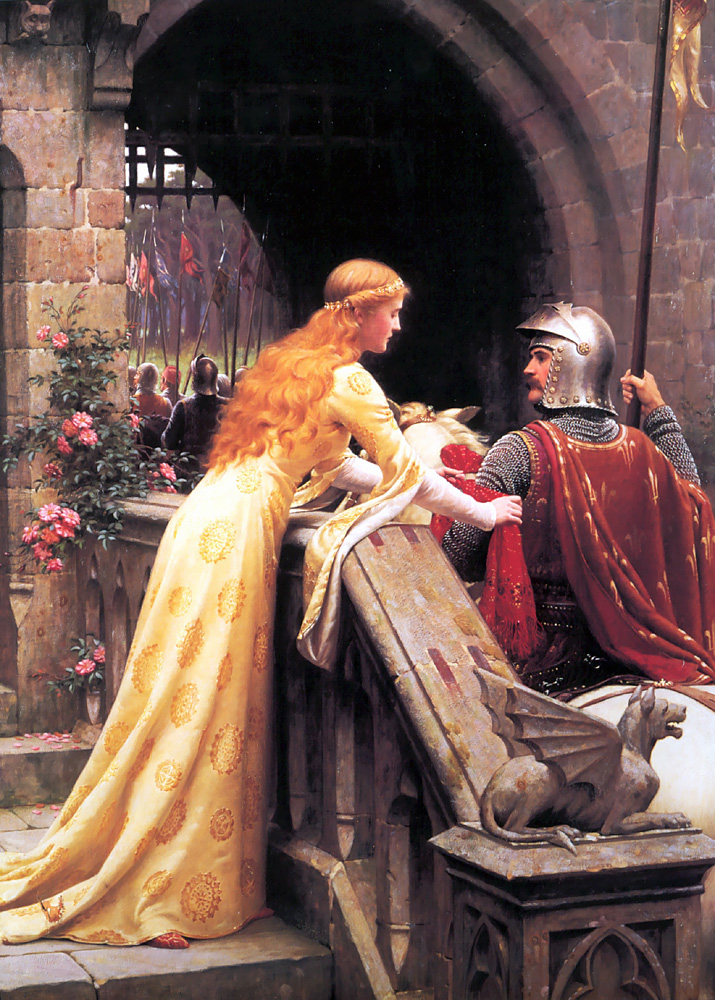


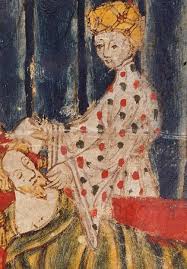
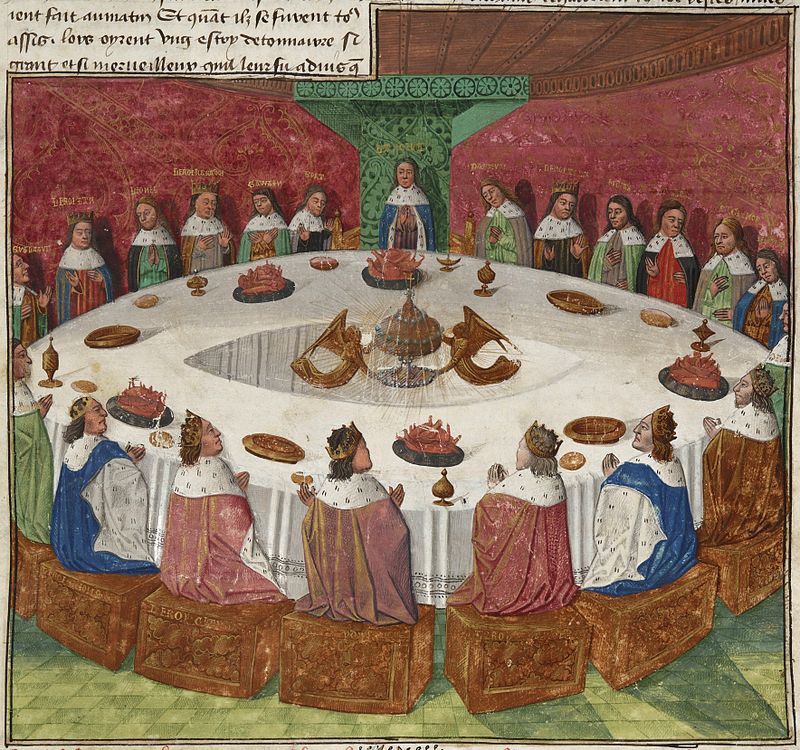

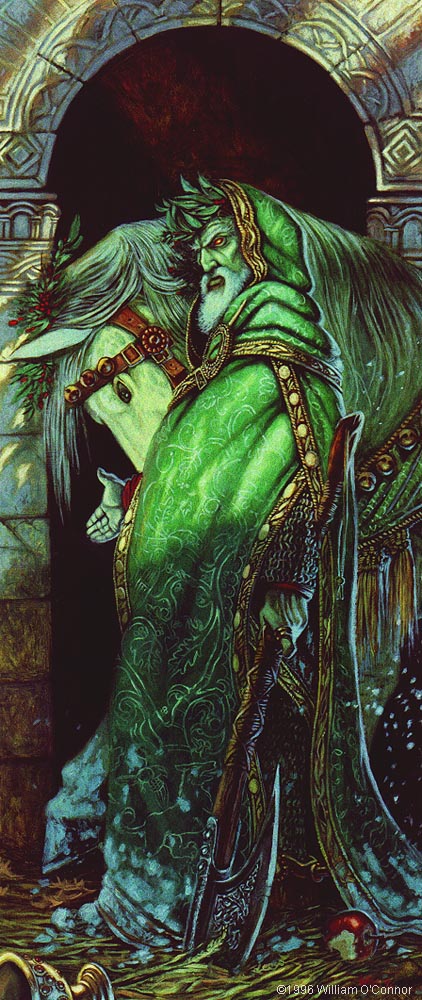
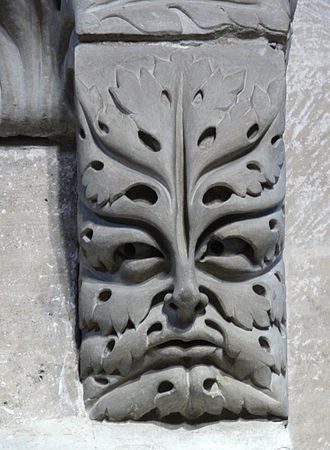
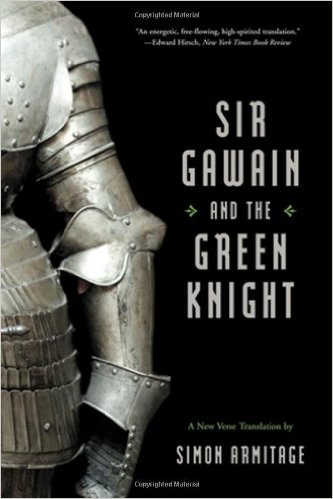
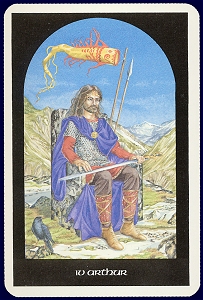
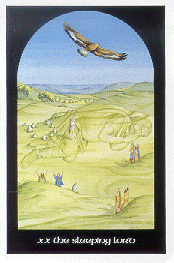
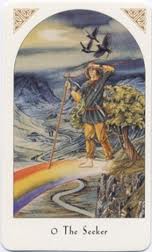
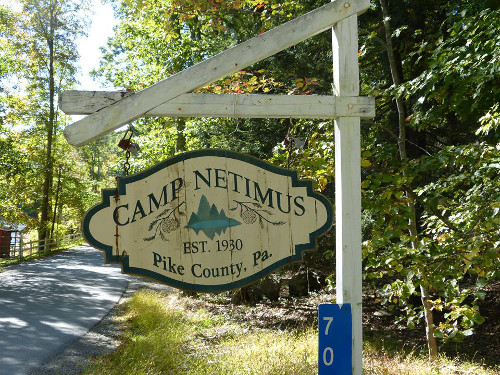
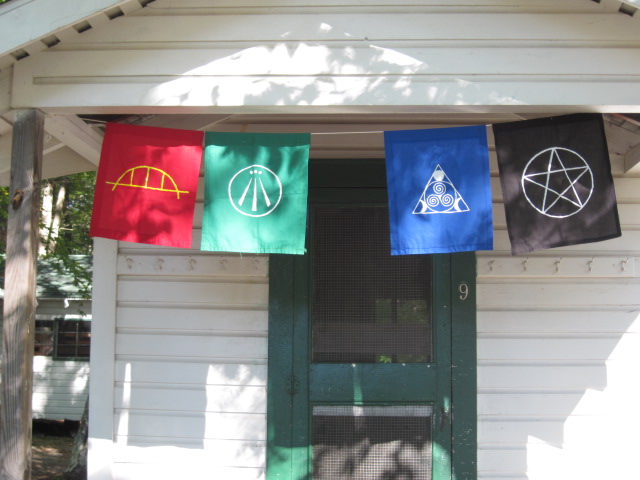
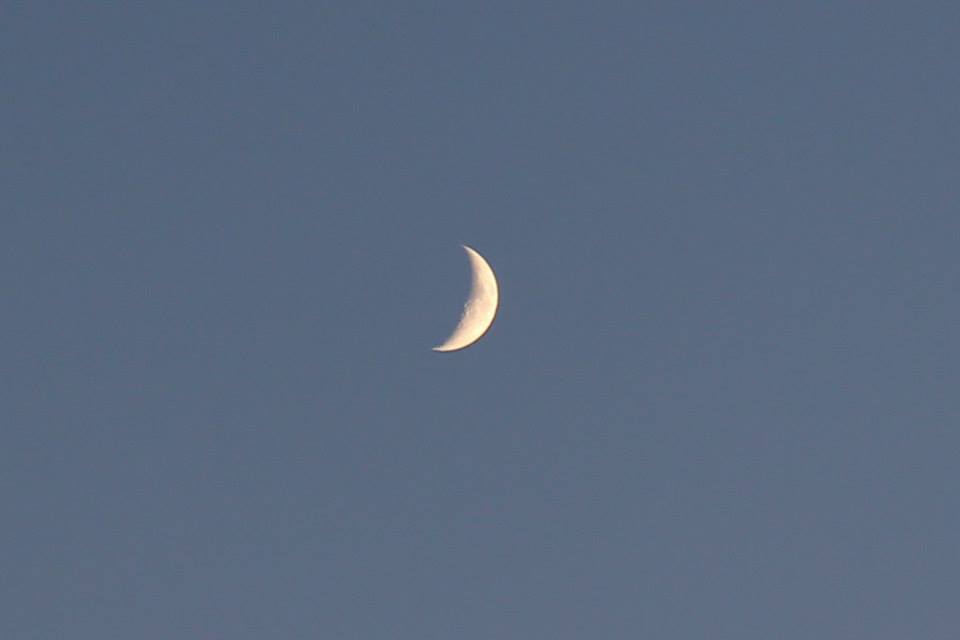
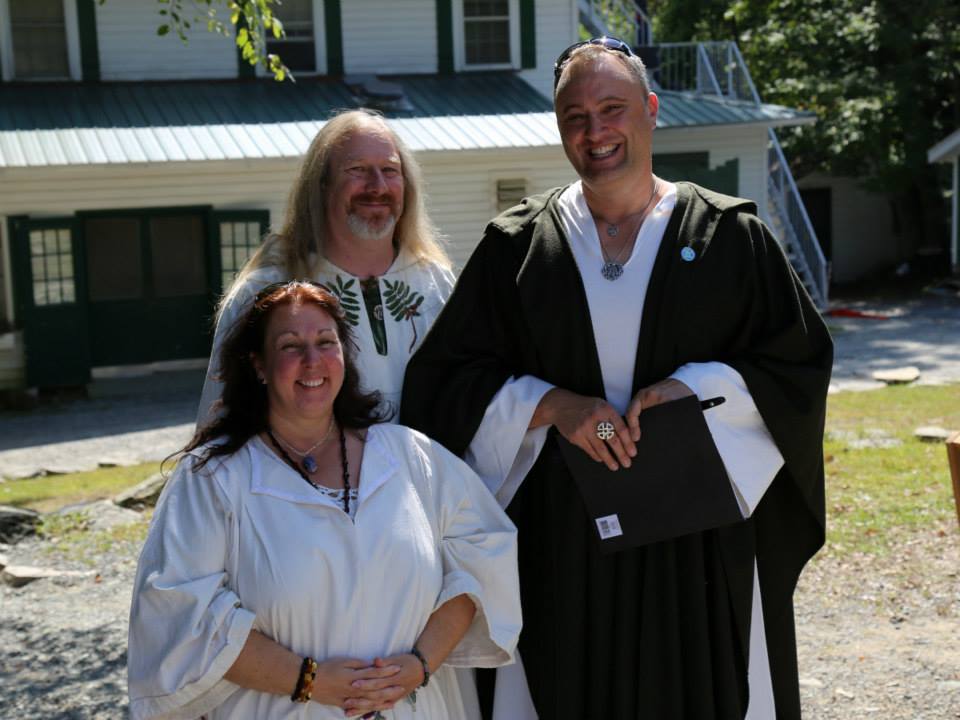
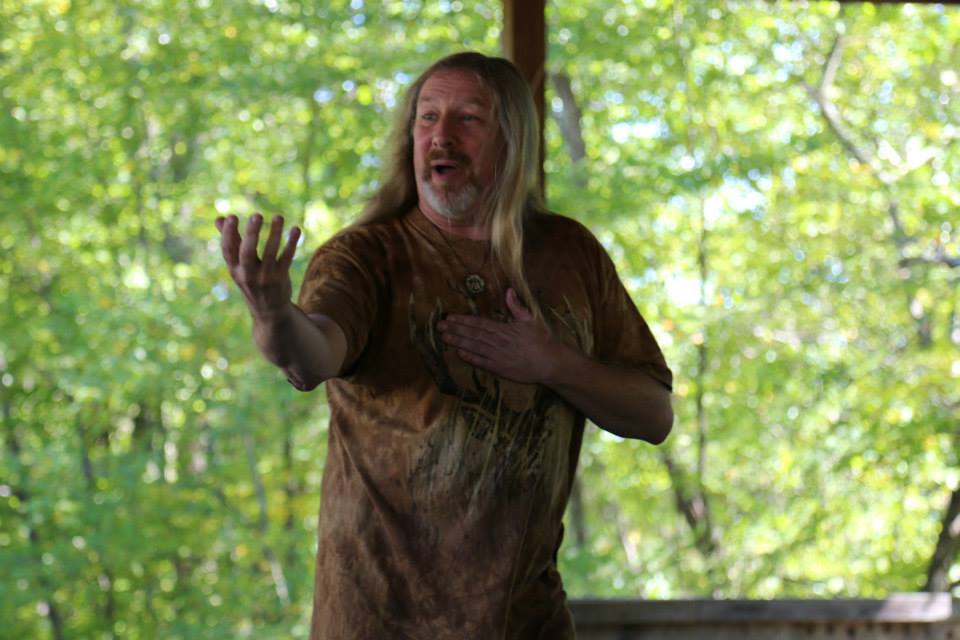
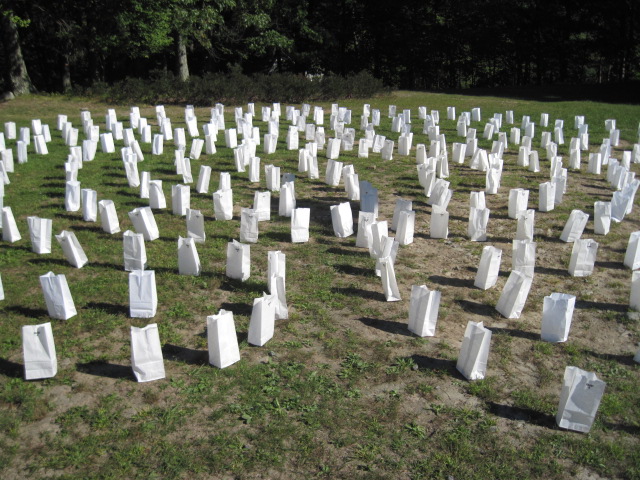

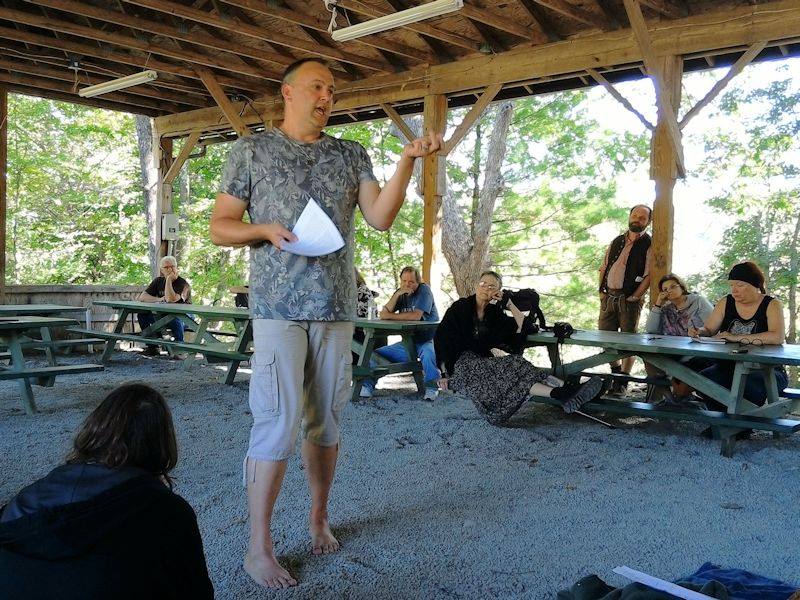
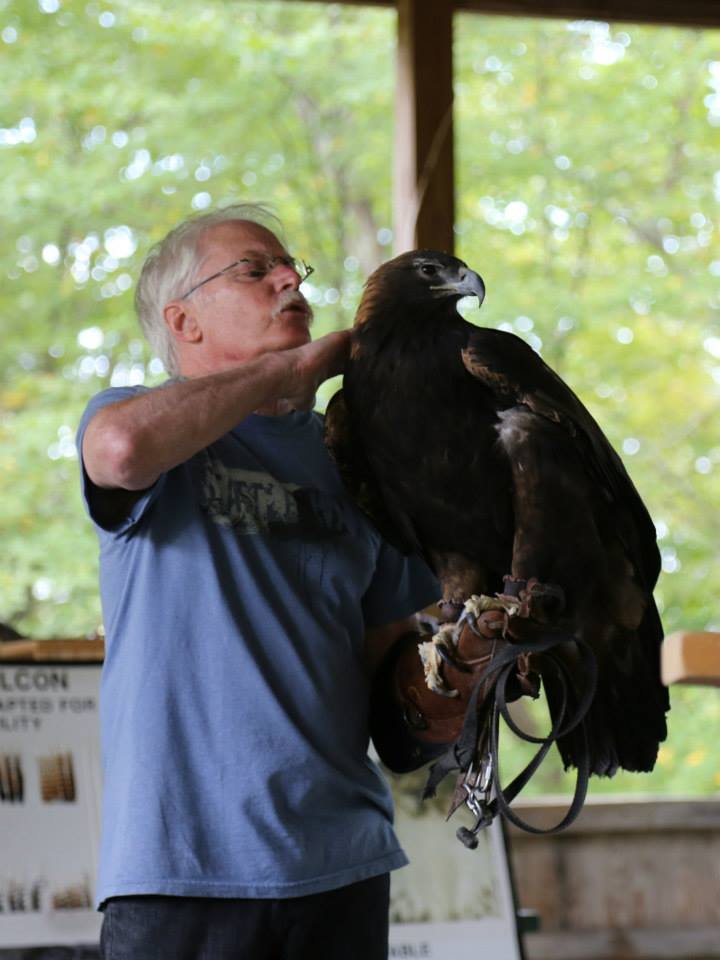
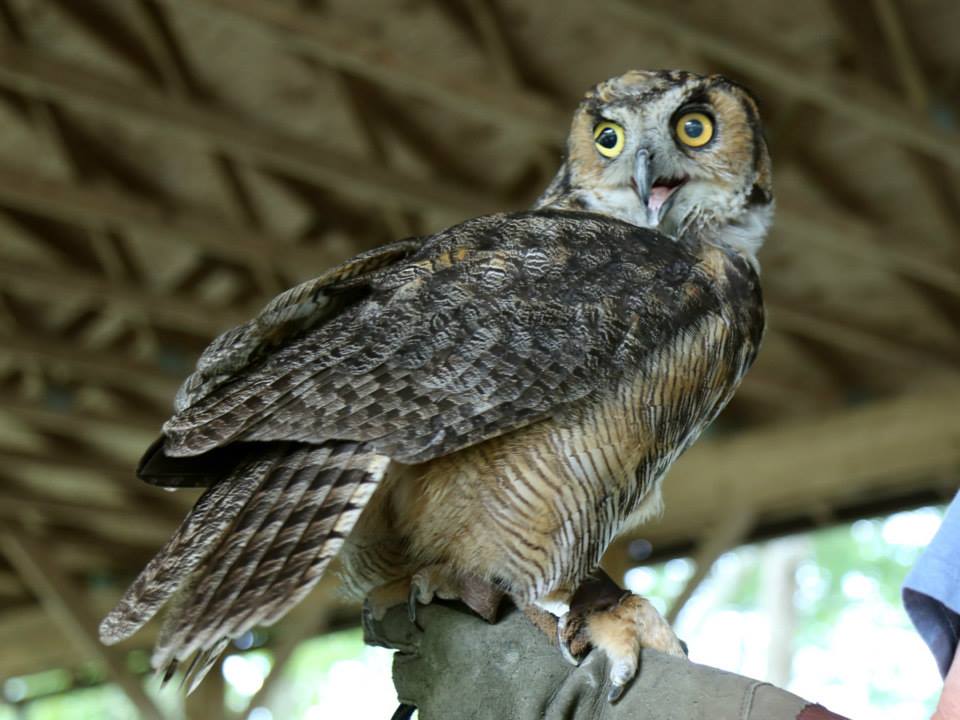
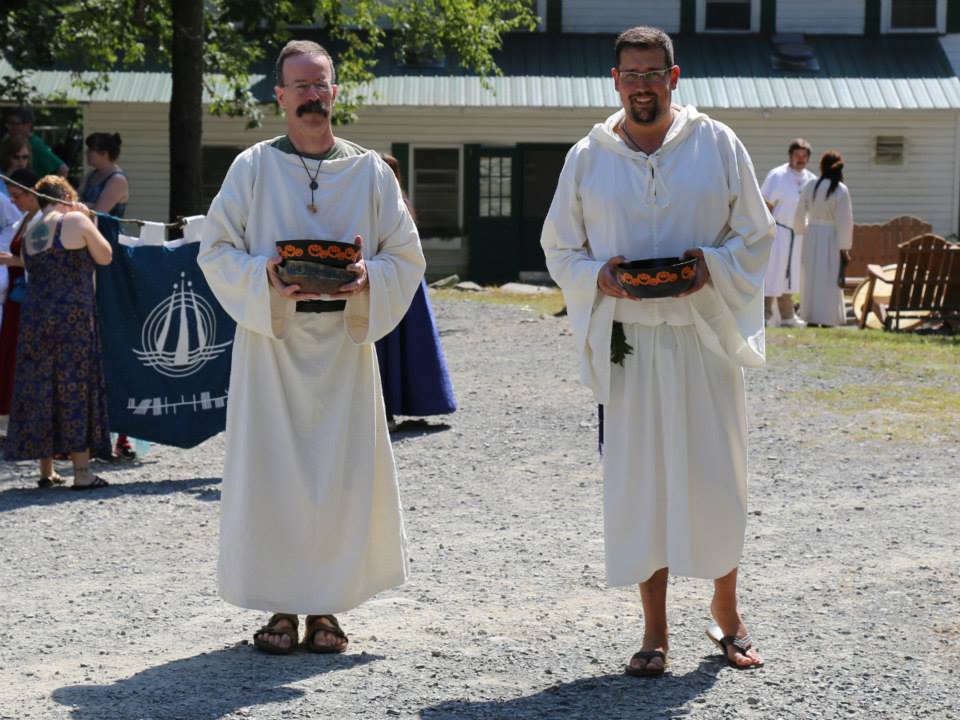
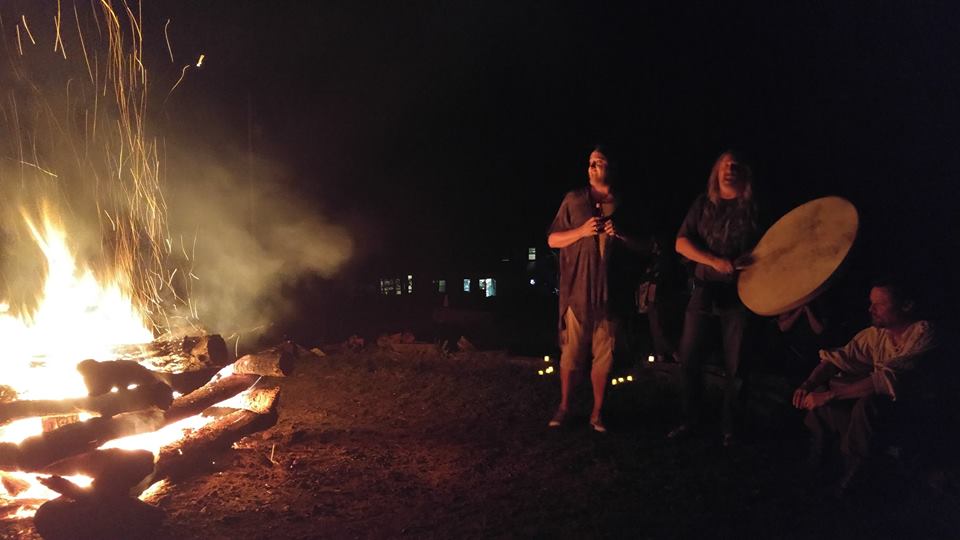
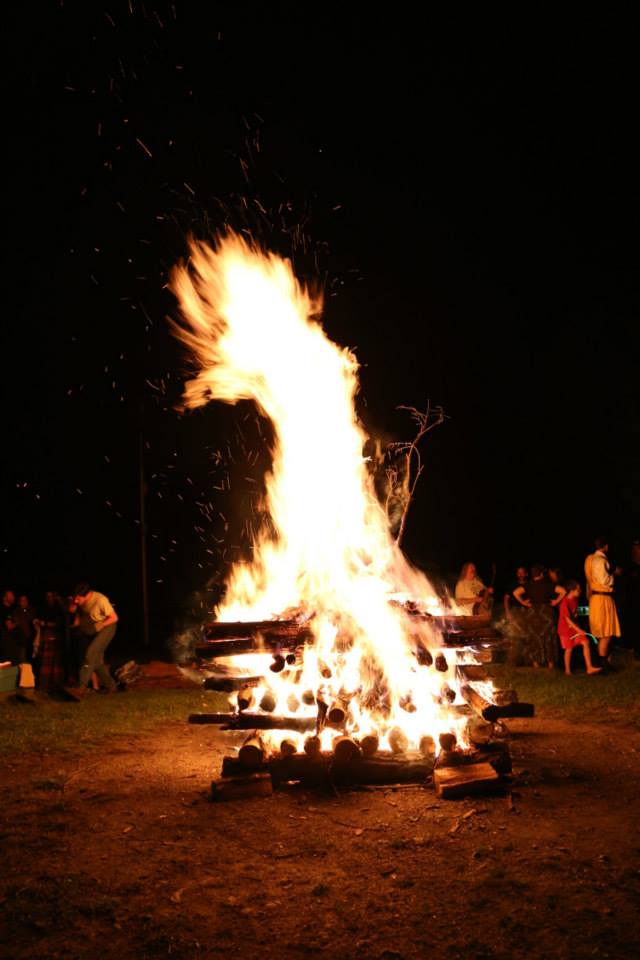

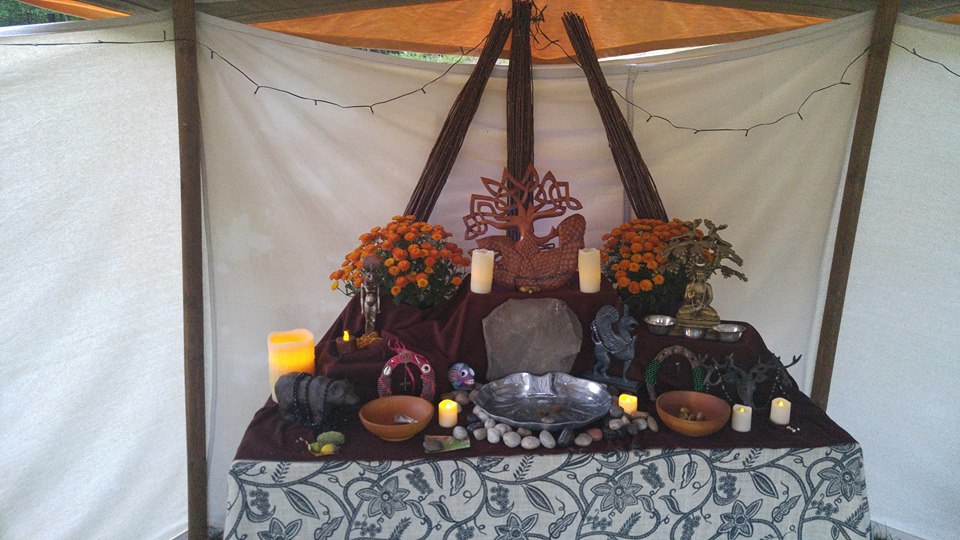
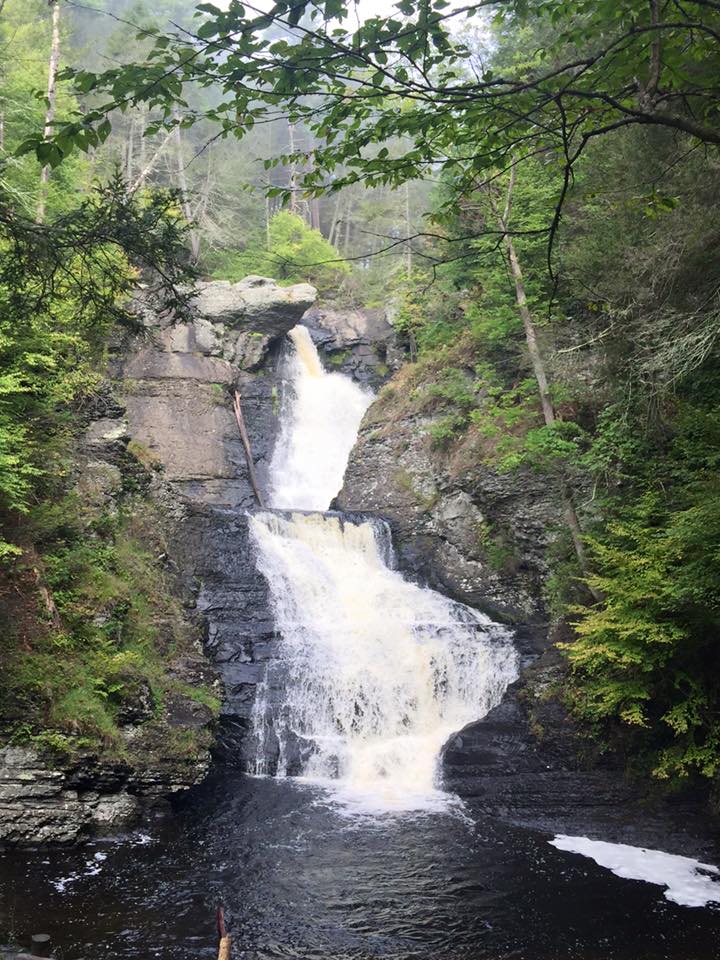

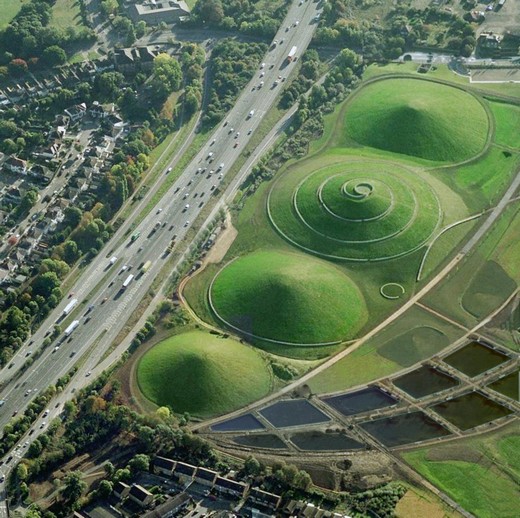
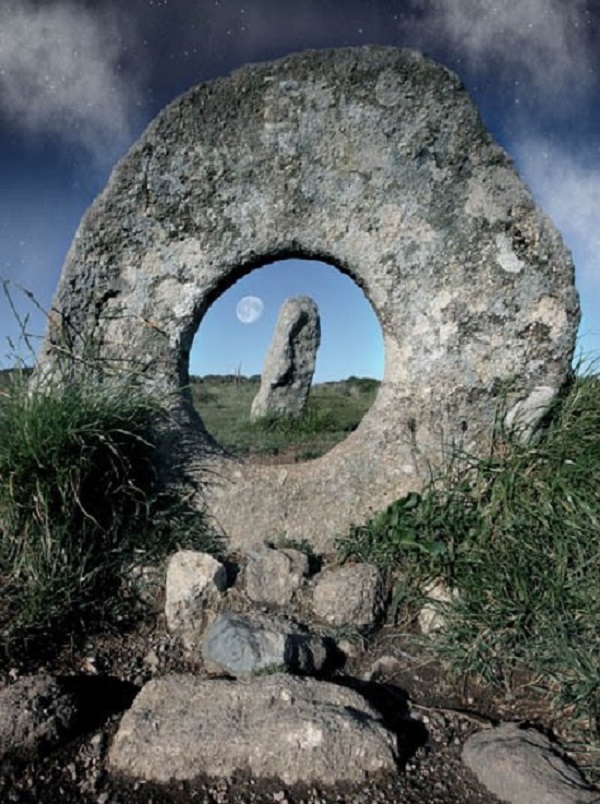

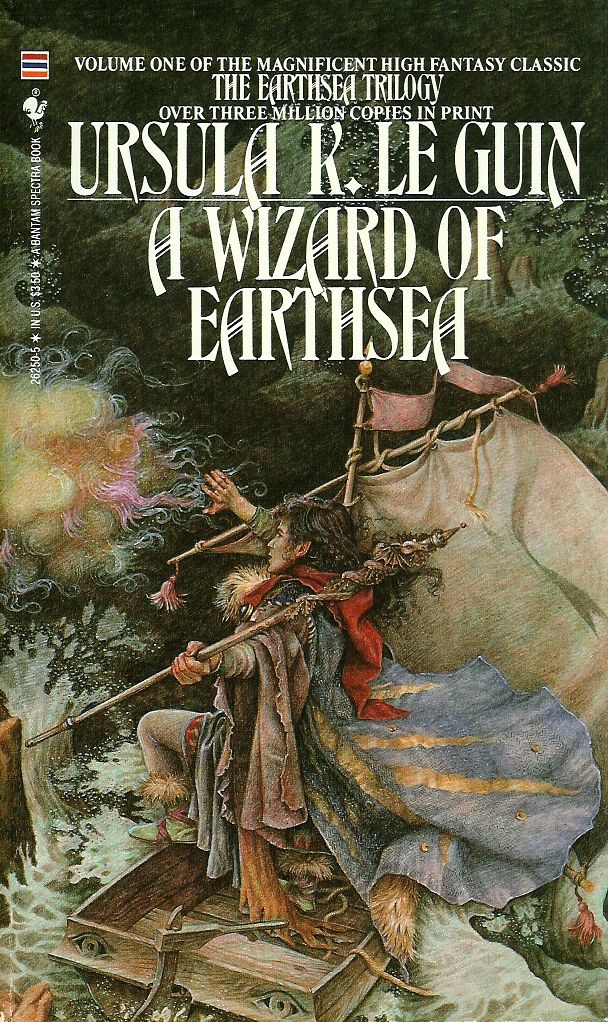
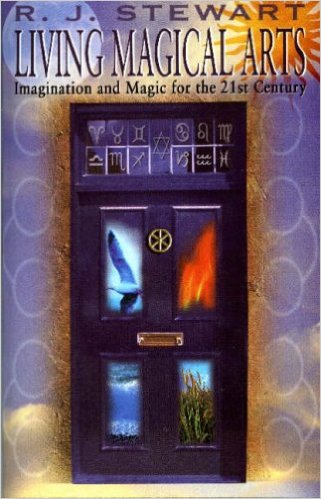
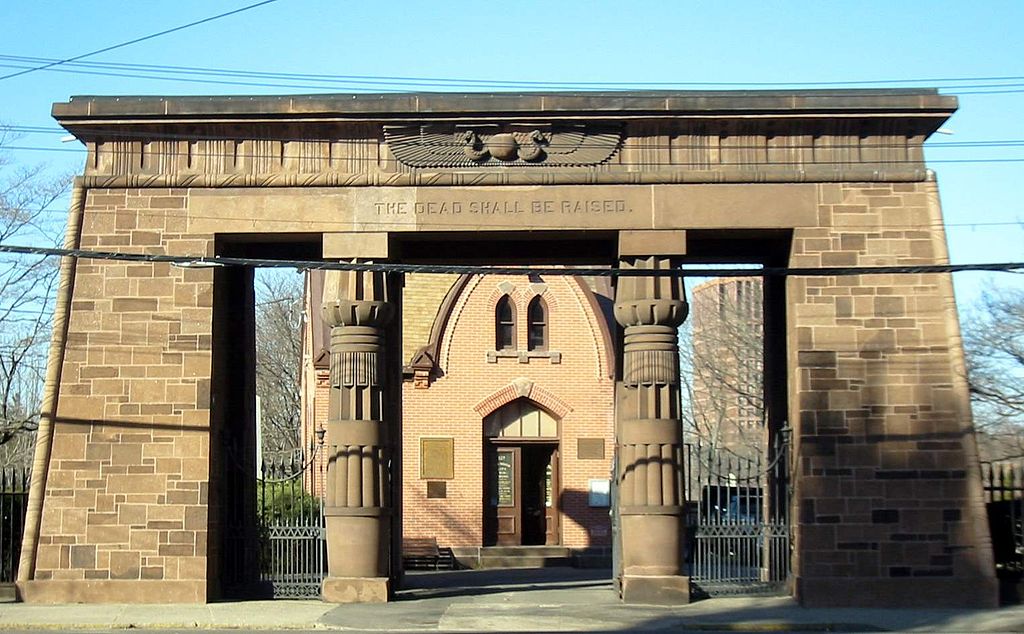

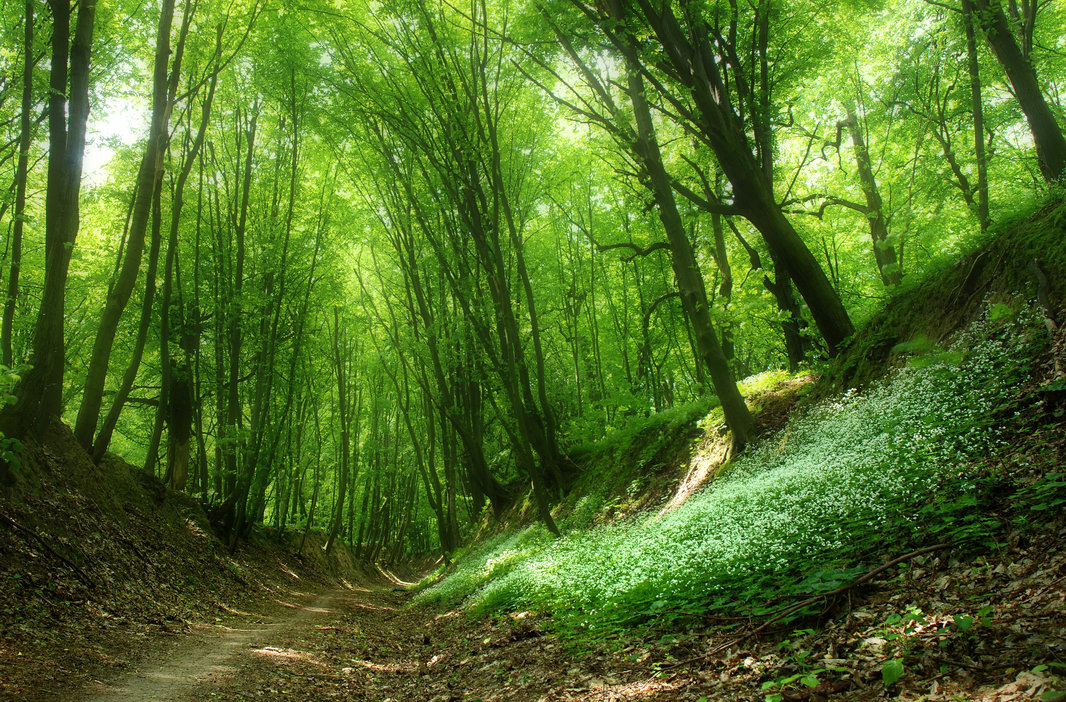


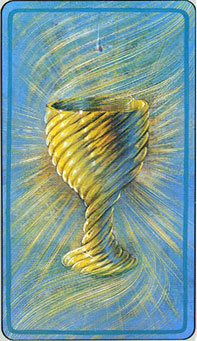
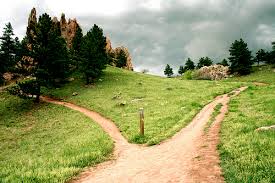
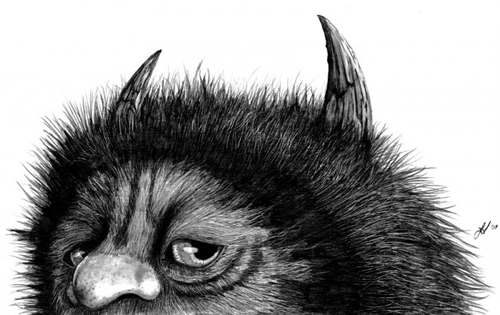

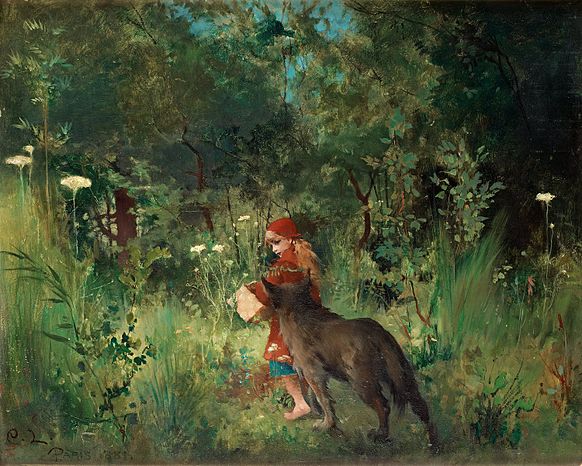

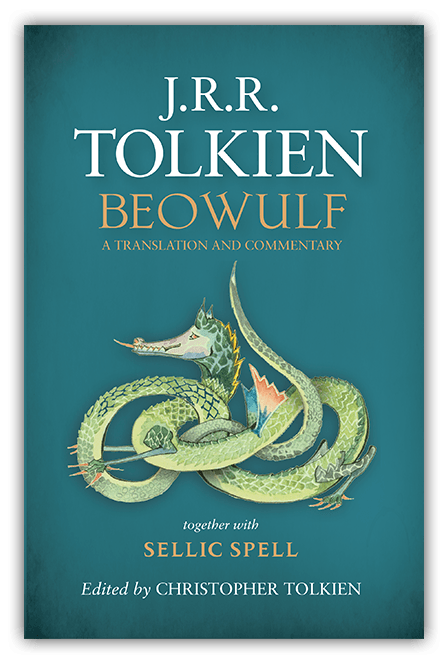

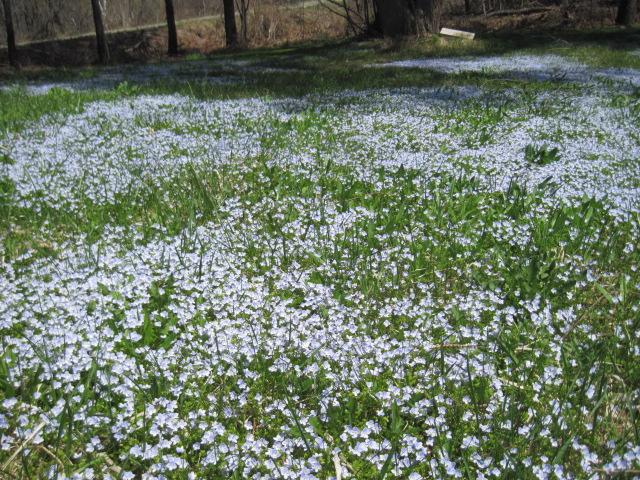



 A Druid Way


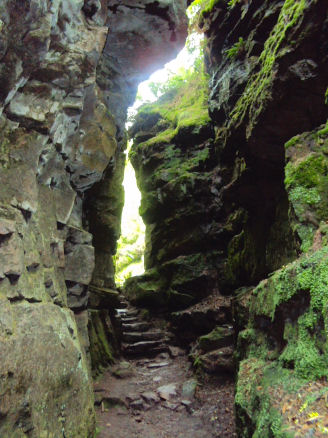
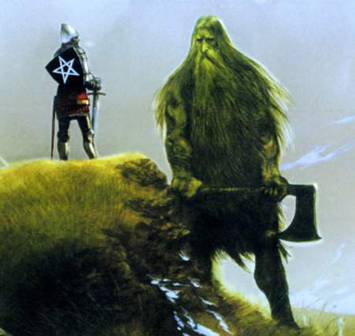

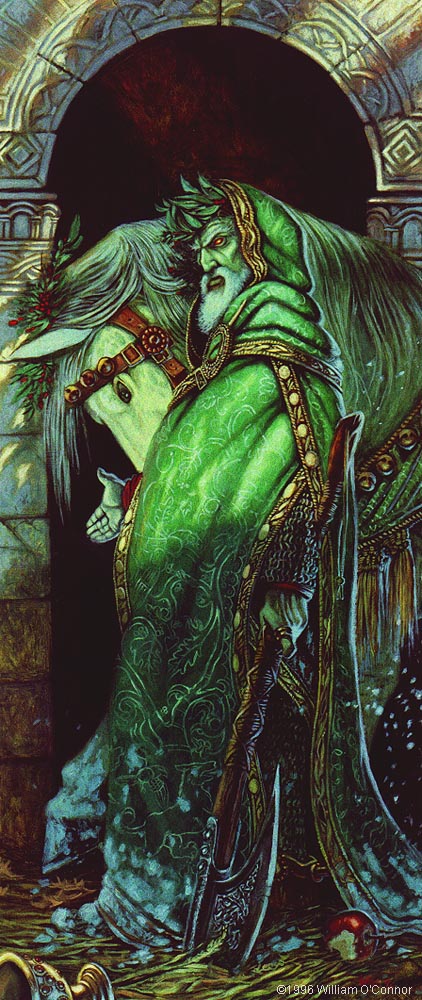


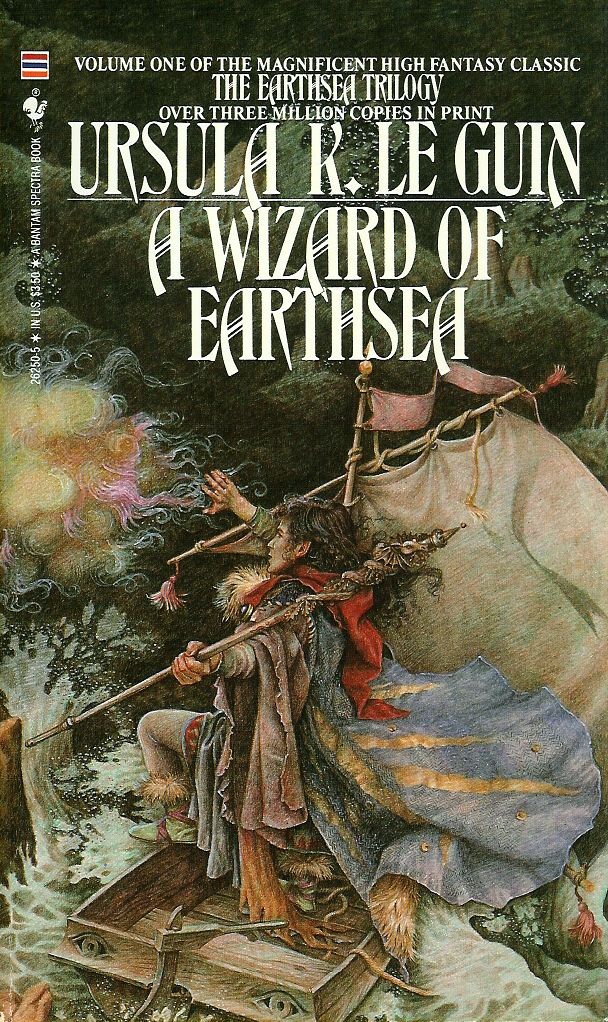
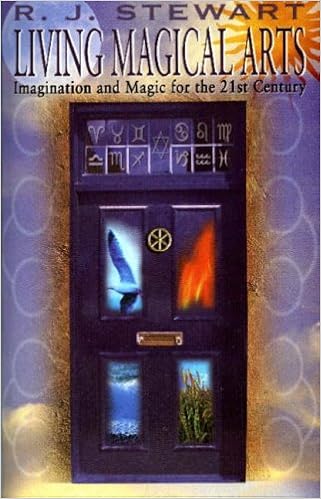




.jpg)


.jpg)