Yesterday our local group celebrated an early Solstice. The forecast rain held off — Blessing of the Sun! — and at the very end of the rite as we uncast the circle, a couple of birds landed in the branches of the tree above the altar, just a few feet overhead. As many of you have also witnessed, the natural world acknowledges the energies of ritual respectfully performed.
Several members of our group are Wiccans — note the brooms to sweep away negative energy as needed. They’re not only working tools but useful working symbols as well. By that I mean a symbol to carry into meditation and deploy in visualization, as well as a physical object. Catch myself in less-than-desirable states of consciousness? Out comes the “inner broom”. My particularly stubborn inner trash gets swept into heaps, dumped in a bucket and cast into an inner river which dissolves it and washes it away, reintegrating it into the cosmos. (Repeat as needed.)
So often we look half-aware for something to replace negativity, and lacking a viable replacement we can get sucked back into it, because its tug draws the emotions. Symbols stand ready to our need, charged with their own emotional electricity. When I find it may not be enough merely to purify, whether with prayer, salt, incense, ritual or some combo of them, a symbol can help rally inner resources. Some unwanted stuff has a way of creeping back in, and the situation may call for an ongoing cleanse. Broom, en garde!
If it makes you feel better, because you “grasp” or “understand” such things, to call them “psychological”, by all means do so. What matters more to me, though, at least in the moment, is whether they work. One member couldn’t join us yesterday who played a specific role in the rite-as-written, so after a quick exchange of PMs with the ritual writer, I stepped in, among other things to cast the circle. This gave me a splendid excuse to de-rust a sword for the purpose and, not-so-incidentally, help me confront why I love and seek out ritual, but shy from consecrating objects I already possess as ritual aids. I’ve touched on this in previous posts [among others, here].
Fire comes to our ritual and bodily need (why separate them, after all?), its heat, light and hue all central to the season and a ritual working: nearby fire-pit shedding warmth on our skin, or candles flickering on the altar. But the sword is a fine tool of power, a weapon, a strong and ancient symbol, forged in flame and often enough incorporating a cross where hilt meets blade. So it gathers up a whole complex of symbolic vectors of energy.
The replica sword I cleaned up yesterday morning before the ritual is an older design than the more familiar Medieval ones with the exaggerated hilt. Its edges are very dull — no risk to anyone of injury — so it’s also ideal to transport. If by chance the police should stop me for any reason, it’s much easier to explain a stage sword than one like my other sword, much rustier, but with a wicked edge still. Seeing how well the white vinegar cleaned off the rust from the smaller sword, though, I’ll be tackling that more extensive cleaning job tomorrow.
I mention all this at some length because the curious resistance I felt at bringing a ritual tool along to the ritual told me something curious is afoot. Two swords (a promising name for a novel, or magical order!) put me in mind of the two ancient Indo-European words for elemental fire, *ogni the active, and *pur the static. Is there something at play in my conception of ritual, or my ritual purposes, that I’m missing or blocking? The smaller, less impressive (and very dull-edged) blade has the fancy scabbard. The other, larger and deadly weapon has a simple leather sheath, all practicality, but no tooled design. Surface and deeper meaning, keenness and showiness, purpose and pretension? I’m still listening.
After uncasting the circle yesterday, I drove the point of the blade into the soft earth by the altar, saying, “The circle open, but unbroken”, or some variation on those words.
And the ritual circle in my mind, open and unbroken, interrogates me still. If I gain any insight, I’ll pick this up again in a subsequent post.
/|\ /|\ /|\
“Where can I celebrate the Solstice?” You can find some version of this question online. Best, I’d answer, is your own celebration. Yes, there are plenty of group events around the world, but the shortest night of the year offers you your pick of how to observe the festival. An all-night party (a lively Scandinavian tradition) or a vigil (some Druid traditions) are two popular options. Or some unique combination of the two.
I plan to stay up Tuesday evening for a “second Solstice” and greet the Sun Wednesday morning, June 21st, on what will be the longest day in the eastern U.S. Where I live, daylight on the 21st is 15 hours and 21 minutes long, making the night just a little over 8 and a half hours.
The “third Solstice” is Friday 23 June, whether I attend a group celebration just outside of Boston (a drive of 3 hours in Friday evening traffic) or do a ritual solo at home.
Depending on where you lurk on the Net, you may have run across this passage:
Be sure the patient remains completely fixated on politics. Arguments, political gossip, and obsessing on the faults of people they have never met serves as an excellent distraction from advancing in personal virtue, character, and the things the patient can control. Make sure to keep the patient in a constant state of angst, frustration, and general disdain towards the rest of the human race in order to avoid any kind of charity or inner peace from further developing. Ensure the patient continues to believe that the problem is “out there” in the “broken system” rather than recognizing there is a problem with himself.
One of my cousins posted this recently on Facebook.
Also depending on your alertness and your familiarity with Lewis and his works, you may or may not have additionally spotted the following caveat. “Screwtape’s ‘fixated on politics’ quote”, notes Joshua Dance, “is not by C.S. Lewis. You and I may like the idea, but proceed with caution.”
How perfect for my purpose here: to use a wrongly-attributed quotation in the process of desconspiracizing ourselves. What ideas do we like, and how cautious are we — can we be — should we be — with them as we proceed?
And does this piece of wisdom still retain any value, once we uncouple it from its famous but misidentified source?
If you think it does, I invite you to keep reading. (If not, here’s the new-as-of-June trailer for Voldemort — Origins Of The Heir, a fan-film.)
Human liking for conspiracy theories is by almost all accounts wonderfully unbiased in its spread. Liberal, Conservative, Libertarian, Communist, Anarchist — whatever colors I fly on my mast, I’m just as susceptible to a theory that fits my prejudices as the next person. No one’s immune. In my book that qualifies as a “problem with myself”. Fortunately, remedies exist. Maybe not cures, but remedies.
Here, after a completely unscientific search, are seven news links [ Paul Ratner | The Independent | The Telegraph | Time | The Guardian| Conspiracies.net| 6 True Conspiracy Theories ] to some of the most popular conspiracy theories out there in the English-speaking world. (Those of you with a foot in other linguistic and cultural communities have your own favorites that you know far better than I.)
And if you’d like just one of many available pages pointing out the logical fallacies underpinning conspiracy thinking, here’s an example that offers 13 fallacies.
My main goal in this post? I want to remind myself most of all, and any of you so inclined, to continue the work needed to minimize the effect of conspiracy thinking. Secondarily, I want to refresh my understanding of ways of thinking and doing — like Druidry — that can “distract me from the distractions”.
Two things I’ve learned over decades to treasure and nourish in myself and my dear ones more than anything else: what I choose to attend to, and how I choose to attend to it. In other words, attention and attitude.
We know how valuable our attention is because advertisers and politicians work so hard to get it and hold on to it. Our attitude matters just as much: everyone wants to tell us how to feel, rather than letting us discover that on our own.
Once someone has my attention hooked, and my attitude in their pocket, they own me.
So here’s one of my triads for action:
1) Love what I can see, touch and talk to most often — daily is ideal. This includes family, friends, trees, pets, the garden, ancestors, my community, and the people I meet. “I bless you in the name of what you love most deeply” is a silent prayer I can offer for everyone I meet. An even briefer version: “Bless this day and those I serve”. (I also find it’s very useful in stopping me from mechanical reactions for or against, from forming pointless opinions based on superficial details like age, weight, dress, gender, etc. — or for cutting me off in traffic, or tailing me much too closely. So I “repeat as needed”: “I bless you in the name of what you love most deeply”.)
2) Whatever time and energy I can give, work so that it will benefit others as much as myself. This blog is one of those things. My years in teaching, and in holding open discussions on spiritual topics in our local library, are a couple of others. A chance conversation in a shop or store that acknowledges another’s humanity and dignity can be a profound service to others. I don’t try to be selfless; I try to enlarge my sense of who is part of the Self. Because I’m still learning, whenever necessary, I start small.
backyard willow on wash-day
3) Thank everyone and everything that helped me do the first two things. Gratitude may be too simple for our complex and suspicious age, but, I notice, it never goes out of style. Again, it may be silent just as often as something to express. Yes, this can be a dangerous age to live and be generous in. But I find a wise kindness works well.
If I focus more on my attitude and attention, I can diminish the moments of “angst, frustration, and general disdain towards the rest of the human race in order to avoid any kind of charity or inner peace from further developing”.
The more I experience the inherent joy in using my attitude and attention skilfully, the more I find myself energized to keep on practicing with them. These are some of the truest things Druidry has helped me discover.
Ah, Summer Solstice, almost upon us. Time of greatest light, and — with the kind of paradox implicated in so many human experiences — the start of a slow turn toward longer nights and shorter days.
So many solstices in our lives. Make a list for yourself. How many times has a peak — longed for, striven for, suffered and sacrificed for — also signaled its own diminishment? How often does crest drag trough along with it? And how many times has this seemed like a sad, bad or terrible thing?
If I search even briefly on Youtube, log in to my handful of friendly Pagan Facebook groups, read a blog, or play some of the latest computer games with their massive, nimble and interactive CGI engines and palettes, I can savor a virtual festival or gathering or historical re-creation: case in point, here’s a Stonehenge app.
I love the definition of “virtual” at dictionary.com: “beingsuchinpower,force,oreffect,thoughnotactuallyorexpressly such”. It’s only the third definition that’s explicitly cybernetic: “temporarily simulated or extended bycomputer software”.
“A reality in power, force or effect that is temporarily simulated” by humans is a fair definition of ritual, including the last major dinner you had with family. Unplug, and your reality gets only more virtual — closer to “real” reality.
Isn’t everyreality “virtual”?! (“My reality’s more virtual than yours!” “New and improved reality: 37% more virtual than the leading competition!”)
So what are my responses to the questions I posed back in that second paragraph? I’m putting myself on the spot here, because I asked you to do the same. If you haven’t, do you know what you’re missing?
How many times has a peak also signaled its diminishment?
Well, every time I can think of. From what I’ve seen, that’s how we define a peak, how we recognize it at all. I wake on the morning of either solstice, summer or winter, and know that though I can’t see it yet, the shift’s begun. Pay careful attention and you can feel it, something about the light, something you can almost hold in your hands, or feel along your spine, a kind of undertone to each day, a melody just below the threshold of hearing. (Ritual works, among other things, to amplify the melody just a little, so we can hear, honor, learn from, cooperate with it. Music of the spheres, voice of a god, thrum of blood in our veins, all, none, the same.)
But with the drag and inertia of this dense, physical world, there’s often a delay in change manifesting. The greatest heat’s yet to come after the longest day. July and August will bring it in swaths. The sharpest cold arrives a couple months following the shortest day, late January and February breathing down our necks, here in Vermont.
How often does crest drag trough along with it?
Pretty much always. Optimist or pessimist, conspiracy theorist or activist, conservative or liberal, I pick my favorite “partialist” partisan, or out myself as one. I choose which part of the cycle I want to focus on and ignore the rest of it. Trough, crest, average of the two, nudging the shape of the curve to resemble the wing of a bird or a turtle’s shell — I take my pick of virtual realities, and make it my reason for living. I establish “a reality in power, force or effect that is temporarily simulated”! (Or fail to do so, doubtless because of the machinations of some evil Other.)
Ritual says Look. Listen. Look again, wider. And again.
And how many times has this seemed like a sad, bad or terrible thing?
Solstice says Here are light and warmth and life. Like that old but choice piece of wisdom also says, To everything there is a season. And a Pagan adds And a ritual to go along with it.
Marcus Aurelius observed, “…the nature of the Universe loves nothing so much as to change the things which are, and to make new things like them”.
[But it’s thisone I love! I cry. This one I’ve lost, the one I will lose, one like no other. The sun of my life will go down, and nothing to be done about it.]
So I make it one of my spiritual practices to try out the wisdom of that crazy old Bard, Ezra Pound, in his 81st Canto: “What thou lovest well remains,/the rest is dross/What thou lov’st well shall not be reft from thee/What thou lov’st well is thy true heritage”.
Oh Ezra, you say it with such conviction! But I’m (mostly) no fool. How — in what ways — is this true, for me anyway? (You must answer for you.) Are some ways truer than others? How can even one of them shape a sorrow, deepen a joy? Are there exceptions? And what do they teach? The Bardic gift may often be the gift of song first, but I need not drop good sense. Let melody carry me to a fuller measure of wisdom.
(Dross, how much of my life have I poured out in loving and losing you? A ritual to leave dross behind, recycle it, hand it over for composting.)
That’s one of my Solstice meditations, as virtual — full of virtue and power — as I can make it.
/|\ /|\ /|\
Depending on your geography, you may witness six seasons, or two, or nearly none at all, if you’re living in the equatorial tropics.
winter 2014 “lake effect” snowstorm
Growing up west of the Finger Lakes in New York, I knew Summer Solstice meant school was out for the summer — hail, Alice Cooper! (With all the snow days likely in lake-effect country, with the heavy wet snows typical around Erie and Ontario, easternmost of the Great Lakes, some years it was mid-June before we’d made up all the missed classes. The year I graduated high school was one of the latest because of the Blizzard of ’77.)
It meant the first cutting of hay went to silage, or — if the weather was unusually dry for green, wet western New York, we cut, raked, and baled it, and ferried wagon after wagon of it to the dark, looming haymow. Under the gray asphalt shingles that covered the immense gambrel roof, you’d sweat just standing still in the dim half-light, waiting for the elevator to drop seemingly endless bales as you scurried to stack and balance on the slowly rising tiers.
Solstice meant calves born in our summer pastures, either one of two 25-acre spreads of grazing, hills and thickets and streams, with a newborn easily hidden by its mother in grass already waist-high by late June. Solstice marked whether we’d likely prevail once again with our corn-crop and the annual proverbial goal: “knee-high by the Fourth of July”.
Solstice meant wrapping up a freshman biology project at year’s end: I recorded how on average I consumed 5000 calories a day once summer farm work began, and as a rangy and growing 15-year-old I still lost weight.
Solstice meant lilacs, rhubarb, strawberries, new-mown grass, the sustained spike in the cream content of our cows’ milk, once they could graze the pastures — a luscious languor that matched the blissful coolness of summer evenings moderated by the massive heat-sinks of nearby lakes the size of small oceans.
Letchworth State Park, middle & upper falls
Solstice always arrived a scant few days before my parents’ anniversary, always the occasion for a family picnic in nearby Letchworth State Park, 14,000 acres of Genesee river-gorge and hiking trails and secluded picnic spots.
Solstice set the rhythm of my late boyhood.
/|\ /|\ /|\
Cathasach: The rhythm of eternity in a world of change can only manifest as cyclic change.
Mathghamhain: You say that. But what does it signify? Even granting such a thing as eternity —
Cathasach: Eternity’s not a thing. Language misleads us. We think there are individual things we can choose to believe in or not, rather than how stuff is. The stuff we use to believe or disbelieve in something is part of what we believe or doubt. Can’t get outside it and be “objective” about it. Among all the other things eternity does is time.
Mathghamhain: Ah, you quibble now.
Cathasach: Not at all. I challenge. What is a cycle but a pattern of regular change, a wheel that rolls, that spirals rather than digging a rut?
Mathghamhain: It’s not stationary, but it returns, yes. On that we can agree.
The June full moon, often aptly named the Strawberry Moon, actually reaches its fullest tomorrow (Friday) morning, but most North Americans will see it at its peak tonight.
wild strawberries, north yard — perfect reason not to mow
Tonight I’ll offer my full moon ritual for the health of the hemlocks that line the north border of our property, as well as other beings, “quando la luna è crescente” — while the moon’s still waxing. As the full moon nearest the summer solstice less than two weeks away, Strawberry Moon plays counterpoint to the shortest night and longest day of the year, and governs the first of the true summer months here in New England. I’ll be posting a follow-up in the next weeks.
“queen” hemlock, 50 ft. tall, visible from where I write
As Dana has so passionately documented on her Druid Garden site, including a powerful ogham/galdr healing ritual, the eastern hemlock battles against the hemlock woolly adelgid, widespread enough that it’s gained its own acronym — HWA. The adelgid, an aphid-like insect, is just one of several pests that afflict the trees, but one not native to North America and a factor in near-complete mortality in infested areas. As a commenter on Dana’s blog notes, natural biological agents offer the best and least toxic means of control and containment. The United States Dept of Agriculture site summarizes the situation well.
And if you ask why, Our true self and the land are one, says R. J. Stewart. As always, test and try it out for yourself. That ways lies deep conviction, replacing casual opinion with earth loved, spirit manifest, life full.
9. How well does my spiritual interaction pass through the “Three Gates”?
This, I’ve slowly learned, is a great question to ask both before and after. In other words, any time.
As Matt Auryn notes in his original blogpost, “Rumi is credited with wisdom about three gates of speech. ‘Before you speak, let your words pass through three gates: At the first gate, ask yourself “Is is true?” At the second gate ask, “Is it necessary?” At the third gate ask, “Is it kind?”‘”
These gates, I’ve found over the years, work splendidly as a guide for my spoken interactions and for any other kind, too. They also form a powerful Triad for making decisions.
I need to include myself in the Triad: is my speech, action or decision also true, needful and kind — to me? What about my thoughts? And my feelings?
Often, whatever I’m testing with the Triad, I can get two out of three. Often it’s true and necessary. But it’s not kind. Return, return. Start over.
Standards tighten, I’m discovering. It’s not necessary anymore merely to “do no harm”. Someone — god, ancestor, higher self (same, different?) demands more. As elastic beings, staying where we are almost guarantees that the past stretching we’ve suffered through and learned from and grown into will weather down into slack. I can read the signs — tedium, stagnation and listlessness, if I don’t keep on stretching, letting myself be stretched, seeking out opportunities to stretch not just further, but wisely.
10. What’s my goal for interaction with Spirit? What is Spirit’s goal for me?
Important questions. Sometimes I know, or think I know, what’s needed at the moment. Sometimes it takes some digging to get to honesty with myself.
Other times the answer’s easy: no clue.
Usually that’s an excellent place for me to be. It means I need to listen first, before anything else. Instead of a ready cliche or a stock answer or something I dredge up from my own most recent spiritual slackness, I practice patience.
Sit, sing and wait, counsels one of the Wise. So I find different places and perspectives to sit in. The front entry of our house does duty for a small but useful office. Or a tree-stump from a powerline clearing that Green Mountain Power left beneath the row of hemlocks on our north property line. I sing a word, a name for spirit, a line from a song or poem, a spoken fragment from a dream. And I watch as this moment crystallizes into the next, and shapes of possibility begin to form. Often they scatter, birdlike, flying somewhere along the horizon, not where I’m gazing at all. I stand up and go about my day, and a whisker of insight, if I honor the handshake of spirit, comes.
11. How can I see and describe my understanding as a perspective?
Matt Auryn observes, “One of the best ways to keep your ego in check when discussing different methods and ideas is to claim them as your perspective and not as the dogmatic way to do things”.
So I try to remember to tell myself rather than believing X or Y that I suspect X or Y. Because whether it’s a ripple in the apparent world or a flash in the Otherworld, I almost always under-perceive it. I miss something, and often a lot. I kneel down to study a large footprint in our muddy backyard, never seeing the bear that made it lumbering away to forage among early blackberries. But knowing there’s alway more to perceive doesn’t discourage me. It makes it a game, even and especially when the stakes are high. Sometimes my best contemplations take wing when I begin by asking So what did I miss this time?
backyard black walnut coming into leaf
12. What hints and nudges has spirit sent to me already about fine-tuning my practice?
Every week or so, there’s a tonic that Spirit throws me down for and forces me to swig. “Take as indicated”, the label reads. And the fine print says:
“You’re a slow learner. That’s ample reason to practice humility. Everyone else is a slow learner, too. That’s an excellent reason to practice compassion.”
Funny how I haven’t yet overdosed on either of these.
13. What examples and teaching from the natural world greet and guide me today, right here and now?
A question I need never cease asking.
Yesterday and today, rain. The power out for about 90 minutes. The thermometer reads 46 F (8 C). I lit a fire about an hour ago. And as I set a match to the wadded newspaper and kindling, breathing the faint cold ash of the last fire, I knew Brighid was present, whether I’d invoked her this time or not.
Invocation, I heard/thought as the flame took hold, is my privilege. The gods welcome my service, but they move in the worlds just fine without me. And where there is privilege, and service, there is also wonder.
Every season is in season. Here on June 4, a private foretaste of winter. Not because the world is cruel, or because I’m cynical or confused, or because the nighttime temperatures here in the hills still refuse to budge from the mid-40s F (6 C), but because all possibilities are alive at every moment, even as time sorts them into sequences, into sets of before-and-after.
The first two cords of firewood arrived a couple days ago. I stack wood in June, and I’m reminded that I will lift these pieces again in December to carry in to the woodstove, my hands faintly scented with oak and maple and elm. This comes not as a rush of melancholy, but rather an intuition of a rhythm far larger than any one person or tribe or party. I sweat in the doing of it, and feel a familiar ache in the shoulders after I pause and straighten and stretch, another row done.
All around, we scrabble, dust ourselves off and parade our opinions, we joust and spar, not in our spare time, but in a time always spare of days. Meanwhile the great patterns we could apprentice ourselves to go largely unregarded, day following day, even as we wonder at what’s missing from our lives, and point fingers outward, away from where our lives point us.
At the close of World War 1 in 1919, two years shy of a century past, W. B. Yeats wrote these verses which too easily match today’s headlines:
Things fall apart; the centre cannot hold;
Mere anarchy is loosed upon the world,
The blood-dimmed tide is loosed, and everywhere
The ceremony of innocence is drowned;
The best lack all conviction, while the worst
Are full of passionate intensity.
Meanwhile what I need to know has always looked me in the face every minute of my life. It whispers in my ears, offering itself to my hearing. What I need to do comes to me in breathing, eating, working, sleeping and waking again, watching the worlds around me even as I take part in them and explore their textures with my skin. The moon waxes towards fullness, and birds sing all night long, making counterpoint with the peepers in the pond. The month warms towards the Solstice, and in a few weeks I will gather to celebrate it on a nearby hillside with half a score of others here in southern Vermont who also choose to honor the ancient rhythms.
With this blog I try to avoid “must” and “should”, “ought” and “have to”, except when I’m talking about myself and my own doings. Oh, I’m just as much a busybody as anyone. I have my opinions about what and how, who and when and why. But I also try out a path of wisdom laid down long ago and rein myself in, as much as I can, from dumping mere prejudices on you. And I submit that both of us breathe more easily as a result, and are the better for it. In their place, I strive to listen and reflect and marvel and shape into words what comes of that.
I see my woodpile and I lift, piece by piece, the life that is given to me, and order it as it lies within my power to do. And you, friend — blessedly, you do the same where you are.
“Ceremonies of innocence” have endured all these long millennia — will endure, as long as we practice them. And the Center? The Center has always held, making everything else possible — it’s the edges that fray, that have always frayed. We stitch up, and rip, as we go. So I turn toward that shining Center when I can, I invite you to consider the Center where you are, as it may look to you. And I write about it here.
For a related reflection about selfishness, continue on to the next paragraph. To jump to the next four points in this three-part series, scroll down to the break and the three awens /|\.
Selfishness. The behavior often gets a bad name, but I sometimes forget that survival is always a blend of self and other. In my marriage, my wife and I pursue both couple and individual goals. They needn’t conflict, though sometimes they rub up against each other in challenging ways. We negotiate and compromise. The marriage fails, or endures, on the basis of affection and communication. Self and other is what drew us together in the first place. Blending and balancing them is what sustains the partnership.
Change the scene. In a harsh environment, as human or animal, if I don’t eat so that my offspring can, I may starve, but they may survive. Biologically, this makes good sense — my genetic material gets passed along through them. Personally, of course, it may be disastrous, if I die. But the species benefits. My lines continues, with whatever genetic variants and strengths it may contribute to the whole. But if I don’t act “selfishly” enough to survive in the first place, I will never reproduce. The genetic possibilities I offer never benefit the species.
And this is just a simplistic biological sketch. My wife and I have no children. Biologically, simplistically, we “contribute nothing” to the species. Our species’ old judgments of childless couples stem from biology, and to an extent, they make very good sense. But wait …
What about spirituality? Some have labeled it a maladaptive behavior. From some perspectives it does look useless. For that matter, how do art, music, religion, philosophy, or other kinds of inward searches with variable outward results benefit either the species or the individual?
Humans have developed so that cooperation has begun to balance instinct as a means of both individual and species survival. We definitely haven’t mastered it yet — we’ve managed to kill the equivalent of the population of a large country of our own species (some 200 million) in just the last hundred years. Anger and fear, very ancient companions, still live with us. Each also has a survival benefit, up to a point.
But we’ve also managed to enrich both our individual and species experience immeasurably through beauty, wonder, awe, delight, pleasure, curiosity — you can extend this list yourself. These skills of consciousness make our species marvelously adaptive in unique ways we’re still only beginning to understand. To take just one ready example, ask yourself how often music has seen you through a rough period, or served as the capstone to a time of joy.
As a biological experiment, like all other species, it remains to be seen if we continue to adapt, or die out. But one rich component of our adaptive skill is self-consciousness and an ability to weigh courses of action. How well can cooperation serve us? How well can we manage both to honor instinct and also not let it usurp our chances and choices?
If you’re reading this blog, you presumably feel that spiritual inquiry and awe serve our species better than many other things we also do.
/|\ /|\ /|\
5. How am I looking for connection in ways that mesh with my practice?
If I use regular physical exercise, for example, as a time to renew, reconnect, and rebalance, I may gain in physical well-being, a priceless gift. But I may not pick up as readily on other spiritual cues and clues that come along and which I can access through other practices. Neither is “better” than the other, but they are choices and practices, each with distinct consequences and benefits.
To continue with the example, some forms of physical exercise allow for a meditative experience as a side benefit. Some don’t. The emptying and easing of worry, care, concern or obsessive thought that can result during vigorous exercise may be just the practice I need — a time away, a refuge on a par with prayer, meditation, silence, etc. On the other hand, if my body has sustained injury, or has survived for several decades, or for a host of other reasons, then other kinds of practice may be more suitable.
One point I’ve learned the hard way: I tend to overlook the gifts of one form of practice and lament that I miss out on other gifts that issue from practices I’m not trying. But I’ve learned that a spiritual practice almost never should be “either-or”. Most practices encourage tinkering and experimentation. If the path I’m on, the religion or spirituality or tradition that I follow, doesn’t urge me to play and explore and find delight, I need to seriously reconsider the path, or at least my approach and understanding of it. I may be serving it, probably mechanically or out of rote habit, but it’s not serving me.
6. How is my practice itself part of what’s inhibiting communication?
By definition, my practice is a choice I’ve made, a seed I’ve planted. All choices have consequences, and will germinate and grow and branch in unique ways. So it’s a given that my practice will inhibit some kinds of spiritual connection even as it sparks others. Rather than seeing this as a “bad” thing, though, I can see it as a measure of change and opportunity. Life is laboratory. Like a hermit crab, I may need to move on to a bigger shell. Tweak my practice, and new connections and communication become possible. I’ve dropped a few yoga asanas that now seem to strain more than they soothe, and I’ve added a daily 5-minute outdoor meditation leaning against the trunk of my favorite hemlock along our northern property line. New possibilities for connection open up I’m only beginning to discover.
hickory to our north, with new growth at the tips
7. What assumptions am I making?
Mind is really really good at assumptions. If instinct doesn’t always kick in, assumptions will. Again, this isn’t a bad thing, in itself. How else do I find a baseline for thought? I have to start somewhere. The large animal running toward me has attacked before. It’s likely to attack again. That food doesn’t agree with my digestion, so if I indulge, I’ll regret it. From good assumptions come “thrival” and survival. Poor assumptions lead to “complications”: death, stress, conflict, indigestion, anger, despair. We learn from “experience”, which is just another name for our set of assumptions constantly being tested, weeded out, replaced, refreshed and broadened. Cling too tightly to assumptions and, sure, they’ll lead to suffering. But hold on too weakly to good assumptions, and I overlook the usefulness of past experience as a guide to present choices.
So I start with assumptions. We all do. A “blank slate” means no basis for choice, judgment, taste, preference. The more I know my existing assumptions, the more I can play with them, rather than letting them play me. I can try out a new assumption like I would test-drive a car or a pair of shoes or a new series on Netflix, and see if I like it, see if it takes me somewhere I never imagined, if it builds and grows, or heals, teaches or delights.
8. To what degree is my understanding or misunderstand a matter of semantics?
To some degree — that I already know. Two evenings ago, a monthly study group I belong to spent some time talking about “broken” words and phrases, ones that just don’t communicate what we sense they might, or what others intend by them when they use them.
So we worked with renaming some of them. Instead of surrender, allowing. Instead of God, Spirit or the Way. And there’s the Bardic quest, in a nutshell: to dust off and recall old names, but also to refresh the imagination, to restore and recover and transmute energy. To commemorate, celebrate, innovate. Lots of “-ations”! To find and manifest and honor the elemental sacraments of spirit in fire, earth, water and air. To keep naming, to go on singing, what we need to hear.
We all know the experience of being called or offering the wrong name, the pleasure of someone (ourselves included!) remembering and using the right name. Confucius talked about cheng ming, the “rectification of names” to promote and ensure harmony. This, too, is practice.
“Call on me by my name”, say the gods and teachers of so many traditions. Paradoxically, most gods and teachers also possess and answer to many names. Then we get to play another game: Is Pallas Athena “the same” as Athena Parthenos? Is Coyote or the Trickster the “equivalent” of Hermes or Mercury or Loki?
“The name (ming) that can be named isn’t the real/lasting/eternal name”, the Tao Te Ching slyly reminds us in its second line (“Ming ke ming fei chang ming”.) Wider understanding of that little detail might have saved a few million lives.
Of course my understanding is partly mediated by semantics. Get over yourself, I hear. You’re a lot more than your mind. Use other tools, and your understanding gets mediated in other ways. The trick, I’m still learning, is to choose the tool, and not let the tool choose the understanding. Add a tool, add an understanding. We might ask, wresting to our own purposes the Samuel Jackon-fueled Capital One ad(vert)s, “What’s in your spiritual wallet?”
In his fine novel South of Broad, Pat Conroy writes:
His curiosity about the earth ennobled his every waking moment. His earth was billion-footed, unseen worlds in every drop of water and every seedling and every blade of grass. The earth was so generous. It was this same earth that he prayed to because it was his synonym for God (Pat Conroy, South of Broad, New York: Dial Press/Random House, pg. 3).
/|\ /|\ /|\
I’m adapting the 11 questions from Matt Auryn’s recent (May 27, 2017) post “Witchsplaining & How To Avoid It”, turning them around, upside down, and inside out, shaking them a little, and adding two more to make it 13 in total for this three-part series.
Matt’s original asks questions to help others avoid condescending or patronizing interactions – think “mansplaining” and apply it to Witchcraft. My adaptation repurposes the questions. (Who would condescend to themselves?!) It’s for myself and others who’d like a jumping off place for assistance and perspective in examining our interactions with Spirit. Among other things, I’ve modified the questions to make them into “hows” and “whys” along a continuum, rather than a matter of yes or no, all or nothing. You can think of a spiritual practice as an inward synonym for gods or God.
So here goes: if I feel Spirit or the Divine doesn’t seem to be speaking to me, here are some questions I try to remember to ask myself. Versions have been kicking around in my journal for a couple of decades. You might think of them as “13 Moons of Spirit”, a year’s worth of spiritual investigation. Because if I haven’t visited some version of these recently, I’ll discover — or get prodded into remembering — that it’s time to return and incorporate asking and listening to them into my practice.
1. How have I already been asking for and seeking a connection with Spirit?
Almost everyone has some kind of practice already in place, at least in embryo. Take a walk, a jog or a drive after work to unwind? Read a favorite author or listen to the same song to help you fall asleep? Get up before everyone else, or stay up after everyone else, to find some “alone time”? Seek a particular household task (dishes, laundry, window-washing, vacuuming, etc.) as much for its rhythm as for its usefulness? Recite a favorite saying, charm, poem, etc., at a particular moment of your day, just before sleep, right after waking? (For some years, out for a jog each morning a little before sunrise, I’d whisper to myself these words from the Odyssey at the dawn: “The sun rose on the flawless brimming sea into a sky all brazen–all one brightening for gods immortal and for mortal men”.) You’re on the way to a practice already.
Often we assume that with Spirit we start from zero and move from no connection to full connection. Or sometimes we evaluate spiritual practices or paths like we rate internet connections or sports cars: 0 to 60 in how many seconds? Not fast enough? Change brands or makes of car. Get the speed you need! Sticking with a practice and timing it for results is like watching a pot for when it starts to boil, like waiting for seedlings to germinate, break through the surface and send out their first leaves. It will happen, and it also takes way longer if I sit there just watching for it. Finding something else to do can be an important part of my after-practice.
2. How can I open myself further to Spirit? How can I strengthen my “essential welcome” (see previous post)?
Asking for connection, all by itself, is a great start. Listening for answers and trying out nudges and hints is a fine second step.
What will I do with greater access, increased flow? How will I pass it on? (Otherwise it bottlenecks, and all the openness in the world to “more” won’t pass it along until I find an outlet. In-flow, out-flow. We are lakes, reservoirs, oceans, capacitors. Or if I’m feeling particularly modest, a tea-cup. Once I’m full, “more” has no place to go but over the sides. I need to get bigger, too. I need to pass along the gift.
3. How have I responded when Spirit and I DO connect?
If I don’t record it somehow, it almost always disappears. Getting it down is a practice of gratitude all its own. Our minds are exquisitely this-world focused. That’s useful for driving a car, following a schedule, coloring within the lines. Want to keep a job, an appointment, a promise? Mind is your go-to guy.
Want to retain the touch of a god, the breath of Spirit, the thrill of broadened understanding, the trance of ritual, the gift of love between luminous beings? Mind drops what doesn’t fit on its notepad, its index, its time-card. Write it down, record your voice telling it, draw it, sing it, etc. This, I’ve found, helps train mind to hold on to just a little more. Every once in a while I get a glimpse of how much comes and how little I notice. And reviewing such records helps prime the pump, blows away the cobwebs and reminds us of past connections. One daydream including a glimpse of hilltop or temple may be a lapse of attention. Five or ten “daydreams” of the same location, recorded over a year or three, (mind WILL forget!) is something else entirely. How will I detect the difference if I lose the recall?
Response generates response. Thanks, with no other practice, can take me amazingly far into other worlds where gratitude is the sole pass-key. Thanks, wonder, generosity: a holy triad.
4. How, if at all, have I formally apprenticed myself to Spirit? How, if at all, have I agreed to make Spirit or any Wise Ones partners in my training?
Making these kinds of agreements can be of immense help in training a stubborn and lazy human consciousness to serve more widely. Once I begin to serve, the tools and resources and opportunities begin to open up. Make the request or promise seriously to grow and serve — they amount to the same thing — and Spirit will hold me to it. The training and the feedback in the form of quicker reactions to my actions all help sharpen awareness. If it gets to be too much, I can always take a break. Dial it back. Soon enough, I’m restless and eager to grow again. Because on an endless journey, there’s no rush. Only a holy rhythm.
Today I take for my divination the two rhododendrons blooming outside our bedroom window. One hasn’t wintered well, ungainly thing, and it needs pruning at the end of the season. Whether it was winter die-off or just increasing age, a good bit of the plant is brown and lifeless. But the blooming part is lovely as ever, the lush buds spilling open into flower at one with the birdsong that begins around 5:20 a.m. now, at first light.
It’s my mother’s birthday today — she’d be 98 if she were still with us, and I marvel each year as that number nears a full century. As many do, I’ve long found that spring and early summer can intermittently be times of intense nostalgia. Here again is new life, and in the midst of each lengthening day and its wonders, so many things seem intent on calling us to remember what has departed as well as what thrives and burgeons and grows. This is the Samhain-of-Beltane, the autumn in spring. Not a diminishment at all, but a deepening of each birth and renewal. All the earth, the dirt underfoot, is the substance of past life. In a very literal way, we could not live without the lives of those gone before us, their bodies nourishing and supporting ours, ours depending on theirs for every breath.
In her Celtic Devotional, Caitlin Matthews writes:
There are so many difficulties in our daily lives, so few incentives to act responsibly, so little support for personal spiritual growth that it is only within the broadest categories of spiritual hospitality that the soul can be encouraged to find its own natural pathway. This is especially so where the soul has been injured by intolerance and lack of charity, or scandalized by the unholy infighting of formal religion, or by its lack of respect for non-human life-forms and neglect of planetary and universal issues. These and many other reasons may drive people from formal religious adherence, but they do not stop the need for them to pray, to meditate or contemplate in union with the world …
The urge to follow a spiritual pathway comes in a variety of ways, but, in every case, the soul puts out its exploratory shoots in the context of personal devotion, testing the ground, discovering how Spirit responds, learning how true communion with the Divine can be brought about (Celtic Devotional, p. 8).
One of the many ironies of this period of human history is that while it can indeed be a time of difficulty and lack of support as Matthews describes, paradoxically it’s also a time where our need for a spiritual practice is all the more acute and obvious. Other supports for any inner life have been weakened or destroyed, and the emptiness of the available distractions shows all the more clearly. The outlines of what we need are clearer now than before.
Small wonder then that the spiritual power of authentic practice touches so many, and even a little bit can point the way forward. Whether it’s some form of Paganism or some other spiritual path that calls to us, the appeal is patent and powerful. In some form we feel the lack every day until we begin to nourish ourselves with a practice. The shape that practice takes will necessarily be our own. No one else can dictate what it should be for us. It will evolve with us as we set out on the journey.
For the beginning of a practice, then, a prayer-charm:
I weave the cincture of protection,
from the nine powers of nine trees,
strength of oak,
straightness of ash,
purity of birch,
absorbency of alder,
brightness of beech,
elegance of elm,
healing of willow,
power of holly,
everlastingness of yew.
Nine trees to circle me,
nine powers to guard me,
as the Summer song resounds.
(Matthews, Celtic Devotional, pg. 86)
May you live and grow and flourish in groves of protection.
/|\ /|\ /|\
Matthews, Caitlin. Celtic Devotional: Daily Prayers and Blessings. Rev’d ed. Gloucester, MA: Fairwinds Press, 2004. (First published by Godsfield Press, 1996.)
“… if we could reduce Paganism down to its essentials”, write the Higginbothams in their 2002 book Paganism: An Introduction to Earth-Centered Religions, “we believe its two most central concepts are interconnectedness and blessedness” (pg. 2). I look at the two trees on the cover. Let the left one be connection, I say to myself, and the right one blessing.
I quote this book because it’s on my mind. The Pagan group of some dozen members I’ve recently helped to form here in southern Vermont is discussing it as a way toward building some common ground. We’re Wiccan, Pagan, Druid, agnostic and more, veteran and newcomer, from our 20’s through our 50s.
If we seek connection and blessing, it helps to know where to look for them. It’s no surprise that “current events” offer scant help in seeing and experiencing either one. But then, if I’m looking to daily sensationalist media accounts of human mistakes and suffering for inspiration and guidance, what do I expect? The news that gets reported is commonly bad. Pain and suffering pull in eyeballs, and sell advertising. Most informational media, you can soon conclude, aren’t ultimately here for our benefit at all. To be “informed” commonly means nothing more than to know the bad news in the distance. You could easily be excused for wondering how there’s any world left, after just a week of “current events”. What won’t “go to hell in a handbasket”, if we give it half a chance?
But we also make our own news every day, closer and more important. The only two givens: I was born and I will die. Between those two mile-markers lies everything to make the worst and also the best life I can. Everything begs for our attention, the most precious thing we have. Where to put it?
After a day of rain and cold, morning sun. Outside these house walls, where my wife and I are sorting through a few decades of packrat-dom — simplify, simplify! — the blossoming crab apple in the front yard draws an orchestra of bees.
Connection and blessing. They come like a handshake — the offer’s there, but I need to extend my hand as well, if I want to complete it and bring it home. All the disasters in the world do not negate the possibility of connection and blessing. Like the frame for a picture, they only accentuate its value. The only reason I’m here at all is because of connection and blessing. Pass it on, says the crab apple, the sweet spring air, the buzz of bees. Do your best to pass it on.
At MAGUS ’17, Dana (on the left — check out her excellent blog The Druid’s Garden) generously offered readings for several of us, using her set of tree staves. You can see four of us (I’m on the right) sitting bundled in every layer we brought with us — the weather had turned cold.
I’d sat in on a couple previous readings (with permission!), and Dana’s infectious love of trees and tree lore made each reading memorable and full of wisdom. With her combination of hands-on experience and extensive reading in herbals and Native American lore, each of us learned anew how Druidry has much to teach. I say “how” because any time spent in Druid practice shows us we go just as far as we’re willing to put in time and energy.
If we’re new to divination we may bring to it our skepticism, or an uncritical acceptance of whatever we hear, or a cherished obtuseness to anything outside our blinkered perspectives. Having run through these and a range of other even less useful inner “sets” in the past, I tried simply to listen. Drawing for an awen spread of three staves — past influences, present circumstances and future tendencies — can help give a sense of dynamics that may be working through some part of our lives.
My notes here are a merging of Dana’s reading, my own study and insight from subsequent meditation and reflection.
Here are the three staves I drew: birch, white pine and cottonwood.
Birch (genus Betula) is a common hardwood, with species ranging worldwide throughout the northern hemisphere. The northeastern U.S has perhaps a dozen species. The bark, famous for canoes, also makes excellent kindling, I’ve discovered, even when it’s damp, because its oils will still burn. With medicinal, cosmetic and industrial uses, the birch is widely used. It’s also a pioneer tree, adaptable to varied conditions, among the first to appear in pastures, meadows and burnt areas. As such, birches frequently represent beginnings, initiations, growth, renewal, and so on. The associated ogham is beith. As part of my Ovate work, I’m identifying the trees on our 2 and a half acres, and there are nearby birches to get to know.
The past is a beginning. It’s not destiny, but simply a direction taken. I find the past a surprisingly fluid thing. (The birch is flexible). Because as I grow and change, I perceive my own past differently, coming to value some difficult experiences for what they taught me, and seeing whole decades in a different light than they appeared at the time.
To choose just one example, my first serious relationship, shortly before I met my wife, dragged me along an emotional roller-coaster, passionate and full of drama at the time. But it taught me patience, dispelled a fair amount of romantic nonsense, and showed me that kindness more than anything else should grow at the core of my relationships if I want them to last.
Rather than a fixed past, I find it’s the future that’s fixed — at any single moment. But then the moment shifts, my awareness and choices enter in, and the future shifts as well. Taking a reading is like sounding the depth of coastal waters — it’s accurate for that interval, but you need to know if the tide’s coming in or going out. Twelve hours earlier or later, to say nothing of twelve days or twelve years, conditions will have changed. Birches aren’t especially long-lived, but they “open the way” for others.
White Pine (Pinus strobus), like the Birch, is a common tree in the northeast U.S. Other Pinus species flourish in Europe and Asia. A softer wood, a long-lived tree (the record in the U.S. is 500 years), the white pine is prized for woodworking, lumber, and medicinal properties. It’s the “peace tree” of the Haudenosaunee or Iroquois, and it has also produced the tallest trees in the eastern U.S. (the famous sequoias take the prize in the west). Pine needles contain quintuple the vitamin C of lemons, and a needle tea is a healthful drink — a good medicine for me, because I’m prone to lung and skin problems. Algonquian tribes in the region knew other uses — the Adirondack Mountains in New York take their name from the Mohawk adirodaks, meaning “tree-eaters”, their term for the Algonquians.
As a guide to the present, white pine tells me, in Thoreau’s words, “be not simply good, be good for something”. And as a Druid, to me this means to be good at something, too. For a long time I’ve worked with words, making a living as teacher and writer. Druidry urges me to expand my knowledge and practice, and learn my neighbor trees better. It’s time to give back more, to support trees in distress, learn the landscape and do my part to help the biome as it adjusts to climate changes. (Both for its useful info and for its misleading title, spend a few minutes with “American trees have started migrating west and no one knows why“.)
As I delve more deeply into the Ovate grade, and improve my knowledge of healing, otherworld mysteries, and divination, white pine is a worthy signal tree and spiritual landmark. “If not this, then something better” has been my mantra during a protracted job search. Looking outside my accustomed region/specialty is both good job-search advice and good physical-spiritual foraging advice, too. Go further afield.
Cottonwood (Populus species) is the third stave. Dana and I laughed at this one. At least the cottonwood she had in mind is not a native to the east, but a western tree, so this third stave seems to confirm and extend some of the energetics present in the white pine above. (Some species do inhabit the eastern U.S.)
Cottonwoods constitute a varied group of trees, including aspens and poplars. Populus trichocarpa is the first tree species to have its genome sequenced. It grows fast, and can reach nearly 60 feet (18 meters) in about a decade. Varieties of cottonwoods have flourished in unlikely places, and helped re-tree barren areas, notably the Faroe Islands and Iceland. Like the birch and white pine, it has food and medicinal uses.
As a tree speaking about the future, the cottonwood is a good reminder both to play to strengths and also to try out new areas, to adapt, to “do my own thing” while finding new niches where that “thing” can thrive. “Grow where you’re planted” isn’t bad counsel as a start — we all do that inevitably anyway, at birth. It’s flowering after that that’s the work of our days. “To go to seed” isn’t a bad thing, despite the connotations of “seedy”. How else to pass along who we are, what we’ve gained? To give back as we do, completing the cycle, walking the circle, answering the Druid call to service.
Now that I’ve reached the end of this series on some possible shared spaces between Druids and Christians, I’d like to pause and take stock.
How many of us have experienced anger, frustration or a kind of spiritual PTSD from our contacts with Christianity? How many have found one or more of these posts irritating or painful? Yet how many still feel drawn to something alive in Christianity or Christian practice?
From the wild stats this particular series has generated, I have to conclude it’s provoked a whole complex, difficult medley of thoughts and feelings. Consider, as I have, new readers from outside the circle of the most common visitors — North Americans and a few western Europeans, with the occasional Australian or New Zealander. This series, however, has drawn readers from Iraq, China, Turkey, India, Japan, Hungary, Singapore, Greece, Pakistan — and a readership from all of these nations showed up not just for single post but for most of this series.
And what should appear here as the 9th theme? Magic? Prayer? Initiation? Heresy — the right to choose — along with heterodox beliefs and practices? The Otherworld? Divine kingship? All promise rich materials as fitting ways to close. I’ll probably tackle at least a few of these in the coming weeks. If only because a series like this, like a devotional practice undertaken with love over time, almost always generates a momentum no finite thing can contain.
Or what about a shift of terminology? Would that help at all with any of these themes? If instead of “Baptisms of the Elements”, we called them “Elemental Sacraments”, would that easier name make a difference? Would it make it any easier to move beyond instinctive antipathies and past traumas?
Christian Druids and Druid Christians have already found ways to integrate their practice and ritual, celebrating spirit as it actually manifests, regardless of creeds. Some of the best links happen in community and fellowship. We experience something together beyond words, even as we struggle to embody it in language. But it’s that initial encounter, not the subsequent formulation in speech or writing, that constitutes the source of spiritual energy.
Praised be You, my Lord, through Brothers Wind and Air,
And fair and stormy, all weather’s moods,
by which You cherish all that You have made.
Praised be You my Lord through Sister Water,
So useful, humble, precious and pure.
Praised be You my Lord through Brother Fire,
through whom You light the night
and he is beautiful and playful and robust and strong.
Praised be You my Lord through our Sister,
Mother Earth
who sustains and governs us …
Here is insight and wisdom and reverence indeed, one that may find resonance for both Druids and Christians.
An “incarnational” Druidry, one that shares with Christians a deep gratitude for natural beauty and for the mystery of birds and beasts, for the holy gifts of choice and speech, thought and reason, for birth and dying and rebirth, and for the voice of the sacred in dream, vision, prayer and ritual, and for the transformational power that a spirit-filled person can manifest, whatever the tradition, will earn respect and a hearing in any quarter a Druid would want to find one.
Likewise, a humble Christianity, one which seeks first to model love of self and other, of spiritual freedom, of service and stewardship of the created world, of care for the body, and delight in our kinship with the natural world, one which reads with reverence the Book of Nature, will move and persuade and welcome Druids and other Pagans far more than any scriptural proofs or the tongue of condemnation, doctrine or preaching.
“Let our deeds and our shining faces be our testimony”.
anamnesis (Greek ἀνάμνησις; English an-am-NEE-sis) 1) the Platonic principle that people retain knowledge from past lives and that our present learning involves a recollection of that past knowledge. 2) the Christian principle of recalling the events of Christ’s sacrificial death in the words and actions of the liturgy, especially during Communion or the Eucharist*.
/|\ /|\ /|\
One way into the Greek word that may serve as a link between Druid and Christian practice is the English borrowed word amnesia, literally “forgetting”. An-amnesis is its opposite: “unforgetting, recall, recollection, remembrance, memorial action”. And I’m going on from there for a moment and, at least for the purposes of this post, forming the adjective anamnetic “having to do with ritual remembrance”.
Druidry and Christianity both acknowledge the importance of anamnesis. Anamnetic deeds depend for their effect on both ritual and memory — actions intended to evoke a sacred event or time. Perform the ritual and bring to mind the holy. Sacrifice is “making sacred”, and we only “know” the sacred because in some way we re-cognize it: we know it again. Anamnetic acts acknowledge that even the best memory fades, so they recharge it with symbolic words and deeds.
At the “hour of recall” in OBOD ritual, we’re reminded that the rite is both timeless and bound by time. Its effect comes in part through memory: “let memory hold what the eye and ear have gained”. We’re also reminded that the apparent world and the inner world may overlap, but they’re not the same. Ritual sets aside a space for the inner and the sacred, acknowledges it, increases the overlap, and then reverses all those actions in the farewell, in order to safely restore the participants to the profane, mundane, “real” world of everyday life. (Because trying to function here while still in ritual consciousness is dangerous. We’re “spacey” and attentive to other things, not traffic lights, the blender’s sharp blades, those three steps down, our co-worker’s question, the toddler who darts into the intersection just ahead.)
I take part in a ritual, and its effects follow in time and memory. Likewise in Christianity, depending on how the word “this” is understood, whether once during the annual Passover (the setting where he spoke the words), or at every meal, or something in between, Christ commands his followers to “do this … in remembrance of me” — in a word, to practice anamnesis. “Proclaim the Lord’s death till he come again”.
A sacred meal shared with others is among the best kinds of fellowship. It’s an anamnetic act common to many traditions and cultures as a sign of religious faith, because it also expresses friendly hospitality and generosity. These acts of giving and giving back are inherently sacred. We can choose to recognize this by ritualizing them, or by foregoing the opportunity they offer.
How much of human consciousness, after all, is memory? How do we sustain the transformative power of any event we choose to value, except through recalling it, naming it, celebrating it, re-enacting it in order to vivify it and make it real again in some way in the present? “What is remembered, lives”.
Thus we celebrate anniversaries, birthdays, historical events, and so on. We tell stories of the living and of the ancestors. We even make up fictions the rest of the time, in order to remind ourselves what life is like, in case we lose sight of its shape and nature. And when we enter the mythic realm, the question to ask is not “Is it true? Did it really happen?” but “What truth does it teach? What holy thing does it help us remember?” When we com-memorate something, we remember it together.
And what we value, we dramatize. Greek theater began as religious worship: “Until the Hellenistic period [roughly 320 to 30 BCE], all tragedies were unique pieces written in honour of Dionysus and played only once, so that today we primarily have the pieces that were still remembered well enough to have been repeated when the repetition of old tragedies became fashionable …” notes the Wikipedia entry on the theater of ancient Greece. Until later times, the theater was a sacred precinct. Weapons were banned, and actors were masked because their human identities, at least during the performance, was subsumed under the characters, often gods or heroes, whom they portrayed.
What might all this mean for possible Druid and Christian convergences? Ritual is grounded in theater, in a dramatic portrayal of the memorable. “Let us remember the holy” is one piece of common ground where both can stand. Accepting that no one “owns” the holy is another. Why this is should be obvious, though it’s sometimes ignored in claims of “my god(s) and your god(s)”. But sacred energy continually bursts free of limiting containers, and seeks new forms that refresh and rekindle and feed the spirit. if anything, it’s very much the other way around: the holy owns us. Sometimes it simply breaks through and claims us. You and I have no say in the matter. Other times, we may.
Old or new, liturgies can move us, but they are no substitute for direct contact with the sacred. We need no idolatry of rite placed above spiritual reality. The word’s not the thing it names. Much as I love words, I love the silences of the Great Mystery more. “Be still, and know …” counsels Psalm 46. Because there is that ability within us all that’s able to do this — to be still and come in contact with the holy. It’s our human birthright, and has nothing to do with belief.
Paradoxically (and what would many things amount to, without a touch of paradox?), old ways can come closer to Spirit than newer ones. “Stand at the crossroads and look; ask for the ancient paths, ask where the good way is, and walk in it, and you will find rest for your souls”.** The Hebrew prophet Jeremiah says these words, looking back at ways already old in his time. Pagan and Christian can find more to share than either may often imagine — in silence, in ritual, in remembrance.
/|\ /|\ /|\
*Like anamnesis, eucharist derives from Greek — in this case, from eucharistia “thanksgiving, gratitude”. Modern Greek still uses a related word (changed a little in pronunciation) to say “thank you”: ευχαριστώ [ehf-khah-ree-STOH]
**Jeremiah 6:16. The prophet gives these words to God to say.
The first of what richly promises to be an annual event, the Mid-Atlantic Gathering U.S. (MAGUS) took place over this last weekend, Thursday to Sunday, at Four Quarters Sanctuary in Artemas, Pennsylvania.
photo courtesy Wanda Flaherty
The initial inward glimpse of the Gathering came to one of the organizers almost a decade ago. There’s yet another indication, if I need the reminder, of the possible time-gap between first seed and outward manifestation.
And our hosting venue, Four Quarters, an interfaith sanctuary launched in 1994, was the perfect place to hold a Beltane Gathering. As the Four Quarters home page observes, it’s
a membership-driven non-profit, a vibrant community of real people living real lives. And Four Quarters actually owns the Land, buildings and equipment that make our work possible, forever set aside from the vagaries of private ownership.
The lovely and wild 150 acres of the sanctuary lie in the Allegheny foothills in southern PA, just miles from the Maryland border. Home to a stone circle, labyrinth, retreat center with bunkhouse and dining pavilion, a brewery, a drum and dance circle, sweat lodge, a handful of permanent residents, and the clean-flowing Siding Creek defining part of its periphery, Four Quarters strives to
honor the many world traditions that reflect an Earth Based Spirituality, and we work to support those traditions and welcome their people. We do not teach “One Way” of belief. We do not have “The Answer”. We do have good questions.
Here’s the Stone Circle seen from the north, a work in progress (with annual megalithic-style stone raisings open to anyone willing to join the rope-pulling and log-rolling stone lifting team). Note the nearly three-foot-long camp bell suspended from the tripod in the foreground — a deep voice audible throughout the property.
photo courtesy Wanda Flaherty
A wide-angle shot can’t capture the majesty of the stones or the power of the circle. Here’s a closer view of some of the lovely rough surfaces, mottled with rust in places, asking for touch and communion.
photo courtesy Wanda Flaherty
The first time I walked the circle Thursday evening, I sensed a quiet hum of presence. The next time I came more at ease, eager to touch and listen to the land and the inner voices. By the time I reached the eighth stone, sudden tears filled my eyes. The circle holds indisputable power.
Here’s one of the altars near the center of the stone circle. The ancestors speak strongly here, if I give even half an ear.
photo courtesy Wanda Flaherty
How to convey the blend of the speaking land, the personal and the tribal at such Gatherings?! You come as someone new to Paganism, or to OBOD more specifically. Or you come knowing you’ll reunite with your people once more, across the miles. If we saw each other every day, we might begin to forget the human and spiritual wealth that surrounds us. In ritual, in conversations in the dining pavilion (below) or over coffee during breaks, we’re reminded that we’re never alone, no matter how solitary we may live the rest of the year. Inner connection exists over any distance.
dining pavilion — photo courtesy Wandy Flaherty
Typically when I reflect on a Gathering a few days after, one or two things stand out sharply. But when I started naming them over breakfast this morning, I ended with a list of a score of items — nearly the entire weekend as I experienced it, a blend not to be parcelled out in soundbites or highlights.
From the place, with its cool air crackling with oxygen from the vigorous trees, to the faces and energy of the Tribe and its rituals, formal and informal, to the songs of spiritual presence that all places offer, everything stands out in memory. Impossible to narrow down. This post is a small attempt to hint at that Everything — to urge you, if you want a taste of a particular kind of marvelous, to attend a Gathering if you can.
The way of the Solitary can indeed be a blessed one, but the Tribe also offers a great deal to reinvigorate even the most hermetic of Solitaries. A Gathering can paradoxically reaffirm the Solitary, because you meet other Solitaries. You witness the integrity of the individual path, as well as the gift of the Tribal way. Gatherings have changed me into an avid Tribe-seeker, at least a few times each year, so that when I retreat to my own smaller circle, the closing words of OBOD ritual echo true: “May our memories hold what the eye and ear have gained.”
/|\ /|\ /|\
“Kindling the Flame” was our Gathering theme. We apparently also needed the blessing of Water, in the form of steady rain from late Thursday afternoon through the night, and intermittently all Friday, to help remind us that all the elements gather, whenever any one of them is invoked. “Thus is balance preserved”.
Thursday included an opening orientation by our special guest OBOD Druid Renu Aldritch, a workshop I delivered on “Kindling Our Sacred Fires”, the opening ritual, and preparation for Bardic initiations the next morning.
After breakfast Friday, we initiated 12 Bards. Like many others, I’ve come to see how priceless it is to support initiations and attend whenever I can, regardless of whether I have an assigned “role”. The rite washes over us all, renews the experience each of us had during our own initiation, helps us rededicate, and allows us to greet the newly initiated within ritual space.
Always there are small hiccups and endearing glitches during a ritual. I think without them we’d have to make sure we added them. And we come to expect them: they humanize a dramatic moment, when someone with a major or minor role misplaces a prop or drops a ritual spoken line, topples the incense or bowl of water, mispronounces a magical name, and so on. We laugh, disarmed, and then the next part of the ritual can reach deeper, because we’ve opened up that much more. Each initiation is unique: tears, laughter, the presence of Spirit, the call of bird or beast to punctuate a word or silence.
Friday gave us Renu’s workshop, “Kindling the Spiritual Warrior”, a theme that bears ongoing attention. Dana’s workshop “Land Healing on the Inner and Outer Planes”, her ritual later that afternoon, “Ogam Tree Galdr in the Northern Tradition”, her generous personal readings using her own tree divination system, and her conversation fired many with renewed love and commitment to this path. That evening also brought initiation to three Ovates under moonlight and the background throb of drums from a drum workshop. We couldn’t have asked for a better ritual setting.
Downhill from the Labyrinth, prepping for the evening Ovate initiation in the open air: Renu, Dave, Ahote, me and Cat. (We opted later for a covered stage, in case the rain continued.)
photo courtesy Gail Nyoka
Saturday gave us Wanda’s workshop, “Awakening Your Beltane Sensuality” with its creative chance to heighten one sense by muting the others. Now that the rain had ceased, we could hold our main Beltane rite in the stone circle.
Here’s an evocative pic from Saturday night, the Fire Circle alight, a few dancers visible, along with Brom, our Fire Master, tending the flames.
photo courtesy Wendy Rose Scheers
By Saturday night I’d mostly finished my other ritual responsibilities, including providing a glitch for the main Beltane ritual where I had a speaking part — I dropped a line. “When that ritual pause goes on a little too long and you look around, you’re probably what’s missing”, as someone quipped over the weekend.
I was looking forward to enjoying the Fire Circle without performing for the eisteddfod, the Bardic arts portion of most OBOD festivals that welcomes the evening fires and the awen-inspiration of a Gathering and offers it back again in song and poetry and story.
But as Bards know from experience, the awen sometimes has other ideas. Fire gave me an opening line a few hours earlier during dinner. And it kept gathering more lines to it, right up to the evening Fire Circle. Verses kept changing and I didn’t have pen and paper handy, so I kept playing with lines and rhymes and their order. “Fire says improvise” came the first line. I’d invoked fire, after all, during my workshop, in several different ways. What did I expect?! Here’s the poem:
Fire says improvise —
no surprise,
when such orange wonder
seeks out skin and eyes.
Fire can burn all to black
but before,
that hot roar lifts me
to soar beyond
anything I thought to think I lack.
Most times I’m no fool —
how does this jewel
get to be so hot and cool?
Old rule, it says.
Burn madly, gladly,
or — if you must — sadly:
one way only among those other two.
For I will heat you from your crown
to your open-toed shoe.
The fire, friend,
the fire is in you.
Just get up and say it, came the nudge. Doesn’t have to be polished. I delivered the lines, gazing at the flames the whole time, then stumbled back fire-blind to my seat on one of the Fire Circle benches. The version here is close to what I remember saying, probably edited a little. Fire didn’t want an editor. Just flame, large or small. The other Bards obliged, and this eisteddfod was among the most varied and interesting I’ve known.
One of the oldest pieces of spiritual counsel in the Indo-European tradition is this: “Pray with a good fire”.
/|\ /|\ /|\
Below is an informal altar by Siding Creek, which curls around Four Quarters, another voice audible through much of the Sanctuary as a background whisper.
photo courtesy Renu Aldritch
Four Quarters brews its own mead, a taste of the Land to take inside the body. Warmed by place, fire and fellowship, we return to our lives richer by each person who attended. Long live MAGUS!
photo courtesy Wanda Flaherty
A final view of the Circle through the eye of the Mother Stone:
How do I keep the inward doors open? (How do I even begin to locate them and find their handles?) How do I pick up on subtle nudges? How do I hear the quiet inward speech of things — the “still small voice” as older versions of Christian scripture call it? We all get the big events — no need to go looking for them. They burst on the scene, kicking down the door a few times in a life, unmistakably loud and messy, whether good or bad, and usually a mix. But they break through, and everything shifts.
“Go out and stand on the mountain in the presence of the Lord, for the Lord is about to pass by.” Then a great and powerful wind tore the mountains apart and shattered the rocks before the Lord, but the Lord was not in the wind. After the wind there was an earthquake, but the Lord was not in the earthquake. After the earthquake came a fire, but the Lord was not in the fire. And after the fire came a gentle whisper. When Elijah heard it, he pulled his cloak over his face and went out and stood at the mouth of the cave. Then a voice said to him, “What are you doing here, Elijah?” (1 Kings 19:11-13).
With wind and earthquake and fire, how do we ever catch the whisper? And then, even if we manage to hear the “still small voice”, we may find that instead of resolution or insight or growth, we’re left with questions, like Elijah. Our own lives interrogate us. “What am I doing here? How did things end up like this?”
Most traditions urge a daily practice. As much of Christianity has become focused on belief rather than practice, it has lost much of what monastic practice has preserved. A site on Trappist monasticism notes:
The practice of lectio divina, (divine reading), is foundational to monastic life. So important is divine reading to the spiritual well-being of a monk that, traditionally, we devoted some of the best hours of the day to this practice. Lectio Divina is a discipline whose fruits are experienced over time. One needs to understand the practice and then commit to it with some regularity.
Practice matters. Not because it makes our lives “safe” or “easy”: no life is that I know of. If I think about it, most lives resemble the character throw in role-playing games (RPGs) like Dungeons and Dragons. You toss the game dice for talents, strengths and weaknesses. You may for instance roll a high intelligence, but your physical body is weak. You can’t rely on it. If you’re allowed to roll again, your strength, your vitality, may be high this time, but you’re none too bright. Or on the third throw, both intelligence and strength come up high, but your temper makes your life a train-wreck of impulse and blame.
A daily practice helps build spiritual stamina. It’s something like what our grandparents and great-grandparents used to call “inner resources”, though they may rarely have shown us how to develop ’em. (Merely “following the rules” doesn’t usually help.) But they knew enough to recognize people who had them. (In RPGs like Dungeons and Dragons, you can improve even weak qualities of your character over time, through experience. Funny thing!)
One of my teachers says that even if we could know the future, we’d have a hard time accepting just the good things to come in our lives. (That they might not always resemble “good things” from our present standpoint rarely occurs to us.) We build stamina over time, so that the big lifting is more manageable, and the daily lifting can become a small pleasure in itself.
A daily practice helps us hear that whisper, catch the still small voice. And that in turn can help us ride the worst of the big bad events, and make the most of the big good events (and little ones, too). And that can lead to all kinds of wonderful things. But the practice itself doesn’t deliver them. It catalyzes. It doesn’t guarantee.
One Druid I know makes it a point, whatever the weather, to visit a small outdoor shrine in his backyard each morning, before he heads off to work. He says a short prayer, or holds a meditation, makes an offering, etc. His practice builds over time, with things added or discarded. If, under pressure of a tight schedule or occasional family craziness, he misses his practice one morning, he feels the lack. But that in itself has deep value — it’s one way to recognize the value of a practice. It’s a good habit. The gods know we all cherish enough bad ones.
So working with the habit-forming tendencies we all have, we put them to work here and there. We start small. A daily practice can be a form of magic, of empowering ourselves to live more fully. Because really, what else is there? If we’re so sunk in difficulty that every day is a struggle just to survive, we’ve got nothing extra to share with anyone or anything. Our work is simply to endure. And sometimes that has to be enough. But beyond survival, one goal can be to spend our surplus as we choose, consciously, with intention. The goal is to find ways to get to a surplus in the first place, so we have something to spend, something to give back, to build on, to build up.
As Philip Carr-Gomm has written, “In a world sorely lacking in meaningful ritual, it can feel like a balm to the soul to engage in actions that are not obviously utilitarian, that are designed to help us enter into a deeper sense of engagement with life –- to give expression to our belief in a world of Spirit that infuses this physical world with energies that bring healing and inspiration.” If such ideas seem foreign or strange, that’s a measure of how far we’ve wandered from ways of living proven over millennia to help us make the most of our few decades here.
The Christian “Lord’s Prayer” is brief, and usefully so. Or if you’re a Catholic, the Rosary is comparably short. Most traditions offer short usable rites like prayers or visualizations. Along with similar prayers, OBOD Druids and others may practice a Light Body exercise.
Repetitions done mindfully can be remarkable in their effects over time, hard to describe until you try them out. Like any exercise, they build strength and stamina. We can propose to ourselves any number of fine practices, elaborate rituals, intense mystical exercises. But the small one we actually follow through on every day for a month will be the one that begins to convince us of its value, and of the value of a practice.
The key is to find what works, and what I can stick with. I keep a record. Did this for a week. Liked it. Kept it up for a year. Discarded it. Felt the lack. Picked it up again and added it back in to the mix a year later. Forgotten I’d made that experiment till I re-read my journal from that time.
Finding what works for me, ultimately, is a practice all its own, one of the most “practical practices” I can try.
/|\ /|\ /|\
I’ll close with a Youtube clip of “Pirililou”, which as its description states, is
an old Gaelic Chant sung at the Western ocean’s edge to the soul of the departed, in the first days after death, to assist the soul travelling from this world to the next ones. It is said to imitate the call of a shore bird … a bird dedicated to Bridhe and St Brigit, who assist the birth of souls in this world as well as the next.
As a meditation before sleep (that practice journey we all make nightly), this kind of meditation can lead to deep insight. Have we, after all, been fully born into this world, never mind any other one? Playing (singing, composing) a short devotional song that moves you deeply, and listening (performing) with intention, can make for the beginning of a profound practice.

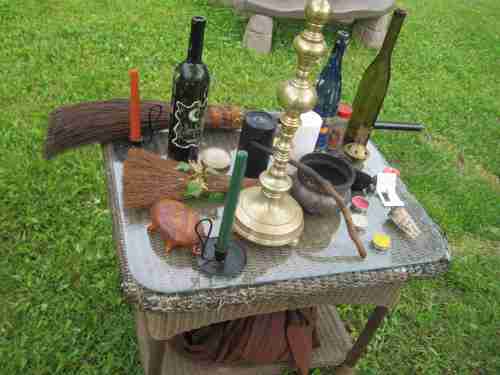

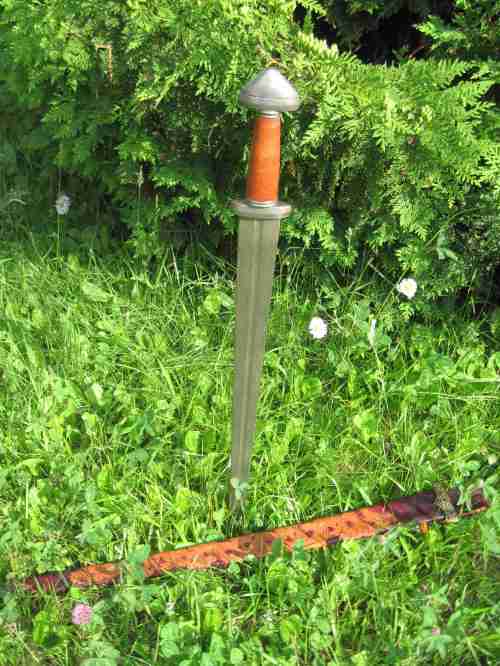
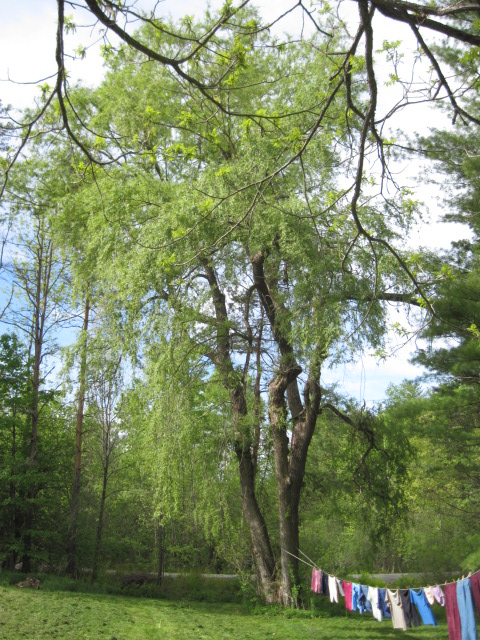
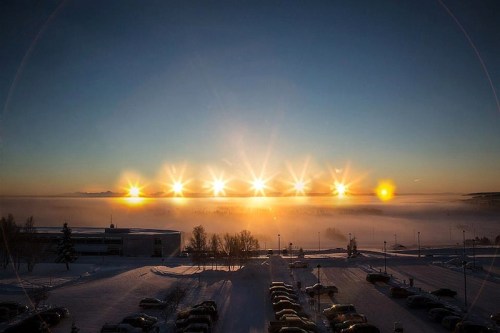

 It meant the first cutting of hay went to silage, or — if the weather was unusually dry for green, wet western New York, we cut, raked, and baled it, and ferried wagon after wagon of it to the dark, looming haymow. Under the gray asphalt shingles that covered the immense gambrel roof, you’d sweat just standing still in the dim half-light, waiting for the elevator to drop seemingly endless bales as you scurried to stack and balance on the slowly rising tiers.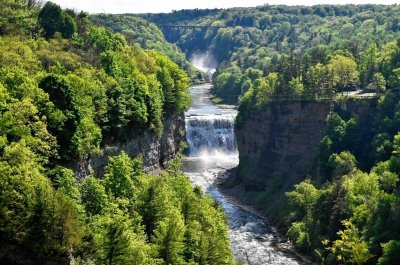

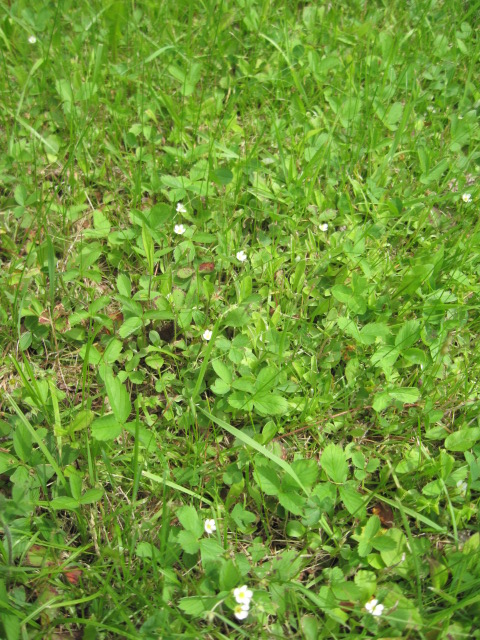
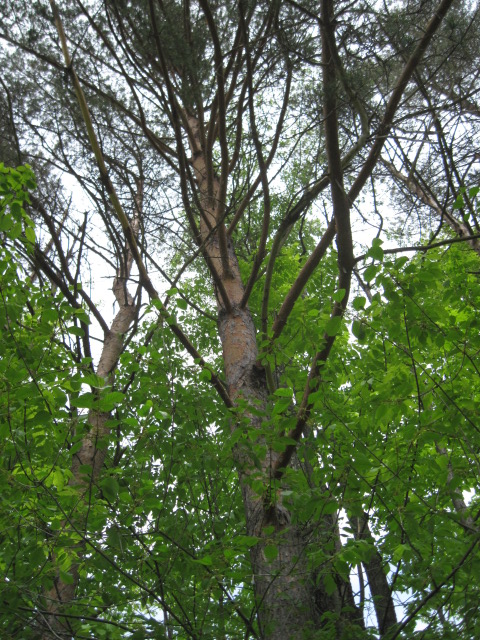

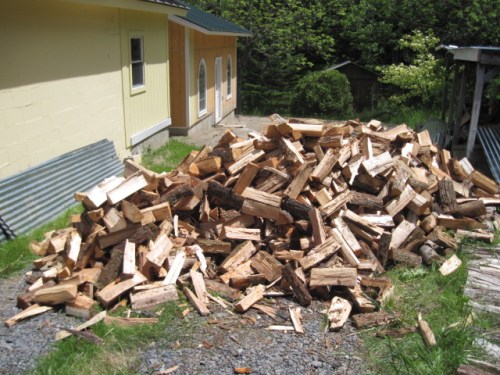
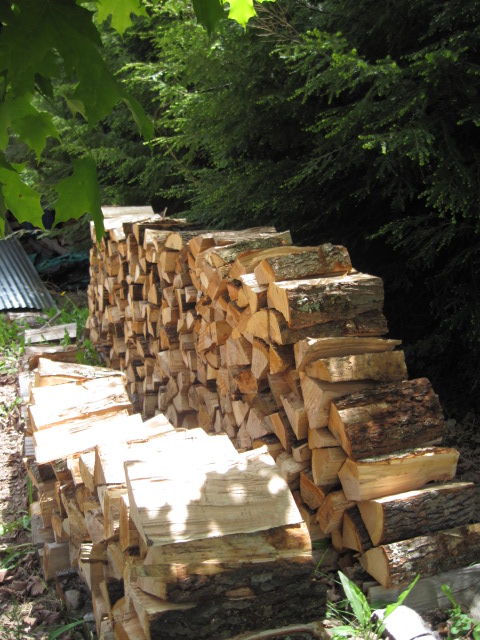
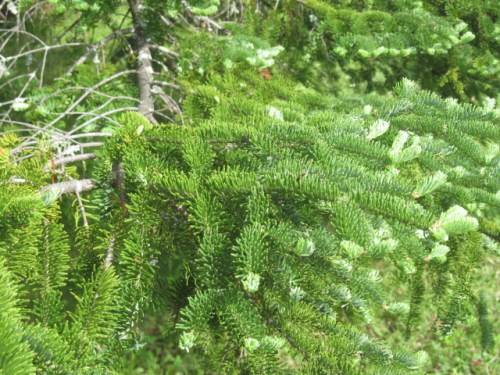

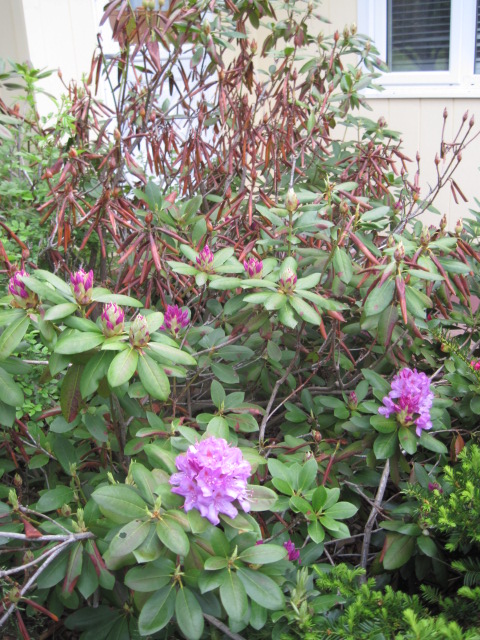
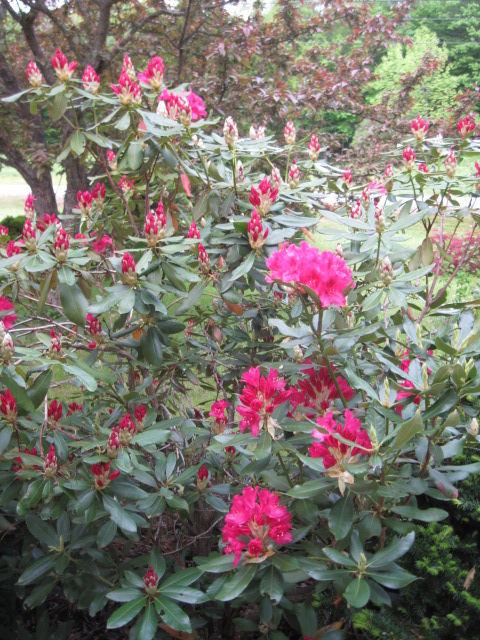
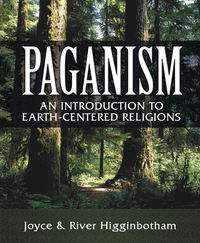 I quote this book because it’s on my mind. The Pagan group of some dozen members I’ve recently helped to form here in southern Vermont is discussing it as a way toward building some common ground. We’re Wiccan, Pagan, Druid, agnostic and more, veteran and newcomer, from our 20’s through our 50s.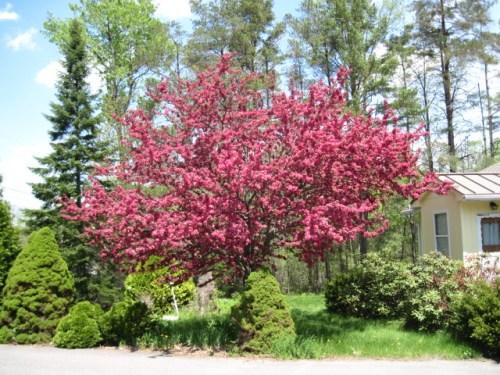
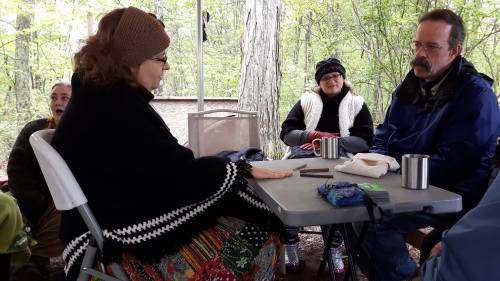
 Or what about a shift of terminology? Would that help at all with any of these themes? If instead of “Baptisms of the Elements”, we called them “Elemental Sacraments”, would that easier name make a difference? Would it make it any easier to move beyond instinctive antipathies and past traumas?


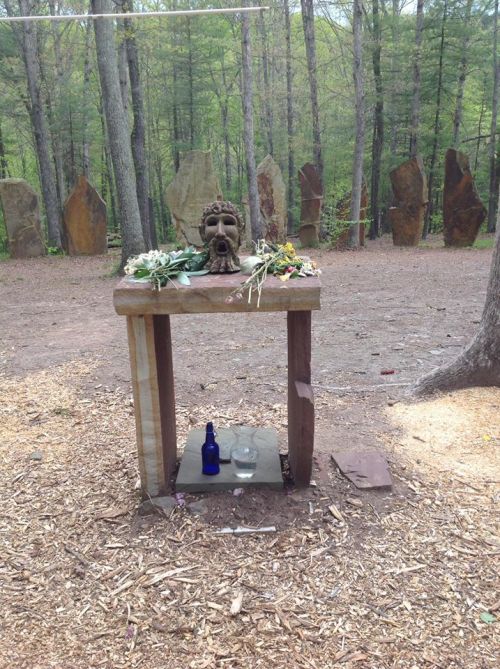

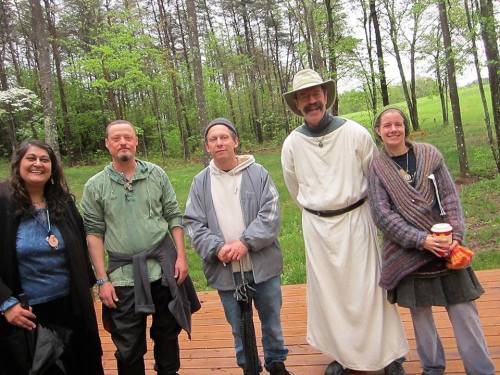

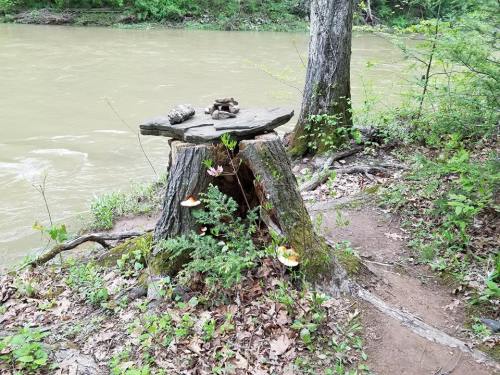

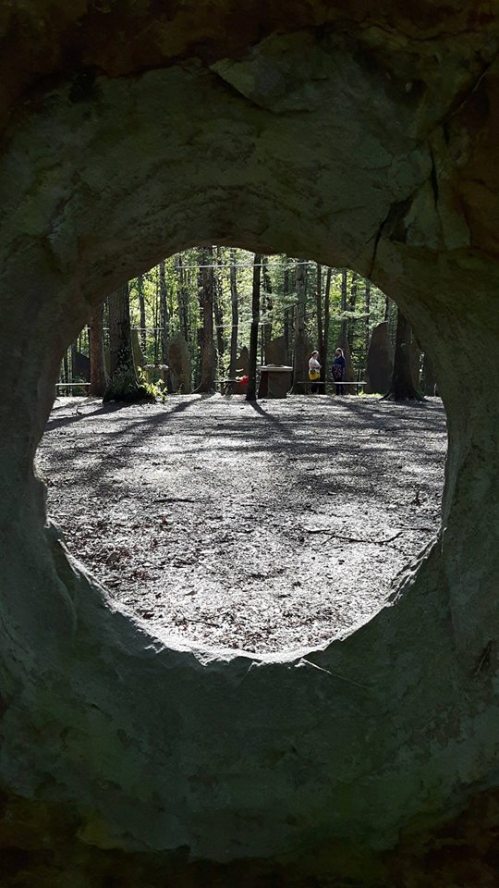


 A Druid Way


