Archive for the ‘Biblical reference’ Category
So if you found my previous post about fear and death (and nerds — yay!) a bit too off-putting, here’s a reprieve. What else might a new “religious operating system” have on offer?  In a Huffington Post article from some time ago (Sept. 2010) titled “The God Project: Hinduism as Open Source Faith,” author Josh Schrei asserts that the principal distinction between Hinduism and other more familiar Western faiths is not that the former is polytheistic and the latter are monotheistic, but that “Hinduism is Open Source and most other faiths are Closed Source.” (We’re already increasingly familiar with the open-source approach from computer systems like Linux and community-edited resources like wikis.) In this series on what a more responsive and contemporary religious design might look like (here are previous parts one and two), this perspective can offer useful insight.
If we consider god, the concept of god, the practices that lead one to god, and the ideas, thoughts and philosophies around the nature of the human mind the source code, then India has been the place where the doors have been thrown wide open and the coders have been given free rein to craft, invent, reinvent, refine, imagine, and re-imagine to the point that literally every variety of the spiritual and cognitive experience has been explored, celebrated, and documented. Atheists and goddess worshipers, heretics who’ve sought god through booze, sex, and meat, ash-covered hermits, dualists and non-dualists, nihilists and hedonists, poets and singers, students and saints, children and outcasts … all have contributed their lines of code to the Hindu string. The results of India’s God Project — as I like to refer to Hinduism — have been absolutely staggering. The body of knowledge — scientific, faith-based, and experience-based — that has been accrued on the nature of mind, consciousness, and human behavior, and the number of practical methods that have been specifically identified to work with one’s own mind are without compare. The Sanskrit language itself contains a massive lexicon of words — far more than any other historic or modern language — that deal specifically with states of mental cognition, perception, awareness, and behavioral psychology.
 It’s important to note that despite Schrei’s admiration for Hinduism (and its sacred language Sanskrit — more in a coming post), the West has all of these same resources — we just have developed them outside explicitly religious spheres. Instead, psychology, so-called “secular” hard sciences, social experimentation, counter-cultural trends and other sources have contributed to an equally wide spread of understandings. The difference is that far fewer of them would be something we would tag with the label “religion,” especially since the pursuit of things like ecstatic experience — apart from some Charismatic and Pentecostal varieties — generally lies outside what we in the West call or perceive as “religion.”
The underlying principle that drives such a range of activity perceived as “religious” also stands in sharp contrast with religion in the West. (Of course there are exceptions. To name just one from “inside religion,” think of Brother Lawrence and his Practice of the Presence of God.) As Schrei remarks, “At the heart of the Indic source code are the Vedas, which immediately establish the primacy of inquiry in Indic thought.” To put it another way, India and Hinduism didn’t need their own version of the American 60s and its byword “question authority,” because implicit in open-source religion is “authorize questions.” Nor did they need debates over Creation or Evolution, because scientific inquiry could be seen as a religious undertaking. Schrei continues:
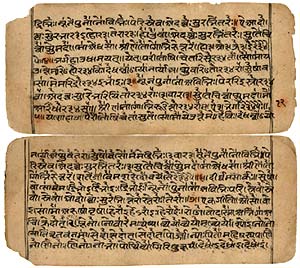
In the Rig Veda, the oldest of all Hindu texts (and possibly the oldest of all spiritual texts on the planet), God, or Prajapati, is summarized as one big mysterious question and we the people are basically invited to answer it. “Who really knows? Who will here proclaim it? Whence was it produced? Whence is this creation? The gods came afterwards, with the creation of this universe. Who then knows whence it has arisen?” While the god of the Old Testament was shouting command(ment)s, Prajapati was asking: “Who am I?”
This tendency to inquire restores authority to its rightful place. In an era in the West when so many faux authorities have been revealed as spiritually hollow or actively deceitful, we’ve arrived at a widespread cynical distrust of any claims to authority. But true authorities do still exist. Their hallmark is an invitation to question and find out for ourselves. Jesus says, “Ask and you will know, seek and you will find, knock and it will be opened to you.” These aren’t the words of one who fears inquiry. To paraphrase another of his sayings, when we can learn and know the truth about something, we will meet an increase of freedom regarding it. It will not intimidate us, or lead us to false worship, or mislead us. One identifier of truth is the freedom it conveys to us. 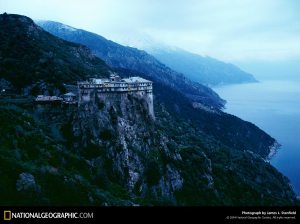
Authorities also benefit us because out of their experience they can guide us toward the most fruitful avenues of inquiry, and spare us much spinning in circles, pursuing wild geese, and squandering the resources of a particular lifetime. Whether we choose to follow good advice is a wholly separate matter. Authorities can point out pitfalls, and save us from reinventing the wheel. At a time when so many look East for wisdom, only recently have we been rediscovering the wisdom of the West hidden on our doorsteps.
Examples abound. The Eastern Orthodox church has preserved a wealth of spiritual practices and living exemplars in places like Mount Athos in Greece. The Pagan resurgence over the last decades has done much useful weeding and culling of overlooked and nearly forgotten traditions rich in valuable methods for addressing deeply the alienation, disruption, dis-ease, physical illness and spiritual starvation so many experience. Individuals within Western monotheisms like Rob Bell and his book Love Wins have served as useful agents for reform and introspection. While it may not be always true, as Dr. Wayne Dyer claims, that “every problem has a spiritual solution,” we’ve only just begun to regain perspectives we discounted and abandoned through the past several centuries, mostly through the seductions of our increasing mastery of a few select processes of the physical plane and their capacity to provide us with comforts, sensations, entertainments and objects unknown until about 75 years ago. We’ve self-identified as “consumers” rather than spiritual beings. Hamlet identified the problem centuries ago: “What is a man if his chief good and market of his time be but to sleep and feed?” Or as another of the Wise asked, “What does it profit a man, if he gain the whole world and lose his soul?” Let us be soul-finders and soul-nourishers. Otherwise, why bother?
/|\ /|\ /|\
Images: open-source cartoon; veda; Mount Athos
Nerds talk a lot, one way or another. If they don’t speak, they write. That’s annoying, because it’s often hard to get them to shut up. And now, armed as they are with blogs and email and Twitter and Facebook and Myspace and a myriad of other venues — well, you get where I’m going with this. More words than people on the planet, every single day.
But while not all of us are Nerds, or even nerds, one thing we all face, nerd or otherwise, is fear. Since we often do our level best not to talk about fear, why not put the nerd instinct to good use? Resist the flow. Be awkward, that thing nerds excel at, and talk about it. (Along the way I get to include a Youtube link, and references to the plague, Jesus, and a medieval poem. Good stuff — a regular pot-luck entry.)
One big fear, of course, is fear of death. Reader, if you’ve found a sure-fire way around it, get busy marketing. You’re set to make your fortune. And no, I’m not talking about any Afterwards. That’s a separate post. I mean the process, the whole sucky thang of the roof caving in on the house, the ground floor dropping away into the basement, and the walls tumbling down. The Demolition (or Eviction, depending on your take regarding a Landlord). The Snuff, the Blowout, the Final Exit, the Nobody Home of your life.
Have I got you thoroughly depressed, and on your weekend, too? Sorry for that, though I won’t apologize for the topic. If we’re going to be morbid, let’s do it right, with style and flair, and a literary reference. Here’s your serving for the day. There’s a well-known Middle English poem I keep coming across from time to time which partly inspired this post. I read it in college and I’ve taught it in high school in British Lit. Pause here for a digression — just skip the rest of this paragraph, and the next one, if you’re in an impatient mood when you read this.
Still with me? OK. Yes, I get it — unless you’re also a fan, Middle English is next door to Old English and Beowulf and all that other stuff your high school or college English teacher inflicted on you. Or if it wasn’t English, it was something else. Let’s just acknowledge that at one time or another you’ve been on the receiving end of, and made to suffer for, an intellectual enthusiasm or obsession you didn’t share. And no — I’ve never shed the geek/nerd label since it first attached itself sometime in high school — the difference nowadays is that I make my living from it as a teacher. It’s as if I wrote a book called Nerdiness for Fun and Profit. Which might actually sell. So I’ll apologize in advance for whatever my educational peers have put you through — you and my own students.
So here’s an excerpt from approximately the first half of the poem. The spelling’s been modernized, and the few words that haven’t made it through into modern English are clear enough in context that you should be able to catch the gist without me being even more nerdy and annotating the damn thing. But I’ll do it anyway. And one other note: the Latin tag in italics translates as “The fear of death disturbs me.”
In what estate so ever I be
Timor mortis conturbat me.
As I went on a merry morning,
I heard a bird both weep and sing.
This was the tenor of her talking: [substance, topic]
Timor mortis conturbat me.
I asked that bird what she meant:
“I am a musket both fair and gent; [sparrowhawk/nobly-born]
For dread of death I am all shent: [ashamed, confused]
Timor mortis conturbat me.
When I shall die, I know no day;
What country or place I cannot say;
Wherefore this song sing I may:
Timor mortis conturbat me.”
In medieval Europe death was everywhere. People died at home, people died young, and people died from — among other things — the series of perfectly nasty plagues that swept Europe and took out a good third of the population. Today we’ve got it easy in many ways. Our life expectancy is twice that of the 1400s, we can usually moderate pain through medication, and many medieval diseases have been eliminated. No, I’m not asking you to be ever so grateful and click on over to EasyDeath.com. But what’s interesting is that the speaker of the poem isn’t concerned with pain but with uncertainty. It’s that sense of being ambushed by an invisible assailant that adds to our fear.
There are several things to say, Druidic and otherwise, in response. First, those who’ve had out-of-body experiences often report that they’ve lost their fear of death. You may be one of those people yourself. To quote Genesis (the band this time–not the book–in their song “Carpet Crawlers”), “You’ve got to get in to get out.” Or in this case, get into other states of reality, see that this one is one among many, and that leaving this one is less of a Big Deal. These kinds of experiences are more common than we’re lead to believe, and those who’ve had them often keep quiet about it because of the general atmosphere of fear, skepticism, and materialism that denies whole facets of human existence. What I’ll say for victims of these mindsets is that they deserve compassion for living on the porch and never venturing into the house, never bothering to find out if there even is a house.
A powerful technique I’ve found is to send love to my fears. I can make it a daily prayer. If we’re worried about a difficult dying, send love to that future self which will die. Break down the patterns of fear that sap and sabotage our present possibilities for joy. As Jesus observed, “Perfect love casts out fear.” And don’t worry if your love isn’t “perfect.” Any love is a good start, an improvement on dread. Most fear is learned.
For those of us who believe in or have had experience of other lives, the sense of deja-vu often replaces fear. Gotta go through it all — again!
I’ll close with another citation, which I find Druidic in sensibility. This one I ran across in school, decades back, and copied down into my journal. The paper I’m reading from as I type this is yellowed and crinkling on the edges. It describes a kind of initiation. The quotation is long but I hope worthwhile for the “tough wisdom” it teaches.
The American Indian’s insistence on direct personal religious experience remains preserved when he comes into contact with Christianity: he finds it difficult to accept experiences of the other world which are said to have happened two millennia ago and which are attested to only by a book.
An empirical attitude toward the other world is a difficult one to put into action. It requires an emptying of the mind and the body, a humbling of the self before all other beings, “even the smallest ant.” It is not as though the Indian [you can substitute Druid here — ADW] is “close to nature” and therefore found such an experience easier to come by than ourselves; he speaks of the journey as carrying him “to the edge of the Deep Canyon,” and he feels it as nothing less than death itself. While he is there he sees a universe where everything is not only animate, but a person, and not only a person but a kinsman. On his return from the journey he is reborn; he is no longer the same person he was before. Having seen for himself the reality of the other world, he now has what William Blake called “the double vision,” as opposed to the single vision of Newton. Alfonso Ortiz describes this double vision in the teachings of his Tewa elders, who “saw the whole of life as consisting of the dual quest for wisdom and divinity.” It is not that the Indian has an older, simpler view of the world, to which we an Newtonian thinkers have added another dimension, but that he has a comprehensive, double view of the world, while we have lost sight of one whole dimension.
The way to his understanding is not found with the road maps of the measurable world. One begins by finding four roads that run side by side and choosing the middle one. The Road, once found, is cut by an impassable ravine that extends to the ends of the world. One must go right through. Then there is an impenetrable thicket. Go right through. Then there are birds making a terrible noise. Just listen. Then there is a place where phlegm rains down. Don’t brush it off. Then there is a place where the earth is burning. Pass right through. Then a great cliff face rises up, without a single foothold. Walk straight through. If you travel as far as this and someone threatens you with death, say, “I have already died.” (Teaching of the American Earth, xx.)
/|\ /|\ /|\
So there you have it — one of my stranger posts, oddly organized, with weird tonal shifts. Hope you get something useful from it. Thanks for reading.
“Behold!”
In this single command, Jesus is profoundly Druidic. Catch the moment, he says. Watch the divine as it swirls around and in you. You can witness the marvelous if you simply pay attention. Listen! Look! Seeing and hearing are a good start. Now do more. Put yourself into your attention. Make it purposeful. Don’t just hear — listen. Don’t just see — look.
“If therefore thine eye be single, thy whole body shall be full of light” (Matthew 6:22). A wonderful assertion– one to test, to try out, to prove to oneself, not merely to accept passively. A promise. Singleness of vision, the devotion and dedication to witnessing what is really there, as opposed to what we assume or fear, wish or ignore. Some have seen this passage as a reference to the yogic “third eye” chakra, the Hindu Shiv Netra or Sufi Tisra Til. Why not both, and something else besides?
In the second half of her poem “The Summer Day,” Mary Oliver says:
I don’t know exactly what a prayer is.
I do know how to pay attention, how to fall down
into the grass, how to kneel down in the grass,
how to be idle and blessed, how to stroll through the fields,
which is what I have been doing all day.
Tell me, what else should I have done?
Doesn’t everything die at last, and too soon?
Tell me, what is it you plan to do
with your one wild and precious life?
Shouldn’t all attention bring to light more and better questions? Wouldn’t we be bored to tears with a life of all things answered? Give me bigger and deeper questions, give me earth whole again, give me all I already have. Give me birth in this moment. We are constantly being born, arriving at ourselves, a remembering, a finding out of the utter strangeness of being alive, and being human in this moment, our eternity, the only time there is. The past is only memory, and changing. The future is hopes and fears. Take the now with both hands.
“Behold, I send you forth as sheep in the midst of wolves: be ye therefore wise as serpents, and harmless as doves.” (Matthew 10:16)
A regular menagerie of a sentence! Sheep, wolves, serpents and doves. If inanimate things like stones can testify to divinity (see previous post) and proclaim truth in the face of human delusion, then certainly birds and beasts can do the job, too.
Here Jesus is admonishing his followers, as he commissions them to spread his teaching, that the world is full of wolves. His disciples won’t appear on the scene with an army at their beck and call. They don’t carry letters of introduction, or a case of free product samples to tempt the potential client. No email blast or flurry of tweets precedes their arrival. No, if they’re to succeed, they’ll need specific attributes which he characterizes as the wisdom of serpents and the harmlessness of doves. And note that you can’t transpose those qualities; who would welcome a person “wise as a dove” or “harmless as a serpent”?! Bad advertizing. It’s a recipe for disaster. But more importantly, would serpent-wisdom and dove-harmlessness actually work? Hold that thought.
A persistent tradition in the UK at least eight centuries old has Jesus spending some of the “lost” years — between his appearance in the temple at 12 and the start of his public ministry around age 30 — in Britain, studying with Druids. William Blake, associated with revival Druidry during his lifetime in the 19th century, penned the famous hymn “Jerusalem” (this version hails from the last night of the ’09 Proms, a popular annual summer music series in the U.K.). The lyrics were put to music about a century later, and the piece has become a perennial favorite, a kind of unofficial British national anthem:
And did those feet in ancient times
walk upon England’s mountains green?
and was the holy lamb of God
on England’s pleasant pastures seen?
These lines of the opening stanza seem innocuous enough, if fanciful. A Middle-Easterner would surely have it rough during a British winter — it isn’t always “green.” The tradition continues from there, claiming that after Christ’s death, Joseph of Arimathea (who provided a tomb for the body) either sent part of the Grail to England, or made the journey himself and founded a church in Glastonbury, or planted there a thorn tree long venerated as holy.* Whatever the truth of these events, it makes for a striking symbol and image.
But Blake continues, and this is when his poem turns odd:
And did the Countenance Divine,
Shine forth upon our clouded hills?
And was Jerusalem builded here,
Among these dark Satanic Mills?
Bring me my Bow of burning gold;
Bring me my Arrows of desire:
Bring me my Spear: O clouds unfold!
Bring me my Chariot of fire!
I will not cease from Mental Fight,
Nor shall my Sword sleep in my hand:
Till we have built Jerusalem,
In England’s green & pleasant Land.
As a proto-Druid, Blake gets his ecological digs in here: the “dark Satanic mills” of the early industrial revolution are already at work spewing smoke and ash over London. While most Druids today have no intention of attempting to “build Jerusalem in England’s green & pleasant land,” the song brings divinity one step closer. Who complains if some versions of our ancient history bring with them a delicious shiver of magic or imaginative religious reconstruction? But is the way to achieve divinity on our shores through “mental fight” and metaphorical battle? The sudden shift to the quadruple imperative of “Bring … bring … bring … bring” summons up images of a bronze-age charioteer. But what of the “arrows of desire”? Here the image is of Eros, Cupid, the piercing quality of sudden strong feeling. Is it the poet speaking as “I” in the last stanzas? Or as someone else? Is it Blake’s idea of Jesus?
You may not remember, but I asked you a few paragraphs back to hold the thought of serpent-wisdom and dove-harmlessness. Some of the “wisdom” accrues from the belief that serpents are uncanny beasts, for they are able to shed their skin and achieve a kind of rebirth or immortality. And the serpent in the Garden that haunts the Western pysche tempted Eve not to the Tree of Life (Eve! EVE!! The other tree! Eat from the OTHER tree!!) but the Tree of Knowledge. As I tease my students, “Major mistake. Become immortal first, and then get the knowledge of good and evil.” The harmlessness of doves is less problematic. Though city dwellers may have their foremost associations with pigeons as flocking beggars in parks, or as producers of statue-staining and public-building-defacing birdshit.
But consider again. If you know something — I mean really know something of life-changing power — you need to come across as seriously harmless. Otherwise people have this nasty tendency to string you up, burn you at the stake, remove the supreme discomfort of your ideas and presence at all costs. Your wisdom puts you in mortal danger. So reassure people first, and work your changes quietly, harmlessly. A major piece of strategy! Some devious or disgusting trick you’d expect to discover about that other political party — the one you don‘t belong to and affect to despise as the epitome of all things vile and loathsome. Is that why this year’s political reality-show contestants (I mean presidential candidates) come across as less than competent? (Repeat after me: “All candidates vile and and loathsome, all con-men big or small, all morons foul and putrid, Democrats/Republicans have them all!”**)
So animals embody a divinely-commissioned strategy for survival. The wisdom of the serpent, long despised, is not dead, but sleeps in each of us, waiting the touch of the divine longing to rouse and waken it in the service of life. The son of God (we are all children of the divine) summons it forth from us. It lives, tree of knowledge and tree of life united, identical, twining its way around our hearts, which know — when our heads deny it — which way to go, what we need, where to find answers others say are “forbidden” or “not for mortals to know.” On the contrary — they’re specifically intended for mortals to realize.
/|\ /|\ /|\
*The Glastonbury thorn has lately made headlines. It (there are actually several in the area, believed to spring from a single parent) was hacked down two years ago this month (with some historical precedent, if you read the article) and then recovered enough by March of 2011 to put forth a new shoot. Another demonstration, as if we needed it, that old things do not just disappear because we hack at them or find them out of place or inconvenient. They have a habit of return, of springing back to life. Another habit from the natural world for us to imitate …
**This uncharacteristically acerbic side-note is not part of the actual blog.
“And some of the Pharisees from among the multitude said unto him, Master, rebuke thy disciples. And he answered and said unto them, I tell you that, if these should hold their peace, the stones would immediately cry out.” (Luke 19:39-40)
What shall we do till the stones start to speak,
or whom can we turn to and trust in these days?
Can we hear even echoes of truths that we seek,
catch mere flickers of fire to illumine our ways?
The stones broadcast secrets we now scarcely hear —
the earth bears true witness, though leaders stay mute,
to remind us of love that is stronger than fear.
Goal and path rise within us — there’s no other route.
The animals know much — in each neighboring eye
is the ghost of the knowledge hard-won from their days:
make the most of each moment, for this body will die —
tomorrow’s new compost, though it shouldn’t amaze
us when walls turn to doors: we walk through them to find
the doors of our hearts were more narrow by far.
Trust the paint-box you’re given, though your dear ones are blind,
though your culture berates you, fear sets up a bar.
We must watch as we journey, be mindful of stones
that mumble or shout, rousing sleepers to wake.
Learn to feel the right path in the set of our bones,
trust the deep self to know the next step to take.
In her blog, Alison Leigh Lily writes beautifully about the human body as a holy thing, an altar:
So, too, my body is the altar in the nemeton [sacred grove–ADW] of my soul — that small, solid piece of world that settles down like a stone into my awareness. And that awareness in turn is carved by the spiraling torrents of the sacred world, the sun that crafts the seasons out of mud and wind, the moon that pushes the sea to its extremes, the stars that draw the eye into the great distances that yawn open between us, the deer, the jay, the badger, the rustling oak and every being and body that dances through its longing, hunger, fear, curiosity and sleep. All these things turn about the sculpted edge of my nemeton, the sanctuary my soul has made of itself, the self that calls itself “I” and reaches out into the world to touch the chaos that has given birth to it. Sitting in the center of that nemeton is my body, all surface, the appearance of skin and hair and angles and soft curves of fat and loose muscle. Like a ladder that reaches into the dark. A spine, a wellspring, a single tree, a tongue of flame. My body is the altar around which my spirit gathers itself into stillness. Not a temple, but only a simple, useful table where I sit down to do my work.
And some of the work we are called to do is to recognize that altar. In the Bible I read, “I will go up into the altar of God” — introibo ad altare dei in Latin. I use it as a mantra, a chant, to be mindful of the altar as a place to ascend to. For it feels like we do actually rise up, into the body, out of thought, out of waking, out of the distractions and worries and daily obsessions, the small news that passes for important events that other people call “headlines,” but which are mostly just footnotes — out of the image and into the reality, into this body that is part of the world, not a thought or an idea or a remove from the thing itself, but the place where we experience a universe.
I strive to occupy this body, this world, as fully as I can, to be fully incarnate. Not to forsake this great, unheralded, impossibly large opportunity to know, to dare, to will and to be silent, to listen for the voices of the Others who move all around me, chickadee at the feeder, crows scavenging a dead squirrel on the road early this morning as my wife and I drove through the dark and the fog to her weaving apprenticeship.
And Tom, who introduced himself yesterday afternoon — a neighbor, out chopping wood. He paused from his work and called to my wife and me, walking slowly over to where we were unloading our car. “It’s something I can still do, and it needs doing,” he said to us, as he stood before us, dressed in blue sweat pants, a gray sweatshirt, a blue hoodie, pieces of leaves and bark plastered to this clothes. “I was just recovering from knee surgery when I had a stroke. And I was recovering from the stroke when I lost my job. But I can still chop wood, as long as I don’t have to bend my legs too much.” So I touch that friendliness, and something of the spirit in him, that brought him to our doorstep to chat in the fading afternoon light of a day in early November. Is any song more wonderful?
“Sanctuary my soul has made of itself,” Alison says — a poem, a song, a prayer for this life, this world.
“Prayer is about being hopeful,” says Sister Alice Martin. “It is not a phone call to God’s hotline. It’s not about waiting around for an answer you like, especially since sometimes the answer you’re going to get is NO!” And she continues, “If you are going to pray, then don’t worry. And if you are going to worry, then don’t bother praying. You can’t be doing both.” I know which one I want to choose, often as I can, prayer at this altar of my body.
“But ask the animals, and they will teach you; the birds of the air, and they will tell you; ask the plants of the earth, and they will teach you; and the fish of the sea will declare to you” — Job 12:7-8.
Mourning doves at the feeder this morning, blue jays squabbling on our standing-seam metal roof, shortly before dawn a fox leaping through the snow nearby, mice in the garage foraging on birdseed I spilled and haven’t yet swept up, a few geese lingering and looking forlorn as they forage in the dark water of a lake, made darker by contrast with the surrounding snows.
Visible kin, feathered and furred. Beneath the surface of the pond, a few salamanders who haven’t yet burrowed into the mud to winter there. Scaled kin.
And golden till the end — leafy kin — a young maple in our back yard, shouldering its way up among larger pines.
 What can I ask, and what will they teach, tell and declare?
Isn’t everything open and shut at the same time, the glory and the wretched side by side, the fox killing the hare, the wonder of sunrise, a birth and a death both?
But what of the between, where we all live, where it is often neither? The third way we pass over, because it constantly moves with us, never stopping to be wholly seen or felt, a shadow at our backs, a light in front of us, a suspicion of beauty and the marvelous: peering through the grime and fog of a dirty window, a commuter on the way to work, waving; a bare branch with exactly seven sparrows wing to wing, puffed against the cold; the surprise of light on water, perfect mirror; a child’s unflinching gaze. O my world, altar of how many things to see and know and suffer and enjoy and give up and welcome again, how can I do anything else than love you, in the end?
and a time to every purpose under the heaven, says Ecclesiastes. Nowadays people say in partial and often unconscious echo, “Everything happens for a reason.” It’s a loaded statement. In the natural world we can find pattern and order, and much of the appeal of Druidry lies in acknowledging and celebrating such patterns. The physical world reflects an order that does not depend on human effort, a pattern which recurs and circles and balances itself: dark with light, death with life, decline with renewal.
These are comforting notions, but what of violent crimes, natural disasters, horrific diseases? Then the words turn glib and facile, if not downright cruel. Tell a burn victim, a family made homeless by a tornado, the target of sexual assault that there’s a reason or purpose behind their suffering. The statements are much less cheery or supportable in such instances.
But the statements assert even more this. A “reason” suggests the “purpose” of the original quotation, an intention and even an intelligence behind it all, perhaps “out there” in the world, perhaps “in here” in human perception and the urge to make sense of experience. Is the universe malevolent? Does it intend us ill? Or, as many suspect, is it in fact not conscious at all, and wholly indifferent to human presence?
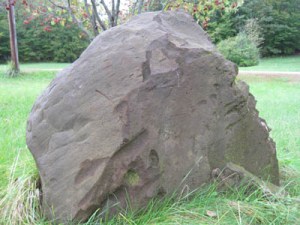
[My wife and I found this half-ton boulder two years ago when we dug up a new garden area. It now sits upright in our front lawn, more or less aligned north-south, and it’s starting to acquire a patina of lichen. Unsought. Beautiful.]
My experience with Druidry thus far has pointed me toward a perspective that comes through experience rather than principally through argument or rational process. These questions matter most prior to experience.
It can, for instance, be pleasant to lie in the sun. Actually lying in the sun delivers this realization after the fact. The warmth feels good, and the body responds to the heat and light. But beyond that, the relaxation may bring a discovery about something completely unrelated to sunbathing — a problem or difficulty I’m having. Likewise, the practice of Druidry can put a Druid in the position of discovering and knowing things unsought, without feeling the need to take a position on them either for or against. You simply know.
Of course we can seek out experiences expressly to test the validity of a belief or opinion for ourselves — that is, after all, good scientific method — but the after-the-fact quality of unsought insight allows one to absorb the experience in a less-conditioned way, without expectations or already-formed conclusions. Experience is primary, and all our explanations follow. Otherwise, we’re merely echoing others’ opinions about their experiences. Once you’ve experienced it yourself, any opinions about it start to matter a lot less.
That’s one reason that Druids I’ve met are tolerant of often divergent beliefs — they know that experience can dissolve doubts and contradictions and disagreements and leave us on the far side of mental processes and constructs, where a new landscape has opened up, and the former questions don’t matter so much any more. Or they’ve been transformed. Or new questions have arisen that are much more challenging and engaging. The world itself has changed for us.

 In a Huffington Post article from some time ago (Sept. 2010) titled “The God Project: Hinduism as Open Source Faith,” author Josh Schrei asserts that the principal distinction between Hinduism and other more familiar Western faiths is not that the former is polytheistic and the latter are monotheistic, but that “Hinduism is Open Source and most other faiths are Closed Source.” (We’re already increasingly familiar with the open-source approach from computer systems like Linux and community-edited resources like wikis.) In this series on what a more responsive and contemporary religious design might look like (here are previous parts one and two), this perspective can offer useful insight.
 It’s important to note that despite Schrei’s admiration for Hinduism (and its sacred language Sanskrit — more in a coming post), the West has all of these same resources — we just have developed them outside explicitly religious spheres. Instead, psychology, so-called “secular” hard sciences, social experimentation, counter-cultural trends and other sources have contributed to an equally wide spread of understandings. The difference is that far fewer of them would be something we would tag with the label “religion,” especially since the pursuit of things like ecstatic experience — apart from some Charismatic and Pentecostal varieties — generally lies outside what we in the West call or perceive as “religion.”


 A Druid Way