Knight, Gareth. The Secret Tradition in Arthurian Legend. Aquarian Press/Thorsons, 1983. [More recent reprints available from other publishers.]
I’m reading Knight’s book as I draft a workshop proposal for the 2019 Mid-Atlantic Gathering. In spite of my tendency to discount such coincidences, I’ve found scant evidence for them. More often than chance could ever explain, two events will turn out to be not just linked in some way, but in a way I can learn from and grow by. And if you conclude I simply haven’t dug below my claims of coincidence into the sheer pervasiveness of chance that underlies it and rules the universe, I’d chuckle at the depth of your superstitious belief in chance, and continue learning from coincidence, a much richer journey altogether. Events talk to each other, and I want in on the conversation.
Maybe you can explain it by my suspicion of the universe, one of my admitted biases. I find this an odd but useful approach. It sounds like I’m a skeptic, still a popular stance in a world that nevertheless keeps on not conforming to our desires, whims and wishes, in spite of things like the Law of Attraction (which tends to operate inwardly, I’ve found, not in the world of physical form). I apparently get to keep a doubting and superior viewpoint, which is what so many unexamined beliefs afford — protection for the ego. But deep down, a part of me knows there’s almost always much more going on than meets my ill-trained eye. My ego’s been pummeled often enough along the way to discovery that I take yet another instance of it as a good sign I’m getting warm. This universe, it turns out, has a will of its own.
I say “ill-trained”: raised in some of the materialist and psychically-polluted environments that pass for much of what is called Western civilization*, it’s little wonder I don’t see things for what they are. It took me the longest time to determine that most of the illusion is in me, not in things. We’ve been trained away from much of the truth of things. Like death and rebirth, polarity, spirit guides and companions, energy centers in the earth, the power of ritual, the centrality of the imagination in our emotional and physical health, the daily magic we all practice, the value of a spiritual discipline, the power of mass belief for good and ill. Basically everything you can find in that section of many bookstores, however obscured by bad writing and incomplete knowledge. And much more importantly, it’s our vast human heritage, the largely unwritten world of experience our ancestors keep whispering we really need to pay attention to, in our DNA, our dreams, our daily lives.
Veteran comedian Steve Martin used to mock human pretension and idiocy in his 70’s routines with references to things like “how I turned a million in real estate into twenty-five dollars in cash” or “how to make money off the mentally ill”. Perhaps unsurprisingly, the problem of mental illness was less acute then or at least less visible, though its roots lengthened daily underground. Of course, large numbers of writers still practice this lucrative trade, on both sides of the bookstore aisles, and on the workshop circuit, stumping for stop-gap measures to make the status quo more quo. We thought the karmic consequences of Western civilization’s less happy choices would all appear on the physical plane, which is where, after all, we’d apparently set them in motion. But we didn’t expect the damage to ourselves to take form before the physical-world effects fully caught up with us. Or as the Wise say, all the planes of existence are connected. We couldn’t despoil a physical world without having already despoiled our own inner worlds.
What does the foregoing rant have to do with Arthur, or a secret tradition? Knight gets right to it on his first page. He explains “the hold that the legends of Arthur and his Knights exercises on the imagination … they enshrine a secret Mystery tradition … which was also the guiding force behind the old stone circles and trackways of Western Europe”.
Or as Mara Freeman puts it in the first line of her book, “The Holy Grail won’t go away” (Grail Alchemy: Initiation in the Celtic Mystery Tradition. Rochester VT: Destiny Books, 2014).
Thank the gods for that.
As the French knight in Monty Python and the Holy Grail tells Arthur, who has just pompously invited his master to join his Quest for the Holy Grail (and you can hear the capital letters in his voice), “He’s already got one” (around the 1:10 mark).
If I come at the Grail with a team of knights, appropriately theatrical music suitable to my nobility accompanying me on my way, and mounted like Arthur, I too may be met with the taunting the French knight offers Arthur and his companions. Grails are, paradoxically, a dime a dozen. One on every street corner. In every castle.
Nonplussed, Arthur asks diffidently, “Can we come up and have a look?”
Of course, no single source of healing will meet our need, given that we’re such a various and noisy and difficult tribe. (Or as the French knight replies to Arthur’s request for a look, “Of course not! You are English types”.) From so many paths and tracks, we converge at this present moment, and do what we will. And learn from that.
Knight outlines what he calls the Lesser Mysteries of Arthur, Merlin and Guinevere: lessons and practices for the individual, for the group, and for polarity working with both individual and group as part of spiritual service. But, you might say — and Knight does — that this is the introductory material. The Greater Mysteries concern the Grail, the old Celtic Cauldron of Regeneration we meet with in myth and legend.
My intermittent dissatisfaction with OBOD ritual and practice, as I’ve shared here, has slowly led me to developing my own practices connected with the Grail, in an idiosyncratic form and tailored to my quirky nature. It’s hardly a system**. Spend too much time systematizing anything, I keep re-learning, and too often it dies in your hands. (Knight notes (pg. 175) provocatively that “archetypes, like individuals, are capable of redemption”.) I’d rather practice what seems to work.
Pieces of it that may be of use to others I’ll try to share in the next series of posts.
/|\ /|\ /|\
*Every civilization offers much to admire, and ours is no exception. The best music and art the West has produced rival the best of other civilizations. Coming to terms with the corresponding limits and faults of a civilization is part of the work of its maturation. No civilization lasts forever. This simple fact still seems to shock many, who apparently believe the West, or at least the United States, is somehow exempt. But if anyone doesn’t also glimpse the weaknesses of the West by now, that person simply hasn’t been paying attention. It’s doubtful, in fact, that such a one has even been conscious for the last 75 years. As with preceding civilizations, we will corporately (if not individually) deny our problems until they overtake us and execute harsh justice on its false suppositions and its deeds, and on those inheriting both their benefits and drawbacks. Which is all of us.
Arthurian legend as Knight examines it addresses such cultural and civilizational collapse as one means of renewal and rebirth.
Social justice warriors: we appreciate at least the relatively sane among you for sounding the alarm and putting a few of your fingers in the dike, but karmic payback on a scale you can’t achieve is already starting to take shape.
**Those seeking a system may find Freeman’s book and its associated practices and workings help answer that search.
A ritual is a series of interrelated actions designed to accomplish a spiritual goal. It may be a celebration, but it’s more than a party. It may honor certain spiritual persons, but it’s more than singing praises. It may work magic, but it’s more than a spell.
Couple this succinct overview of ritual with OBOD founder Ross Nichols’ “Ritual is poetry in the world of acts” and you’ve got a fair bit to go on, if you want to do some rummaging about in ritual spaces and energies.
Ross Nichols leading a procession of the Cornish Gorseth in the 1970s. Wikipedia Creative commons.
For starters, form matters. What makes a lively seasonal festival ritual more than a party? After all, some parties also have a form. If it’s a birthday, maybe there’s a welcome period for everyone to assemble, settle in and get something to drink. Then food — a buffet or even a formal sit-down meal — followed by presents, and then games, or dancing, or some other group activity. Or maybe the whole evening is food, mingling and music, with presents dropped off on a designated table. There may be formal start and ending times, or apart from one announced activity — often, the food — there’s no set beginning or close. “Show up when you can”. Still, people often know what “birthday party” typically means. There’s some kind of loose format in most people’s expectations, unless the invitation says otherwise.
If a ritual has assigned roles, it can begin when all the participants have assembled. Beckett talks about how ritual ideally doesn’t have an “audience”. While it’s a performance, no one should be so detached as to be merely a spectator. At our most recent Vermont OBOD seed group celebration of Winter Solstice, we held a ritual “post-mortem” discussion as some dishes for our potluck dinner were warming in the oven. With just enough members attending that foggy evening to carry out the ritual-as-written, it’s true each of us “had a part”. But more importantly, as one member observed afterward, it’s what we do with and for other participants during the ritual that makes the difference. “I support them”, she said. While one person is assigned to speak the words that “call North”, for instance, everyone else can do so, too. Add your intention. Feel the direction. Visualize, sense it on your skin. Imagine the participant serving as North to be garbed appropriately for the direction, crowned and armed with symbols of earth. In fact, if we expect North or any of the other directions to manifest and be a palpable presence, just such group energy and support are essential. Otherwise, what are we doing calling the directions?
I’ve queried the opening words of the standard OBOD ritual format before, in previous posts. “By the power of star and stone, by the power of the land within and without, by all that is fair and free, welcome to this Rite of …” Lovely, but what IS “the power of star and stone”? And if I don’t know, then how do I know I want to call on it, invoke it, welcome the assembled group with and by it? Is it the same as “the power of the land within and without”? Do either of these have anything to add to our rite?
Or let’s say I chose to forego seeking and supplying a merely intellectual equation: “power of land = X”. I let the words move me wherever and however they’re meant to, trusting the ritual and relying on our group’s reverent and “heart-ful” performing of it to answer such questions in due time, if at all. Let the intention and the energy of the assembled members carry me over any rough spots, and all will be well. OK, but then how do I support the herald who proclaims these opening words, if I don’t know what I’m supposed to be doing? If we all imagine different things on hearing the words, we generate a diffuse generic energy (or nothing much at all) that may not come anywhere near to what the “power of star and stone” could do, if we knew what we were about.
Mean clearly, and you can carry people with you.
O Romeo, Romeo, wherefore art thou Romeo?
Olivia Hussey as Juliet in Franco Zeffirelli’s 1968 film version of the play.
Listen to an informed performance of Romeo and Juliet and when Juliet says these words, it’s the third “Romeo” that she stresses: “O, why do you have to be Romeo? Any other name would be fine. But no: you turn out to belong to my family’s enemies!” If you don’t know what you’re saying, you can’t mean what you need to mean. The words won’t mean what they could. Understand what Juliet says, and her next lines make perfect sense:
Deny thy father and refuse thy name
Or if thou wilt not, be but sworn my love,
And I’ll no longer be a Capulet.
‘Tis but thy name that is my enemy …
Dionysus in ’69. Photo by Brett Brookshire.
Because drama is a component of ritual, films and plays have something to teach us about owning the words and actions of ritual in deep and creative ways. Ancient Greek drama was sacred to Dionysus. In Athens, no weapons were allowed in the theater precinct during the Dionysia Festival of tragedies and comedies. The ritual of theater was an act of worship, a sacred thing dedicated to the god.
Serious about addressing ritual glitches, the crew of MAGUS ’17 asked participants to memorize their parts. Come ready to speak with intention, since you won’t need a piece of paper in front of you. Improvise, once you know the energy of the traditional words. Call North, and let us hear and feel North. I was North, a small but important part. I did call North, with original words and images I’d been composing orally — I felt their power myself — then flubbed a short line North says a page or two later that I couldn’t remember and couldn’t for the life of me find, for an ungodly amount of time, as I pawed through the printed ritual in my hand. Ritual flow broken, I finally found my place and shamefacedly read off my line.
Fortunately, Druids are forgiving folks. It both did and didn’t matter. Ritual isn’t made or marred by a single person. Smiles and laughter heal many a weak line reading, dropped candle, overenthusiastic blessing with water. It took time before I could laugh, because I was so annoyed at myself — all the more reason I needed to.
Contrast this with my Ovate self-initiation: my wife away for the weekend, all lights in the house extinguished except for a single small candle. I sit on the floor in a dim and flickering circle of light, words of the open and closing ritual at hand, but foremost in my awareness a dedication I speak as the words come to me, along with a palpable sense of witnesses around me as I proceed. The ritual pacing my pace, the words my words, the experience my own and that of those who, I sense, share it with me. Powerful, personal, memorable, unscripted at its peak, and especially potent for that reason.
The two poles of ritual? Both valid, necessary — and each distinct.
Why now? Well, this fourth and final installment was promised “soon”, at the end of Part Three — on October 14, 2015. “Soon” can apparently mean more than three years later. Are we on that much-abused term Pagan Tyme here?
Also, someone recently visited one of the posts, reminding me of the series. Thank you, anonymous reader.
A third reason? Perhaps the best: both the quest and the poem of Sir Gawain and the Green Knight end shortly after New Year’s Day.
/|\ /|\ /|\
Sex, death, magic — none of these are alien to whatever spirit pervades things, God on high, or pervading Mystery; Goddess who wears all things as her forms in this world, or spirits, devas, demons; Platonic archetypes, or thought-forms who share and shape the cosmos with us.
How do I know? Because these things — sex, death and magic — haven’t been added to the mix. They’re part and parcel of it, part of its shaping, its innermost warp and woof, dynamic, its movement and melody. There’s no break in the continuity among the many ways life propagates here. Things vibrate to each other, so that more of them can join the show, even as the older ones yield the stage, so that the human and world family continues.
/|\ /|\ /|\
“But wild-looking weather was about in the world”, as Simon Armitage* translates the poem, rousing his hero Sir Gawain on a wet and windy New Year’s Day (like yesterday was, here in New England!), the day of his deadly appointment with the fearsome Green Knight. Enough of feasting and dalliance! We get some 40 lines of the dressing of both knight and his trusty steed Gringolet — anything to delay the inevitable — until finally nothing remains for it but to depart.
Let’s pause for a moment, and recall the twists and turns the tale has taken:
The Green Knight came to Camelot a year ago at Christmas, a fabulous two-week affair of feasts and revelry. The enormous stranger crashes the party. He bursts in on the court uninvited, unannounced, and taunts the assembly. He and his horse, too, people keep noticing, are green. Entirely green. Uncannily green. Magic’s clearly afoot.
The Green Knight has offered a great ax, and the first blow, to whoever has the guts to take him up on his challenge. No one answers. “What, is this Arthures hous?” scoffs the Knight. A pathetic showing from such legendary fighters!
From the British Library manuscript, showing the beheaded Green Knight. (MS Cotton Nero A X, art. 3, fol. 90v.)
The King himself, his blood up at the interruption, the rudeness and the mockery of the man, is ready to answer and seizes the ax. But the king’s nephew Gawain rises and claims the challenge for himself: “This melee must be mine”.
“I schall stand hym a stroke”, says the Green Knight, as long as Gawain agrees to one in return — in a year and day. Repeat the terms, just so we’re entirely clear. And Gawain does.
Hit the green bloke hard enough now, his uncle the King advises Gawain, and you needn’t worry about any future payback. And Gawain heaves the ax and strikes the Green Knight a fearsome blow that does in fact behead him.
But decapitation is small inconvenience when you’re magical. Picking up his own head, the Knight calmly reminds Gawain he’s now bound to take a return blow, a year and a day hence.
“Thou shalt seek me thyself, wherever thou hopest I may be found” says the green head the Knight holds in one hand.
But “What is thy place?” asks Gawain in considerable dismay. “I know not thee, knight, thy court nor thy name”.
The Knight turns the head toward Gawain. “To the Green Chapel … I charge thee” to receive “such a dint as thou dealt”. Many men know me, “the knyght of the Grene Chapel”.
A year and a day. “So come, or be called a coward forever”, as Armitage renders it. At that, the Knight swings up into the saddle and rides off.
/|\ /|\ /|\
For a long while, procrastination serves Gawain quite well. In fact, he delays his departure and delays it again, until finally bad weather has returned the following December. Set yourself a year and a day to accomplish a task, and you too may feel, as I have, that it’s too much time. Too much, too little. Find a balance. Isn’t that what magic’s about?
Gawain sets off at last, and after many travails arrives at a court that he’s told lies very near the Green Chapel. No need to seek further. So he can spend the final few days at his ease.
Once again, the holiday entertainments at court are lavish. Each day the lord of the region goes out hunting, while Gawain remains in the castle, increasingly tempted by the lord’s lovely, charming wife. Her boldness and obvious wish to sample the love of a knight from the famous court of Camelot become harder and harder to resist with each passing day. Nothing like sex-and-death to blend and kindle our heightened awareness of each. Not quite a liebestod, a “love-death”, an operatic aria or duet preceding the suicide of lovers. Or maybe agreeing to such an insane challenge as an exchange of blows with edged weapons is indeed a form of suicide, when your opponent is magical.
“Strangely enough, it all turns out well”, says Henslowe in Shakespeare in Love.
“How?!” demands Shakespeare, as do other characters in their turn.
“I don’t know”, Henslowe admits. “It’s a mystery”.
Mystery or not, on the third and last day of these temptations, the lady convinces Gawain to wear her girdle at his fateful appointment. “No hero under heaven might hew him” who wears it, she urges him, and so at last he relents. Succumbs to fear. Cheats. “What should we call it but what it is?” But what is it, really? Has Gawain forfeited his honour? Squandered his good name as a knight of Arthur’s court for merely personal safety?
The poem itself offers a number of delicious clues to an answer different from any expected yes or no, and as it does so, to use film-making terms, it pans neither right nor left, but draws back and offers a wide-angle shot.
First is the fact that Gawain does yield to the Lady. He’s no “perfect knight”, whatever that means — not some bloodless ideal, but rather a mortal man.
Next is the triple blow the Green Knight offers him. As with a year and a day, we’re in magical territory with this set of threes. At the first blow, Gawain flinches, and the Knight chides him for it. At the second blow, a test of his resolve, Gawain holds firm. He readies himself for the third, which the Knight delivers, but this time merely to nick his neck, just enough to make it bleed a little.
The challenge, by its own strict terms, has been fulfilled. Gawain stood a blow in return for the one he gave the Knight a year and a day before.
But hold a moment. Gawain has also fulfilled the terms of the second contract, between himself and Bertilak, returning kisses — all he received — in exchange for the wild game the lord brings home each day. Except for this morning, when the Lady gave him the girdle, but Gawain offered no exchange to Bertilak for that.
Third is the Green Knight’s behavior here, at Gawain’s resorting to the trick of the girdle. The Knight reveals himself, and calls Gawain on his failure — but gently!
At the third time thou failed …
And therefor that tappe [of the ax] touched thee.
For it is my wede [garment] thou wearest, that same woven girdle —
My own wife weaved it for thee, I wot [know] well …
I know well thy kisses and thy conduct also,
And the wooing of my wife — I wrought it myself.
I sent her to assay thee …
Thou art the most faultless fellow that ever went on foot …
A little thing you lacked, loyalty …
Not for wooing, or any other wild work,
But that you loved your life, so I blame you less.
Fourth is Gawain’s own overblown sense of shame at being found out: “I am fawlty and falce, and have been ever”, he exclaims. Has he even heard the proportion and balance in the Knight’s estimation of him? As the ground shifts with the Knight’s revelations, both we and Gawain learn that the lady, the Knight and the whole of Bertilak’s castle are all players in a larger play — which Gawain wants nothing to do with, now that he’s been found wanting, even a little.
For Bertilak/the Green Knight reveals still more. Keep the girdle, he urges. Behind all this show is Morgan Le Fay, your uncle king Arthur’s half-sister — and thus your aunt — she who learned magic from Merlin. Come back to the Castle and finish out the New Year’s feast with us. You’ll be most welcome, all trickery now done with.
But Gawain declines. I’ll wear this girdle, yes, and thank you. But as a token of my weakness and sin. And then follows a traditional Christian catalog of men tricked by women, from Adam and Eve on down.
However, the poem’s not yet done. Gawain returns to Camelot and confesses everything to the assembled court, resolving to wear the girdle openly as a penance for the rest of his life. The court holds deep affection for him. Arthur comforts him, and everyone laughs — laughs! Then the knights of Camelot all agree that each of them will also wear a green belt as well, slanting across the chest — for Gawain’s sake! For that was acorded the renoun of the Rounde Table. And so the girdle becomes the sign and symbol of the Order of the Garter, founded in 1350. What good is your shame, if others transform it to honor?
And last is the subsequently-added French tag that closes the poem, the motto of the Order of the Garter, and an admonition to the reader: honi soit qui mal y pense — “shame to anyone who thinks it bad”, we might say. What goes around comes around, say others, centuries later than the Medieval poet.
Perhaps you hear it differently, but in these multiple ending moments I hear Pagan laughter. Tolerant, forgiving, intimately familiar with human weakness and pride, capable of the long view, able to shape good from misfortune, and delighting in the often ironic reversals that achieve these things.
/|\ /|\ /|\
*Armitage, Simon. Sir Gawain and the Green Knight. New York: W. W. Norton and Company, 2007.
At the close of my seventh year with this blog, I’m devoting a post to taking stock.
First, thank-yous to everyone — nearly 10,000 of you this past year — who keep coming back to read, to ruminate, and to comment. As I note on my About page, quoting Philip Carr-Gomm:
Just as the spiritual path can be characterised as the ongoing attempt to both remember yourself and forget yourself, so blogging can be seen as a challenge to both be more personal, more open, more sharing of the riches of a life and at the same time to take yourself less seriously, to let go of the concern about what other people might think about you, and to reveal rather than conceal your curiosity and amazement at the often crazy world you find yourself in.
As a spiritual practice, writing here keeps me turning over my experiences and perspectives — a good thing, I’ve found, for both consciousness and compost. This coming February 2019 I’ll join a panel of speakers with the rich topic of “Spiritual Lessons from Everyday Life”, and my time with this blog will definitely contribute. Human experiences have no “size” that I can determine, despite any labels we apply to them. Seemingly “small” ones deliver impacts that may not fully mature for years, while the splashier ones often fade quickly as dreams. You keep turning them over, turning them over, and good stuff emerges, which you know in retrospect mostly because it nourishes what will grow in the future. If I neglect this, soon all I have is a midden that smells, attracts pests, and I learn I’ve forfeited an opportunity for work that is real. Fortunately I can pick up the pitchfork and shovel at any moment and begin.
What other people bring to say, and how they respond to what I share here, seems to work much the same way. You learn it’s often not about you at all, whatever you thought. Each of us makes individual journeys so idiosyncratic and often difficult to get into words that what amazes me is we’re able to share anything at all. Or as I have occasion to exclaim to my wife, I’ve slowly learned that two things are simultaneously true, in the best traditions of paradox: that I’m nothing like other people, and that I’m exactly like other people — I’m an alien, or I’m your twin. This blog usually lands somewhere along that continuum.
Three of the most popular posts this past year originate not from this year but from my 2017 “Druid and Christian Themes” series. This intersection of traditions still lights up for me, as it apparently does for a sizable proportion of readers. Otherwise, the only excuse I can offer for my choice of topics is also Thoreau’s: “I should not talk so much about myself if there were anybody else whom I knew as well.” But beyond Transcendentalist Yankee Smart-assery, he makes a subtler point: go deep enough inside yourself and you will find things to say that resonate for others at least some of the time. The odds of this happening are about the same as for baseball, so an average of .300 is respectable indeed.
Looking a little further at the Druid-Christian intersection I recall how Philip Carr-Gomm notes in his book Druid Mysteries:
Although Christianity ostensibly superseded Druidry, in reality it contributed to its survival, and ultimately to its revival after more than a millennium of obscurity. It did this in at least four ways: it continued to make use of certain old sacred sites, such as holy wells; it adopted the festivals and the associated folklore of the pagan calendar; it recorded the tales of the Bards, which encoded the oral teachings of the Druids; and it allowed some of the old gods to live in the memory of the people by co-opting them into the Church as saints (p. 31).
Since I find I’m citing Carr-Gomm a lot in this post, I’ll end with one more observation by him that I find still most topical today, the 30th of December 2018:
One of the most important tasks that face us today is one of reconciliation, whether that be between differing political or religious positions … the Christian community, far from taking fright at a perceived regression to a pagan past, can ally itself with [Druidry] which is complementary, and not antagonistic to Christian ideals and ethics …
St. Columba said “Christ is my Druid” and I believe that if we take Druidry to represent that ancient wisdom which lies deep within us, and that can connect us once again to the Earth and her wonders, we can understand how we can be Christian Druids, Buddhist Druids or Druids of whatever hue or depth is needed for us at our present stage of development.
May we each find and recognize “whatever hue or depth is needed for us at our present stage of development”. Blessings of the coming New Year to you all.
… that you can give to yourself and others. Many of these are simple, elemental — as they can and may be, needing nothing beyond what we have already. If not one flame coming as a gift, then welcome another. Try one a day for all 13, or choose one or more according to a rhythm that makes sense to you. If a nudge should come to try something else, ah, nurture it for what it can be. Flame sparks flame, light reflects light.
recent mid-December dawn over our roof
Silence. What needs stillness? Find even a brief moment where you can give yourself quiet, if not silence. What flows from that interval? The flame of silence flares when we tend it, and dies back down to embers when we turn up our internal and external volumes. There’s healing in stillness, often because we can finally hear what we’ve been missing, as well as what we can give that we overlooked. Stillness brings a kind of space and light all its own.
Sound. What needs a voice? Music, the human voice, instruments, a happy dog barking, a cat purring, a child’s laughter. These too are gifts to cherish and celebrate. What do I have that I can say, what can I contribute to the conversation? What can I start (or continue) saying that I haven’t said before? What other voices can I listen to and help be heard?
Light. What needs illumination? The Festival of the Returning Sun that is Solstice means the days will begin to grow longer again after this Saturday. We may notice the lengthening more in mid-January, at least in the Northeastern U.S., with the cold, clear days that bespeak deep winter. What’s lighting up for me now? What can I help light up for others?
Ritual. What needs to be celebrated and made more conscious in my life? The smallest things may be asking and answering. Lighting a candle, or a fire. Bathing in a tub for a change, instead of showering (go all out with candles — or bathe in the light of a single flame). Sharing a meal. Watching a video together. Singing a favorite song. Wandering somewhere, off the clock, without a destination.
Kindling. What needs to catch fire? Think kindling as both the action and the materials for it. Go wide — be metaphorical, too. In addition to paper and twigs, think art of all kinds. Sketchbooks, fine paper and pens, glorious fabrics, seed catalogs. Parts, supplies, cleared spaces for projects. Plans, hopes, dreams.
Mistletoe in silver birch. Photo courtesy Chris Miksic.
Prayer. What needs asking and acknowledgement? Wordless is fine. Asking is a good part of prayer, and there are many other prayers. Gratitude is powerful prayer. Linked with silence, it can become a dedicated daily practice. Or try out words. “Let my prayer rise like incense” says Psalm 141: “… the lifting up of my hands like evening sacrifice”. Find a verse or lyric, song or poem and let it be your prayer. Listen for the prompts everywhere: other people’s words, advertising jingles, casual remarks, a headline, a child’s question, the wordless eyes of animals, the “slow gestures of trees”, as UK LeGuin called them.
Service. What and who do I serve already? Can I build on that? Where are new forms of service looking for me? Who is serving me already that I can acknowledge? I start small, and the list grows. Dropping off a meal to a shut-in. Shoveling a driveway. Serving myself, saying “no” when I need time and space.
Change. What can I help be born? What is seeking to emerge? How can I help shape it? What can I let go of in my life, so that a new thing can find birth? What can I welcome that’s arriving?
Contact. What needs touching? Is it me? What can I invite to touch me? If I don’t have human presences, are there animals who enjoy touching and be touched? What can I bring into connection that’s separate right now? What parts of my life deserve to meet each other, and would flourish if they did?
Reading. What deserves my attention? It may be an actual book, of course, a collection of poems on my altar, or a beloved book from childhood that I can make a ritual of re-reading myself, or sharing with others. (And dogs and cats can make good listeners for this, too.) It may be things I’ve been noticing in my life. What am I reading in my life, in others’ lives, in the world, in my dreams, that wishes to offer guidance?
Memory. What can I recall? What deserves forgetting, letting go? What can I bless, regardless of where it’s going? What scrapbooks, physical or inward, do I turn over, or revisit? What does memory offer that I can enrich my life with today? Sorting the mix we all have, setting aside some images (burning them?), while keeping others, blessing all, a second time. And a third. What can I add to my store of memory? What memories deserve sharing with others? What memories do others have that also touch on my life? What memories can I honor that have little or nothing to do with me? What memories does this elm have, that hickory? Let me honor them.
Nourishment. What needs feeding? Is it for me to feed them, or for someone else? How have I been fed? What forms of nourishment can I bring into my life? What am I bringing in already? What forms can I share with others? What prayer of gratitude can I say, acknowledging those gone, those still here, for feeding things in me that might never have survived without their help?
Freedom. What needs to run free? What do I hold on to that would make both of us happier if I let go? What can I welcome that comes to me freely, unbidden, unlooked-for? What symbols of freedom speak to me that I can bring into my attention, my spaces, as reminders and for my growth?
As Mary Oliver exclaims in one of her poems, “so many questions more beautiful than answers”.
On the first day of Solstice, the Goddess said to me …
I go looking for words, sometimes, to make do for deeds. But as I practice over these short midwinter days, as I celebrate them — the same thing, if I hold space for the desire to make it so — I find words coming both before and after the actions.
Slowly I start looking for guidance in more places, rather than shutting it down before it ever has a chance to reach me, wing of a bird-thought across the cheek, merest touch of feather-feeling brushing away dullness and lighting the heart to wonder, if I don’t turn away out of fear, or doubt, or — worst of all — busy-ness. Guest-guidance, I might call it, the stranger knocking, briefest word from a passer-by, bird across the sky, squirrel darting over the drifts in the backyard, woolly-bear caterpillar sluggish in the cold, clinging to the wood I carry in for the fire. Two fires today, for main house and weaving studio.
Josephine McCarthy wryly remarks, “Most of the jobs of a magician [I substitute “person” here, my fellow magicians, readers all] are about restoring balance — very simple, very unglamorous and not very useful if you want to get laid or have a new car”*. Gods know we need re-balancing almost everywhere. We’ve got our work cut out for the new year.
I reach for a natwanpi, lovely Hopi word, “instrument of preparation”, tool or implement or aid. [Go here for a post from 5 months back that talks a little about natwanpi.] For my wife, often, her natwanpi-of-the-moment is in the kitchen, whisk or blender or saute-pan. Much of her magic is a love of cooking, paired with an exquisite sense of taste that can detect herbs and spices in almost anything we eat, from our own kitchen or another’s. Other natwanpis at hand? Her looms, her warping mills, her heddles and stocks of fiber. And further out: her gift for friendship, her generosity. A wide and rich palette, a set of living natwanpi she cares for and delights in and deploys regularly.
I reach for a natwanpi, so many of them it’s an embarrassment of riches, though a bout of melancholy or seasonal affective disorder or depression can seem to raid memory of the treasure-house and make me forget or deny all I have to draw on. Google “natwanpi” and images come up from this blog, a hint of what I carry around, but also of what we each have our own versions of, and that’s just the treasure-house of images. Add in memories of people, places, animals, experiences that rest in other senses, smell and touch, sound and emotion.
McCarthy writes:
My deepest personal experience of that is with the lighting and tuning of the candle flame. The intent to light a candle to prepare the space for a ritual act developed from that simple stance, to an act of bringing into physical manifestation an elemental expression that lights through all worlds and all times: it becomes the light of divinity within everything (Magical Knowledge, pg. 70).
Or what seems almost the opposite to flame: I reach for a stone to hold in hand, door to memory, cool to the touch, scented with earth and mud and time, piece of the planet in my palm. The same, not the same: I build our house- or studio-fire, humming quietly to Brighid, the path of the act of building the fire paralleling the path the fire itself takes through the wood. I kindle, but whether it’s my spirit or the wood that’s burning starts to matter less: it’s both.
Oh, how to say these things we all know so intimately, yet often lack the words for? How to get at them? Much of magic is activating what and who we are already, what sloughs off with time if not renewed, what we can re-ignite with intention and love.
Or this, appropriately enough from Shakespeare’s A Winter’s Tale: “Thou met’st with things dying, I with things new-born”. What he doesn’t say is this: they’re the same things. What’s different is me.
Here for you is a spark of Solstice light: the vocal group Antiphony, singing “Solstice Carol”:
CAOS — that’s Netflix’s The Chilling Adventures of Sabrina, in case you’re blissfully off the grid, out of contact with modern media, and indifferent to fandom’s predilection for abbreviations. Six “problems” — does this mean I won’t or don’t watch it? No. Otherwise, I couldn’t write about it here with anything valid to say. I’m on my second viewing, in fact. I want to like it, and to give it a fair chance. (I’m even holding out very shallow hopes for the Holiday Special tomorrow.) But too many things about it trouble me, and if you’re a sympathetic reader of blogs like this one, at least some of them should trouble you, too.
Come on, I hear you grumble. It’s just a show. OK, don’t waste your time reading this, then. Allow me my occasional rant. Pop culture holds tremendous shaping power over our psyches — it deploys light, sound, imagery, metaphor, archetypes, emotion — a type of magic all its own.
*****SPOILER ALERT*****
1–Let’s start with the show’s name: I can form my own judgments and supply my own adjectives, thank you. Not that there’s much really chilling here. Some stuff in poor taste, yes. Sometimes out of character, inconsistent, aiming for cheap thrills at the expense of story. New Adventures of Sabrina? Fine. Actually descriptive. Sabrina: The Dark Years? Justifiable, and usefully vague. But chilling? It’s not even accurate as irony.
2–High Priest Faustus Blackwood’s pronunciation in Episode 2 of Samhain as “Sam-main”: Really?! Let me grab my athame “ay-thame”! A minute’s Google search, by showrunner or writer, would have avoided that absurd mistake. It’s a known Irish and Pagan word. A smallish detail? Maybe, but representative of a larger sloppiness. The High Priest of the Church of Night can’t get it right? What authority does he deserve to hold? You don’t want to be jerked out of a created, secondary world by careless errors like this. The Norman Conquest … in 1067. Lincoln assassinated … in Chevrolet’s Theater. You get the idea. A small wrongness like that mangles the whole scene, out of all proportion to its size. I don’t know about you, but that predisposes me to distrust future, larger details. I had a long-term substitute high school English teacher who pronounced epitome as “eppy-tome”. Sorry, but some errors are so blatant they deserve to be pilloried.
Click-baity posts like Screenrant.com’s “20 Things Fans Forgot about the Original Teenage Witch” might more aptly be titled “20 Things Producers and Jaded Viewers Simply Don’t Give a Damn About Today”. A better and much more informative read is Indiewire’s guide to all the references, episode by episode. The show actually includes many such references, to the delight of allusion-hunters everywhere. Why be sloppy with such a prominent one as Samhain?
3–The worst stereotypes of medieval witchcraft and magic-as-Satanism: Book of the Beast. Dark baptism. Blood sacrifice. Covens. (And oddly, patriarchy intact. Why no High Priestesses? Witch Queens?) Goth fashion, out of date well over two centuries ago, but continuously retweaked, now for the 21st century. Magic for selfish reasons, not the good of the whole. Treachery. Betrayal. Magic dependent on outside forces, not mirroring energies found within the self. Magic, in a word, as … dark. The stuff of monsters under the bed. Low astral dreams. Bad trips. Christian nightmares, not the universal, world-wide spiritual technology that’s the birthright of all.
Cast of the original Sabrina, 1996-2003
4–Sabrina, apparently sprung full-grown from Artemis’s brow, second-decade-of-the-21st-century wokeness (mostly) intact. Girl-power rampant, speaking truth to patriarchal school principals and Witch Priests, fighting injustice, moral code pure and untainted — despite an upbringing by her two often clueless and Satanically-bound aunts, one of whom happens to murder the other occasionally. Not the role models that would ever have produced this prodigy. Not the role-models of the original series, who served as mentors to their niece. Despite a sit-com trend fishing for irony or social commentary, with feckless adults raising enlightened children, it hardly ever works out that way. Add actor Kiernan Shipka’s preternatural maturity lending her portrayal of Sabrina a curious post-Puritan moral absoluteness — until it must conveniently fail, whenever the plot requires chilling. See next point.
5–Justice for all — except apparently when memories need purging, or throats need slitting. Sabrina erases her boyfriend Harvey’s memory when it could prove troublesome — though we’re led to believe she really does love him — and in Episode 8 sacrifices Agatha, one of her Academy of Unseen Arts classmates, without hesitation or reflection, by ritually slitting her throat. In Buffy the Vampire Slayer, as in real life, actions have real, fascinating and plot-thickening consequences. Not so, too often, for Sabrina. In some ways that’s the most — well, not chilling — perplexing aspect of the show: cause and effect are often in abeyance. What cosmos is this, anyway?
6–“Magic’s not for Mortals”. But for half-mortals like Sabrina, it’s fine! See John Beckett’s Dec. 2 post, “My Biggest Complaint with Magical Fiction”. All right: you’ve read my takes on magic in previous posts — no need to rehash them here.
Is anybody disposed to argue on behalf of the show and tell me where and why I’m over-reacting?
This article in an Atlantic of some three years ago about emailing trees resurfaced online recently, and in case you missed it, still offers a fine blend of longing, whimsy, technology and Druid tree references to satisfy a diverse audience. The subheading says it all: “The city of Melbourne assigned trees email addresses so citizens could report problems. Instead, people wrote thousands of love letters to their favourite trees”.
tsuga canadensis, north of the house
Writing to trees may not (yet) be proven to lower blood pressure, but expressing gratitude and affection never hurts. I write to the stand of hemlocks some twenty feet north from where I’m sitting indoors on this cold day in mid-December. “Your bark glows reddish brown in the late afternoon sun. I send you strength and healing against the hemlock woolly adelgid (HWA) that slowly eats at your bark and branches. Live, neighbors. May we learn more about how to help you so that your beauty and height remain to grace the land”.
/|\ /|\ /|\
And just as the Atlantic article came up for air, so did a positively Druidic sentiment among my Facebook friends: the lovely Welsh idiom dod yn ôl at fy nghoed, which means to “return to my right mind, to my senses, to a balanced state”. But literally it means to “come back to my trees”. (Nghoed is the mutated/possessive form, after fy “my”, of coed “woods, trees”.) A wise admonition coded in language, every time we say it! May we all come back to our trees, the trees that oxygenate and potentially heal us, that feed and nourish and shade us, that transform landscapes, shelter a myriad of birds and beasts, and help make the planet home.
If you’ve ever planned for the future, you’ve practiced a form of magic. Wait a minute, you say. That’s not magic.
Sure it is. You have an intention or goal, and you imagine it, seeing, hearing, feeling, tasting it in ways that seem so ordinary and commonplace we mostly pay no attention to the marvel of what we’re doing. Only when we find ourselves saying “But it didn’t turn out like I thought it would!” do we encounter a mismatch between the picture we painted and carried around with us, and the reality as it finally manifested. Obviously we held a pattern, image, blueprint, plan, etc. in our awareness. It took a few side-roads on the way to appearing here, where we can see and interact with it. No matter. More than before. Do it differently. Revise, modify, experiment.
I may be a visual person, or an auditory or a kinesthetic one, or some other kind of perceiver and manifester, by predilection and experience, that doesn’t have a ready label. Further, the event I manifested may or may not match what I expected or hoped, but it did manifest — as it never would have, if I hadn’t set it in motion in the first place. “As above, so below” — in this case, the above was my plan, and the below was the physical form it took. Schools that could teach us how to get better at this ability instead teach almost everything else but that. Often that’s because the teachers themselves have had the ability taught right out of ’em.
Plenty of folks would like to deny us recognition and use of this basic ability altogether, because it’s the key to freedoms and joys of many kinds, and so it cuts into their power plays. Our politicians insist that only they can fix what’s ailing the town, province or planet, our partners insist they’re essential to our happiness (or we are, to theirs). Priests, pastors and imams would prefer we not discover how independent of them we actually can be, so the ability gets labeled evil, sinful, diabolical, dangerous, forbidden, and any other convenient and manipulative name, even though every one of us alive uses it daily in its simplest forms. But the more advanced levels in particular, the ones that grant larger abilities to change and grow, are naturally more dangerous to the stable order of things, and to those who ardently desire to profit from “the way things are”.
That’s one reason fear is such a popular tool for control, and so widespread today. Keep people ignorant and afraid, keep them from using or even knowing the potentials of their own ability, keep them dependent on a big mommy or daddy for a pitiful, reduced version of life, liberty and the pursuit of happiness, and you’re halfway home to power — of a sort.
Cover up the push into ignorance and dependency with a skillful blend of threats and promises, of magicking up a useful opponent to take the fall, the blame, the consequences of the fear you’ve sown in people’s hearts and minds — and there are so many opponents ready to hand — to distract people from what you’re doing to them, and you’re home free.
If you can attack the very freedom you’re taking away as the cause of the troubles the people face, you’ve graduated to “excellent dictator” status. Congratulations! You’ve mastered one form of debased magic, depriving other people of their birthright. No need to argue whether it’s successful — just look at today’s headlines.
If such low and often negative magic can accomplish so much, what of more positive varieties?
Experiment with learning more about your animal familiar — an ancient and worldwide practice. Animal guardians and teachers abound in myth, legend and folktale for good reason. Many of us know instinctively why we keep pets, and every year we learn more about the health benefits and remarkable abilities domesticated animals bring into our lives. The tarot Fool sets out on the long journey toward wisdom already accompanied by an animal. Who are your companions and what can they teach you?
Formal study and practice of traditional magic may not be for you, temperamentally or practically. But if you decorate your living space with harmonious colors, bringing in plants and pictures that uplift you and establish an oasis of harmony and balance, you’ve magicked your dwelling to aid you in daily life. Or look at your musical tastes and contemplate the harmonics of sound that feed and nourish you. Investigate the effects and use of song, chant, rhythm, pitch, etc. Drums, bells, musical instruments of many kinds can assist you in sound magic. Again, many religious and spiritual traditions speak to the power of the word, voice, sound of creation, music of the spheres, names of gods and angels, etc. Long human wisdom testifies to the potency of sound magic.
Dream work can help put us in touch with levels of experience and consciousness beyond the daily news awareness that can seem like all there is. Plenty of resources exist for studying dreams, recording them, analyzing them, and learning from what they have to teach us. And inspire us. Work on anything that asks you for creativity, and if you focus long enough, the work will follow you into dream. Write, and your characters will begin to talk to you. Paint seriously, and you’ll eventually see patterns, colors, worlds of beauty inwardly nearly impossible to render with earth tones and hues. Garden, and you may be led to plantings and pairings you hadn’t anticipated, or to resources to help you and your plants flourish. Many gardeners know how restorative the work can be. And so with many professions and occupations. It’s hard in fact to think of one that lies outside the purview of dream power and exploration.
Rachel Pollack
The Tarot is a course of magical (and life) instruction all by itself. Find a good overview or book of practical exercises. Two texts I can recommend from long work with them are 78 Degrees of Wisdom by Rachel Pollack and 21 Ways to Read a Tarot Card by Mary Greer. They pair well together, these masterworks by acknowledged masters of the Tarot, complementing each other’s perspectives. When I just checked a few minutes ago, both were available used for $8 or less. Rachel Pollack’s pocket admonition: “To learn to play seriously is one of the great secrets of spiritual exploration”.
Another excellent and quite painless way to acquire a set of vantage points for a magical understanding is to immerse yourself in fantasy and mythology, while practicing visualizations and ritual work with the archetypes present in the latter in particular. Fantasy propels us into alternate realities through the written word, already a magical act. Add the further dimensions that film affords, combining sound and color and embodiment by (usually) skilled actors, and you expand the experience into one quite close to ritual. It’s no surprise that the magical and visionary arts have enjoyed a resurgence in the last century, when we have such preliminary training on hand in these popular forms.
To sum up, then, magic is our birthright, something we practice already, and can explore and refine, like any talent. We shift states of consciousness every day, and what we can’t do in one state, we can often do easily in another. The methods and techniques for shifting, because they bring us to face locks on consciousness, as the previous post indicated, allow us to begin to circumvent, break down or dissolve these impediments.
Then we begin to discover that there are many worlds, and at the same time we discover how to gain access to them, since we intermittently inhabit them already, in moments of heightened experience, in grief, joy, love, exaltation, intense focus and creativity. Each of us is and has a doorway, eventually multiple ones, that we can activate to explore and grow and delight in. And it is there that we meet and shape and begin to fulfill our destinies.
A broader definition of magic sounds interesting, especially when compared with some of the ideas about it I have encountered over the years.
Do you have a working definition you could share or is this something you have developed in your blog?
I do have a working definition of magic, and I’ve also written about it in various forms fairly frequently, though not always under that label. But it’s good to regularly take out opinions and understandings, dust them off, rattle them, note what shakes free, scrape off the rust, and buff and polish the rest. So with the spur that Steve’s comment provides, that’s what I’ll do in this post.
Yevgeny Zamyatin / Wikipedia / public domain
Our definitions come, mostly, after experiences. Before that, we don’t have much to attach them to, and if anyone who’s reading this is anything like me, your definitions at that point may not match things that you later DO experience. So then we get mired in the mismatch, rather than referring back to the original experience. Or — even better than looking backward — experiencing more, other, wilder. So I open up once again a page where I can re-read irascible old revolutionary Yevgeny Zamyatin (1884-1937), whose essay “On Literature, Revolution, Entropy, and Other Matters” reminds me: “Dealing with answered questions is the privilege of brains constructed like a cow’s stomach, which, as we know, is built to digest cud”.
“Privilege”? Tired of a too-steady diet of cud, I aim to forage more widely.
So I’ll begin by asserting we all practice magic, and work outward from there, using this as a core assumption and seeing how it holds up. We do much of our magic half-consciously, so that we often don’t perceive the patterns, causes and effects of what we set in motion as clearly as we might. After all, like most of us, I insist on who I am: in my case, straight, white, male, employed, married, healthy, intelligent, rational. But when even one of these breaks down, as every one of them has for at least some of us over a lifetime, my world trembles violently, even if it doesn’t collapse outright, and I scurry and latch on to explanations for what’s going on.
Isn’t such an interval about the least likely time for any of us to notice the patterns, causes and effects of what we’ve set in motion? And even if and when we do, we tend to account for them only with naturalistic explanations (Pagans may add supernatural but not necessarily more accurate ones), including blaming other people, fatigue, stress, illness, the government, conspiracies, the Man, our reptilian overlords, a loveless marriage, plain bad luck, and so on, forgetting how much even of our conscious experience at the very moment of our explaining has been programmed by education, habit, expectation, culture, practice, a “reasonable explanation”, and a simple, overriding human desire not … to … be … weird.
But … magic?!
At the heart of this often-inaccurate accounting is a precept that disturbs and offends Westerners in particular, taught as we are that we are free and independent beings, with wills and choices subject to our conscious attention. We are not so free after all, but if we can’t even examine this assertion in the first place, what are we to do? If we all practice magic, as I claim, we all need to, because as musician and mage R. J. Stewart observes:
With each phase of culture in history, the locks upon our consciousness have changed their form or expression, but in essence remain the same. Certain locks are contrived from willed patterns of suppression, control, propaganda, sexual stereotyping, religious dogma; these combine with and reinforce the old familiar locks restraining individual awareness; laziness, greed, self-interest, and, most pernicious of all, willful ignorance. This last negative quality is the most difficult of all to transform into a positive; if we truly will ourselves to be ignorant, and most of us do in ways ranging from the most trivial to the most appallingly irresponsible and culpable, then the transformation comes only through bitter experience. It may seem to be hardship imposed from without, almost at random, but magical tradition suggests that it flows from our own deepest levels of energy, which, denied valid expression by the locks upon our consciousness, find an outlet through exterior cause and effect (Stewart, Living Magical Arts, pg. 20-21).
“[D]enied valid expression by the locks upon our consciousness”: we might think such a “locked-up” person simply needs re-education, or better training, maybe positive reinforcement, a decent opportunity. (I note here that it’s almost always some other person who’s the problem, or needs the help — never me. After all, I’m awake and in charge of my life.) This is also where we get much of the American program of self-improvement, “pulling ourselves up by our own bootstraps”, as it used to be called. Those who can afford it try therapy, or weekend retreats and workshops. Those who can’t may rely on pharmaceuticals or liquor or increasingly available weed. As the evidence mounts, as the growing dysfunction, suffering, addiction, unhappiness and all-around misery attest, something’s not working.
So why magic, of all things? Surely any number of other options would be preferable to something so half-baked, superstitious, irrational, etc., etc. — the list of slanders, some of them justified by pernicious snake-oil salesmen, is long.
J. M. Greer, ecologist, blogger, conservationist and mage, puts it this way:
[t]he tools of magic are useful because most of the factors that shape human awareness are not immediately accessible to the conscious mind; they operate at levels below the one where our ordinary thinking, feeling, and willing take place. The mystery schools have long taught that consciousness has a surface and a depth. The surface is accessible to each of us, but the depth is not. To cause lasting changes in consciousness that can have magical effects on one’s own life and that of others, the depth must be reached, and to reach down past the surface, ordinary thinking and willing are not enough (J. M. Greer, Mystery Teachings from the Living Earth, Weiser Books, 2012, pg. 88).
To put it another way, in what is not a particularly poetic magical Druid triad: Magic stems from an experiential fact, an experimental goal, and an endlessly adaptable technique.
The fact is that each day we all experience many differing states of consciousness, moving from deep sleep to REM sleep to dream to waking, to daydream, to focused awareness and back again. We make these transitions naturally and usually effortlessly. They serve different purposes, and what we cannot do in one state, we can often do easily in another. The flying dream is not the focus on making a hole in one, nor is it the light trance of daydream, nor the careful math calculation. What we do mechanically and often without awareness, we can learn to do consciously.
The goal of magic is transformation – to enter focused states of awareness at will and through them to achieve insight and change. Often, for me anyway, this is nothing more mysterious than moving out of a negative, depressed or angry headspace at will into a more free, imaginative one, where I can problem-solve much more effectively, and also be much more pleasant to be around. Or so my wife tells me.
“The major premise of magic,” says R. J. Stewart, “is that there are many worlds, and that the transformations which occur within the magician enable him or her to gain access to these worlds” (R. J. Stewart, Living Magical Arts, pg. 7).
The technique — a cluster, really, of practices and techniques — is the training and work of the imagination. This work typically involves the use of one or more of the following: ritual, meditation, chant, visualization, concentration, props, images and group dynamics to catalyze transformations in awareness. “… [O]ur imagination is our powerhouse …” says Stewart. “… certain images tap into the deeper levels of imaginative force within us; when these are combined with archetypal patterns they may have a permanent transformative effect”.
Even mundanely, golfers visualize a hole in one, carpenters see the finished design long before it emerges from the blueprint, chemists rely as much on inspiration as any artist for discoveries like that of August Kekule, who dreamt of the structure of the benzene ring via the archetypical image of a snake swallowing its tail.
Furnish the imagination with the food it needs, and it can be a powerful tool and guide. Abandon it to others who do not know us, nor have our best interests at heart, and we cast away our birthright.
NOTE: Normally I steer clear of politics, not because current events are insignificant, but because too often they’re already sufficiently chaotic and jangling in themselves to sway us from a focus on things of our own wiser choosing — things we need to hold in our loving attention, if we’re to transform ourselves first. This is indeed the only method I’ve found, over decades of living, to effect lasting and positive change in anything else. Of course, your mileage may vary.
In addition, often we know more down the road from an incident. Immediate commentary is frequently premature: we simply don’t have the overview and detail we need to make an informed assessment. Yes, we have freedom of opinion; no, not all opinions are equal — like everyone else, I’m free to be an idiot, or to act with discipline, love and wisdom. (Most of the time I arrive somewhere in between.) Political and cultural analysis isn’t my forte.
A year from now, it’s guaranteed some other event will have kindled outrage in at least some quarters.
However, silence can be assent. So if I raise an issue, you’ll know what you want to do with it.
With that said, therefore, if you’re seeking upbeat post-Thanksgiving reading, you won’t find it in this post. Instead, save it for some other time, or not all. OK — you’ve been warned.
/|\ /|\ /|\
British author and religious scholar Ronald Hutton, no stranger in Pagan circles, sets forth an admirable and down-to-earth “mission statement” for Pagan groups. In a December 2016 interview called “Reframing Modern Paganism” with Pagan Dawn magazine, Hutton observes,
For those in traditions which stress group work, training, initiating, supporting and coordinating is vital. The end product should be people who are decent to others in the group, as to humans in general, good communicators and effective ritualists, loyal to their fellow initiates and their tradition. They are the best advertisements for that tradition. Any Pagan who wins the respect of non-Pagan neighbours and fellows in a workplace, as a person, and then informs them of her or his beliefs, is doing invaluable work to gain regard for those beliefs.
While Paganism and Druidry certainly have their share of colorful characters who often seem at least subconsciously to resist any movement towards normalization, Hutton adds:
Pagans don’t squabble as much now as they used to do, at least in Britain. In my opinion Doreen Valiente – with whom I had a very strong mutual respect and affection – got it right at the beginning, in the 1950s, by recommending that Pagans spread knowledge of their tradition by writing attractive books about it (nowadays, we would add websites and social media), avoiding journalists and publicity stunts. Also important is a sustained, effective Pagan presence at interfaith meetings, cultural events and demonstrations concerning environmental issues.
/|\ /|\ /|\
The wise counsel Hutton gives above unfortunately flatlines in the face of events like the Saturday, October 20 hexing of U.S. Supreme Court judge Brett Kavanaugh in a Brooklyn bookstore. Whatever our politics, we cannot honestly characterize this as a “sustained, effective Pagan presence”.
Event organizer Dakota Bracciale told Newsweek, “If [the hex] causes suffering and harm and trouble and chaos and mayhem for anyone in the GOP, I’m happy”.
The hex, according to another article in the Independent, was “livestreamed on Facebook and Instagram on Saturday” October 20.
Huffington Post notes, “Kavanaugh will apparently be a focal point for the hex, but not the only target. The public hex is meant to exact revenge on ‘all rapists and the patriarchy at large which emboldens, rewards and protects them,’ a Facebook page dedicated to the event states”.
Part of the ritual intent was to provoke and anger those on the right. The brief flurry of sensationalistic reporting from a number of news outlets made this possibly the most successful aspect of the ritual.
Bracciale conceded, “I don’t for a second shelter a hope within me that he [Kavanaugh] would ever have some change of heart and become a human being”.
In what must be one of the more remarkable assertions of brash naivete and dubious publicity, “If you put it out there, then it’ll happen”, another participant said. “If you watch Oprah, then you know how to do witchcraft”.
Bracciale apparently proclaimed at one point during the ritual, “I will have my justice even if I have to face your jealous God, look Him in his eye and walk backward into Hell”.
The Mercury Newsrecounts how San Jose exorcist and Catholic priest Fr. Gary Thomas offered masses to counter-act the hex. “This is a conjuring of evil — not about free speech”, noted Father Thomas.
Protestors outside the bookstore offered prayers and chants during the ritual. Presumably that also qualifies as “putting it out there” — the fighting of “ritual fire” with fire.
Reuters provided the most nuanced and objective comment:
The planned casting of an anti-Kavanaugh spell, one of the more striking instances of politically disgruntled Americans turning to the supernatural when frustrated by democracy, has drawn backlash from some Christian groups but support from like-minded witch covens.
By the sound of most reports, we can probably call the whole thing a draw. Like two competing cheer squads at an athletic event, whoever offers up more energy may help tip the scales slightly one way or the other, though usually without supplying a defining element of victory or defeat. Strength of intent, however, doesn’t equate to “justice”, or this would be a very different world.
/|\ /|\ /|\
Bracciale reportedly announced a secondary goal for the event: “If [attendees] come in beat up and leave with a renewed hope and a fire in their belly then I’ll know I did my job”.
Though it mostly got lost in the psychic noise around the event, here is a much more positive ritual goal anyone can set for themselves. Rituals that purge us of unproductive emotion have their place, freeing us for more clearly-defined action that can make a bigger difference. As a small example, after my first serious girlfriend broke up with me when I was in my twenties, I burned her picture — a common ritual many do at some point — and dumped a lot of anger into the flames, because I no longer wanted it. I certainly felt better afterward. With much of my anger out of the way, within a year I was freer to move into a relationship that has become a successful marriage.
If such uplift comes at cost to another, I need to examine my motives and priorities. Given the nature of magic, with dark workings any spear I choose to cast must pass through me first to reach and harm my enemy. That’s a cost few sane people are willing to pay. The mixed motives, ritual targets, sensationalism, scattering of focus, and admission of larger defeat permeating this recent hexing ritual simply do not model either best practices or beneficial outcomes for the greater good. We can understand and stand witness to the anger, bitterness and frustration of the hexing ritual participants without copying their methods.
We can do better.
Mending human relations has become even more challenging, and hence more necessary, at present. Not easy work — I can also testify to that firsthand. Frustrating, but worthwhile. I’ll close by reiterating Hutton’s words from the opening section:
The end product should be people who are decent to others in the group, as to humans in general, good communicators and effective ritualists, loyal to their fellow initiates and their tradition. They are the best advertisements for that tradition. Any Pagan who wins the respect of non-Pagan neighbours and fellows in a workplace, as a person, and then informs them of her or his beliefs, is doing invaluable work to gain regard for those beliefs.
On ne voit bien qu’avec le cœur. L’essentiel est invisible pour les yeux.
“It’s only with the heart that you can see”, goes one rendering of these lines from St. Exupery’s classic The Little Prince. “Anything essential is invisible to the eyes”.
Still, you have to start somewhere. We all did, what with this being born thing, and with keeping the body together, in spite of maniacal drivers on the road, maniacal partisans in our politics, maniacal gremlins apparently in charge of both private and global destinies. Maybe the best reason for being a Druid is learning how to meet such magic with love, our oldest wizardry of all.
Without love in our lives, we die.
There’s a reason most of our popular songs talk about love. Good, bad, broken, ending, beginning, lost, found again. Sexual, Platonic, sentimental, confused, enduring, patriotic, familial, nostalgic. If it’s a Country song, there’s usually a pickup or whiskey or a gun in it. If it’s folk, there are often seven seas, or siblings, or signs, or at least a chorus everyone learns by the second go-round — the singer often demands we learn it. If it’s opera, there’s disguise and revelation, or an aria about, oh, I don’t know … buttons. But almost always it’s love that drives the story. Our story, after all.
The ways Druidry, like any worthy spiritual path, can lead us to contact love and bring more of it into our lives aren’t always made explicit, or even called “love” by name. But since too much of modern experience seems to focus on un-love between groups of people, and worst of all the un-love we direct towards ourselves, as the perennial experts in dark magic that we all are, it’s worth explicitly devoting a blogpost to this first invisible essential.
As with so many practices, I can only begin where I am. Remember, remember. Grow the love that already exists, and let it take up increasingly more space, till the extra spills over into other parts of my life, and then at length into other people’s lives, too. We all know people who are simply wonderful to be around. They give off love like sunlight. In their presence, there’s not just enough but plenty to spare. There’s a physics of love they’ve mastered, consciously or not: give it away so more can flow in. Like breathing, there’s a rhythm to it. It comes in, it goes out. Without this rhythm, we die. With it, we can inhabit our world and daily meet the possibility of loving someone and something in it better than we did yesterday. I start small because small things need love too. And because with love, there’s no such thing as size.
Romance gives us a glimpse of one kind of love in excess. Lovers often shimmer with it, their romantic love so strong you can feel it — even dense, non-psychic types like me pick up on it. There’s more than enough for them, so it spills over into the space around them, imparting to everything that giddy glamour we know if we’ve been there.
More mature love may not be quite so puppy-like, but that’s fine, too. We know people devoted to a craft or skill, or people who cook with love. They may not all be fabulous cooks, but you can taste the difference nonetheless. We know gardeners, pet-lovers, nature-lovers — the parade of lovers lengthens, with any luck, as you get older and tally up the encounters you’ve had with love of so many kinds. Druidry simply adds love of the green world to the pool of loves, and asks of us a practice to live more closely in harmony with this love and this world. Do what you do, and here are some tools to do it deeper and more powerfully and wondrously.
The particular form a practice takes, whether a daily walk (with or without dog), a morning or evening prayer, time feeling for a touchstone or seashell, piece of driftwood or stave picked up in a special place, that gem or animal fur or loved one’s cheek we caress, all let us bring some love into the physical world and ground it here, completing the circuit so more can flow in and out again.
Song, chant, ritual, poem, blessing, affirmation, or wordless love that kindles in the heart for this strange and marvelous planet, and all the other worlds we in-dwell: let our love come first in our hearts, guide, tool, weapon, defense against the dark, first and last resort, refuge, home, root, soul of every thing we cherish and hold dear. And more marvelous still, these things start to answer back, returning that love, building, if we only let it, the next step in our journeys, so that they may be joyful ones. And I wish this for you all.
First major snowfall, 16 November 2018. Color photo, garbed in November’s hues.
Around a fire into the evening on Tuesday, a delicious and quiet Samhain with three others. Before that, a lovely group Samhain of 40 last Friday in Western MA. And one more Samhain celebration to come, with our Vermont Seed Group on Saturday, in two days’ time.
A fine invocation for Thursday evenings of the Samhain season, in Caitlin Matthews Celtic Devotional:
As the Winter closes about our ears, and the wind blows chill, I call upon my soul’s teacher to show me the progress of the day. In the depths of doubt and uncertainty, may we always be shown the next step of the road.
And we are.
Three years ago on Samhain I wrote:
We stand at the eve of winter in the northern hemisphere, with the change to standard time in the U.S. to underline the shift and bring on darkness an hour earlier in the evening. The change proves useful, I find, to draw me out of private thoughts and back toward awareness of the planet beneath my feet and all around me, awareness too of all the kin who whisper and flap and caw and bark and write blogposts and sit across the table from me.
I’m called to fast, I’m summoned to be born. Ignore the call, and I suffer, goes the divination.
So I heed my own words and listen.
What does the Tarot say? With the classic 10-card Celtic Cross spread, I ask about the shape of the coming year. Here are the cards I drew, with fairly standard interpretations of the positions first.
1–The present. Also, the self, or the querent’s state of mind: King of Pentacles.
2–The crossing card, placed over the first card; the immediate influence, problem, challenge, etc.: Queen of Swords.
3–Destiny; in some spreads, placed above as the “crown” of past influences: Devil.
4–Distant past; or in some interpretations, the future — to the right: 5 of Swords.
5–Recent past, or conscious focus, above: 7 of Cups.
6–Future influence; or the unconscious, the underlying or the true driving force of a situation — below: 9 of Pentacles.
7–The querent; self-perceptions: 4 of Pentacles.
8–External influences: Knight of Wands.
9–Inner emotions, a tangle of fears and hopes: The Star.
10–Outcome or final result: The Moon.
Detailed Analysis:
I start with seeing the major arcana as the soul’s journey, and minor arcana as individual human lives. Here, both as my own physical incarnation and as a wider representation of earthly powers and princes, card 1 with the King of Pentacles is dominant. The Court cards may be interpreted as personalities, with the king as an older male, and pentacles concerned with resources. The challenge or immediate influence of card 2 is the Queen of Swords, a feminine influence or figure in thought. As a past influence or tendency toward destiny, card 3 with the Devil is immersion in materiality, often polarized as male and female, or dual in nature. It can also represent dark magic, against and by the self most of all. Numerically his Tarot number 15 reduces to 6, linking this card, and the Devil’s influence, both to the future and to the unconscious — no surprise.
The distant past (or future) of card 4 in the spread is the 5 of Swords, a mental sorting or balancing. This can lead to a crisis or challenge all its own, because — arising from a single element — it is incomplete. It presages the later Star of card 9.
The recent past and conscious focus of card 5 is the 7 of Cups, magic, spirituality, results, completion, mixed with or focused on emotion. The unconscious or true influence of card 6 is the 9 of Pentacles, a fixing, ending or culmination of resources. Card 7, self-perception, is the 4 of Pentacles, stability or security — again, of resources. The external influence of card 8, the Knight of Wands, is a younger personality or presence, more fiery and ambitious. Card 9, the card of hopes and fears, is the Star, deeply important on the other path I practice, and present in our proverbs and idioms as guiding star, north or pole-star, and also as dis-aster, ill-starred-ness. Its Tarot number 17 reduces to 8, and hence influences or pairs with card 8. The final outcome or result of all of this is the Moon, whose Tarot number 18 reduces to 9 and pairs with card 9: a strong linking of the last three cards.
Summation:
With 3 of the 10 cards coming from Pentacles, resources and the physical world will be a prime focus of the year personally and for the planet. Balancing feminine energies to the mature male energies in play are an immediate aspect of the present and near future. Destiny and past influences at work, though not inevitable, are ones we have both initially set in motion and strengthened by our sharp focus on materiality. Our outer fixation on security and stability may feel reasonable, given such destabilizing forces at work. But while our hopes and dreams focused on these things are valid, pursuing them along a still-material path, even with a renewed youthful vigor, will not return us to what is stable and safe. Other directions we have recently begun to explore can prove more beneficial. We’ll see moon-like changes, darkness and light alternating in phases.
I’ll return to this in a year and see how I did.
/|\ /|\ /|\
Once again I’ve set out on the remarkable journey that is Nanowrimo, churning on toward my first day’s word-count goal of 1666 words (50,000 words divided by the 30 days of November). Not too late to join us!
IMAGES: The original 1910 Rider-Waite deck is now in public domain in the U.S.; these images from that edition come from Wikipedia.
For me, four of the prime holds to loosen are don’t, can’t, shouldn’t and won’t. Each pretends to wisdom, when in fact it’s almost always mere legalism. And if it isn’t (a fifth hold?), a practice I try out will almost always begin to reveal it for what it is.
Let’s look at each hold in turn. Don’t presupposes tendency or present fact. “People don’t do X or Y”. Peer pressure being what it is, “majority rule” often enough shunts people away from even trying something different. Don’t try out Nanowrimo, the new job, the blind date, the salsa, the nudge to take a different route home.
Don’t as command can also, perversely, provoke instinctive rebellion, so that some people will do something simply because someone in authority forbids it — not from careful reflection, but reactively. This opens up a second meaning of don’t: pure prohibition. And our first encounter with this form as children has a sometimes dubious accompanying parental justification: “because I said so”. We can take at least one step forward and say what it is we actually do, rather than defining ourselves or anyone else by exclusion.
How to simplify a lifetime of teaching, if your nickname has become “The One Who Teaches”? Choose again, counsels the female messiah Aenea in Dan Simmons’ Hyperion Cantos.
Can’t opens up a whole set of assumptions that have been successfully challenged over time. Some have to do with the capacities of a subset of humanity, whether we select on the basis of gender or ethnicity or social class or some other criteria. Further, there are two kinds of can’t: permission of another person and our own personal abilities. We hear “You can’t do that!” often enough that we may carry its echo within us to the grave. “What demon possessed me that I behaved so well?” asks Thoreau of such times. Often that inner echo is enough to stop us from ever testing the second kind of can’t: are we in fact actually able to do it? Do we possess the will, grace, skill, energy and courage? The Nike campaign of “Just Do It” may not be the best single counsel, but taken with other helpings of wisdom at the meal of decision-time, it’s a plucky guide.
Shouldn’t may arise from the prudent counsel of another, but as a percentage of shouldn’ts that most of us hear, it rates pretty low. Much more common are the shouldn’t of fear, of concern for appearances (what will the neighbors/family/friends/coworkers think?), or of the speaker’s own incapacity, not mine. What does my dog think, when I run it by her? How about the friendly oak in the back yard, or the rowan guardian out front, that I’ve consulted in the past?
Won’t is a limit all its own. “It won’t work. You won’t succeed. Thing won’t turn out as you expect. You won’t like it once you get it”. Again, many of these are envy or fear of another’s success, or the habitual naysayer’s discouragement. A few won’ts may rise from loving concern, a desire to protect us, but they’re almost always better phrased as positives. “How about X? Have you thought about Y? Maybe Z would also work”.
Like other valid spiritual practices, Druid teachings generally offer positives in place of such holds on action, freedom, discovery and expression. Here are a Druidy set of seven I go to:
1) Ask for guidance. It can come in many forms: our animal neighbors, dreams, chance conversations in the checkout line, pets, flyers on a bulletin board, children, lines from books, a phrase on the evening news, and so on. Unless it’s a split-second decision, a choice usually benefits from at least a day’s reflection. Assemble your Wise Ones, consult them, and proceed from there.
2) Practice a form of divination to uncover factors you may not perceive are at work. A “divinatory attitude” increases options, and need never rule out my common sense. Tarot, impulse, hint, chance, ogham, runes, bibliomancy (opening a book of wisdom at random and focusing on what appears there) — there are many forms to try of openness to the cosmos.
3) Pray. Who and what you pray to and for, and how, and when, are up to you. Many resources exist to help open up this universal and age-old practice. If you’ve tried prayer, and had no success, maybe your target audience needs a switch. Ancestor, deity, ideal, energy — we open up when we pray. Turn the switch, open the valve, unlock the door, crank the window, twist off the lid. Breathe. Give thanks for a pulse.
Pythagoras the rooster — what is he saying? Photo courtesy Dana Driscoll.
4) Consult tradition. While each of us breaks new ground by simply existing in ways and places and spaces no one else has, we also share immense common ground with others. The insights of the best of them have been preserved for our benefit, and it’s pure foolishness for me to overlook what they may have to say to me. They’re called classics for a reason. Pick your oracle. I light incense, a candle, toss a coin in a fountain, leave a larger tip in a restaurant, offer a piece of quartz to a favorite tree. Offerings, especially spontaneous ones, help open me up to listen, before and after. For me it’s part of cultivating an intention.
5) Follow intuition and guidance. When I write down my dreams and images and words from contemplations, even if I don’t always catch what’s coming through at the time, they prove their value as guides over time when I read them a day or week, month or year later.
6) Listen for creative nudges and work-arounds. We may admit later to factors in action that we turned away from at the time. Keep options in play. Everything in my heart and out my window has something to say, and that’s just one small corner of what’s available to me. I choose the red leaves on the blueberry bushes out the window as I write this, which remind me to bring in the garden hose before the next frost tonight.
7) Watch for signs. One good reason you and I exist — we’re individual responses to factors at play right now. We can hear and see things no one might notice or know of. Mentioning them from time to time to a trusted friend or partner is a useful reminder. They might have missed them. I have something to contribute to the conversation the world is always having with anybody listening.
“The awen I sing — from the deep I bring it” — Taliesin.
In Welsh, Yr Awen a Ganaf, Or Dwfn y Dygaf. Badly, uhr AH-wehn ah GAH-nahv, ohr DOO-vn uh DUH-gahv.
Chanting this quietly to myself — a practice all its own.
At Camp Middlesex, Ashby, MA. Photo courtesy Anna Oakflower.
I appreciate that these two things — what we deserve, what we owe — preserve the power to provoke and unsettle us. In the millennia of recorded human history, we’ve grappled long with them both, trying out a range of responses, never wholly satisfied with any of them, though it seems almost every generation in the last few hundred years has claimed to have arrived at some definitive version.
It’s no surprise they’re linked, our rights and our obligations, to put them in more contemporary terms. And it should be no surprise that the second of the pair gets much less air time. But what are our duties and obligations? What do we owe, and to whom? Pop culture offers its ready wisdom: what goes around comes around, you get what you give, there’s no free lunch.
John Beckett in a recent blogpost outlines seven things we owe Pagan newcomers, and they are helpful guides to anyone connecting with others. Among things we might reasonably be said to owe, he notes, are hospitality (a world-wide value), respectful boundaries, clear expectations, and an honest history. And only by acknowledging that we owe these things to others can we rightfully expect to claim them in return for ourselves. To put it in other terms, where we expect to benefit is where we are called to honor others’ expectations for those same things. Such human reciprocity is the cornerstone of civilization.
For we receive so much so freely already, a gift. The black walnut in our back yard has gone golden yellow, its heavy mealy nuts falling, to the delight of our gray squirrels.
black walnut, 14 October 2018
The last salamanders before the frosts come are walking their fires across the earth.
salamander — photo courtesy Anna Oakflower
Mushrooms drank in the wet summer and autumn of New England this year, and emerged in their unlikeliness.
OBOD ritual knows the power of summoning us to “what we may deserve” — a little quiver of reckoning in those words. Do we even know? How far do our presence and actions extend?
A stand of pines reaches skyward, lifting vision with them.
Do we deserve this world? Do the clouds deserve the lakes that go still and mirror them back to the sky? Sometimes the only fitting response is gratitude and generosity in return.
millpond, Camp Middlesex, Ashby, MA
From these come the first stirrings of spiritual presence for many — the strange and marvelous givenness of our world, and ourselves in it.

 What does the foregoing rant have to do with Arthur, or a secret tradition? Knight gets right to it on his first page. He explains “the hold that the legends of Arthur and his Knights exercises on the imagination … they enshrine a secret Mystery tradition … which was also the guiding force behind the old stone circles and trackways of Western Europe”.
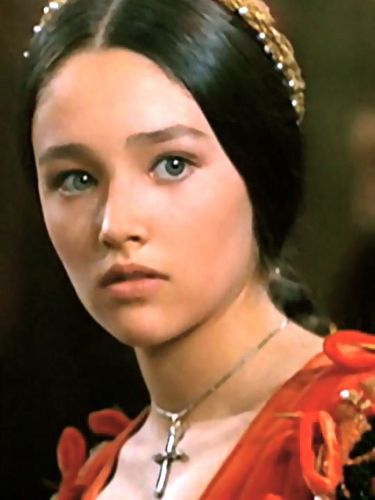

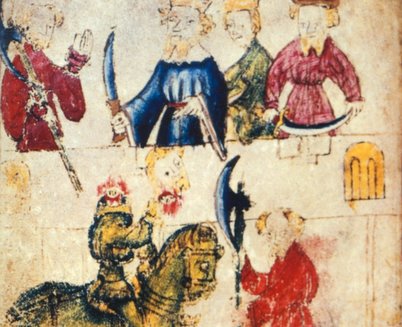
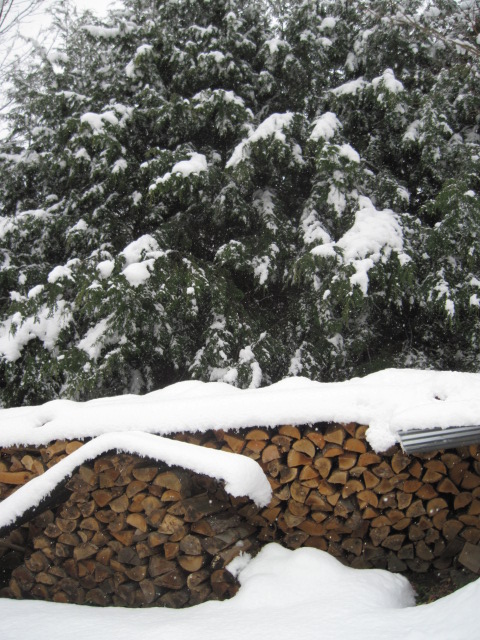
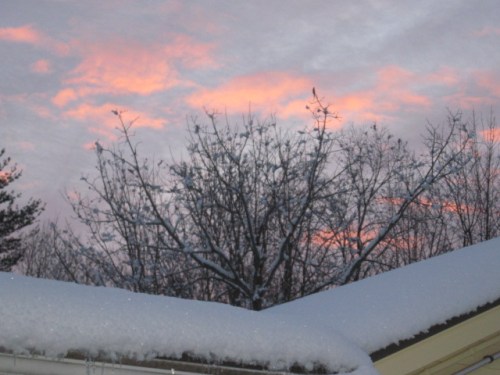
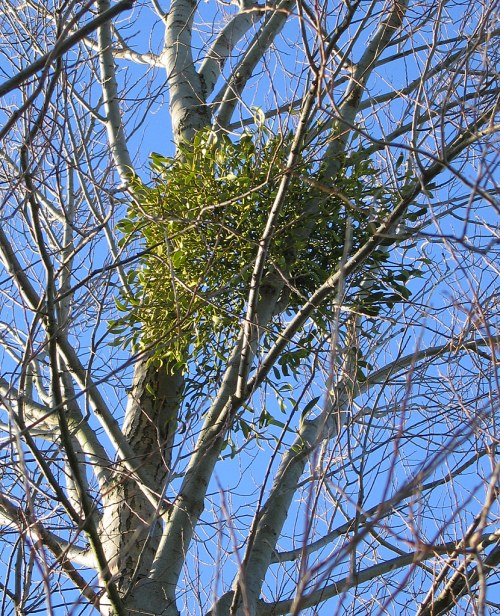
 Or what seems almost the opposite to flame: I reach for a stone to hold in hand, door to memory, cool to the touch, scented with earth and mud and time, piece of the planet in my palm. The same, not the same: I build our house- or studio-fire, humming quietly to Brighid, the path of the act of building the fire paralleling the path the fire itself takes through the wood. I kindle, but whether it’s my spirit or the wood that’s burning starts to matter less: it’s both.
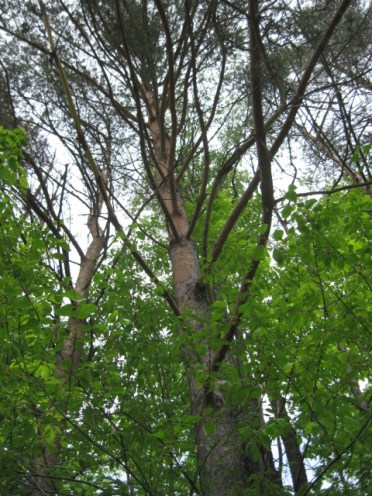
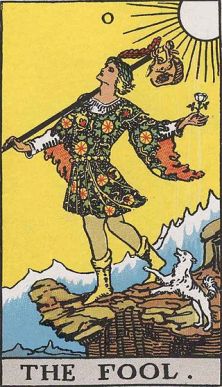 Experiment with learning more about your animal familiar — an ancient and worldwide practice. Animal guardians and teachers abound in myth, legend and folktale for good reason. Many of us know instinctively why we keep pets, and every year we learn more about the health benefits and remarkable abilities domesticated animals bring into our lives. The tarot Fool sets out on the long journey toward wisdom already accompanied by an animal. Who are your companions and what can they teach you?

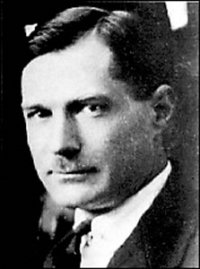

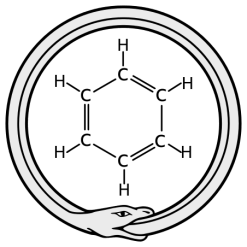 Even mundanely, golfers visualize a hole in one, carpenters see the finished design long before it emerges from the blueprint, chemists rely as much on inspiration as any artist for discoveries like that of
 So I heed my own words and listen.
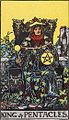 I start with seeing the major arcana as the soul’s journey, and minor arcana as individual human lives. Here, both as my own physical incarnation and as a wider representation of earthly powers and princes, card 1 with the King of Pentacles is dominant. The Court cards may be interpreted as personalities, with the king as an older male, and pentacles concerned with resources. The challenge or immediate influence of card 2 is the Queen of Swords, a feminine influence or figure in thought. As a past influence or tendency toward destiny, card 3 with the Devil is immersion in materiality, often polarized as male and female, or dual in nature. It can also represent dark magic, against and by the self most of all. Numerically his Tarot number 15 reduces to 6, linking this card, and the Devil’s influence, both to the future and to the unconscious — no surprise.
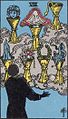 The recent past and conscious focus of card 5 is the 7 of Cups, magic, spirituality, results, completion, mixed with or focused on emotion. The unconscious or true influence of card 6 is the 9 of Pentacles, a fixing, ending or culmination of resources. Card 7, self-perception, is the 4 of Pentacles, stability or security — again, of resources. The external influence of card 8, the Knight of Wands, is a younger personality or presence, more fiery and ambitious. Card 9, the card of hopes and fears, is the Star, deeply important on the other path I practice, and present in our proverbs and idioms as guiding star, north or pole-star, and also as dis-aster, ill-starred-ness. Its Tarot number 17 reduces to 8, and hence influences or pairs with card 8. The final outcome or result of all of this is the Moon, whose Tarot number 18 reduces to 9 and pairs with card 9: a strong linking of the last three cards.
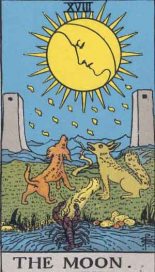 With 3 of the 10 cards coming from Pentacles, resources and the physical world will be a prime focus of the year personally and for the planet. Balancing feminine energies to the mature male energies in play are an immediate aspect of the present and near future. Destiny and past influences at work, though not inevitable, are ones we have both initially set in motion and strengthened by our sharp focus on materiality. Our outer fixation on security and stability may feel reasonable, given such destabilizing forces at work. But while our hopes and dreams focused on these things are valid, pursuing them along a still-material path, even with a renewed youthful vigor, will not return us to what is stable and safe. Other directions we have recently begun to explore can prove more beneficial. We’ll see moon-like changes, darkness and light alternating in phases.
 Once again I’ve set out on the remarkable journey that is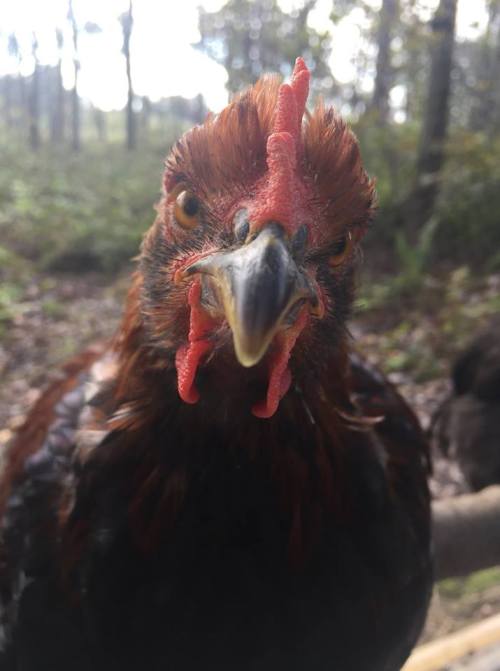
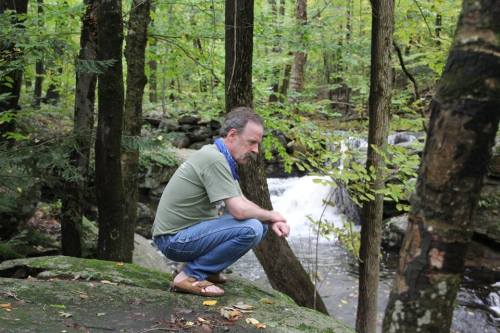

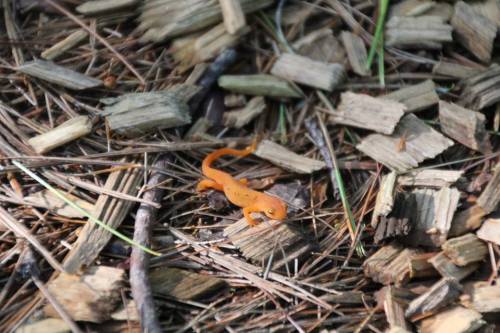
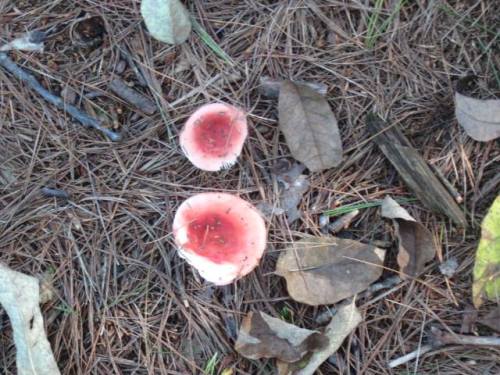
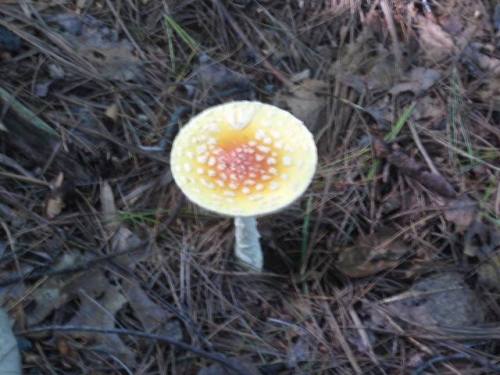


 A Druid Way

